Isaiah 64
Buk Baibel long Anuki · Tap a verse to see its cross-references.
Pari God yana wiinuwanuwaghana kiiravine
4Naghove, naghove waghata
getana iiyabo iyawaiyana da God tana meme tam naboni,
bo wawaya getana God tam naboni iyakita towoyina!
Iiyabo yiwiita da iiyawogha siyitumaghanem na kiiravidiye.
5Raghanina wawaya nuwamiimiiseye bera miisedi saberabera,
bi yam keda rotomanidi sakivikivina, na kwiiwiitedi.
Tam nuwanuwam ipughu toumii biiyadi,
bi gegha da toumii patana raghani gurina bera berona kaya berabera.
Metagha wawaya toumii naboni, rubana kuniyawiimii?
6Yama tamumu saberaberamii da tam matamve na toumii dadabumii.
Bagune raghanina kiimatipo da bera miisedi kayabera,
bi gegha da matam kamone na nokodi bera na
ware gara dadabudi tamogosigosiridi naboni.
Bi yama tamumu kiiravine na toumii kakanakana,
ware rugurugu mekodi sipokina naboni
da yama tamumu sakabitavemii ware yanunu rugurugu yatapi karuvedi sanaghotaveyana naboni.
7Bi getana iiyabo tam biidi iyarurupari,
bo iyapiipiika tam biidi wiiwiita kiiravine iyibabana,
basuna tam kumiiri kubutemii,
na kubera da yama tamumu siviberomii.
8Bi gegha da Yawe God tamna tamamiinaki.
Toumii na ware nau kana dobodobo naboni,
bi tam na berabera wawayim.
Tam imamma toumii tupamii kuberamii.
9Na genuwanuwam inapughu kirakii toumii biiyadi,
bi gegha yama tamumu kunanoghota wiikarukaruvenina.
Kita! Toumii tupamii na tam yam wawaya,
na kinuwanuwaghanemii.
Did you know?
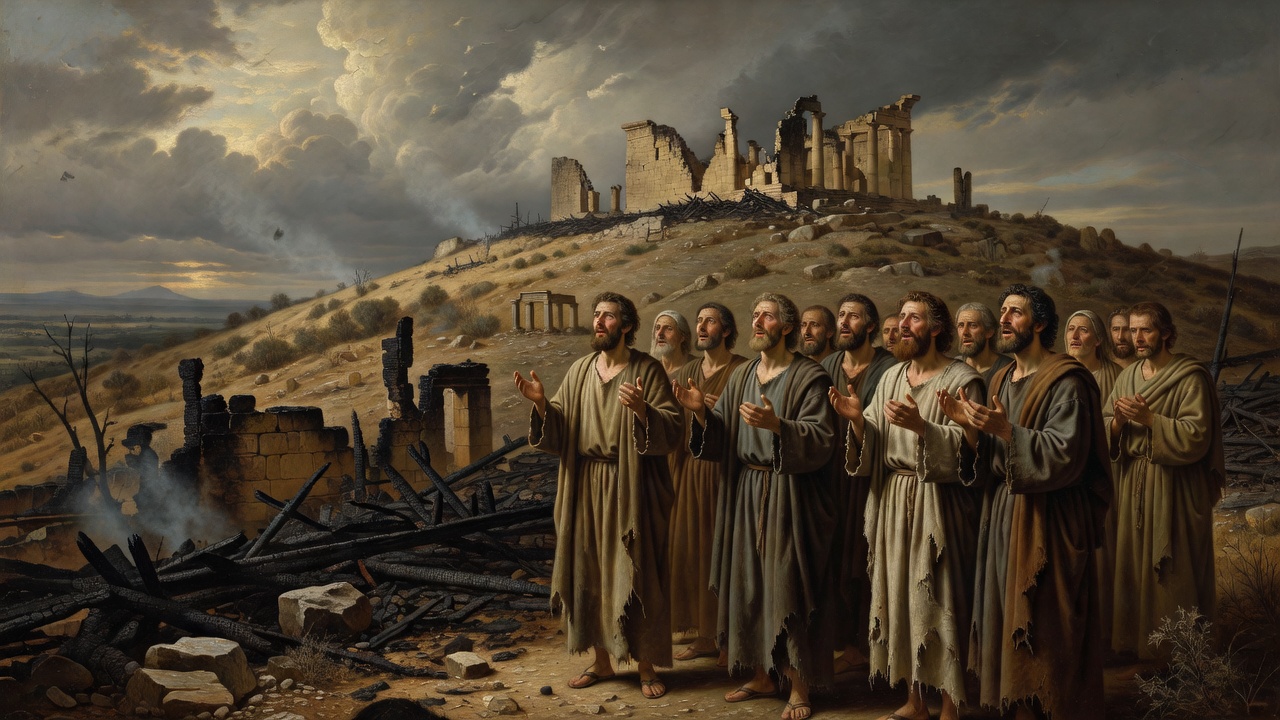
A Prayer for Mercy Amid Ruin
- The passage opens with a plea for God to rend the heavens and descend with world-shaking power, like fire that kindles brushwood. Yet it contrasts this desire for divine presence with a confession of human unworthiness, comparing people to withering leaves swept away by their own iniquities.Sources: the Bible text itself
- In Isaiah 64, the community appeals to God as a Father and craftsman, declaring, "we are the clay, and You are the potter." This imagery emphasizes human frailty and total dependence on God, pleading for divine mercy despite their acknowledged guilt.Sources: the Bible text itself
- The chapter laments the destruction of sacred spaces, describing Zion and Jerusalem as desolate wastelands. It specifically mourns the burning and ruin of the holy temple where past generations had offered praise.Sources: the Bible text itself · Zion · Jerusalem
Notes written with AI assistance from open sources (Theographic Bible Metadata, CC BY-SA 4.0; Easton’s Bible Dictionary, public domain) and reviewed before publishing.
Places in this chapter
Only places identified with high confidence are shown (90% or more according to the scholarly sources compiled by OpenBible). Period map: DARE (Digital Atlas of the Roman Empire), CC BY 4.0; modern map: © OpenStreetMap contributors; places: OpenBible.info (CC BY 4.0).
Credits and license for this translation
Buk Baibel long Anuki
Portions of the Holy Bible in the Anuki language of Papua New Guinea
Buk Baibel long tokples Anuki long Niugini
copyright © 2010-2016 Wycliffe Bible Translators, Inc.
Language: Anuki
Translation by: Wycliffe Bible Translators
This translation is made available to you under the terms of the
Creative Commons Attribution-Noncommercial-No Derivatives license 4.0.
You may share and redistribute this Bible translation or extracts from it in any format, provided that:
You include the above copyright and source information.
You do not sell this work for a profit.
You do not change any of the words or punctuation of the Scriptures.
Pictures included with Scriptures and other documents on this site are licensed just for use with those Scriptures and documents.
For other uses, please contact the respective copyright owners.
2014-06-02
Source: http://png.bible/aui/ · eBible.org