Isaías 64
Buk Baibel long Anuki · Toca un versículo para ver sus referencias cruzadas.
Pari God yana wiinuwanuwaghana kiiravine
4Naghove, naghove waghata
getana iiyabo iyawaiyana da God tana meme tam naboni,
bo wawaya getana God tam naboni iyakita towoyina!
Iiyabo yiwiita da iiyawogha siyitumaghanem na kiiravidiye.
5Raghanina wawaya nuwamiimiiseye bera miisedi saberabera,
bi yam keda rotomanidi sakivikivina, na kwiiwiitedi.
Tam nuwanuwam ipughu toumii biiyadi,
bi gegha da toumii patana raghani gurina bera berona kaya berabera.
Metagha wawaya toumii naboni, rubana kuniyawiimii?
6Yama tamumu saberaberamii da tam matamve na toumii dadabumii.
Bagune raghanina kiimatipo da bera miisedi kayabera,
bi gegha da matam kamone na nokodi bera na
ware gara dadabudi tamogosigosiridi naboni.
Bi yama tamumu kiiravine na toumii kakanakana,
ware rugurugu mekodi sipokina naboni
da yama tamumu sakabitavemii ware yanunu rugurugu yatapi karuvedi sanaghotaveyana naboni.
7Bi getana iiyabo tam biidi iyarurupari,
bo iyapiipiika tam biidi wiiwiita kiiravine iyibabana,
basuna tam kumiiri kubutemii,
na kubera da yama tamumu siviberomii.
8Bi gegha da Yawe God tamna tamamiinaki.
Toumii na ware nau kana dobodobo naboni,
bi tam na berabera wawayim.
Tam imamma toumii tupamii kuberamii.
9Na genuwanuwam inapughu kirakii toumii biiyadi,
bi gegha yama tamumu kunanoghota wiikarukaruvenina.
Kita! Toumii tupamii na tam yam wawaya,
na kinuwanuwaghanemii.
¿Sabías que…?
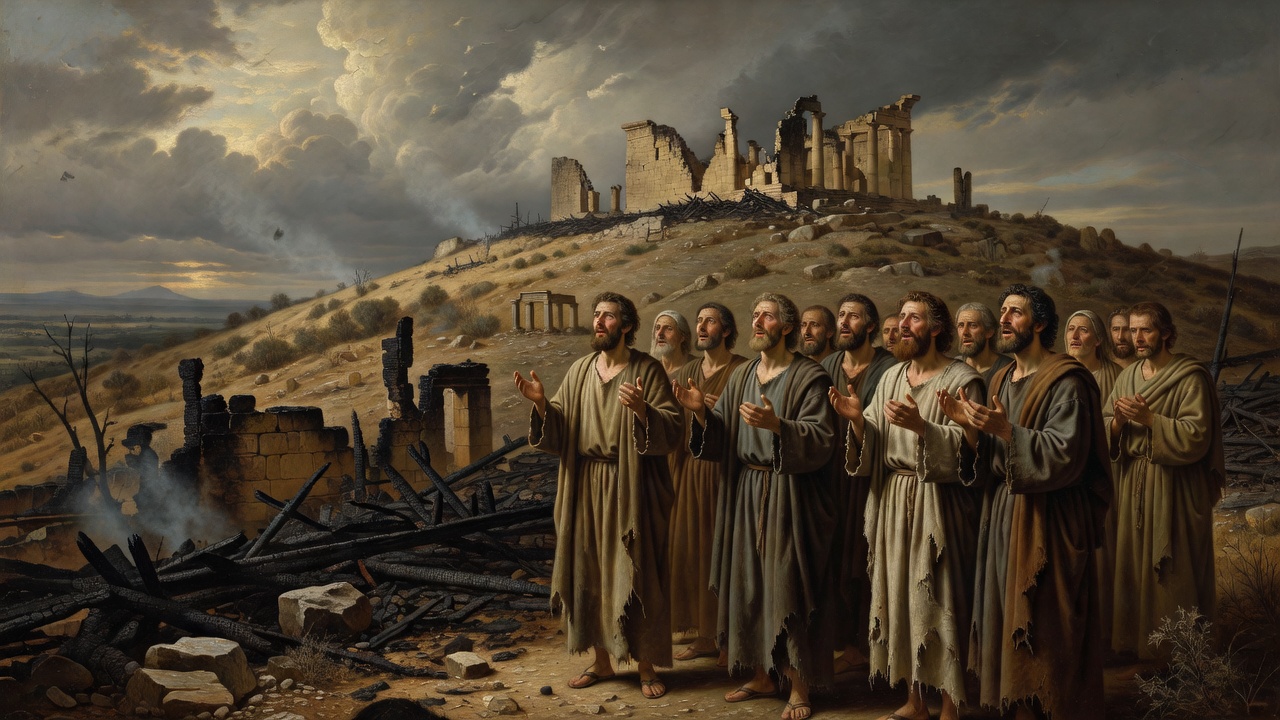
Una Oración por Misericordia en Medio de la Ruina
- El pasaje comienza con una súplica para que Dios rasgue los cielos y descienda con poder sobrecogedor, como fuego que enciende la leña. Sin embargo, contrasta este deseo de la presencia divina con una confesión de la indignidad humana, comparando a las personas con hojas secas arrastradas por sus propias iniquidades.Fuentes: el propio texto bíblico
- En Isaías 64, la comunidad apela a Dios como Padre y artesano, declarando: "nosotros somos el barro, y tú nuestro alfarero". Esta metáfora subraya la fragilidad humana y la total dependencia de Dios, suplicando misericordia divina a pesar del reconocimiento de sus culpas.Fuentes: el propio texto bíblico
- El capítulo lamenta la destrucción de los lugares sagrados, describiendo a Sion y Jerusalén como desolaciones y desiertos. El texto lamenta específicamente el incendio y la ruina del templo sagrado donde las generaciones pasadas habían ofrecido alabanzas.Fuentes: el propio texto bíblico · Zion · Jerusalem
Notas escritas con ayuda de IA a partir de fuentes abiertas (Theographic Bible Metadata, CC BY-SA 4.0; Easton’s Bible Dictionary, dominio público) y revisadas antes de publicarse.
Lugares de este capítulo
Solo aparecen lugares identificados con alta confianza (90 % o más según las fuentes académicas reunidas por OpenBible). Mapa de la época: DARE (Digital Atlas of the Roman Empire), CC BY 4.0; mapa actual: © colaboradores de OpenStreetMap; lugares: OpenBible.info (CC BY 4.0).
Créditos y licencia de esta traducción
Buk Baibel long Anuki
Portions of the Holy Bible in the Anuki language of Papua New Guinea
Buk Baibel long tokples Anuki long Niugini
copyright © 2010-2016 Wycliffe Bible Translators, Inc.
Language: Anuki
Translation by: Wycliffe Bible Translators
This translation is made available to you under the terms of the
Creative Commons Attribution-Noncommercial-No Derivatives license 4.0.
You may share and redistribute this Bible translation or extracts from it in any format, provided that:
You include the above copyright and source information.
You do not sell this work for a profit.
You do not change any of the words or punctuation of the Scriptures.
Pictures included with Scriptures and other documents on this site are licensed just for use with those Scriptures and documents.
For other uses, please contact the respective copyright owners.
2014-06-02
Fuente: http://png.bible/aui/ · eBible.org