Sofonias 1
Yi Antiw Bible / Yi Ac'aj Testament · Toque num versículo para ver as referências cruzadas.
Sobre este livro
Sobre Sofonias
- O Dicionário Bíblico de Easton (1897) apresenta Sofonias, cujo nome explica como "Jeová ocultou" ou "Jeová das trevas", como filho de Cusi e bisneto de Ezequias, e como o nono dos profetas menores. Data sua profecia no reinado de Josias, rei de Judá (641–610 a.C.), e diz que ele foi contemporâneo de Jeremias, com quem tinha muito em comum.Fontes: Easton: Zephaniah · Zephaniah · Cushi
- Amom, pai de Josias, restaurou a idolatria em Judá, e Easton lê Sofonias 1:4 e 3:4, 11 como referências a esse reinado. O mesmo dicionário liga Sofonias 1:4–6 ao culto de Baal e Sofonias 1:5 a Malcã, descrito como o ídolo nacional dos amonitas. Josias, que subiu ao trono aos oito anos, é apresentado como alguém que depois agiu contra a idolatria então predominante.Fontes: Amon · Josiah · Baal · Malcham
- O Dicionário Bíblico de Easton descreve o livro como uma introdução que anuncia o juízo sobre o mundo e sobre Israel por causa de suas transgressões (1:1–6), uma descrição do juízo (1:7–18), uma exortação a buscar a Deus enquanto ainda há tempo (2:1–3), o juízo sobre outros povos (2:4–15), o que chama de miséria sem esperança de Jerusalém (3:1–7) e uma promessa de salvação (3:8–20).Fontes: Easton: Zephaniah
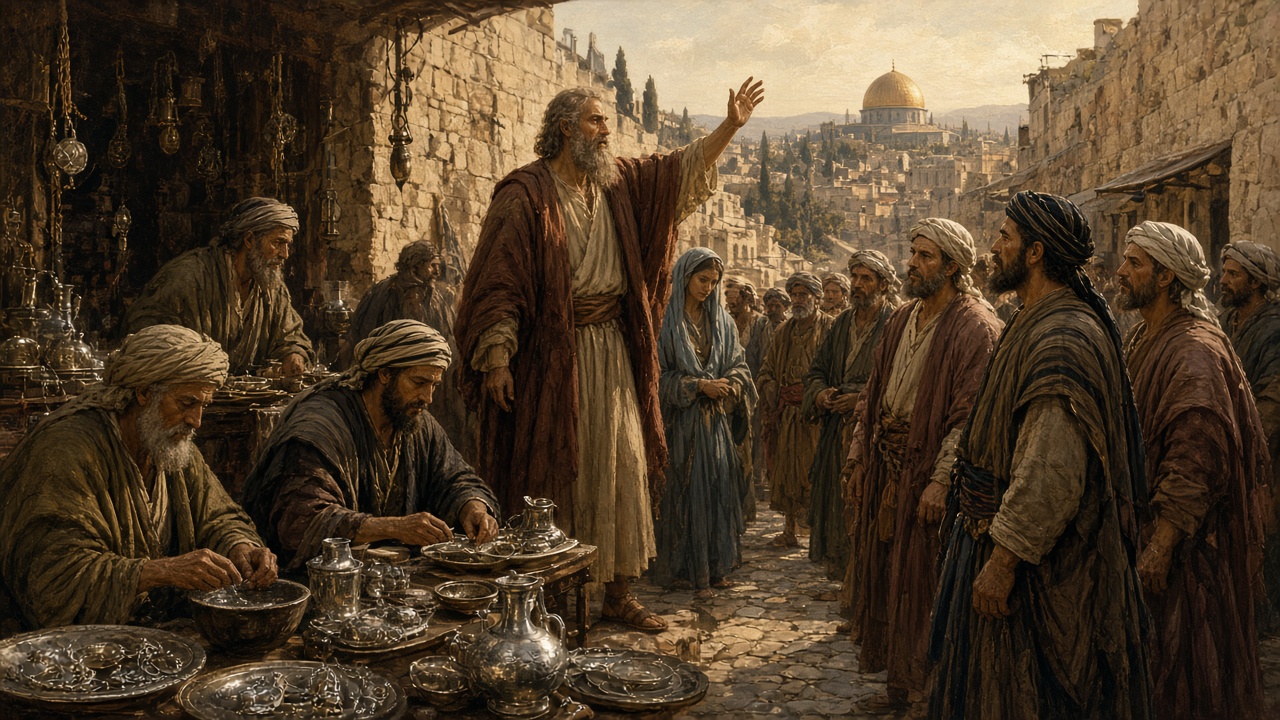
- Sofonias 1:11 nomeia o Pilão, um lugar em Jerusalém ou perto dela, habitado por mercadores de prata. Conjecturou-se que fosse o bairro fenício da cidade, onde viviam comerciantes dessa nação.Fontes: Mortar
Notas escritas com auxílio de IA a partir de fontes abertas (Theographic Bible Metadata, CC BY-SA 4.0; Easton’s Bible Dictionary, domínio público) e revisadas antes de publicar.
1Je yi xtxolbile'j yi tal Kataj Ryos tetz Sofonías yi elsanl stzi' i', te yi tiemp yi na cawun tzaj yi rey Josías yi cy'ajl Amón, le ama'l Judá. Yi taj Sofonías Cusi bi'. Nin yi bi' yi taj Cusi, i'tz Geldaías. Nin yi bi' yi taj Geldaías i'tz Amarías. Ma Amarías Ezequías bi' yi tetz taj.
Yi k'ejlal yil ẍchaj Ryos yi ẍchi'chbe'n c'u'l
2Je yol Kataj Ryose'j: “Tz'elpon cu'n tircu'n wa'n swutz. Tircu'n yi mbi cu'n at bene'n tzi'n wi munt stzajk wa'n.
3Tircu'n yi e' wunak scyuch' yi e' txuc chelpon cu'n wa'n swutz, na ẍchiquimok tircu'n yi e' txuc wa'n yi na chixon wuxtx'otx', scyuch' yi e' yi na chixicy'in, scyuch' yi e' yi najlche' xe a'. Ncha'tz yi e' wunak yi chin juntlen nin cyajtza'kl, tircu'n chelpon cu'n wa'n swutz.”
4Ej nin je junt yol Kataj Ryose'j yi tz'elpon k'ab te'j: “Ẍche' incawse' yi e' aj Judá. Ncha'tz yi e' yi najlche' Jerusalén ẍche' incawse'. Copon inxitul tircu'n yi e'chk teblal yi jun ryosa'tz yi na bi'aj Baal yi na tzan lok'e'n wutz Jerusalén. Ncha'tz yi e' pale' yi na chixcon tetz yi jun ryosa'tz, chelpon cu'n wa'n swutz tircu'n.
5Tircu'n yi e' yi na chije' wi'ak chica'l tan lok'e'n wutz e'ch tx'uml, chelpon cu'n wa'n swutz. Ncha'tz yi e' yi na chimeje' tan na'wse'n imbi' tu yi junt chiryosil yi na bi'aj Milcom, tircu'n yi e'a'tz chelpon cu'n wa'n swutz.
6Ncha'tz tircu'n yi e' yi na quil cyen inchusu'n, chelpon cu'n wa'n swutz. Tircu'n yi e' yi qui na cho'c tan injoyle'n tan jakle'n cyajtza'kl swetz, tircu'n yi e'a'tz, chelpon cu'n wa'n swutz,” stzun Kataj Ryos.
7Cya'l bin jun jilon swutz Kataj Ryos. Kayut'e' kib, na ato' txe' quen yi jun k'ejlal yil ticy'saj i' c'u'l scye'j cyakil jilwutz wunak. Na txumijt ta'n tan chiquimse'n cu'n cyakil yi e' contr. Cho'n cu'n ẍchibne' ta'n chi na patij jun tx'ixwatz. Nin ja wi't chixansij yi e' xtxocum ta'n.
8“Tul yi jun k'eja'tz, nocpon tan tak'le'n chicaws yi e' wi'tz bajxom, scyuch' chicy'ajl, nin cyakil yi e' yi na el cyalma' tan xconse'n be'ch cyetz awer nak.
9Ncha'tz yil tz'opon yi jun k'ejlala'tz yil wicy'saj inc'u'l scye'j yi e' malnaka'tz, ẍche' incawse' cyakil yi e' yi na chixom te cyajtza'kl yi e' awer nak yi na chicy' tz'itpuj tibaj yi xe' yi marquil e'chk puert. Ncha'tz ẍche' incawse' cyakil yi e' yi na cho'c tan oyintzi' nin tan chisuble'n wunak tan chicambal chime'bi'l bantz cyak'ol tetz chiryosil,” chij Ryos.
10Je junt yol Kataj Ryose'j, yi tz'elpon k'ab te'j: “Nin tul yi jun k'ejlala'tz, wi'nin sich' sbajok tan jakle'n ich'eya'n swutz cunin yi sawanil yi tapij yi na bi'aj Sawan Tetz Cay. Nin wi'nin ẍchiẍch'ink yi e' wunak yi ate' le ca'p cantón. Ej nin quibite' wi'nin jincane'n yil saj nil yi e'chk kotx'.
11Wi'nin o'kl ẍchibne' yi e' aj Jerusalén yi najlche' le cantón yi na bi'aj Mortero, na ẍchiquimok cyakil yi e' aj lijens, tu cyakil yi e' aj tx'exul wutz pwok yi najlche'-tz.
12Nin tul yi jun tiempa'tz ni'cu'ntz chi nink xconk jun txekbil wa'n tan chijoyle'n cyakil yi e' yi na cyew quib le tnum Jerusalén. Na nocpon tan tak'le'n chicaws cyakil yi e' yi le wutz cyetz cyajtza'kl ba'n ate't, yi e' yi na cyal squibil quib: ‘Qui'c tulbil kacaws tan Ryos’.
13Tan yi cyajtza'kla'tz tz'elpon majij cyakil chime'bi'l, nin copon woc' chica'l. Sbnixok chica'l cya'n, poro quil chinaje' txe'. Scyawe' wi'nin wi' uva swutzak chicojbil poro quil baj yi ta'al cya'n.”
14¡Ato' txe' quen yi jun k'ejlala'tz yil ticy'saj Ryos c'u'l scye'j yi e' wunak! ¡Ato' txe' quen yi jun k'ejlala'tz, na tz'ul chan! ¡Wi'nin jincane'n sbajok le jun k'ejlala'tz, na chin xo'wbil nin sbne'! Na nicy't nin yi e' yi chin cham nin e', ẍchiẍch'ink tan xo'w.
15Ẍchaje' Ryos yi ẍchi'chbe'n c'u'l, scye'j yi e' contr. Nin wi'nin sotzaj c'u'lal tz'ul ẍchiwutz, nin ẍchitije' wi'nin q'uixc'uj. Tircu'n slo'onk. Chin tz'inunin tunin sbne'. Wi'nin muj sbne' tcya'j, nin chin tz'o'tz nin tunin sbne' tircu'n wuxtx'otx'.
16Tul yi jun k'ejlala'tz ẍch'ink e'chk chun tan ẍchajle'n yi xe'tok jun chin oyintzi'. Xitok e'chk tnum, yi tapij cu'n solte'j. Ej nin xitok e'chk torre yi nim wutz tkan, kale chicolone't quib yi e' sanlar.
17Ncha'tz je na tal Kataje'j: “Tz'opon e'chk il wa'n ẍchiwutz wunak, nin ni'cu'n ẍchibne' chi ik e' moyi'ẍ, na ja chijuch quil tzinwutz. Tz'elpon kojij chiẍch'el chi na el kojij a'. Nin tenaji'n cu'n sbne' chiwankil, chi na ban xtxa' cne'r yi junit muluj na ban,” chij Kataj.
18Tul yi jun k'ejlala'tz yil ẍchaj tib yi ẍchi'chbe'n c'u'l Ryos, quil xcye' sakal nka oro tan chiclaxe'n wunak, na sotzok tircu'n yi e'chk takle'na'tz tan yi ẍchi'chbe'n c'u'l Ryos yi ni'cu'n tu k'ak'. Tz'ocpon Kataj Ryos tan chixite'n cu'n cyakil yi e' wunak yi ate' wi munt, tul jun ntzi' tkuj.
Você sabia?
O Dia do SENHOR e o julgamento da idolatria
- Sofonias traça sua linhagem por quatro gerações até Ezequias, situando seu ministério profético no reinado do rei Josias de Judá. Josias assumiu o trono após seu pai, o rei Amom, ter restaurado a idolatria em Judá antes de ser assassinado por seus próprios servos.Fontes: o próprio texto bíblico · Josiah · Amon · Hizkiah
- O capítulo denuncia o sincretismo religioso em Jerusalém, onde as pessoas se prostravam nos terraços diante do exército dos céus e misturavam sua devoção ao SENHOR com juramentos a Baal e a Milcom (Malcã), o ídolo nacional dos amonitas.Fontes: o próprio texto bíblico · Baal · Malcham
- A profecia especifica marcos em Jerusalém que enfrentariam tribulação, incluindo a Porta dos Peixes e o Mactés (ou Cavidade), um bairro habitado por comerciantes que pesavam prata.Fontes: o próprio texto bíblico · Fish Gate · Mortar
Notas escritas com auxílio de IA a partir de fontes abertas (Theographic Bible Metadata, CC BY-SA 4.0; Easton’s Bible Dictionary, domínio público) e revisadas antes de publicar.
Lugares deste capítulo
- Jerusalem · 31.777, 35.234 · versículos 4, 12
- Fish Gate · Hoje: in Jerusalem · 31.777, 35.234 · versículo 10
- Second Quarter · Hoje: in Jerusalem · 31.777, 35.234 · versículo 10
- Canaan · 32.767, 35.333 · versículo 11
- Mortar · Hoje: in Jerusalem · 31.777, 35.234 · versículo 11
Só aparecem lugares com identificação de alta confiança (90% ou mais segundo as fontes acadêmicas reunidas pelo OpenBible). Mapa da época: DARE (Digital Atlas of the Roman Empire), CC BY 4.0; mapa atual: © colaboradores do OpenStreetMap; lugares: OpenBible.info (CC BY 4.0).
Créditos e licença desta tradução
Yi Antiw Bible / Yi Ac'aj Testament
Bible in Aguacateco (GT:agu:Aguacateco)
copyright © 2011 Wycliffe Bible Translators, Inc.
Language: Aguacateco
Translation by: Wycliffe Bible Translators, Inc.
Copyright Information
© 2011-02-18, Wycliffe Bible Translators, Inc. All rights reserved.
This translation text is made available to you under the
terms of the Creative Commons License: Attribution-Noncommercial-No Derivative Works.
( http://creativecommons.org/licenses/by-nc-nd/3.0/ )
In addition, you have permission to port the text to different file formats, as long as you
do not change any of the text or punctuation of the Bible.
You may share, copy, distribute, transmit, and extract portions
or quotations from this work, provided that you include the above copyright
information:
You must give Attribution to the work.
You do not sell this work for a profit.
You do not make any derivative works that change any of the actual words or punctuation of the Scriptures.
Permissions beyond the scope of this license may be
available if you contact
us with your request.
The Bible
in Aguacateco
© 2011-02-18, Wycliffe Bible Translators, Inc. All rights reserved.
This translation is made available to you under the terms of the
Creative Commons Attribution-Noncommercial-No Derivatives license 4.0.
You may share and redistribute this Bible translation or extracts from it in any format, provided that:
You include the above copyright and source information.
You do not sell this work for a profit.
You do not change any of the words or punctuation of the Scriptures.
Pictures included with Scriptures and other documents on this site are licensed just for use with those Scriptures and documents.
For other uses, please contact the respective copyright owners.
2014-04-21
Fonte: http://ebible.org/aguBl/ · eBible.org