Habacuque 3
Yi Antiw Bible / Yi Ac'aj Testament · Toque num versículo para ver as referências cruzadas.
Yi toque'n Habacuc tan nachle'n Kataj junt tir
1Yi xtxolbile'j yi xomtzaj, ya'stzun yi yol Habacuc, yi elsanl stzi' Ryos yi toque'nt tan nachle'n Kataj.
2Wajcaw, na wek ẍchi'u', na ja wit yi ẍe'n cunin tane'nu' sajle'n tunintz. Nin ja wit cyakil yi e'chk takle'n balaj yi bnixnak tanu' sajle'n. Ta', bne'u' junt tir yi e'chk takle'na'tz skaxo'l, chi yi bnixnak tanu' sajle'n, bantz kilol ketz. Ẍchaje'u' yi banl talma'u' sketz. Mpe sajnak colp wi'u' ske'j, poro ẍchaje'u' yi poreru' sketz.
3Tz'ul Kataj Ryos junt tir, yi kaRyosil, yi wi'nin xanil. Cho'n lsaj i' le ama'l Temán, nin le wi'wtz Parán. Yi pak'puchal yi tetz k'ej sbajk xtxekul cyakil e'chk ama'la'tz, yil tz'ult. Nin yil bajij yi e'chk xtxolbila'se'j, cyakil wunak scyak'e' chik'ajsbil tetz. 4Na cho'n tz'ul i' tul jun pak'puchal yi i cunin xlitz' tane'n. Nin tz'elepon wi'nin e'chk k'ak' le k'ab yil tz'ul tan ẍchajle'n scyetz wunak yi at porer i'. 5Sbajxok wi'nin ya'bil swutz, yi chin xo'wbil nin. Nin tz'ul xomok yi quimichil wutz coc. 6Syucank yi wuxtx'otx' yil xcye' cu'n i' tibaj. Nin cyakil wunak yi ate' bene'n tzi'n lakak nación, ẍchixobok yil quil nin wutz i'. Cyakil e'chk wutz yi at sajle'n tunintz copon nil. Nin cyakil yi e'chk ju'wtz xitok. Na yi i' tetz at nin i'-tz le xe'tzbil tzaj.
7Ja wil jun xtxolbil chi tul wutzicy' tane'n. I'tz yi e' aj Cusán yi chin q'uixc'uj nin ate' cu'nt. Nin ncha'tz quitane'n yi e' aj Madián, ja oc yab ẍchiwi' na qui't na pujx cya'n yi mbil chiban tan bi'l yi xo'w yi ate' cu'nt. 8¡Wajcaw! ¿Tz'ul pe'u' ntin tan oyintzi' scye'j yi e' malnaka'tz, yi wi'nin na chijuchun, chi na ban tzanla' yi na el pok'? Qui' lo'. ¿Tz'ul pe'u' ntin tan paj yi na chi'ch c'u'lu' scye'j e' wunak yi ni'cu'n e' tu yi mar yi tunin na ojkel tu'? Qui'. Yil tz'ulu' tib ẍcheju' tan oyintzi', ¿i'tz pe' tan oyintzi' tu' scye'j yi e' wunaka'tz? Qui'. Ej nin yil saju' tul yi care'tu' tetz oyintzi', ¿i'tz pe' tan oyintzi' tu' scye'j e' mal nak? Qui'. Yi mero tajbilu' yil tz'ulu' te'j i'tz tan chicolche'n yi e' tanumu'.
9Ej nin yil tz'ulu', list atit yi e'chk ma'clu' tan oyintzi', chi tane'n yi arco yi na xcon tan c'oxle'n e'chk flech. Ej nin tan yi poreru' jepon c'apx wi'nin ama'l wuxtx'otx'. 10Nin cyakil e'chk ju'wtz ẍchilucnek yil quil nin wutzu'. Nin tz'ul jun chin wutzile'n a'bal. Nin ẍch'ink yi pak'bil mar yil ẍchek'e'n tib. 11Qui't txekun yi k'ej tu yi xaw tan paj yi pak'puchal yi flechu', nin yi litz'unil yi lansu'. 12Nin yil saj colp wi'u', mbenu' bene'n tzi'n wi munt tan chiyak'pe'n cyakil e'chk nación. 13Poro Wajcaw, ya'stzun sbne'-tz tanu' tan kacolpe'n yi o' tanumu'. Na tz'ocoponu' tan ẍch'eye'n yi ketz kareyil yi je'nak xtxa'olu' tetz ajcaw ske'j. Na ẍchilo'onk len yi e' kacontr tanu'. Sbajk woq'uilu' chica'l. Copon woq'uilu' tircu'n jalen te yi xe'. 14Squimok yi cyajcawil yi kacontra'tz. Ite'n nin yi tetz flech sbiyonk cu'n. Chu'l yi e' kacontra'tz tib chichej tan kabiyle'n, yi o' tanumu'. Nin chu'l lajke'l chi na ban jun chin wutzile'n cyek'ek' a'bal. Chu'l lajke'l tan kabiyle'n cu'n yi o' tal prow tanumu' yi qui'c rmeril tan kacolol kib. Ẍchitze'enk ẍchic'u'l cuntu' yil chu'l tan kabajse'n klo'.
15Poro yi ilu' teru' Ta', chin cham nin ilu', na ba'n na xonu' wi mar te yi ẍcheju'. Nin ba'n na xonu' tib yi pak'bil mar yi wi'nin spumil at. 16I tzun yi bene'n wilol yi e'chk xtxolbila'tz, nin yi bene'n wital yi mbi tal Ryos swetz, nintzun inxobtz. Qui't a'w yol wa'n tan yi xo'w yi atin cu'nt. Qui't quiwix wukan tan paj, nin qui'c mu'ẍ inwalor bantz. Poro qui'c na ban yi mbil bajij tzantzaj, na ilenin tzinch'iwe' yi tona' tz'oc Kataj Ryos tan tak'le'n chicaws cyakil yi e' kacontra'tz.
17Nin yil bajij yi e'chk xtxolbila'tz ẍchintzatzink nin swak'e' ink'ajsbil tetz Kataj Ryos, yi colol wetz. Swak'e' ink'ajsbil tetz, mpe qui'k xu'min e'chk wi' ibẍ, mpe qui'k ltak' wutz e'chk wi' uva, mpe qui'k lwutzin e'chk wi' oliw, mpe qui'k ltak' yi cojbil e'chk ujul. Mpe nink chisotz cyakil yi awun yi ate' bene'n tzi'n wi munt, nin mpe nink chisotz cyakil e' cne'r tu wacẍ tan paj yi qui'ct chiwa', quil chimbisun tan paj yi e'chk xtxolbila'se'j, ma na ilen nin ẍchintzatzink nin swak'e' ink'ajsbil tetz Kataj Ryos, na i' colol wetz. 19Na i' na ak'on inwalor, tan inxone'n lajke'l chi na ban jun masat yi qui na je' trimpuj. Nin cho'n nchimben tcy'al wi'wtz bantz incolol wib ẍchik'ab yi e' incontr.
Você sabia?
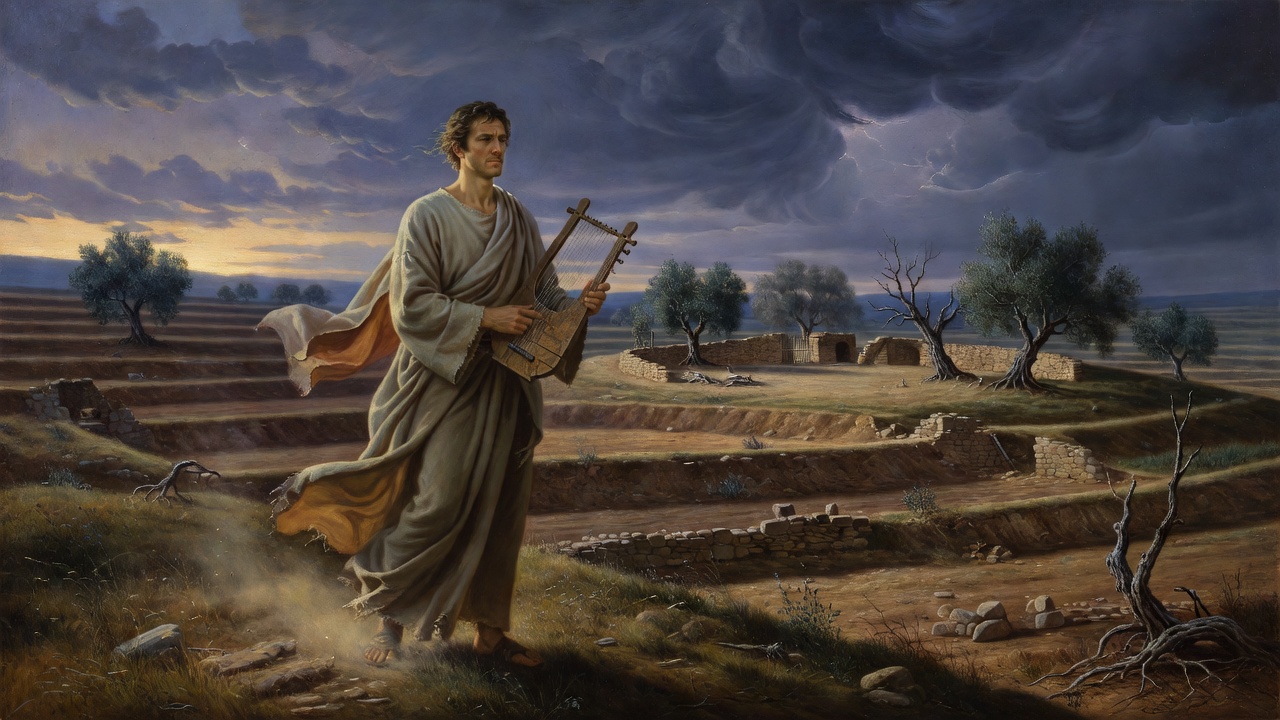
A oração de Habacuque e o cântico de fé
- O poema retrata Deus surgindo a partir do deserto ao sul, mencionando Temã, no sul de Idumeia, e o monte Parã, no limite desértico da Terra Prometida. Essas referências geográficas ecoam descrições poéticas antigas do Senhor marchando em majestade desde o sul.Fontes: Teman · Mount Paran · o próprio texto bíblico
- Cusã e Midiã são descritas tremendo diante do avanço divino. Os midianitas eram tribos árabes nômades que viviam em tendas pelos desertos e pastagens do Sinai e do norte da Arábia.Fontes: Cushan · Midian · o próprio texto bíblico
- O capítulo é estruturado como um salmo litúrgico, trazendo termos musicais como 'Sigionote', 'Selá' e uma dedicação final ao regente do coro para execução com instrumentos de cordas.Fontes: o próprio texto bíblico
Notas escritas com auxílio de IA a partir de fontes abertas (Theographic Bible Metadata, CC BY-SA 4.0; Easton’s Bible Dictionary, domínio público) e revisadas antes de publicar.
Lugares deste capítulo
- Midian · 28.495, 35.012 · versículo 7
Só aparecem lugares com identificação de alta confiança (90% ou mais segundo as fontes acadêmicas reunidas pelo OpenBible). Mapa da época: DARE (Digital Atlas of the Roman Empire), CC BY 4.0; mapa atual: © colaboradores do OpenStreetMap; lugares: OpenBible.info (CC BY 4.0).
Créditos e licença desta tradução
Yi Antiw Bible / Yi Ac'aj Testament
Bible in Aguacateco (GT:agu:Aguacateco)
copyright © 2011 Wycliffe Bible Translators, Inc.
Language: Aguacateco
Translation by: Wycliffe Bible Translators, Inc.
Copyright Information
© 2011-02-18, Wycliffe Bible Translators, Inc. All rights reserved.
This translation text is made available to you under the
terms of the Creative Commons License: Attribution-Noncommercial-No Derivative Works.
( http://creativecommons.org/licenses/by-nc-nd/3.0/ )
In addition, you have permission to port the text to different file formats, as long as you
do not change any of the text or punctuation of the Bible.
You may share, copy, distribute, transmit, and extract portions
or quotations from this work, provided that you include the above copyright
information:
You must give Attribution to the work.
You do not sell this work for a profit.
You do not make any derivative works that change any of the actual words or punctuation of the Scriptures.
Permissions beyond the scope of this license may be
available if you contact
us with your request.
The Bible
in Aguacateco
© 2011-02-18, Wycliffe Bible Translators, Inc. All rights reserved.
This translation is made available to you under the terms of the
Creative Commons Attribution-Noncommercial-No Derivatives license 4.0.
You may share and redistribute this Bible translation or extracts from it in any format, provided that:
You include the above copyright and source information.
You do not sell this work for a profit.
You do not change any of the words or punctuation of the Scriptures.
Pictures included with Scriptures and other documents on this site are licensed just for use with those Scriptures and documents.
For other uses, please contact the respective copyright owners.
2014-04-21
Fonte: http://ebible.org/aguBl/ · eBible.org