Zephaniah 1
Yi Antiw Bible / Yi Ac'aj Testament · Tap a verse to see its cross-references.
About this book
About Zephaniah
- Easton's Bible Dictionary (1897) presents Zephaniah, whose name it explains as "Jehovah has concealed" or "Jehovah of darkness," as the son of Cushi and great-grandson of Hezekiah, and as the ninth of the minor prophets. It dates his prophecy to the reign of Josiah, king of Judah (641–610 B.C.), and says he was contemporary with Jeremiah, with whom he had much in common.Sources: Easton: Zephaniah · Zephaniah · Cushi
- Amon, Josiah's father, restored idolatry in Judah, and Easton reads Zephaniah 1:4 and 3:4, 11 as referring to that reign. The same dictionary links Zephaniah 1:4–6 with the worship of Baal and Zephaniah 1:5 with Malcham, described as the national idol of the Ammonites. Josiah, who came to the throne at eight, is presented as later acting against the idolatry that prevailed.Sources: Amon · Josiah · Baal · Malcham
- Easton's Bible Dictionary outlines the book as an introduction announcing judgment on the world and on Israel because of their transgressions (1:1–6), a description of the judgment (1:7–18), an exhortation to seek God while there is still time (2:1–3), judgment on other peoples (2:4–15), what it calls the hopeless misery of Jerusalem (3:1–7), and a promise of salvation (3:8–20).Sources: Easton: Zephaniah
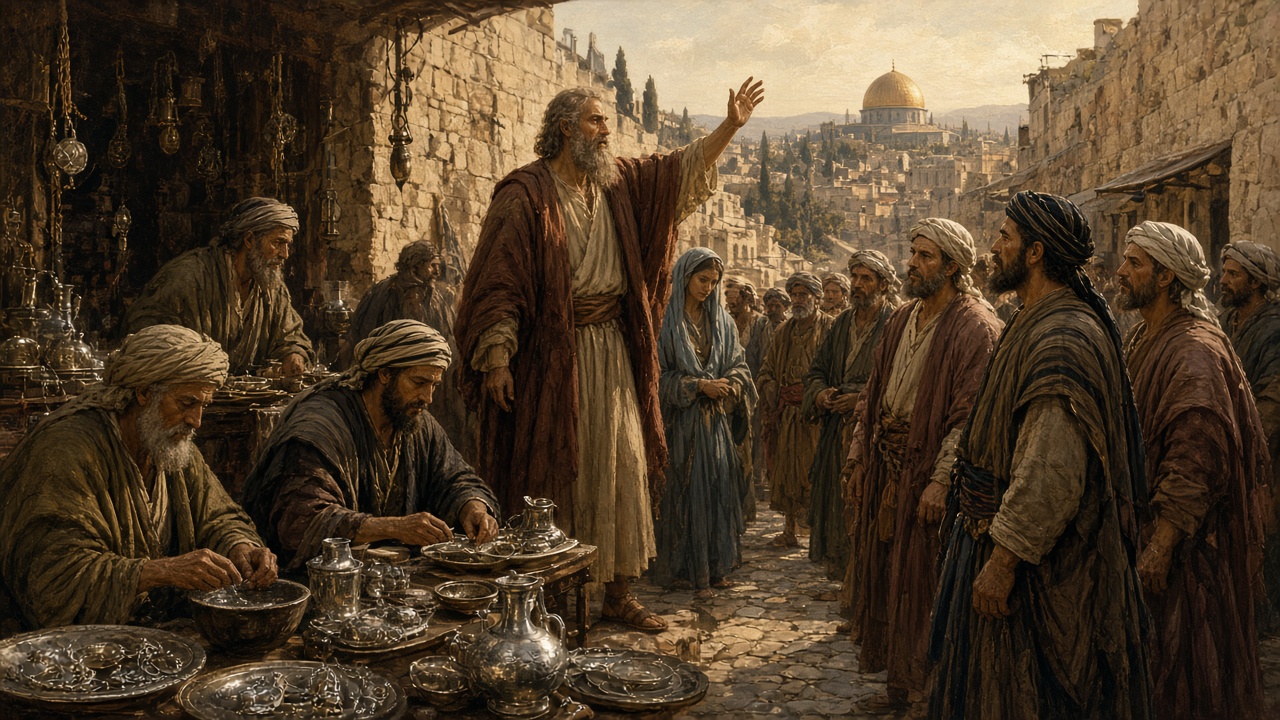
- Zephaniah 1:11 names the Mortar, a place in or near Jerusalem inhabited by silver merchants. It has been conjectured that this was the Phoenician quarter of the city, where traders of that nation lived.Sources: Mortar
Notes written with AI assistance from open sources (Theographic Bible Metadata, CC BY-SA 4.0; Easton’s Bible Dictionary, public domain) and reviewed before publishing.
1Je yi xtxolbile'j yi tal Kataj Ryos tetz Sofonías yi elsanl stzi' i', te yi tiemp yi na cawun tzaj yi rey Josías yi cy'ajl Amón, le ama'l Judá. Yi taj Sofonías Cusi bi'. Nin yi bi' yi taj Cusi, i'tz Geldaías. Nin yi bi' yi taj Geldaías i'tz Amarías. Ma Amarías Ezequías bi' yi tetz taj.
Yi k'ejlal yil ẍchaj Ryos yi ẍchi'chbe'n c'u'l
2Je yol Kataj Ryose'j: “Tz'elpon cu'n tircu'n wa'n swutz. Tircu'n yi mbi cu'n at bene'n tzi'n wi munt stzajk wa'n.
3Tircu'n yi e' wunak scyuch' yi e' txuc chelpon cu'n wa'n swutz, na ẍchiquimok tircu'n yi e' txuc wa'n yi na chixon wuxtx'otx', scyuch' yi e' yi na chixicy'in, scyuch' yi e' yi najlche' xe a'. Ncha'tz yi e' wunak yi chin juntlen nin cyajtza'kl, tircu'n chelpon cu'n wa'n swutz.”
4Ej nin je junt yol Kataj Ryose'j yi tz'elpon k'ab te'j: “Ẍche' incawse' yi e' aj Judá. Ncha'tz yi e' yi najlche' Jerusalén ẍche' incawse'. Copon inxitul tircu'n yi e'chk teblal yi jun ryosa'tz yi na bi'aj Baal yi na tzan lok'e'n wutz Jerusalén. Ncha'tz yi e' pale' yi na chixcon tetz yi jun ryosa'tz, chelpon cu'n wa'n swutz tircu'n.
5Tircu'n yi e' yi na chije' wi'ak chica'l tan lok'e'n wutz e'ch tx'uml, chelpon cu'n wa'n swutz. Ncha'tz yi e' yi na chimeje' tan na'wse'n imbi' tu yi junt chiryosil yi na bi'aj Milcom, tircu'n yi e'a'tz chelpon cu'n wa'n swutz.
6Ncha'tz tircu'n yi e' yi na quil cyen inchusu'n, chelpon cu'n wa'n swutz. Tircu'n yi e' yi qui na cho'c tan injoyle'n tan jakle'n cyajtza'kl swetz, tircu'n yi e'a'tz, chelpon cu'n wa'n swutz,” stzun Kataj Ryos.
7Cya'l bin jun jilon swutz Kataj Ryos. Kayut'e' kib, na ato' txe' quen yi jun k'ejlal yil ticy'saj i' c'u'l scye'j cyakil jilwutz wunak. Na txumijt ta'n tan chiquimse'n cu'n cyakil yi e' contr. Cho'n cu'n ẍchibne' ta'n chi na patij jun tx'ixwatz. Nin ja wi't chixansij yi e' xtxocum ta'n.
8“Tul yi jun k'eja'tz, nocpon tan tak'le'n chicaws yi e' wi'tz bajxom, scyuch' chicy'ajl, nin cyakil yi e' yi na el cyalma' tan xconse'n be'ch cyetz awer nak.
9Ncha'tz yil tz'opon yi jun k'ejlala'tz yil wicy'saj inc'u'l scye'j yi e' malnaka'tz, ẍche' incawse' cyakil yi e' yi na chixom te cyajtza'kl yi e' awer nak yi na chicy' tz'itpuj tibaj yi xe' yi marquil e'chk puert. Ncha'tz ẍche' incawse' cyakil yi e' yi na cho'c tan oyintzi' nin tan chisuble'n wunak tan chicambal chime'bi'l bantz cyak'ol tetz chiryosil,” chij Ryos.
10Je junt yol Kataj Ryose'j, yi tz'elpon k'ab te'j: “Nin tul yi jun k'ejlala'tz, wi'nin sich' sbajok tan jakle'n ich'eya'n swutz cunin yi sawanil yi tapij yi na bi'aj Sawan Tetz Cay. Nin wi'nin ẍchiẍch'ink yi e' wunak yi ate' le ca'p cantón. Ej nin quibite' wi'nin jincane'n yil saj nil yi e'chk kotx'.
11Wi'nin o'kl ẍchibne' yi e' aj Jerusalén yi najlche' le cantón yi na bi'aj Mortero, na ẍchiquimok cyakil yi e' aj lijens, tu cyakil yi e' aj tx'exul wutz pwok yi najlche'-tz.
12Nin tul yi jun tiempa'tz ni'cu'ntz chi nink xconk jun txekbil wa'n tan chijoyle'n cyakil yi e' yi na cyew quib le tnum Jerusalén. Na nocpon tan tak'le'n chicaws cyakil yi e' yi le wutz cyetz cyajtza'kl ba'n ate't, yi e' yi na cyal squibil quib: ‘Qui'c tulbil kacaws tan Ryos’.
13Tan yi cyajtza'kla'tz tz'elpon majij cyakil chime'bi'l, nin copon woc' chica'l. Sbnixok chica'l cya'n, poro quil chinaje' txe'. Scyawe' wi'nin wi' uva swutzak chicojbil poro quil baj yi ta'al cya'n.”
14¡Ato' txe' quen yi jun k'ejlala'tz yil ticy'saj Ryos c'u'l scye'j yi e' wunak! ¡Ato' txe' quen yi jun k'ejlala'tz, na tz'ul chan! ¡Wi'nin jincane'n sbajok le jun k'ejlala'tz, na chin xo'wbil nin sbne'! Na nicy't nin yi e' yi chin cham nin e', ẍchiẍch'ink tan xo'w.
15Ẍchaje' Ryos yi ẍchi'chbe'n c'u'l, scye'j yi e' contr. Nin wi'nin sotzaj c'u'lal tz'ul ẍchiwutz, nin ẍchitije' wi'nin q'uixc'uj. Tircu'n slo'onk. Chin tz'inunin tunin sbne'. Wi'nin muj sbne' tcya'j, nin chin tz'o'tz nin tunin sbne' tircu'n wuxtx'otx'.
16Tul yi jun k'ejlala'tz ẍch'ink e'chk chun tan ẍchajle'n yi xe'tok jun chin oyintzi'. Xitok e'chk tnum, yi tapij cu'n solte'j. Ej nin xitok e'chk torre yi nim wutz tkan, kale chicolone't quib yi e' sanlar.
17Ncha'tz je na tal Kataje'j: “Tz'opon e'chk il wa'n ẍchiwutz wunak, nin ni'cu'n ẍchibne' chi ik e' moyi'ẍ, na ja chijuch quil tzinwutz. Tz'elpon kojij chiẍch'el chi na el kojij a'. Nin tenaji'n cu'n sbne' chiwankil, chi na ban xtxa' cne'r yi junit muluj na ban,” chij Kataj.
18Tul yi jun k'ejlala'tz yil ẍchaj tib yi ẍchi'chbe'n c'u'l Ryos, quil xcye' sakal nka oro tan chiclaxe'n wunak, na sotzok tircu'n yi e'chk takle'na'tz tan yi ẍchi'chbe'n c'u'l Ryos yi ni'cu'n tu k'ak'. Tz'ocpon Kataj Ryos tan chixite'n cu'n cyakil yi e' wunak yi ate' wi munt, tul jun ntzi' tkuj.
Did you know?
The Day of the LORD and Judgment on Idolatry
- Zephaniah traces his lineage back four generations to Hezekiah, dating his prophetic ministry to the reign of King Josiah of Judah. Josiah came to power after his father, King Amon, had restored idolatry across Judah before being assassinated by his own servants.Sources: the Bible text itself · Josiah · Amon · Hizkiah
- The chapter denounces religious syncretism in Jerusalem, where people bowed on rooftops to the host of heaven and combined their devotion to the LORD with oaths to Baal and Malcham, the national idol of the Ammonites.Sources: the Bible text itself · Baal · Malcham
- The prophecy specifies landmarks in Jerusalem that would experience turmoil, including the Fish Gate and the Mortar (or Hollow), a district inhabited by merchants who weighed out silver.Sources: the Bible text itself · Fish Gate · Mortar
Notes written with AI assistance from open sources (Theographic Bible Metadata, CC BY-SA 4.0; Easton’s Bible Dictionary, public domain) and reviewed before publishing.
Places in this chapter
- Jerusalem · 31.777, 35.234 · verses 4, 12
- Fish Gate · Today: in Jerusalem · 31.777, 35.234 · verse 10
- Second Quarter · Today: in Jerusalem · 31.777, 35.234 · verse 10
- Canaan · 32.767, 35.333 · verse 11
- Mortar · Today: in Jerusalem · 31.777, 35.234 · verse 11
Only places identified with high confidence are shown (90% or more according to the scholarly sources compiled by OpenBible). Period map: DARE (Digital Atlas of the Roman Empire), CC BY 4.0; modern map: © OpenStreetMap contributors; places: OpenBible.info (CC BY 4.0).
Credits and license for this translation
Yi Antiw Bible / Yi Ac'aj Testament
Bible in Aguacateco (GT:agu:Aguacateco)
copyright © 2011 Wycliffe Bible Translators, Inc.
Language: Aguacateco
Translation by: Wycliffe Bible Translators, Inc.
Copyright Information
© 2011-02-18, Wycliffe Bible Translators, Inc. All rights reserved.
This translation text is made available to you under the
terms of the Creative Commons License: Attribution-Noncommercial-No Derivative Works.
( http://creativecommons.org/licenses/by-nc-nd/3.0/ )
In addition, you have permission to port the text to different file formats, as long as you
do not change any of the text or punctuation of the Bible.
You may share, copy, distribute, transmit, and extract portions
or quotations from this work, provided that you include the above copyright
information:
You must give Attribution to the work.
You do not sell this work for a profit.
You do not make any derivative works that change any of the actual words or punctuation of the Scriptures.
Permissions beyond the scope of this license may be
available if you contact
us with your request.
The Bible
in Aguacateco
© 2011-02-18, Wycliffe Bible Translators, Inc. All rights reserved.
This translation is made available to you under the terms of the
Creative Commons Attribution-Noncommercial-No Derivatives license 4.0.
You may share and redistribute this Bible translation or extracts from it in any format, provided that:
You include the above copyright and source information.
You do not sell this work for a profit.
You do not change any of the words or punctuation of the Scriptures.
Pictures included with Scriptures and other documents on this site are licensed just for use with those Scriptures and documents.
For other uses, please contact the respective copyright owners.
2014-04-21
Source: http://ebible.org/aguBl/ · eBible.org