Isaías 5
Awajún [Aguaruna] · Toque num versículo para ver as referências cruzadas.
Uva ajakbau pachisa kantamamu
1Mina kumpaju daajin pachisan, nii uva ajakmamujiya nuna pachisan, kantamtain wi kantamatjai.
Mina kumpagdau nugka pegkeg
shiig tsapaunum uva ajakbau ajuyi.
2Nuna nugkan pukuja, kaya aidaun utsantuk,
uva ajake shiig pegkeg aidaun ajakui.
Dutika peegkeg apaka,
nunú aja ejapeen kumpinan jiika,
vino najanatnunashkam umikui.
Dutika umika uva yumimitun tsamakti tusa
eke tsamachu asamtai, dakak pujau.
Tujash nunú uva aidauk chujuinun tsamakui.
3Jerusalégnumia aidauwah,
Judá aents aidauwah,
nunú nunika dusha ¿yanawaita utugchatash,
midaukait, atsa uva ajakbauwa nudaukait?
4¿Uva chujuin ai tusan wi dutikmainush awak?
Wika yumimitun nejekti tusan wakekabiajai,
tujash ¿wagkag chujuinnash nejekiawa?
5Tuja midau uva ajakbauwa nunash,
wisha itugkatag tajaki nuna yamai ujaktajime.
Wika aunak ashí ijinatnume tusan
kuitamtsuk idaisattajai, tuja utsaantuawag,
najakag kupig ijinatnume tusan
peejamua nunashkam tegajattajai.
6Dutikan pachitsuk idaisattajai.
Tuja tuke nejen ati tusa,
kanawe pegkegchau aidau tsupija utsanka
pegkeg ematia nunash dutikachagtatui.
Tuja dupanash takagsachagtatui,
dutikamu asa dupa jagki aidaujai tsapaka
akijuatnai.
Tuja nuna uchupig pegkeg ematnunash
yuminak yutumtijashtatjai.
7Tuke Pujuu ashí senchigtin uvan wakejus ajakua duka
Israel aents Judá wegantujai aina nunuwai.
Tuke Pujuuk mina chichamjun umigtuktinme
tusa wakekauwai,
tujash ditak magkagtin wajasu ainawai.
Tuke Pujuuk shiig pegkeg dekaskenum takau atinme
tusa wakekauwai,
tujash ditak ima pegkegchaunak takaidaun
Tuke Pujuu wainui.
Você sabia?
A Canção da Vinha e os Seis Ais
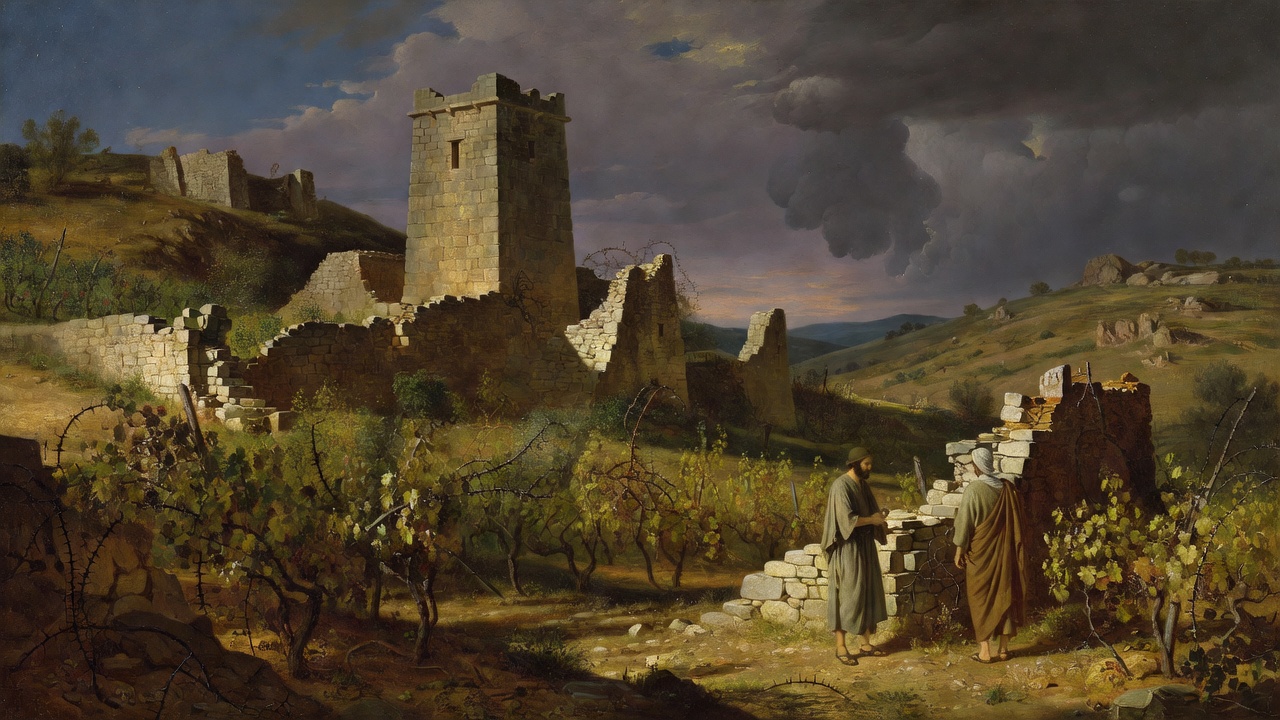
- O cântico de abertura em Isaías 5 descreve o trabalho minucioso da viticultura na antiga Judeia: limpar as pedras de encostas férteis, construir uma torre de vigilância de pedra, cavar um lagar na rocha e plantar videiras nobres protegidas por cerca e muro. O poema transforma-se em uma parábola jurídica na qual a vinha representa a casa de Israel e os homens de Judá, dos quais se esperava justiça em vez de derramamento de sangue.Fontes: o próprio texto bíblico
- O capítulo apresenta uma série de seis ais proféticos que condenam abusos sociais e morais específicos em Judá. Entre eles estão grandes proprietários que acumulavam terras juntando casa a casa e campo a campo, juízes que aceitavam subornos para absolver culpados negando justiça aos inocentes, e líderes que se entregavam a banquetes luxuosos enquanto desprezavam os mandamentos divinos.Fontes: o próprio texto bíblico
- O ministério profético de Isaías em Jerusalém dirigiu-se ao povo de Judá ao longo de um extenso período que começou em meados do século VIII a.C. O capítulo encerra advertindo que o Senhor daria um sinal a exércitos estrangeiros distantes e disciplinados, equipados com carruagens, arcos e cavalos velozes, para executar juízo sobre a terra.Fontes: Jerusalem · Prophecies of Isaiah · o próprio texto bíblico
Notas escritas com auxílio de IA a partir de fontes abertas (Theographic Bible Metadata, CC BY-SA 4.0; Easton’s Bible Dictionary, domínio público) e revisadas antes de publicar.
Lugares deste capítulo
Só aparecem lugares com identificação de alta confiança (90% ou mais segundo as fontes acadêmicas reunidas pelo OpenBible). Mapa da época: DARE (Digital Atlas of the Roman Empire), CC BY 4.0; mapa atual: © colaboradores do OpenStreetMap; lugares: OpenBible.info (CC BY 4.0).
Créditos e licença desta tradução
Awajún [Aguaruna]
Aguaruna: Awajún [Aguaruna] (Bible)
copyright © 2020 Wycliffe Bible Translators, Inc.
Language: Aguaruna
Translation by: Wycliffe Bible Translators
Contributor: Wycliffe Bible Translators, Inc.
Aguaruna
agr
Peru
Copyright Information
© 2008, Wycliffe Bible Translators, Inc. All rights reserved.
This translation text is made available to you under the
terms of the Creative Commons License: Attribution-Noncommercial-No Derivative Works.
( http://creativecommons.org/licenses/by-nc-nd/3.0/ )
In addition, you have permission to port the text to different file formats, as long as you
do not change any of the text or punctuation of the Bible.
You may share, copy, distribute, transmit, and extract portions
or quotations from this work, provided that you include the above copyright
information:
You must give Attribution to the work.
You do not sell this work for a profit.
You do not make any derivative works that change any of the actual words or punctuation of the Scriptures.
Permissions beyond the scope of this license may be
available if you contact
us with your request.
The New Testament
in Aguaruna
This translation is made available to you under the terms of the
Creative Commons Attribution-Noncommercial-No Derivatives license 4.0.
You may share and redistribute this Bible translation or extracts from it in any format, provided that:
You include the above copyright and source information.
You do not sell this work for a profit.
You do not change any of the words or punctuation of the Scriptures.
Pictures included with Scriptures and other documents on this site are licensed just for use with those Scriptures and documents.
For other uses, please contact the respective copyright owners.
2025-04-26
Fonte: http://ebible.org/agr/ · eBible.org