Isaías 5
Awajún [Aguaruna] · Toca un versículo para ver sus referencias cruzadas.
Uva ajakbau pachisa kantamamu
1Mina kumpaju daajin pachisan, nii uva ajakmamujiya nuna pachisan, kantamtain wi kantamatjai.
Mina kumpagdau nugka pegkeg
shiig tsapaunum uva ajakbau ajuyi.
2Nuna nugkan pukuja, kaya aidaun utsantuk,
uva ajake shiig pegkeg aidaun ajakui.
Dutika peegkeg apaka,
nunú aja ejapeen kumpinan jiika,
vino najanatnunashkam umikui.
Dutika umika uva yumimitun tsamakti tusa
eke tsamachu asamtai, dakak pujau.
Tujash nunú uva aidauk chujuinun tsamakui.
3Jerusalégnumia aidauwah,
Judá aents aidauwah,
nunú nunika dusha ¿yanawaita utugchatash,
midaukait, atsa uva ajakbauwa nudaukait?
4¿Uva chujuin ai tusan wi dutikmainush awak?
Wika yumimitun nejekti tusan wakekabiajai,
tujash ¿wagkag chujuinnash nejekiawa?
5Tuja midau uva ajakbauwa nunash,
wisha itugkatag tajaki nuna yamai ujaktajime.
Wika aunak ashí ijinatnume tusan
kuitamtsuk idaisattajai, tuja utsaantuawag,
najakag kupig ijinatnume tusan
peejamua nunashkam tegajattajai.
6Dutikan pachitsuk idaisattajai.
Tuja tuke nejen ati tusa,
kanawe pegkegchau aidau tsupija utsanka
pegkeg ematia nunash dutikachagtatui.
Tuja dupanash takagsachagtatui,
dutikamu asa dupa jagki aidaujai tsapaka
akijuatnai.
Tuja nuna uchupig pegkeg ematnunash
yuminak yutumtijashtatjai.
7Tuke Pujuu ashí senchigtin uvan wakejus ajakua duka
Israel aents Judá wegantujai aina nunuwai.
Tuke Pujuuk mina chichamjun umigtuktinme
tusa wakekauwai,
tujash ditak magkagtin wajasu ainawai.
Tuke Pujuuk shiig pegkeg dekaskenum takau atinme
tusa wakekauwai,
tujash ditak ima pegkegchaunak takaidaun
Tuke Pujuu wainui.
¿Sabías que…?
El cántico de la viña y los seis ayes
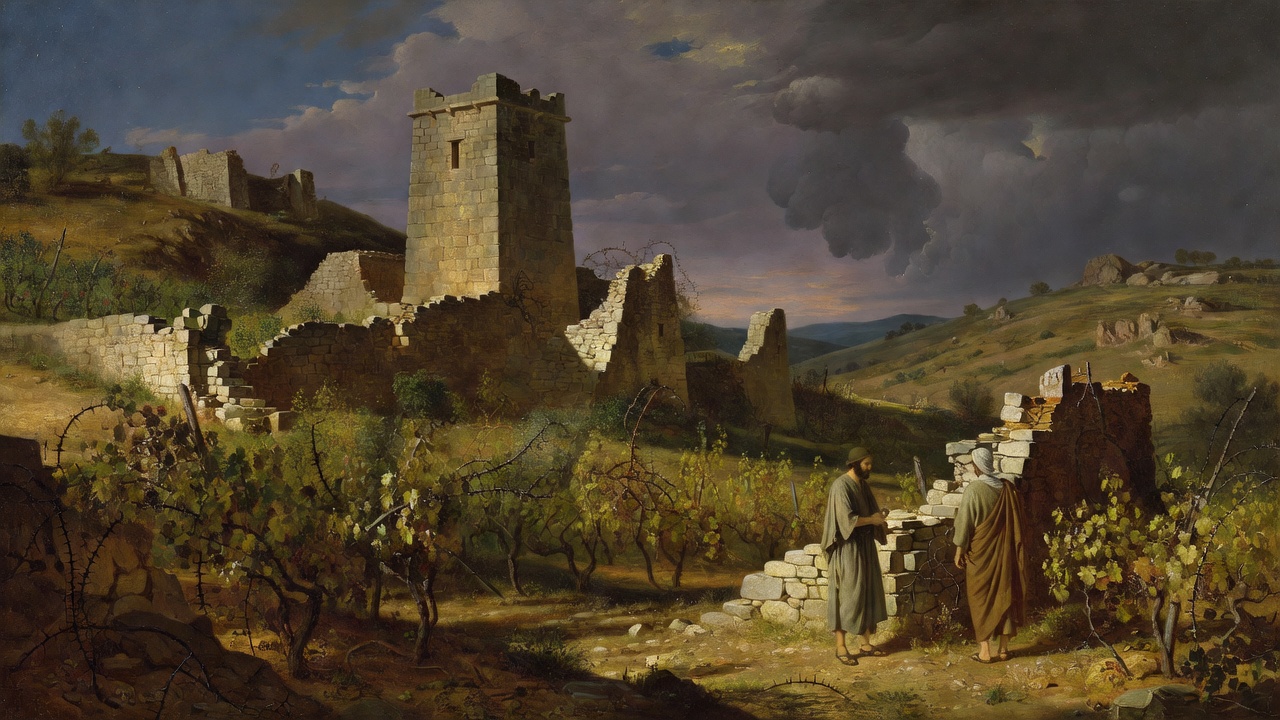
- El cántico que abre Isaías 5 describe el meticuloso trabajo de la viticultura en la antigua Judea: despedregar laderas fértiles, levantar una torre de vigilancia de piedra, excavar un lagar en la roca y plantar cepas escogidas protegidas por un vallado y un muro. El poema se convierte en una parábola judicial donde la viña representa a la casa de Israel y a los hombres de Judá, de quienes se esperaba justicia en lugar de derramamiento de sangre.Fuentes: el propio texto bíblico
- El capítulo presenta una serie de seis ayes proféticos que denuncian abusos sociales y morales específicos en Judá. Entre ellos destacan los terratenientes que acumulaban propiedades juntando casa a casa y campo a campo, los jueces que aceptaban sobornos para absolver a culpables privando de justicia al inocente, y los gobernantes entregados a banquetes mientras desoían la instrucción divina.Fuentes: el propio texto bíblico
- El ministerio profético de Isaías en Jerusalén se dirigió al pueblo de Judá durante un prolongado período que comenzó a mediados del siglo VIII a.C. El capítulo concluye advirtiendo que el Señor daría una señal a ejércitos extranjeros distantes y disciplinados, equipados con carros, arcos y veloces caballos, para ejecutar juicio sobre la tierra.Fuentes: Jerusalem · Prophecies of Isaiah · el propio texto bíblico
Notas escritas con ayuda de IA a partir de fuentes abiertas (Theographic Bible Metadata, CC BY-SA 4.0; Easton’s Bible Dictionary, dominio público) y revisadas antes de publicarse.
Lugares de este capítulo
Solo aparecen lugares identificados con alta confianza (90 % o más según las fuentes académicas reunidas por OpenBible). Mapa de la época: DARE (Digital Atlas of the Roman Empire), CC BY 4.0; mapa actual: © colaboradores de OpenStreetMap; lugares: OpenBible.info (CC BY 4.0).
Créditos y licencia de esta traducción
Awajún [Aguaruna]
Aguaruna: Awajún [Aguaruna] (Bible)
copyright © 2020 Wycliffe Bible Translators, Inc.
Language: Aguaruna
Translation by: Wycliffe Bible Translators
Contributor: Wycliffe Bible Translators, Inc.
Aguaruna
agr
Peru
Copyright Information
© 2008, Wycliffe Bible Translators, Inc. All rights reserved.
This translation text is made available to you under the
terms of the Creative Commons License: Attribution-Noncommercial-No Derivative Works.
( http://creativecommons.org/licenses/by-nc-nd/3.0/ )
In addition, you have permission to port the text to different file formats, as long as you
do not change any of the text or punctuation of the Bible.
You may share, copy, distribute, transmit, and extract portions
or quotations from this work, provided that you include the above copyright
information:
You must give Attribution to the work.
You do not sell this work for a profit.
You do not make any derivative works that change any of the actual words or punctuation of the Scriptures.
Permissions beyond the scope of this license may be
available if you contact
us with your request.
The New Testament
in Aguaruna
This translation is made available to you under the terms of the
Creative Commons Attribution-Noncommercial-No Derivatives license 4.0.
You may share and redistribute this Bible translation or extracts from it in any format, provided that:
You include the above copyright and source information.
You do not sell this work for a profit.
You do not change any of the words or punctuation of the Scriptures.
Pictures included with Scriptures and other documents on this site are licensed just for use with those Scriptures and documents.
For other uses, please contact the respective copyright owners.
2025-04-26
Fuente: http://ebible.org/agr/ · eBible.org