Isaiah 5
Awajún [Aguaruna] · Tap a verse to see its cross-references.
Uva ajakbau pachisa kantamamu
1Mina kumpaju daajin pachisan, nii uva ajakmamujiya nuna pachisan, kantamtain wi kantamatjai.
Mina kumpagdau nugka pegkeg
shiig tsapaunum uva ajakbau ajuyi.
2Nuna nugkan pukuja, kaya aidaun utsantuk,
uva ajake shiig pegkeg aidaun ajakui.
Dutika peegkeg apaka,
nunú aja ejapeen kumpinan jiika,
vino najanatnunashkam umikui.
Dutika umika uva yumimitun tsamakti tusa
eke tsamachu asamtai, dakak pujau.
Tujash nunú uva aidauk chujuinun tsamakui.
3Jerusalégnumia aidauwah,
Judá aents aidauwah,
nunú nunika dusha ¿yanawaita utugchatash,
midaukait, atsa uva ajakbauwa nudaukait?
4¿Uva chujuin ai tusan wi dutikmainush awak?
Wika yumimitun nejekti tusan wakekabiajai,
tujash ¿wagkag chujuinnash nejekiawa?
5Tuja midau uva ajakbauwa nunash,
wisha itugkatag tajaki nuna yamai ujaktajime.
Wika aunak ashí ijinatnume tusan
kuitamtsuk idaisattajai, tuja utsaantuawag,
najakag kupig ijinatnume tusan
peejamua nunashkam tegajattajai.
6Dutikan pachitsuk idaisattajai.
Tuja tuke nejen ati tusa,
kanawe pegkegchau aidau tsupija utsanka
pegkeg ematia nunash dutikachagtatui.
Tuja dupanash takagsachagtatui,
dutikamu asa dupa jagki aidaujai tsapaka
akijuatnai.
Tuja nuna uchupig pegkeg ematnunash
yuminak yutumtijashtatjai.
7Tuke Pujuu ashí senchigtin uvan wakejus ajakua duka
Israel aents Judá wegantujai aina nunuwai.
Tuke Pujuuk mina chichamjun umigtuktinme
tusa wakekauwai,
tujash ditak magkagtin wajasu ainawai.
Tuke Pujuuk shiig pegkeg dekaskenum takau atinme
tusa wakekauwai,
tujash ditak ima pegkegchaunak takaidaun
Tuke Pujuu wainui.
Did you know?
The Song of the Vineyard and the Six Woes
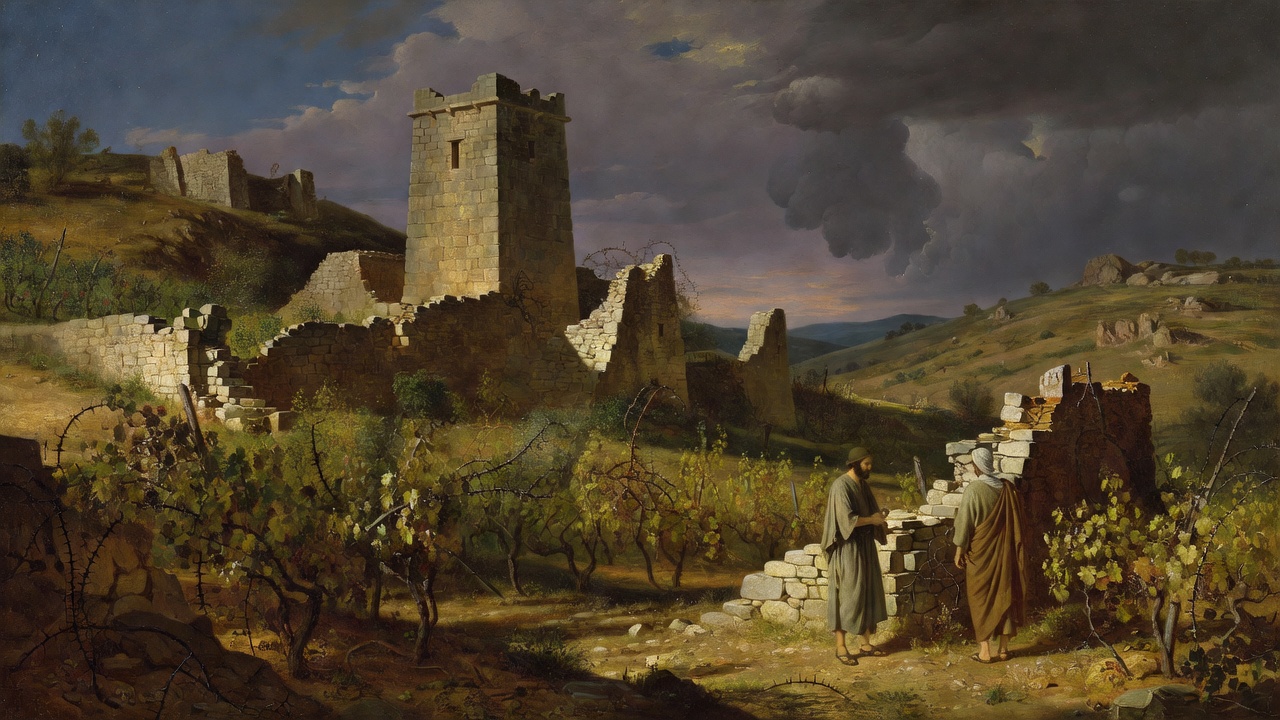
- The opening song in Isaiah 5 describes the elaborate labor of ancient Judean viticulture: clearing rocky hillsides of stones, building a protective stone watchtower, digging out a winepress in the bedrock, and planting prime vines surrounded by a protective hedge and wall. The poem turns into a legal parable where the vineyard represents the house of Israel and the people of Judah, from whom justice was expected instead of bloodshed.Sources: the Bible text itself
- The chapter delivers a series of six prophetic laments or woes, condemning specific social and moral abuses in Judah. These include wealthy landowners consolidating real estate by adding house to house and field to field, judges taking bribes to acquit the guilty while denying justice to the innocent, and leaders indulging in lavish feasting while ignoring divine instruction.Sources: the Bible text itself
- Isaiah's prophetic ministry in Jerusalem addressed the people of Judah over an extended period beginning in the mid-eighth century BC. The chapter concludes with a warning that the Lord would signal distant, disciplined foreign armies equipped with chariots, bows, and swift horses to execute judgment on the land.Sources: Jerusalem · Prophecies of Isaiah · the Bible text itself
Notes written with AI assistance from open sources (Theographic Bible Metadata, CC BY-SA 4.0; Easton’s Bible Dictionary, public domain) and reviewed before publishing.
Places in this chapter
Only places identified with high confidence are shown (90% or more according to the scholarly sources compiled by OpenBible). Period map: DARE (Digital Atlas of the Roman Empire), CC BY 4.0; modern map: © OpenStreetMap contributors; places: OpenBible.info (CC BY 4.0).
Credits and license for this translation
Awajún [Aguaruna]
Aguaruna: Awajún [Aguaruna] (Bible)
copyright © 2020 Wycliffe Bible Translators, Inc.
Language: Aguaruna
Translation by: Wycliffe Bible Translators
Contributor: Wycliffe Bible Translators, Inc.
Aguaruna
agr
Peru
Copyright Information
© 2008, Wycliffe Bible Translators, Inc. All rights reserved.
This translation text is made available to you under the
terms of the Creative Commons License: Attribution-Noncommercial-No Derivative Works.
( http://creativecommons.org/licenses/by-nc-nd/3.0/ )
In addition, you have permission to port the text to different file formats, as long as you
do not change any of the text or punctuation of the Bible.
You may share, copy, distribute, transmit, and extract portions
or quotations from this work, provided that you include the above copyright
information:
You must give Attribution to the work.
You do not sell this work for a profit.
You do not make any derivative works that change any of the actual words or punctuation of the Scriptures.
Permissions beyond the scope of this license may be
available if you contact
us with your request.
The New Testament
in Aguaruna
This translation is made available to you under the terms of the
Creative Commons Attribution-Noncommercial-No Derivatives license 4.0.
You may share and redistribute this Bible translation or extracts from it in any format, provided that:
You include the above copyright and source information.
You do not sell this work for a profit.
You do not change any of the words or punctuation of the Scriptures.
Pictures included with Scriptures and other documents on this site are licensed just for use with those Scriptures and documents.
For other uses, please contact the respective copyright owners.
2025-04-26
Source: http://ebible.org/agr/ · eBible.org