Génesis 3
Hset Hadròeh · Toca un versículo para ver sus referencias cruzadas.
Cro ta yiniq lui …
1Jò aih, dìq dŏng ka ƀài ngè rìh tagùng go Jêhowa Boc plình khoe broq loh, i bìh aih la adrech ma yeo tai manoh. Bìh doe ka mangai cadrì: Ajoq! Boc plình i doe chôp ùh jah acaq ƀài plì ta wuàn ùh xài? 2Mangai cadrì padreo bàu: Nhèn jah kaq plì ta wuàn, 3mahaq Boc plình i doe “Chôp ùh khòh kaq plì da long ma hon taqne wuàn, èh hadai ùh dùh poh dèh, èh chôp loq cachìt.”
4Bìh doe ka mangai cadrì “Chôp ma i cachìt taleq; 5mahaq Boc plình loq waq toq hì leq chôp hi kaq plì long qmat, mat chôp jah tapèch, chôp jah tìah ka Boc plình, loq ka trong lem xam trong dù.”
6Jò mangai cadrì hnoq plì da long aih tìah gleq jìang kaq, lem ka mat hnoq, èh khòh waq, majah qmang aih loq jah kan khun rabiaq haq hi gich kaq. Haq hadai am deh ka ŏng yòng ten aih. Ŏng hadai kaq. 7Khoe aih, mat wa haq dìq hi tapèch, wa loq ka rađeh rahòng, aih wa hi yŏc hla pŏc broq capen hu cabàn rađeh. 8trùh jò trŏc khoe hangèp yàp, tàng bàu Jêhowa Boc plình lam pagat ta wuàn, Ađam xam mai haq amot taqne bôt, đòeq hu cadoc rađeh khoe ka Boc plình. 9Mahaq Boc plình creo bòch Ađam: “Ìh oe taleq?” 10Ađam doe: Au i tàng bàu ìh oe ta wuàn, au loh ka yùq crè, majah qmang aih au rahòng dài au majah amot. 11Boc Plình bòch: “Cabô patô ka ìh loq đeh rahòng? Ìh i kaq plì au ma khoe tanap ùh khòh kaq aih loq ùh.” 12Mangai calô padreo bàu: Mangai cadrì ìh ma đòeq haq oe tacô ti au khoe am au plì long aih, èh au khoe kaq. 13Jêhowa Boc Plình bòch mangai cadrì: Ìh khoe broq cleq kô ìq? Mangai cadrì tèu: Bìh padô au, au khoe kaq.
14Jêhowa Boc Plình doe ka bìh:
“Gè khoe broq yiniq qmang kô,
Taqne ƀài ngè ma ban tahnim,
ƀài ngè rìh tagùng, gè ep pòq wê kan hamaiq,
gè ep moq deh xi cliac rai kaq blo taneh lùch ka qnhòng.
15Au broq ka gè xam mangai cadrì,
xinoe gè xam xinoe mangai cadrì tagit ka dabau.
haq jôiq da gè cadôh gàu, gè kap da haq lùnh jènh.”
16Haq doe ka mangai cadrì:
“Au tam kan xa ep jò ìh hadràp; ìh ep chìuq jìq jò hauang;
kan enh da ìh tangèa dŏng dèh ta ŏng, mahaq ŏng ma pagàu ka ìh.
17Haq doe hòm ka Ađam: Pàng ìh khoe tiaq bàu dèh mai đòeq kaq plì au ma khoe tanap ùh khòh kaq,
“kô èh taneh ep pòq kan hamaiq taiq ìh;
dìq ka qnhòng ìh ep xalep, taneh men loh dahwèq hu acaq.
18taneh hon yila xam tùn yila, ìh kô èh chaq kaq cachiq taruàng;
19Ìh ep abroq loh pa-ùh ngòng men jah acaq,
trùh hì leq ìh hlài ta taneh,
aih la nòe ma loh ìh,
majah qmang aih ìh qmat blo taneh, ìh hlài deh ta blo taneh.”
20Ađam yiniq deh ka mai Êwa; majah qmang aih haq aih miq da kon mangai.
21Jêhowa Boc Plình yŏc akia broq eo ka Ađam xam mai haq, rai caxùnh am ka wa.
22Jêhowa Boc Plình doe: “Kon mangai manòeq kô khoe daq adàng ka bèn, canau loq trong lem trong dù, manòeq kô ep ngan oq, yùq kon mangai loq dèch tì git kaq plì long kan rìh èh jah rìh mòeq đòe qmòh.” 23Jêhowa Boc Plình hnan qnoh kon mangai loh khoe ka wuàn Êđen đòeq hu abèq taneh, aih nòe ma khoe loh kon mangai, 24qmang aih, haq hnan qnoh kon mangai loh khoe ka wuàn, khoe èh enh pah mahì loh da wuàn Êđen haq đòeq ƀài chêrubim xam pla chang yôh chah ma tanhìa, đòeq hu tàt trong lam trùh ta long kan rìh.
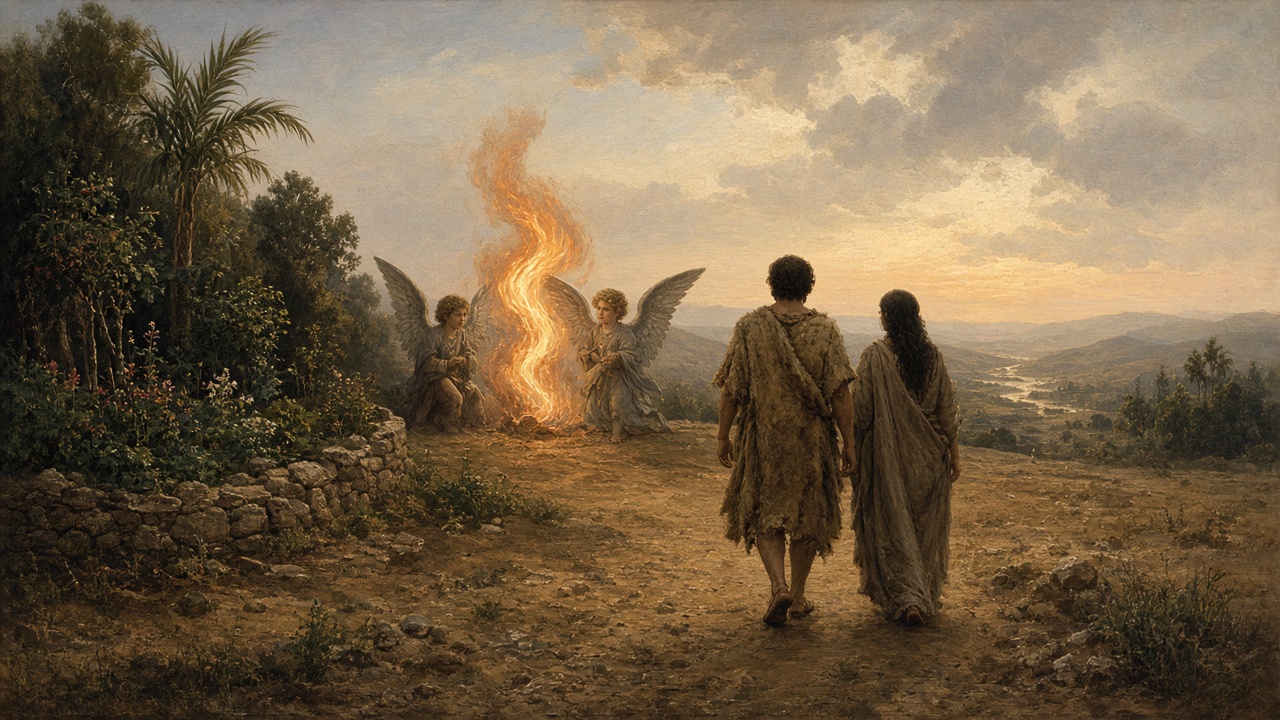
¿Sabías que…?
La caída y el exilio del Edén
- Una referencia tradicional explica Adán como “rojo”, palabra babilónica usada como nombre genérico del hombre, con el mismo sentido en hebreo y en asirio, y relaciona el nombre con el hecho de que fue formado del polvo de la tierra. En este capítulo ese origen reaparece en el juicio: trabajará por su alimento hasta volver al suelo, porque es polvo y al polvo volverá, y es enviado a labrar la tierra de la que fue tomado.Fuentes: Adam · el propio texto bíblico
- En este capítulo Adán da a su mujer el nombre Eva, que significa “vida” o “viviente”, porque ella sería la madre de todos los vivientes.Fuentes: Eve · el propio texto bíblico
- La ubicación del jardín de Edén, del que el hombre es expulsado en este capítulo, se ha discutido mucho: se ha situado en Armenia, al oeste del mar Caspio, en Media, cerca de Damasco, en Palestina, en el sur de Arabia y en Babilonia. Una nota geográfica tradicional lo busca a lo largo del Tigris y el Éufrates, en la tierra de Sinar, o Babilonia.Fuentes: Eden · el propio texto bíblico
Notas escritas con ayuda de IA a partir de fuentes abiertas (Theographic Bible Metadata, CC BY-SA 4.0; Easton’s Bible Dictionary, dominio público) y revisadas antes de publicarse.
Créditos y licencia de esta traducción
Hset Hadròeh
The New Testament in the Hre language of Vietnam, translated by Baq Thi
Copyright © 2024 Baq Thi
Language: (Hre)
This translation is made available to you under the terms of the
Creative Commons Attribution Share-Alike license 4.0.
You have permission to share and redistribute this Bible translation in any format and to make reasonable revisions and adaptations of this translation, provided that:
You include the above copyright and source information.
If you make any changes to the text, you must indicate that you did so in a way that makes it clear that the original licensor is not necessarily endorsing your changes.
If you redistribute this text, you must distribute your contributions under the same license as the original.
Pictures included with Scriptures and other documents on this site are licensed just for use with those Scriptures and documents.
For other uses, please contact the respective copyright owners.
Note that in addition to the rules above, revising and adapting God's Word involves a great responsibility to be true to God's Word. See Revelation 22:18-19.
2026-07-18
Fuente: http://ebible.org/hrebt/ · eBible.org