Génesis 2
Hset Hadròeh · Toca un versículo para ver sus referencias cruzadas.
Ađam xam Êwa…
1Qmang aih trŏc taneh xam rìm yiniq khoe jah broq gêh. 2Hì tapèh Boc plình broq gêh ƀài yiniq đeh khoe broq, èh hì tapèh, haq padài khoe ka ƀài bìac haq ma broq. 3Khoe aih Boc plình am xôq ramot ka hì tapèh rai broq hì aih wìa hì hadròeh; majah qmang aih, haq padài ka ƀài bìac khoe broq loh majah qmang aih dìq khoe jah gêh.
4Aih xèm goe da trŏc xam taneh jò khoe jah gêh, oe ta hì Jêhowa Boc plình broq loh trŏc xam taneh.
5Jò aih qnhòq i mòeq xèm long qyoh leq plôh tagùng, hadai qnhòq i mòeq goe nhat leq hon taruàng, majah qmang aih Jêhowa Boc plình qnhòq i am mè loh ta taneh, èh hadai qnhòq i cabô abèq ta taneh. 6Mahaq i hòe diac plôh tŏc enh taneh pùc jàp jìa crŏng taneh. 7Jêhowa Boc plình yŏc blo taneh mot loh chac mangai, hlui mùt hi hèm ta mùh; aih kon mangai hi wìa adrech rìh i mahua yiang.
Wuàn Êđen…
8Khoe aih, Jêhowa Boc plình broq mòeq toq wuàn ta Êđen, tangèa ƀè mat mahì loh, rai đòeq mangai haq maneo broq loh oe ta aih. 9Jêhôwa Boc plình broq ka taneh hon loh ƀài adrech long lem ka mat hnoq, plì aih jìang ka kaq; taqne wuàng aih i long kan rìh xam long loq trong lem trong dù.
10Mòeq cròng diac loh enh Êđen đòeq pùc ta wuàn; khoe èh enh aih haq talah broq pôn halah diac. 11Yiniq halah diac ma baxèm aih Pisôn; halah aih hìu dudan gùng gùng Hawila, aih nòe i wang. 12Wang gùng aih lem raya; ta aih hadai i gahnàu xam ngŏc nget. 13Yiniq halah diac ma baiq aih Gihôn, hìu dudan gùng Cuso. 14Hiniq halah diac ma piq aih Hiđêke, hìu ta ƀè mat mahì loh da gùng Asiri, halah diac ma pôn aih la Ôphorat.
15Jêhowa Boc plình aràng mangai mùt ta wuàn Êđen hu abèq rai wèq wuàn. 16“Jêhôwa Boc plình doe: Ìh jah acaq dìq dŏng ƀài plì long ta wuàn; 17mahaq long loq trong lem trong dù ìh ùh jah kaq; majah qmang aih jò ìh kaq, ìh ep cachìt”.
Tanèp ŏng mai.
18Jêhowa Boc Plình doe: “Kon mangai oe moe ngai ùh lem. Kô èh Au broq mòeq ngai đòeq wiang, dôq ma hatroq qmòe ka haq.”
19Jêhowa Boc plình yŏc taneh broq loh ƀài ngè rìh tagùng, ƀài chìm ta trŏc khoe aih ajèn aràng enh ngeà Ađam đòeq ngan haq yiniq am ka ƀài aih qmang leq cadèh; waq toq yiniq leq Ađam yiniq am aih hi wìa yiniq da ma aih. 20Ađam yiniq am ka ƀài ngè rìh aban ta hnim, ka ƀài chìm ta trŏc xam ƀài ngè rìh tagùng go; mahaq da Ađam aih chaq ùh jah mòeq cabô ma hatìah ka rađeh đòeq hu wiang ti haq. 21Boc plình broq ka Ađam kùi ùh hmàng, jò haq kùi pi hmàng Boc plình hi yŏc mòeq hadrang yimìa, khoe èh yŏc xech hi baxìa hlài. 22Jêhowa Boc Plình yŏc caxènh yimìa ma khoe yŏc enh Ađam broq loh mòeq ngai cadrì, aràng trùh ajang Ađam. 23Ađam doe:
Mangai kô caxènh loh enh caxènh au,
xech loh enh xech au.
Mangai kô jah creo ka haq mangai cadrì,
majah qmang aih haq loh enh mangai calô.
24Qmang aih, dài mangai calô majah ep talah dèh ka miq baq đòeq hu hatop dèh ti mai, aih èh wa hi wìa mòeq xech.
25Ađam xam mai dìq baiq rahòng, mahaq ùh camaih.
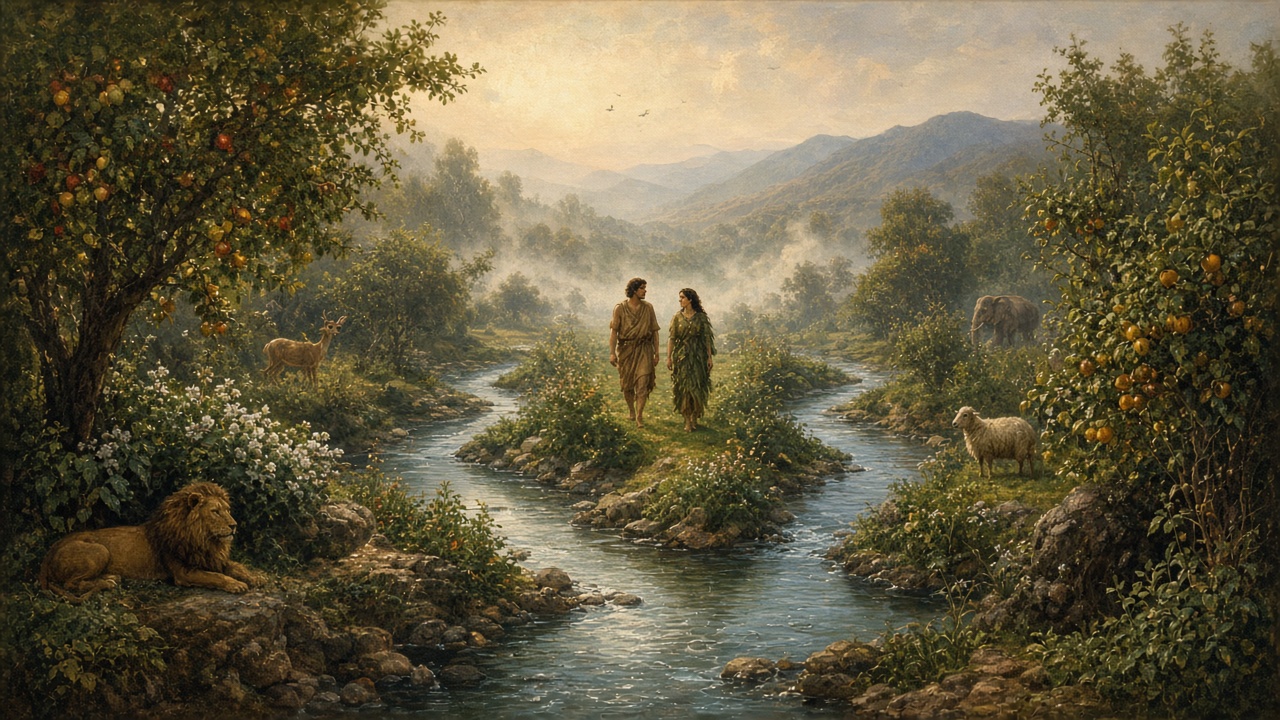
¿Sabías que…?
Adán, el Edén y los cuatro ríos
- Adán, que significa “rojo”, es una palabra babilónica y el nombre común del ser humano, con el mismo sentido en hebreo y en asirio. Se le dio al primer hombre. Fue formado del polvo de la tierra —de ahí el nombre— y Dios sopló en sus narices el aliento de vida.Fuentes: Adam · el propio texto bíblico
- Un río salía del Edén y se dividía en cuatro brazos: el Pisón, el Gihón, el Hidekel y el Éufrates. Algunos identifican el Pisón con el Fasis o el Halis; otros, con el Indo, el Ganges u otros ríos más. El Gihón ha sido identificado con el Nilo, y otros lo consideran el Oxo, el Araxes o el Ganges. El Hidekel es el Tigris, llamado por los acadios el río de Idikla; Gesenius entendió el nombre como “el Tigris rápido”.Fuentes: el propio texto bíblico · Pison · Gihon · Hiddekel
- El sitio del Edén, el jardín en el que vivieron los primeros padres, se ha discutido más que casi cualquier otra cuestión geográfica. Se ha situado en Armenia, en la región al oeste del mar Caspio, en Media, cerca de Damasco, en Palestina, en el sur de Arabia y en Babilonia. El Easton's Bible Dictionary (1897) lo busca a lo largo del Tigris y del Éufrates del Asia occidental, en la tierra de Sinar, o Babilonia.Fuentes: Eden
Notas escritas con ayuda de IA a partir de fuentes abiertas (Theographic Bible Metadata, CC BY-SA 4.0; Easton’s Bible Dictionary, dominio público) y revisadas antes de publicarse.
Lugares de este capítulo
- Assyria · 36.359, 43.153 · versículo 14
- Euphrates · Hoy: Euphrates River · 31.004, 47.442 · versículo 14
- Tigris · Hoy: Tigris River · 31.004, 47.442 · versículo 14
Solo aparecen lugares identificados con alta confianza (90 % o más según las fuentes académicas reunidas por OpenBible). Mapa de la época: DARE (Digital Atlas of the Roman Empire), CC BY 4.0; mapa actual: © colaboradores de OpenStreetMap; lugares: OpenBible.info (CC BY 4.0).
Créditos y licencia de esta traducción
Hset Hadròeh
The New Testament in the Hre language of Vietnam, translated by Baq Thi
Copyright © 2024 Baq Thi
Language: (Hre)
This translation is made available to you under the terms of the
Creative Commons Attribution Share-Alike license 4.0.
You have permission to share and redistribute this Bible translation in any format and to make reasonable revisions and adaptations of this translation, provided that:
You include the above copyright and source information.
If you make any changes to the text, you must indicate that you did so in a way that makes it clear that the original licensor is not necessarily endorsing your changes.
If you redistribute this text, you must distribute your contributions under the same license as the original.
Pictures included with Scriptures and other documents on this site are licensed just for use with those Scriptures and documents.
For other uses, please contact the respective copyright owners.
Note that in addition to the rules above, revising and adapting God's Word involves a great responsibility to be true to God's Word. See Revelation 22:18-19.
2026-07-18
Fuente: http://ebible.org/hrebt/ · eBible.org