Genesis 3
Hset Hadròeh · Tap a verse to see its cross-references.
Cro ta yiniq lui …
1Jò aih, dìq dŏng ka ƀài ngè rìh tagùng go Jêhowa Boc plình khoe broq loh, i bìh aih la adrech ma yeo tai manoh. Bìh doe ka mangai cadrì: Ajoq! Boc plình i doe chôp ùh jah acaq ƀài plì ta wuàn ùh xài? 2Mangai cadrì padreo bàu: Nhèn jah kaq plì ta wuàn, 3mahaq Boc plình i doe “Chôp ùh khòh kaq plì da long ma hon taqne wuàn, èh hadai ùh dùh poh dèh, èh chôp loq cachìt.”
4Bìh doe ka mangai cadrì “Chôp ma i cachìt taleq; 5mahaq Boc plình loq waq toq hì leq chôp hi kaq plì long qmat, mat chôp jah tapèch, chôp jah tìah ka Boc plình, loq ka trong lem xam trong dù.”
6Jò mangai cadrì hnoq plì da long aih tìah gleq jìang kaq, lem ka mat hnoq, èh khòh waq, majah qmang aih loq jah kan khun rabiaq haq hi gich kaq. Haq hadai am deh ka ŏng yòng ten aih. Ŏng hadai kaq. 7Khoe aih, mat wa haq dìq hi tapèch, wa loq ka rađeh rahòng, aih wa hi yŏc hla pŏc broq capen hu cabàn rađeh. 8trùh jò trŏc khoe hangèp yàp, tàng bàu Jêhowa Boc plình lam pagat ta wuàn, Ađam xam mai haq amot taqne bôt, đòeq hu cadoc rađeh khoe ka Boc plình. 9Mahaq Boc plình creo bòch Ađam: “Ìh oe taleq?” 10Ađam doe: Au i tàng bàu ìh oe ta wuàn, au loh ka yùq crè, majah qmang aih au rahòng dài au majah amot. 11Boc Plình bòch: “Cabô patô ka ìh loq đeh rahòng? Ìh i kaq plì au ma khoe tanap ùh khòh kaq aih loq ùh.” 12Mangai calô padreo bàu: Mangai cadrì ìh ma đòeq haq oe tacô ti au khoe am au plì long aih, èh au khoe kaq. 13Jêhowa Boc Plình bòch mangai cadrì: Ìh khoe broq cleq kô ìq? Mangai cadrì tèu: Bìh padô au, au khoe kaq.
14Jêhowa Boc Plình doe ka bìh:
“Gè khoe broq yiniq qmang kô,
Taqne ƀài ngè ma ban tahnim,
ƀài ngè rìh tagùng, gè ep pòq wê kan hamaiq,
gè ep moq deh xi cliac rai kaq blo taneh lùch ka qnhòng.
15Au broq ka gè xam mangai cadrì,
xinoe gè xam xinoe mangai cadrì tagit ka dabau.
haq jôiq da gè cadôh gàu, gè kap da haq lùnh jènh.”
16Haq doe ka mangai cadrì:
“Au tam kan xa ep jò ìh hadràp; ìh ep chìuq jìq jò hauang;
kan enh da ìh tangèa dŏng dèh ta ŏng, mahaq ŏng ma pagàu ka ìh.
17Haq doe hòm ka Ađam: Pàng ìh khoe tiaq bàu dèh mai đòeq kaq plì au ma khoe tanap ùh khòh kaq,
“kô èh taneh ep pòq kan hamaiq taiq ìh;
dìq ka qnhòng ìh ep xalep, taneh men loh dahwèq hu acaq.
18taneh hon yila xam tùn yila, ìh kô èh chaq kaq cachiq taruàng;
19Ìh ep abroq loh pa-ùh ngòng men jah acaq,
trùh hì leq ìh hlài ta taneh,
aih la nòe ma loh ìh,
majah qmang aih ìh qmat blo taneh, ìh hlài deh ta blo taneh.”
20Ađam yiniq deh ka mai Êwa; majah qmang aih haq aih miq da kon mangai.
21Jêhowa Boc Plình yŏc akia broq eo ka Ađam xam mai haq, rai caxùnh am ka wa.
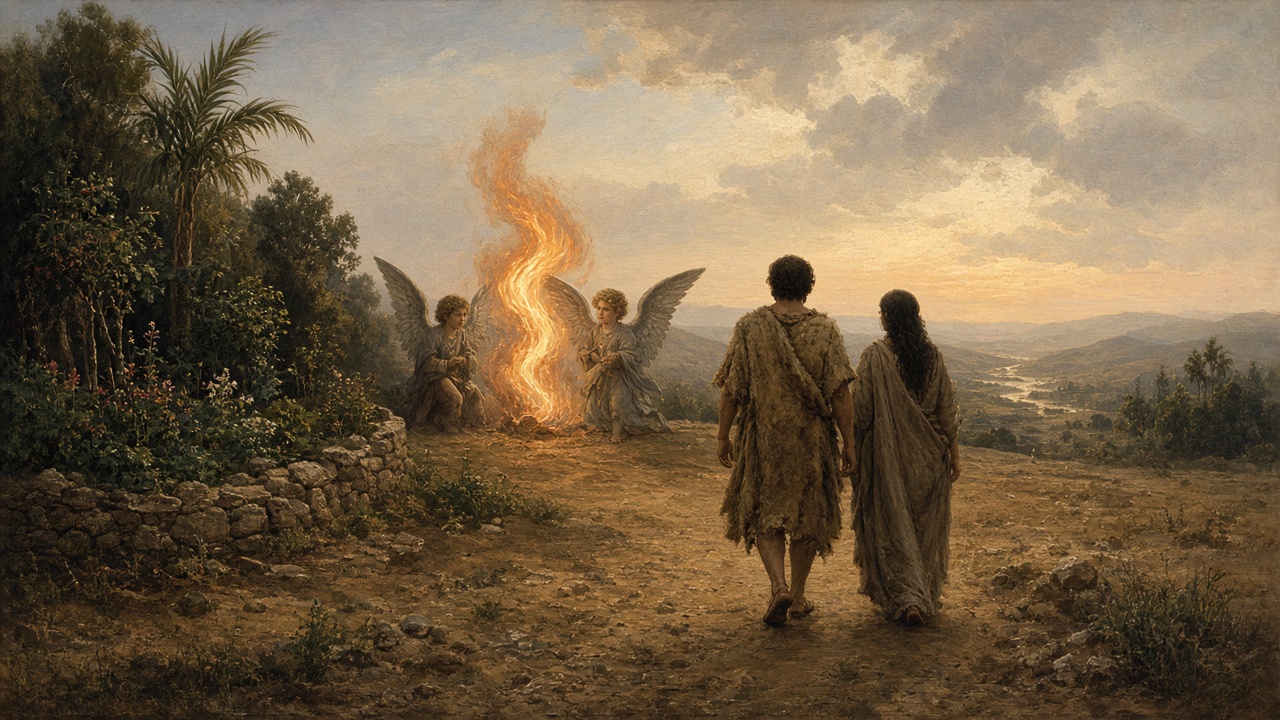
22Jêhowa Boc Plình doe: “Kon mangai manòeq kô khoe daq adàng ka bèn, canau loq trong lem trong dù, manòeq kô ep ngan oq, yùq kon mangai loq dèch tì git kaq plì long kan rìh èh jah rìh mòeq đòe qmòh.” 23Jêhowa Boc Plình hnan qnoh kon mangai loh khoe ka wuàn Êđen đòeq hu abèq taneh, aih nòe ma khoe loh kon mangai, 24qmang aih, haq hnan qnoh kon mangai loh khoe ka wuàn, khoe èh enh pah mahì loh da wuàn Êđen haq đòeq ƀài chêrubim xam pla chang yôh chah ma tanhìa, đòeq hu tàt trong lam trùh ta long kan rìh.
Did you know?
The Fall and Exile from Eden
- A traditional reference explains Adam as “red,” a Babylonian word used as the generic name for man, with the same meaning in Hebrew and Assyrian, and links the name to his being formed from the dust of the earth. In this chapter that origin returns in the judgment: he will toil for his food until he returns to the ground, for he is dust and to dust he will return, and he is sent to work the soil from which he was taken.Sources: Adam · the Bible text itself
- In this chapter Adam gives his wife the name Eve, meaning “life” or “living,” because she would be the mother of all the living.Sources: Eve · the Bible text itself
- The site of the garden of Eden, from which the man is driven in this chapter, has been much discussed and placed in Armenia, west of the Caspian Sea, in Media, near Damascus, in Palestine, in southern Arabia, and in Babylonia. A traditional geographical note looks for it along the Tigris and the Euphrates, in the land of Shinar, or Babylonia.Sources: Eden · the Bible text itself
Notes written with AI assistance from open sources (Theographic Bible Metadata, CC BY-SA 4.0; Easton’s Bible Dictionary, public domain) and reviewed before publishing.
Credits and license for this translation
Hset Hadròeh
The New Testament in the Hre language of Vietnam, translated by Baq Thi
Copyright © 2024 Baq Thi
Language: (Hre)
This translation is made available to you under the terms of the
Creative Commons Attribution Share-Alike license 4.0.
You have permission to share and redistribute this Bible translation in any format and to make reasonable revisions and adaptations of this translation, provided that:
You include the above copyright and source information.
If you make any changes to the text, you must indicate that you did so in a way that makes it clear that the original licensor is not necessarily endorsing your changes.
If you redistribute this text, you must distribute your contributions under the same license as the original.
Pictures included with Scriptures and other documents on this site are licensed just for use with those Scriptures and documents.
For other uses, please contact the respective copyright owners.
Note that in addition to the rules above, revising and adapting God's Word involves a great responsibility to be true to God's Word. See Revelation 22:18-19.
2026-07-18
Source: http://ebible.org/hrebt/ · eBible.org