Levítico 24
Bib Sen An · Toca un versículo para ver sus referencias cruzadas.
1SENYÈ a te pale avèk Moïse. Li te di: 2Kòmande fis Israël yo pou yo pote bay ou lwil klè ki sòti nan oliv ki te bat yo, pou limyè, pou fè lanp lan briye san rete. 3Deyò vwal temwayaj tant asanble a, Aaron va kenbe li an lòd soti nan aswè rive jis nan maten devan SENYÈ a pou tout tan. Sa va yon règleman pandan tout jenerasyon nou yo. 4Li va kenbe lanp an lòd sou chandelye an lò devan SENYÈ a pou tout tan.
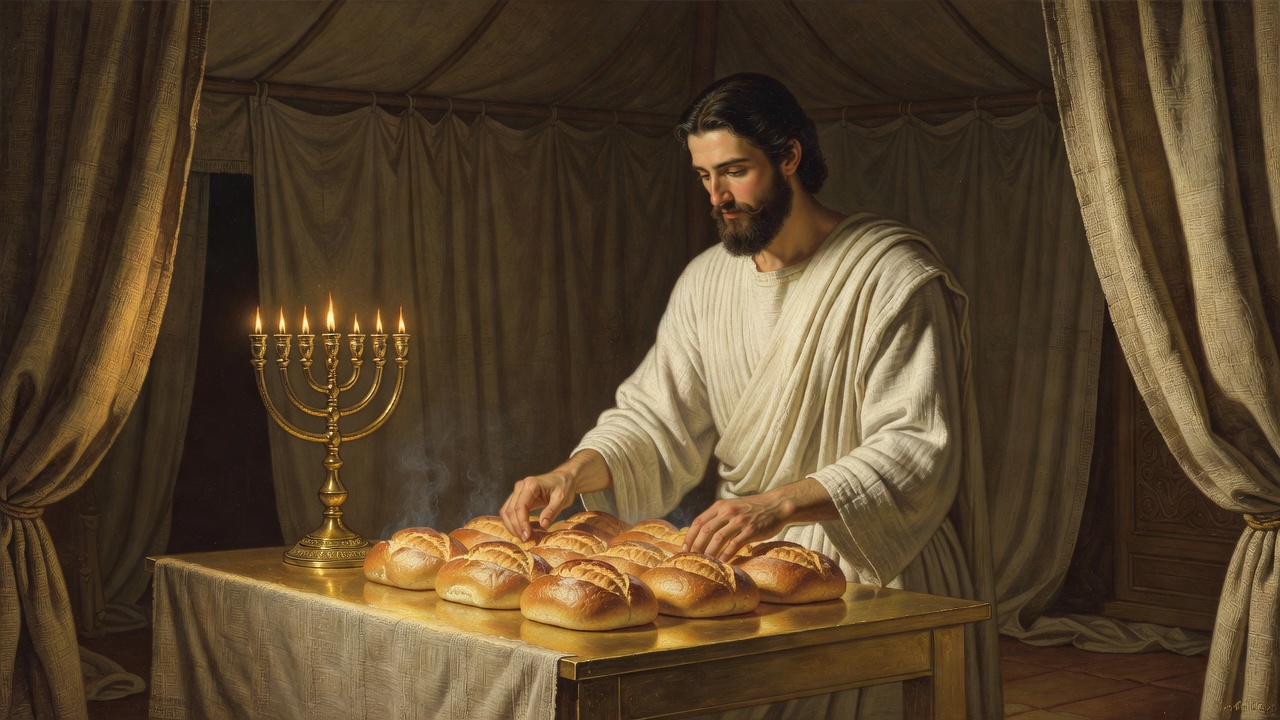
5Konsa, nou va pran farin fen an e fè douz gato avèk li: de dizyèm pati yon efa va sèvi nan chak gato. 6Nou va mete yo nan de ranje, sis nan chak ranje, sou tab lò san tach ki devan SENYÈ a. 7Nou va mete lansan san tach nan chak ranje pou li kapab yon pati komemoratif pou pen an, menm yon ofrann pa dife bay SENYÈ a. 8Chak jou Saba, li va mete li an lòd devan SENYÈ a pou tout tan. Se yon akò k ap dire pou tout tan pou fis Israël yo. 9Li va pou Aaron avèk fis li yo. Yo va manje li nan yon lye ki sen; paske li sen pase tout ofrann ki soti nan ofrann bay SENYÈ yo, ofrann pa dife, pati pa li pou tout tan.
10Alò, fis a yon famn Izrayelit avèk yon papa Ejipsyen, te sòti pami fis Israël yo. Konsa, fis a fanm Izrayelit la ak yon mesye peyi Israël te lite youn avèk lòt nan kan an. 11Fis a fanm Izrayelit la te blasfeme Non Bondye a e li te bay madichon. Pou sa, yo te mennen li vè Moïse. Alò manman li te rele Schelomith, fi a Dibri nan tribi Dan nan. 12Yo te arete li pou lòd SENYÈ a ta kapab vin klè a yo menm.
13Alò SENYÈ a te pale ak Moïse. Li te di: 14“Mennen sila ki te bay madichon an deyò kan an, kite tout moun ki te tande li yo vin poze men sou tèt li; epi kite tout asanble a lapide li avèk kout wòch. 15Ou va pale avèk fis Israël yo e di: ‘Si yon moun modi Bondye li a, alò, li va pote peche li. 16Anplis, sila ki blasfeme non a SENYÈ a va vrèman vin mete a lanmò. Tout asanble a va vrèman lapide li. Etranje oswa natif, lè li blasfeme Non Bondye, li va vin mete a lanmò.
17“‘Si yon nonm pran lavi a yon Kretyen vivan, li va vrèman vin mete a lanmò. 18Sila ki pran lavi a yon bèt va fè l bon, lavi pou lavi. 19Si yon nonm blese vwazen li, menm sa ke li te fè a, va fèt a li menm: 20zo kase pou zo kase, zye pou zye, dan pou dan. Menm jan ke li te blese yon moun, se konsa ke li va fèt sou li menm. 21Konsa, sila ki touye yon bèt va fè li bon, men sila ki touye yon moun va vin mete a lanmò. 22Va gen yon sèl règleman pou nou. Li va pou etranje kòm pou moun peyi a, paske Mwen se SENYÈ a, Bondye nou an.’”
23Konsa, Moïse te pale a fis Israël yo. Yo te mennen sila ki te modi a deyò kan an, e yo te lapide li avèk kout wòch. Konsa fis Israël yo te fè, jis jan ke SENYÈ a te kòmande Moïse la.
¿Sabías que…?
Las Lámparas del Tabernáculo, el Pan y la Igualdad ante la Ley
- A Aarón se le ordenó cuidar del candelabro de oro puro fuera del velo del Testimonio desde la tarde hasta la mañana, usando aceite puro de olivas prensadas traído por los israelitas. Junto al candelabro había una mesa de oro puro con doce panes dispuestos en dos hileras con incienso puro, renovados cada día de reposo y consumidos exclusivamente por Aarón y sus hijos en un lugar sagrado.Fuentes: el propio texto bíblico · Aaron
- Una disputa en el campamento involucró a un hombre cuya madre, Selomit hija de Dibri, pertenecía a la tribu de Dan, mientras que su padre era egipcio. Cuando el hombre blasfemó el Nombre durante una pelea, fue puesto bajo custodia hasta que Moisés recibiera instrucciones divinas sobre cómo proceder.Fuentes: el propio texto bíblico · Shelomith · Dibri · Dan
- La ordenanza dada en este pasaje estableció que la misma norma jurídica se aplicaba tanto al extranjero como al natural del país. También reiteró el principio de justicia proporcional, resumido como fractura por fractura, ojo por ojo y diente por diente.Fuentes: el propio texto bíblico
Notas escritas con ayuda de IA a partir de fuentes abiertas (Theographic Bible Metadata, CC BY-SA 4.0; Easton’s Bible Dictionary, dominio público) y revisadas antes de publicarse.
Créditos y licencia de esta traducción
Bib Sen An
The Holy Bible in Haitian Creole, 2023 update
copyright © 2017-2023 Ron Smith
Language: Kreyòl Ayisyen (Haitian)
Translation by: Ron Smith
Contributor: Felix Nixon
This translation is made available to you under the terms of the
Creative Commons Attribution Share-Alike license 4.0.
You have permission to share and redistribute this Bible translation in any format and to make reasonable revisions and adaptations of this translation, provided that:
You include the above copyright and source information.
If you make any changes to the text, you must indicate that you did so in a way that makes it clear that the original licensor is not necessarily endorsing your changes.
If you redistribute this text, you must distribute your contributions under the same license as the original.
Pictures included with Scriptures and other documents on this site are licensed just for use with those Scriptures and documents.
For other uses, please contact the respective copyright owners.
Note that in addition to the rules above, revising and adapting God's Word involves a great responsibility to be true to God's Word. See Revelation 22:18-19.
2026-06-11
Fuente: http://ebible.org/hatbsa/ · eBible.org