Isaías 8
Bib Sen An · Toca un versículo para ver sus referencias cruzadas.
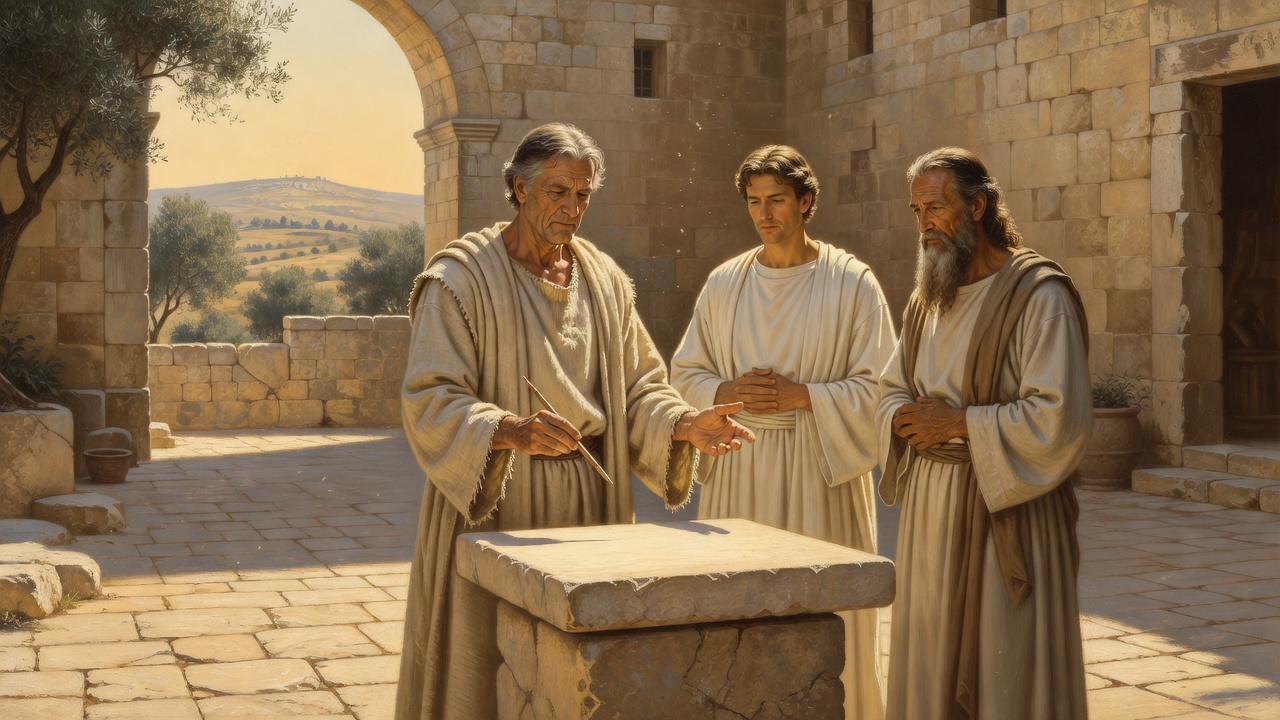
1SENYÈ a te di mwen, pran pou ou yon gwo tablo, e ekri sou li an lèt òdinè: “ rele non l ‘Maher-Schalal-Chasch-Baz’” (Vit se piyaj la e rapid se viktim nan), 2Epi Mwen va pran pou Mwen temwen fidèl pou fè temwayaj, Urie, prèt la ak Zacharie, fis a Bérékia a.
3Pou sa, mwen te pwoche pwofetès la. Li te vin ansent e li te bay nesans a yon fis. Epi SENYÈ a te di mwen: “Bay li non Maher-Schalal-Chasch-Baz. 4Paske avan tigason an konnen jan pou li kriye: ‘Papa mwen oswa manman mwen’, tout richès Damas ak piyaj Samarie yo va fin pote ale devan wa Assyrie a.”
5Ankò SENYÈ a te pale ak mwen. Li te di: 6“Konsi moun sa yo fin rejte dlo Siloé k ap koule dous la pou rejwi nan Retsin ak fis Remalia a; 7alò, pou sa, men gade, SENYÈ a prè pou mennen sou yo dlo fò an gran kantite ki sòti nan rivyè Euphrate la, wa Assyrie ak tout glwa li. Dlo sa a va monte wo pou kite kanal li yo e vide sou tout rebò li yo. 8Li va pase kouri nèt rive Juda. Li va debòde e pase sou li nèt jiskaske li rive menm nan kou li. Konsa, zèl ouvri li yo va ranpli lajè peyi ou a, O Emmanuel!
9“Se pou fè bwi, o pèp yo, e vin kraze nèt! Bay zòrèy nou, tout peyi lwen yo. Mare senti nou, malgre n ap fin brize nèt! Abiye pou batay la, malgre n ap brize nèt. 10Fè yon plan, e sa ap bloke. Pale yon pawòl, e sa p ap dire. Paske Bondye avèk nou.”
11Paske se konsa SENYÈ a te pale mwen ak gwo pouvwa e te pase m lòd pou m pa mache nan chemen a pèp sa a, epi te di: 12“Ou pa dwe di: ‘Konplo’ de tout sa ke pèp sa a rele ‘konplo’ a. Ou pa pou pè sa ke yo menm pè a, ni etone pa li. 13Se SENYÈ dèzame yo ke ou dwe gade kon sen. Se Li k ap vin lakrent ou. Se li k ap fè w etone. 14Li va devni yon sanktyè; men pou toulède kay Israël yo, L ap yon wòch pou fè nou bite, yon zatrap ak yon pèlen pou sila ki rete Jérusalem yo. 15Se anpil moun k ap bite sou yo, yo va tonbe e yo va kraze nèt. Yo menm va pran nan pyèj e va tonbe pou yo kenbe nèt.”
16Mare akò a. Sele lalwa pami disip mwen yo. 17Mwen va tann SENYÈ a ki kache figi Li kont kay Jacob la. Mwen va chache Li ak enpasyans. 18Gade byen, mwen menm ak pitit ke SENYÈ a te ban mwen yo se pou sign ak mèvèy an Israël ki sòti depi nan SENYÈ Dèzame yo, ki demere sou Mòn Sion.
19Lè y ap di nou: “Konsilte sila ki konn pale ak mò yo ak divinò ki yo menm pale ak ti souf e bougonnen;” èske yon pèp pa ta dwe konsilte Bondye pa yo? Èske yo ta dwe konsilte mò yo pou sila ki vivan yo? 20Vire kote lalwa ak akò a! Si yo pa pale selon pawòl sa a, se akoz ke yo pa gen granmaten k ap vini. 21Yo va pase nan peyi a, plen gwo pwoblèm ak grangou nèt. Li va vin rive ke lè yo grangou, y ap vin anraje e modi wa yo ak Bondye pandan y ap gade anlè. 22Epi konsa, y ap gade vè latè, gade byen, gwo twoub ak fènwa, dezolasyon ak gwo lapèn. Konsa, yo va chase ale nan tenèb.
¿Sabías que…?
La Inundación Inminente y la Señal Fiel
- El nombre Maher-salal-has-baz significa "el despojo se apresura; la presa se precipita". A Isaías se le ordenó registrar este nombre públicamente ante testigos confiables —el sacerdote Urías y Zacarías— y luego dárselo a su hijo recién nacido, como señal de que Damasco y Samaria pronto serían saqueadas por el rey de Asiria.Fuentes: el propio texto bíblico · Maher-shalal-hash-baz · Urijah
- El pasaje contrasta las aguas de Siloé, que fluyen suavemente en Jerusalén, con las caudalosas aguas del río Éufrates. Como el pueblo rechazó la confianza serena, la imagen representa al rey invasor de Asiria arrasando la tierra como una inundación devastadora que llega hasta el cuello.Fuentes: el propio texto bíblico · Shiloah · River · Assyria
- Isaías se presenta a sí mismo y a sus hijos como señales y símbolos vivos dados por el Señor a Israel. En un tiempo de crisis nacional, advierte al pueblo que no debe consultar a médiums ni a espiritistas que murmuran, insistiendo en que deben buscar a Dios y Su testimonio.Fuentes: el propio texto bíblico
Notas escritas con ayuda de IA a partir de fuentes abiertas (Theographic Bible Metadata, CC BY-SA 4.0; Easton’s Bible Dictionary, dominio público) y revisadas antes de publicarse.
Lugares de este capítulo
- Assyria · 36.359, 43.153 · versículos 4, 7
- Damascus · 33.511, 36.306 · versículo 4
- Samaria · 32.276, 35.195 · versículo 4
- Shiloah · Hoy: Pool of Siloam · 31.771, 35.235 · versículo 6
- Euphrates · Hoy: Euphrates River · 31.004, 47.442 · versículo 7
- Jerusalem · 31.777, 35.234 · versículo 14
- Mount Zion · 31.772, 35.229 · versículo 18
Solo aparecen lugares identificados con alta confianza (90 % o más según las fuentes académicas reunidas por OpenBible). Mapa de la época: DARE (Digital Atlas of the Roman Empire), CC BY 4.0; mapa actual: © colaboradores de OpenStreetMap; lugares: OpenBible.info (CC BY 4.0).
Créditos y licencia de esta traducción
Bib Sen An
The Holy Bible in Haitian Creole, 2023 update
copyright © 2017-2023 Ron Smith
Language: Kreyòl Ayisyen (Haitian)
Translation by: Ron Smith
Contributor: Felix Nixon
This translation is made available to you under the terms of the
Creative Commons Attribution Share-Alike license 4.0.
You have permission to share and redistribute this Bible translation in any format and to make reasonable revisions and adaptations of this translation, provided that:
You include the above copyright and source information.
If you make any changes to the text, you must indicate that you did so in a way that makes it clear that the original licensor is not necessarily endorsing your changes.
If you redistribute this text, you must distribute your contributions under the same license as the original.
Pictures included with Scriptures and other documents on this site are licensed just for use with those Scriptures and documents.
For other uses, please contact the respective copyright owners.
Note that in addition to the rules above, revising and adapting God's Word involves a great responsibility to be true to God's Word. See Revelation 22:18-19.
2026-06-11
Fuente: http://ebible.org/hatbsa/ · eBible.org