Isaías 29
Tupàn ze'eg · Toca un versículo para ver sus referencias cruzadas.
Uze'eg Zeruzarez rehe a'e
1Pepuhareko Zeruzarez Tupàn pe imonokatu pyrer nehe.
Kwehe mehe tuwihawete Tawi uzapo weko haw a'e pe.
Pemumaw amo kwarahy
mynykaw Tupàn imuwete haw iapo pà nehe.
2A'e re Tupàn uzepyk putar a'e tawhu Tupàn pe imonokatu pyrer her ma'e rehe nehe.
A'e pe har uzai'o putar wà nehe. Uzemumikahy putar wà nehe no.
Tawhu nuzawy kwaw Tupàn henataromo ma'ea'yr hapy haw tuwykwer tetea'u rehe har nehe.
3Tupàn omono kar putar zauxiapekwer tetea'u tawhu pe wà nehe, iàmàtyry'ym kar pà wanupe wà nehe.
A'e zauxiapekwer a'e wà, tawhu pe har wàmàtyry'ymar a'e wà, umàmàn putar tawhu izywyr wà nehe.
Uzapo putar pàrirogaw rehe uzeupir àwàm wà nehe. Uzeupir putar hehe tawhu pupe wixe pà wà nehe.
4Weityk putar tàpuz paw wà nehe.
A'e pe har u'ar putar ywy rehe upyta pà wà nehe.
Uze'eg putar tekwe ài wà nehe.
Hewowo putar wà nehe. Uze'eg putar imuhemahy 'ym pà tekwe ài wà nehe no.
5Na'arewahy tàrityka'i
Tupàn Tuweharupi Wiko Ma'e Ikàg Wera'u Ma'e uzàmàtyry'ym putar wàmàtyry'ymar oho a'e wà nehe kury. Ni amo nuàro kwaw tur àwàm wà nehe.
Zauxiapekwer amo ae ywy rehe arer romo wanekon wà.
Wànoànog putar nehe. Ywy uryryryryz putar nehe no. Wànoànogahy putar nehe.
Ur putar ywytuaiw nehe. Àmànuhu ukyr putar nehe no. Tata ma'erapy har ur putar nehe no.
Umuigo kar putar wàmàtyry'ymar ywy imuku'iahy pyrer romo wà nehe.
Nuzawy kwaw ka'api'i uxinig ma'e kwer ywytu hemiraha kwer wà nehe.
7Tupàn pe ma'ea'yr hapy haw rehe ipurumuaiw wer har wà nehe,
zauxiapekwer tawhu izywyr har paw wà nehe, pàrirogaw rehe uzeupir haw iapo har wà nehe no,
a'e paw ukàzym putar puahu haw zanewi uhemaw ài wà nehe, ma'e hexak awer ukàzym ma'e kwer ài wà nehe.
8Teko ywy nànànar Xiàw ywytyr iàmàtyry'ymar wà nehe,
nuzawy kwaw awa ima'uhez katu ma'e umai'u haw rehe upuahu ma'e wà nehe.
Ume'e mehe ima'uhez we a'e.
Nuzawy kwaw awa iziwez katu ma'e uwi'u haw rehe upuahu ma'e wà nehe.
Ume'e mehe iziwez we a'e.
Zeruzarez pe har wamumuranu haw
9Peiko wiwi iranaiwa'u ma'e romo nehe, aze peneko wer nehe.
Peiko wiwi hehàpyhà 'ym ma'e romo nehe, aze ikatu wera'u nezewe haw peme nehe.
Aze pei'u win pupe nehe, aze pei'u kàwiahy pupe nehe, peka'u he'o ma'e ài peata e pà nehe.
10Ta'e Tupàn Tuweharupi Wiko Ma'e pemuger kar tuwe a'e xe.
Upyk peàkàg. Pemuzeàpumi kar a'e.
Peàkàg a'e wà, peneha a'e wà no, wiko Tupàn ze'eg imume'u har romo a'e wà.
Tupàn wexak kar zepe ma'e puahu pe har zàwenugar a'e awa wanupe a'e. Nuexak kwaw wà.
11Ko 'ar rehe puahu pe har zàwenugar paw nuzawy kwaw ze'eg pape rehe imuapyk pyrer iwàpytym pyrer peme. Napepuner kwaw ikwaw paw rehe. Aze peraha pape amo pape kwaw par pe nehe, — Emugeta nehe, aze peze izupe nehe, — Napuner kwaw ihe, ta'e uzewàpytym pape a'e xe, i'i putar peme nehe. 12Aze peze'eg pape kwaw par 'ym pe nehe. — Emugeta nehe, aze peze izupe nehe, — Nakwaw kwaw pape imugeta haw ihe, i'i putar peme nehe.
13Zanezar uze'eg nezewe.
— Ko teko uze'eg ihewe uzuru pupe wà.
Umume'u hekatu haw weme pupe wà.
Wapy'a muite ihewi wà.
Teko wapurumu'e haw rupi
zo hemuwete wà.
Xo ze'eg imume'u wiwi haw zo ukwaw wà.
14A'e rupi amupytuhegatu kar wi putar ko teko ihe wà nehe.
Azapo putar ma'e ikwaw pyr 'ym wainuinuromo nehe, azapo putar iaiw ma'e wainuinuromo nehe no.
Ukwaw katu ma'e wà. Nezewe rehe we nupuner kwaw a'e ma'e imume'u haw rehe wà nehe. Nukwaw kwaw a'e ma'e heremiapo ràm wà nehe.
Teko ma'e tetea'u rehe imu'e pyrer nukwaw kwaw a'e wà nehe no, i'i Zanezar.
15Aze teko umim wemiapo Tupàn Tuweharupi Wiko Ma'e wi a'e wà nehe, uzepyk putar wanehe a'e nehe.
Pepuhareko ipytunahy haw rehe ikatu 'ym ma'e iapo har pe wà nehe. Uze'eg nezewe wà.
— Ni amo nupuner kwaw zanerexakaw rehe wà. Ni amo nukwaw kwaw zaneremiapo wà, i'i waiko wà.
16Pemono ikatu 'ym ma'e ikatu ma'e hekuzaromo.
Aipo ywyzuwa ikatu wera'u ima'ema'e har zapepo iapo har wi.
Zapepo nuze'eg kwaw nezewe wapo arer pe.
— Naheapo kwaw pe ne, ni'i kwaw.
— Nerekwaw kwaw ma'e iapo haw, ni'i kwaw ywy'a wapo arer pe.
Purupyro haw imume'u haw
17Nan kwehe tete ka'aete uzeapo putar ma'etymaw romo nehe.
Ma'etymaw uzeapo wi putar ka'a romo wiko pà nehe.
18A'e 'ar mehe iapyha 'ym ma'e wenu putar ze'eg a'e wà nehe. Amo umugeta a'e ze'eg pape iwàpytym pyrer rehe har wà nehe, ze'eg imuapyk pyrer hexak pyr 'ym wà nehe.
Hehàpyhà 'ym ma'e uhem putar ipytunahy haw wi wà nehe. Upuner putar ma'e hexakaw rehe wà nehe.
19Tupàn Tuweharupi Wiko Ma'e omono putar turywete haw ma'e hereko 'ymar wanupe nehe.
Tupàn Ikatuahy Ma'e Izaew wazar umurywete kar putar hemetarer 'ym ma'e a'e wà nehe.
20Ta'e Tupàn umumaw putar wemiaihu wanehe imunar ma'e a'e wà nehe xe.
Uzuka putar uzehe uze'eg zemueteahy ma'e a'e wà nehe.
Amo teko wanupe ikatu 'ym ma'e wemiapo ràm imume'u har a'e wà nehe, ukàzym putar a'e wà nehe.
21Tupàn umumaw putar amo rehe hemu'em ma'e wà nehe.
Umumaw putar tuwihaw wanupe hemu'em ma'e wà nehe no.
Aze amo hemu'em amo rehe tuwihaw henataromo nehe, aze a'e rupi tuwihaw omono kar amo ikatu 'ym ma'e iapo 'ymar zemunehew paw pe nehe, Tupàn uzepyk putar a'e hemu'em ma'e rehe nehe.
22Tupàn Tuweharupi Wiko Ma'e, upyro Àmàrààw ikatu 'ymaw wi imàno haw wi a'e. Uze'eg iko teko Izaew izuapyapyr wanehe kury.
— Heremiaihu nuzemumikahy wi kwaw wà nehe.
Na'imaranugar pixik kwaw wà nehe.
23Wexak putar heremiapo ràm wamyter pe àràm wà nehe.
Hexak mehe umume'u putar herer ikatu haw wà nehe.
— Ereiko Tupàn Ikatuahy Ma'e Izaew wazar romo ne, i'i putar ihewe wà nehe.
Ukyze putar ihewi hemuwete katu pà nehe.
24Na'e iranaiwa'u ma'e wiko putar ma'e kwaw katu har romo wà nehe.
Heàmàtyry'ym arer
weruzar putar hepurumu'e haw wà nehe no, i'i Tupàn uzeupe.
¿Sabías que…?
El asedio y la restauración de Ariel
- El nombre Ariel se utiliza simbólicamente en este pasaje para Jerusalén, la ciudad donde acampó el rey David. El término también se asocia con el hogar de un altar de holocaustos, describiendo a la ciudad soportando un intenso asedio y aflicción antes de su repentina liberación.Fuentes: Ariel · David · el propio texto bíblico
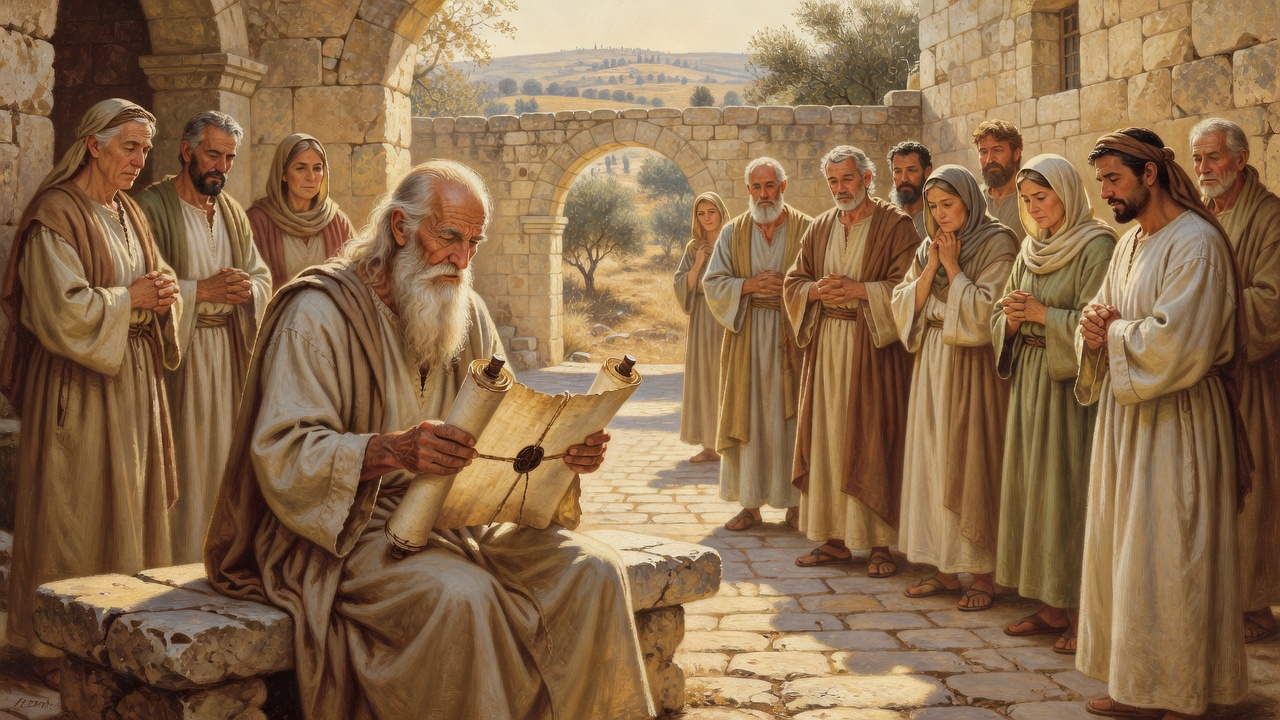
- Isaías compara la insensibilidad espiritual del pueblo con un rollo sellado que los letrados no pueden abrir y los analfabetos no pueden leer. Condena a quienes invierten el orden natural al actuar como si el barro pudiera cuestionar al alfarero que lo formó.Fuentes: el propio texto bíblico
- El capítulo promete una transformación drástica en la que la gran región montañosa del Líbano se convertirá en un huerto fértil. En aquel día, a los descendientes de Jacob y Abraham se les promete entendimiento, gozo y justicia mientras los ciegos ven y los sordos oyen.Fuentes: Lebanon · Abraham · Jacob (Israel) · el propio texto bíblico
Notas escritas con ayuda de IA a partir de fuentes abiertas (Theographic Bible Metadata, CC BY-SA 4.0; Easton’s Bible Dictionary, dominio público) y revisadas antes de publicarse.
Lugares de este capítulo
- Ariel · Hoy: Jerusalem · 31.777, 35.234 · versículos 1, 2, 7
- City of David · 31.774, 35.236 · versículo 1
- Jerusalem · 31.777, 35.234 · versículos 2, 3
- Mount Zion · 31.772, 35.229 · versículo 8
- Lebanon · 33.540, 35.584 · versículo 17
Solo aparecen lugares identificados con alta confianza (90 % o más según las fuentes académicas reunidas por OpenBible). Mapa de la época: DARE (Digital Atlas of the Roman Empire), CC BY 4.0; mapa actual: © colaboradores de OpenStreetMap; lugares: OpenBible.info (CC BY 4.0).
Créditos y licencia de esta traducción
Tupàn ze'eg
Bible without Deuterocanon in Guajajára (BR:gub:Guajajára)
copyright © 2007 Wycliffe Bible Translators, Inc.
Language: Guajajára
Translation by: Wycliffe Bible Translators, Inc.
Guajajára [gub], Brazil
Copyright Information
© 2007, Wycliffe Bible Translators, Inc. All rights reserved.
This translation text is made available to you under the
terms of the Creative Commons License: Attribution-Noncommercial-No Derivative Works.
( http://creativecommons.org/licenses/by-nc-nd/3.0/ )
In addition, you have permission to port the text to different file formats, as long as you
do not change any of the text or punctuation of the Bible.
You may share, copy, distribute, transmit, and extract portions
or quotations from this work, provided that you include the above copyright
information:
You must give Attribution to the work.
You do not sell this work for a profit.
You do not make any derivative works that change any of the actual words or punctuation of the Scriptures.
Permissions beyond the scope of this license may be
available if you contact
us with your request.
Printed book ISBN 9788531109713
The Bible without Deuterocanon
in Guajajára
© 2007, Wycliffe Bible Translators, Inc. All rights reserved.
This translation is made available to you under the terms of the
Creative Commons Attribution-Noncommercial-No Derivatives license 4.0.
You may share and redistribute this Bible translation or extracts from it in any format, provided that:
You include the above copyright and source information.
You do not sell this work for a profit.
You do not change any of the words or punctuation of the Scriptures.
Pictures included with Scriptures and other documents on this site are licensed just for use with those Scriptures and documents.
For other uses, please contact the respective copyright owners.
2020-03-30
Fuente: http://ebible.org/gubBl/ · eBible.org