Isaías 28
Tupàn ze'eg · Toca un versículo para ver sus referencias cruzadas.
Tupàn uzepyk putar Izaew ywy rehe har wanehe nehe
1Tupàn uzepyk putar Xamari tawhu rehe nehe, — Tawhu ikatuahy ma'e, i'i uka'u ma'e Izaew ywy rehe har wà.
Pepuhareko a'e tawhu ywy katu rehe wapyk ma'e nehe.
A'e pe har uka'u waiko wà.
Tawhu ipuràgaw ukàzym iko.
Nuzawy kwaw ma'eputyr uxinig ma'e kwer.
2Tupàn Tuweharupi Wiko Ma'e omono kar putar amo awa ikàg ma'e ukyze 'ym ma'e a'e nehe.
Ur putar àmànita ikyrahy haw ài nehe.
Nuzawy kwaw ywytuaiw tàpuz heitykar nehe.
Nuzawy kwaw àmànuhu ikyr haw nehe.
Umuaiw putar ma'e paw imumaw pà nehe.
3Xamari, — Tawhu ikatuahy ma'e, i'i uka'u ma'e Izaew ywy rehe har wà.
Zauxiapekwer upyropyrog putar a'e tawhu heityk pyrer rehe wà nehe.
4Tawhu ipuràg ma'e a'e, ywy katu rehe wapyk ma'e a'e.
Ipuràgaw ukàzym putar nehe. Nuzawy kwaw ma'eputyr uxinig ma'e kwer nehe.
Nuzawy kwaw ma'e'a kwer pi her ma'e iapyw ma'e ipy nehe, kwarahy mehe har nehe.
Izi'itahy ku'em mehe amo opo'o i'u pà.
5A'e 'ar mehe Tupàn Tuweharupi Wiko Ma'e Ikàg Wera'u Ma'e wiko putar ma'eputyr ipuràg ma'e àkàg rehe har romo iapo pyrer ài nehe.
Omono putar a'e àkàg rehe har wemiaihu izuka pyr 'ym wanupe nehe.
6— Urepurapo kar wer ikatu ma'e rehe teko wanupe ure, i'i putar pureruze'eg ma'e wà nehe, ta'e Tupàn uma'ereko putar wapy'a pupe nehe xe.
Amo zauxiapekwer ume'egatu tawhu weko haw rehe uzekaiw pà wàmàtyry'ymar wanuwi.
Tupàn umupytu'u kar putar a'e zauxiapekwer wakyze re a'e wà nehe no.
Tupàn uzepyk Zuta ywy rehe har wanehe
7Amo teko wata oho waiko uka'u pà wà, ta'e ui'u win tetea'u pupe wà xe.
Nupuner kwaw upu'àmaw rehe wà, ta'e ui'u kàwiahy tetea'u pupe wà no xe.
Xaxeto a'e wà, Tupàn ze'eg imume'u mua'u har a'e wà no, wiko uka'u pà u'au'ar pà wà.
Tupàn wexak kar ma'e hexak pyrer 'ym uze'eg imume'u har wanupe. Uka'u hexak mehe wà. Nukwaw katu kwaw wà.
Xaxeto uka'u a'e wà no. A'e rupi nukwaw kwaw teko waneruze'egaw wà no.
8Wahuhuk awer upyk ywyrapew wama'ereko haw a'e.
Naheta kwaw ni pitài ikatu haw ywyrapew rehe.
9Uze'eg zemueteahy herehe, uzehezehe upuranu pà wà.
— Mo rehe ko Tupàn ze'eg imume'u har ipurumu'e wer iko, i'i uzeupeupe wà.
— Aipo ukwaw Tupàn ze'eg imume'u katu haw zanewe, i'i wà.
Aipo zaiko memyr ukamu romo ma'e kwer romo zane.
10Zanerereko kwarer ài kuzàtài ài a'e.
Ipurumu'e wer zanerehe pape imugeta haw izypy mehe har rehe a'e, i'i wà.
11Aze napepurenu wer kwaw heze'eg rehe nehe, a'e mehe Tupàn Tuweharupi Wiko Ma'e uze'eg putar peme a'e nehe.
Umuze'eg kar putar teko amo ae ywy rehe har amo ae ze'eg rupi uze'eg ma'e a'e wà nehe.
A'e umume'u putar Tupàn ze'eg peme a'e wà nehe.
12Kwehe mehe aze'eg nezewe peme.
— Tupàn pemupytu'u kar putar nehe.
Pemonokatu putar ma'erahy haw wi ma'uhez haw wi xe a'e nehe.
Xe peàmàtyry'ymar nuzapo kwaw ikatu 'ym ma'e peme nehe, a'e peme.
Napepurenu wer kwaw heze'eg rehe.
13A'e rupi Tupàn pemu'e putar zemu'e haw izypy mehe har rehe nehe.
Penereko putar kwarer ài a'e nehe.
Na'e pezeagaw putar peata pà nehe. Kwarera'i u'ar ukupe kutyr.
Nezewegatete peneko haw iaiw wera'u putar nehe. Amo pemuahy kar putar wà nehe. Pe'ar putar ywykwar miar ipyhykaw pupe nehe. Pepyhyk putar pemunehew pà wà nehe.
Peme'egatu peneko haw ikatu mua'u ma'e rehe nehe, i'i
14Tuwihaw Zeruzarez pe har a'e wà,
awa wiko wera'u ma'e ko teko waneruze'egar wà,
peinu Tupàn Tuweharupi Wiko Ma'e ze'eg nehe kury.
15Peze'eg peiko nezewe.
— Uruzapokatu ureze'egaw màno haw rehe we ure.
Uruzapokatu tuwe ureze'egaw umàno ma'e kwer wapyta haw rehe we.
A'e rupi iaiw paw uhua'u ma'e tur mehe
nurupuraraw kwaw ma'erahy ure nehe, peze peiko.
Temu'emaw rehe pezeruzar peiko.
— Ma'e rehe uremunar haw urepyro putar nehe, peze peiko.
16A'e rupi Tupàn Tuweharupi Wiko Ma'e Zanezar uze'eg nezewe kury.
— Amuapyk amo ita hereko Xiàw rehe ihe kury.
Ita hekuzar katu ma'e a'e. Aexaexak a'e ita ihe.
A'e ita upyta putar amo ita heràpuzuhu wy pe har iahykaw rehe a'e nehe, imuàtà katu pà a'e nehe.
Amuapyk ko ze'eg hehe.
— Tupàn rehe uzeruzar ma'e nukyze kwaw wà, i'i ze'eg ita rehe har.
17Teko umuà'ygatu pàrirogaw ita inemo apyr har pupe wà. Nezewegatete apureruze'egatu hekatuahy haw pupe ihe no.
Naheremu'em kwaw nahemunar kwaw waneruze'eg mehe nehe
Peiko pezeàmimaw ikatu 'ym ma'e rehe. Napemigatu kwaw a'e.
Àmànita umumaw ma'e.
'Y uwyrykahy ma'e weityk ma'e heraha. Nezewegatete amumaw putar penemu'emaw peneko katu haw romo iapo pyrer ihe nehe.
18Màno haw rehe we peze'eg awer penemiapo katu kwer uzemumaw putar nehe.
Umàno ma'e kwer wapyta haw rehe we peze'eg awer penemiapo katu kwer uzekazeka putar upaw pà nehe no.
Iaiw hawhu tur mehe
peneraha putar 'y uwyrykahy ma'e ài nehe.
19Teko ma'erahy ipuraraw paw nànàn pepuraraw putar wainuinuromo pe nehe no.
Tuweharupi ur putar nehe: ku'em mehe, kwarahy heixe re nehe no.
Tupàn ze'eg pitàitàigatu werur putar pekyze haw ipyahu ma'e nehe.
20Peiko putar awa a'e ze'eg kwehe arer hemimume'u kwer ài nehe.
— Iker haw iaikwera'i. A'e rupi a'e awa nupuner kwaw u'aw haw rehe hehe.
Izewànaw ipixika'i a'e. A'e rupi nupuner kwaw uzepykaw rehe ipupe, i'i a'e ze'eg.
21Na'e Tupàn Tuweharupi Wiko Ma'e upu'àm putar a'e nehe, ywytyr Perazi her ma'e rehe upu'àm awer zàwe a'e nehe.
Wikwahy putar nehe, ywyàpyznaw Zimeàw her ma'e rehe ukwahy awer zàwe nehe no.
Uzapo putar wemiapo putar haw nehe.
Teko nukwaw kwaw hemiapo ràm a'e wà.
Uzapo putar uma'ereko haw nehe no.
— Màràzàwe tuwen aipo pa, i'i putar teko ima'ereko haw hexak mehe wà nehe no.
22A'e rupi pepytu'u pepuka re nehe.
Aze mo nan, kyhàhàmtàtà pezeàpixipixi haw uzemumikahy wera'u putar nehe.
Ta'e ainu Zanezar Tupàn Tuweharupi Wiko Ma'e ize'eg mehe ihe xe.
— Pemumaw ko ywy paw nehe, i'i a'e.
Tupàn ima'ekwaw paw
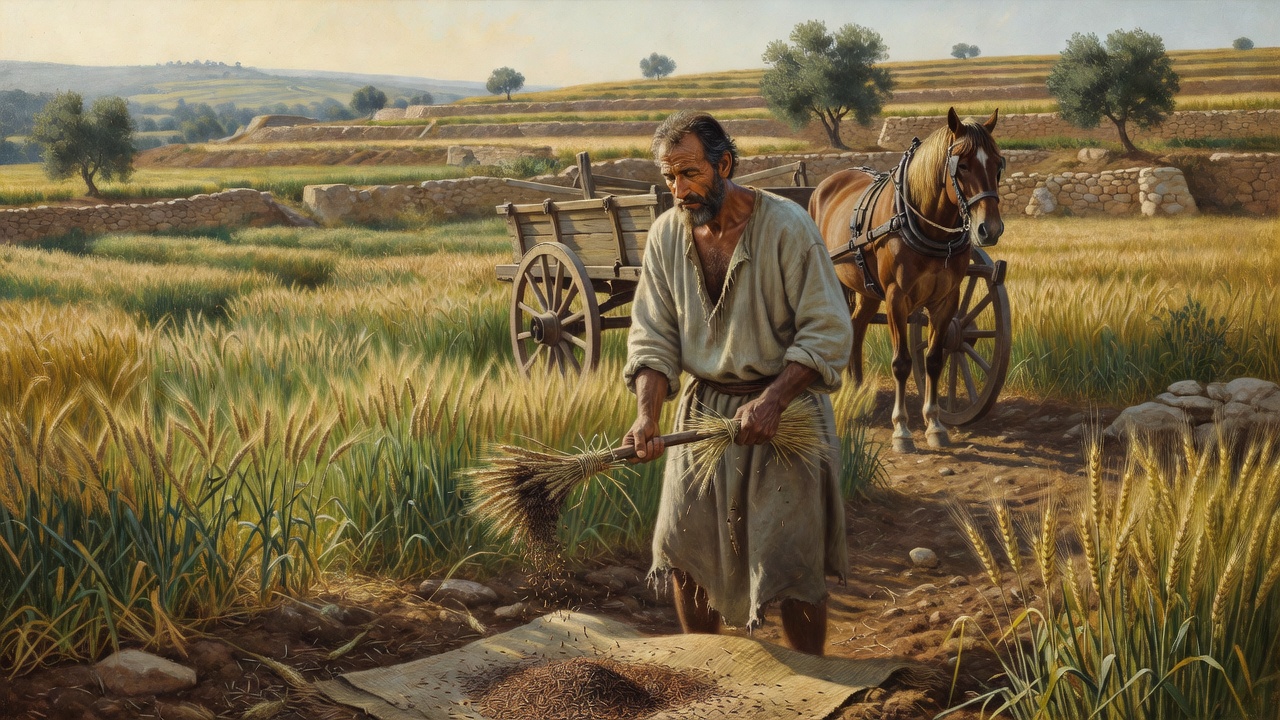
23Peinu heze'eg àwàm nehe. Pezekaiw heremimume'u ràm rehe nehe. 24Ywy imuàgà'ym mehe ma'e itym 'ym mehe we awa numumaw kwaw u'ar paw ywy heruwaruwak pà a'e. Uhàwykàz. Uma'ema'e ywy no. 25Na'e umuhym no. Na'e utym ma'eà'yz enero her ma'e. Utym ma'eà'yz kumin her ma'e no. Utym arozràn xirik her ma'e, arozràn xewar her ma'e no. Amo ae arozràn utym watym àwàm ikatu ma'e rehe no. 26Uzapokatu ma'e paw a'e, ta'e Tupàn umu'e ikatu ma'e iapo haw rehe a'e xe. 27Enero ipo'o re, kumin ipo'o re numuhem kar kwaw iapirer ita ipuhuz ma'e pupe. Umuhem kar ita ipuhuz 'ym ma'e pupe, pixika'i ma'e pupe. 28Arozràn inupànupà mehe nunupàahy kwaw. Nuzukazuka kwaw arozràn. Ukwaw itahu iapu'a ma'e heruwakaw haryw rehe aroz ràn ihaihaw 'ym pà. 29Tupàn Tuweharupi Wiko Ma'e Ikàg Wera'u Ma'e ukwaw kar nezewe haw iapo haw izupe. Tupàn hemiapo putar àwàm ikatuahy. Ukwaw katu wyzài ma'e iapo haw.
¿Sabías que…?
La Piedra Angular y la Sabiduría del Labrador
- Isaías hace referencia a campos de batalla históricos como el monte Perazim, el 'monte de las brechas' donde David derrotó a los filisteos, y el valle de Gabaón, advirtiendo que el Señor se levantará para ejecutar un juicio insólito y desconcertante contra Su propio pueblo.Fuentes: Mount Perazim · Valley of Gibeon · el propio texto bíblico
- Al dirigirse a los gobernantes de Jerusalén, el profeta contrasta su frágil refugio político con una piedra angular probada y preciosa puesta en Sion, la colina elevada donde David estableció su ciudadela real.Fuentes: Jerusalem · Zion · el propio texto bíblico
- El capítulo concluye con una parábola agrícola que muestra que el labrador no trilla especias delicadas como el comino con trillos pesados o ruedas de carretas, sino que las golpea suavemente con una vara, ilustrando la sabiduría mesurada de Dios en la disciplina.Fuentes: el propio texto bíblico
Notas escritas con ayuda de IA a partir de fuentes abiertas (Theographic Bible Metadata, CC BY-SA 4.0; Easton’s Bible Dictionary, dominio público) y revisadas antes de publicarse.
Lugares de este capítulo
- Samaria · 32.276, 35.195 · versículos 1, 3
- Jerusalem · 31.777, 35.234 · versículo 14
- Zion · Hoy: Jerusalem · 31.777, 35.234 · versículo 16
- Valley of Gibeon · 31.847, 35.183 · versículo 21
Solo aparecen lugares identificados con alta confianza (90 % o más según las fuentes académicas reunidas por OpenBible). Mapa de la época: DARE (Digital Atlas of the Roman Empire), CC BY 4.0; mapa actual: © colaboradores de OpenStreetMap; lugares: OpenBible.info (CC BY 4.0).
Créditos y licencia de esta traducción
Tupàn ze'eg
Bible without Deuterocanon in Guajajára (BR:gub:Guajajára)
copyright © 2007 Wycliffe Bible Translators, Inc.
Language: Guajajára
Translation by: Wycliffe Bible Translators, Inc.
Guajajára [gub], Brazil
Copyright Information
© 2007, Wycliffe Bible Translators, Inc. All rights reserved.
This translation text is made available to you under the
terms of the Creative Commons License: Attribution-Noncommercial-No Derivative Works.
( http://creativecommons.org/licenses/by-nc-nd/3.0/ )
In addition, you have permission to port the text to different file formats, as long as you
do not change any of the text or punctuation of the Bible.
You may share, copy, distribute, transmit, and extract portions
or quotations from this work, provided that you include the above copyright
information:
You must give Attribution to the work.
You do not sell this work for a profit.
You do not make any derivative works that change any of the actual words or punctuation of the Scriptures.
Permissions beyond the scope of this license may be
available if you contact
us with your request.
Printed book ISBN 9788531109713
The Bible without Deuterocanon
in Guajajára
© 2007, Wycliffe Bible Translators, Inc. All rights reserved.
This translation is made available to you under the terms of the
Creative Commons Attribution-Noncommercial-No Derivatives license 4.0.
You may share and redistribute this Bible translation or extracts from it in any format, provided that:
You include the above copyright and source information.
You do not sell this work for a profit.
You do not change any of the words or punctuation of the Scriptures.
Pictures included with Scriptures and other documents on this site are licensed just for use with those Scriptures and documents.
For other uses, please contact the respective copyright owners.
2020-03-30
Fuente: http://ebible.org/gubBl/ · eBible.org