Romanos 1
Berean Standard Bible · Toca un versículo para ver sus referencias cruzadas.
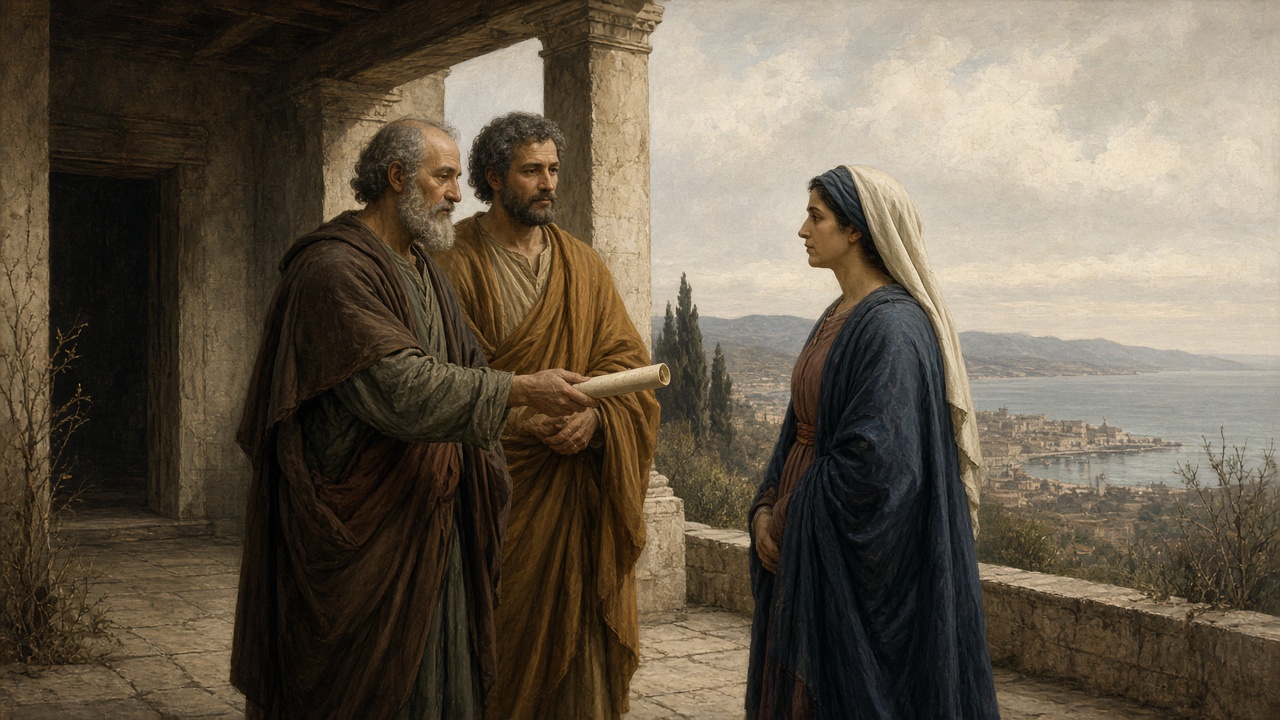
Acerca de este libro
Acerca de Romanos
- El diccionario bíblico de Easton (1897) presenta esta carta como escrita por el apóstol, probablemente en Corinto, donde Gayo de Corinto lo hospedó y Erasto era el camarero de la ciudad. El diccionario fecha la redacción a principios del año 58 d.C., al cierre de la segunda visita del apóstol a Grecia, en el invierno anterior a su ida a Jerusalén para ministrar a los santos. Febe, de Cencrea, llevó la carta a Roma.Fuentes: Easton: Romans, Epistle to the
- Easton considera muy probable que el cristianismo se plantara en Roma por medio de personas que habían estado en Jerusalén el día de Pentecostés, cuando había allí forasteros venidos de Roma. Los judíos eran entonces numerosos en la ciudad, y es probable que los romanos también acudieran a sus sinagogas y así oyeran lo que se contaba acerca de Jesús; se formó una iglesia de judíos y gentiles, ya numerosa y que probablemente se reunía en más de un lugar.Fuentes: Easton: Romans, Epistle to the · Rome
- Cuando se escribió el Nuevo Testamento, Roma era la ciudad más célebre del mundo. Se dice que fue fundada en el 753 a.C. Easton estima su población en un millón doscientos mil habitantes, cerca de la mitad de ellos esclavos, con gente de casi todas las naciones entonces conocidas, y describe la ciudad como marcada por la riqueza, el lujo y el libertinaje, mientras el imperio estaba en su mayor prosperidad.Fuentes: Rome
- Easton dice que el propósito del apóstol era explicar las grandes enseñanzas del evangelio en su relación tanto con judíos como con gentiles. Describe Romanos como una exposición sistemática y argumentativa de un evangelio de aplicación universal y como un alegato en favor de los gentiles dirigido a los judíos, a diferencia de Gálatas, donde el apóstol apela a su propia autoridad porque él había fundado aquella iglesia. Tras la introducción (1:1-15), Easton traza la justificación por la fe (1:16-11:36), que vincula con la justicia imputada de Cristo y con la salvación como enteramente de gracia, y luego exhortaciones prácticas (12:1-15:13) y un cierre con notas personales, saludos a veinticuatro cristianos en Roma, una bendición y una doxología (15:14-16).Fuentes: Easton: Romans, Epistle to the
- En la carta, Pablo declara su intención de visitar España. El artículo de Easton sobre España señala que no hay evidencia de que haya hecho ese viaje, aunque algunos piensan que quizá lo hizo entre un primer y un segundo encarcelamiento.Fuentes: Spain
Notas escritas con ayuda de IA a partir de fuentes abiertas (Theographic Bible Metadata, CC BY-SA 4.0; Easton’s Bible Dictionary, dominio público) y revisadas antes de publicarse.
Paul Greets the Saints in Rome
1Paul, a servant of Christ Jesus, called to be an apostle, and set apart for the gospel of God— 2the gospel He promised beforehand through His prophets in the Holy Scriptures, 3regarding His Son, who was a descendant of David according to the flesh, 4and who through the Spirit of holiness was declared with power to be the Son of God by His resurrection from the dead: Jesus Christ our Lord.
5Through Him and on behalf of His name, we received grace and apostleship to call all those among the Gentiles to the obedience that comes from faith. 6And you also are among those who are called to belong to Jesus Christ.
7To all in Rome who are loved by God and called to be saints:
Grace and peace to you from God our Father and the Lord Jesus Christ.
Unashamed of the Gospel
8First, I thank my God through Jesus Christ for all of you, because your faith is being proclaimed all over the world. 9God, whom I serve with my spirit in preaching the gospel of His Son, is my witness how constantly I remember you 10in my prayers at all times, asking that now at last by God’s will I may succeed in coming to you. 11For I long to see you so that I may impart to you some spiritual gift to strengthen you, 12that is, that you and I may be mutually encouraged by each other’s faith.
13I do not want you to be unaware, brothers, how often I planned to come to you (but have been prevented from visiting until now), in order that I might have a harvest among you, just as I have had among the other Gentiles. 14I am obligated both to Greeks and non-Greeks, both to the wise and the foolish. 15That is why I am so eager to preach the gospel also to you who are in Rome.
16I am not ashamed of the gospel, because it is the power of God for salvation to everyone who believes, first to the Jew, then to the Greek. 17For the gospel reveals the righteousness of God that comes by faith from start to finish, just as it is written: “The righteous will live by faith.”
God’s Wrath against Sin
18The wrath of God is being revealed from heaven against all the godlessness and wickedness of men who suppress the truth by their wickedness. 19For what may be known about God is plain to them, because God has made it plain to them. 20For since the creation of the world God’s invisible qualities, His eternal power and divine nature, have been clearly seen, being understood from His workmanship, so that men are without excuse.
21For although they knew God, they neither glorified Him as God nor gave thanks to Him, but they became futile in their thinking and darkened in their foolish hearts. 22Although they claimed to be wise, they became fools, 23and exchanged the glory of the immortal God for images of mortal man and birds and animals and reptiles.
24Therefore God gave them over in the desires of their hearts to impurity for the dishonoring of their bodies with one another. 25They exchanged the truth of God for a lie, and worshiped and served the creature rather than the Creator, who is forever worthy of praise! Amen.
26For this reason God gave them over to dishonorable passions. Even their women exchanged natural relations for unnatural ones. 27Likewise, the men abandoned natural relations with women and burned with lust for one another. Men committed indecent acts with other men, and received in themselves the due penalty for their error.
28Furthermore, since they did not see fit to acknowledge God, He gave them up to a depraved mind, to do what ought not to be done. 29They have become filled with every kind of wickedness, evil, greed, and depravity. They are full of envy, murder, strife, deceit, and malice. They are gossips, 30slanderers, God-haters, insolent, arrogant, and boastful. They invent new forms of evil; they disobey their parents. 31They are senseless, faithless, heartless, merciless.
32Although they know God’s righteous decree that those who do such things are worthy of death, they not only continue to do these things, but also approve of those who practice them.
¿Sabías que…?
El evangelio dirigido a Roma
- Pablo dirige esta carta a “todos los que están en Roma”. En el tiempo de Cristo, Roma era la ciudad más célebre del mundo, y se dice que fue fundada en el 753 a. C. Cuando se escribió el Nuevo Testamento, Roma estaba enriquecida con los despojos del mundo y tenía una población estimada en un millón doscientas mil personas, cerca de la mitad de ellas esclavas, incluidas personas de casi todas las naciones entonces conocidas; el imperio del que era la capital había alcanzado su mayor prosperidad.Fuentes: Rome · el propio texto bíblico
- La carta comienza con Pablo, siervo de Cristo Jesús y apóstol apartado para el evangelio, que recibió gracia y apostolado para llamar a los gentiles a la obediencia que viene de la fe; también dice que tiene obligación tanto con los griegos como con los no griegos. Era natural de Tarso, capital de Cilicia, una provincia romana en el sureste de Asia Menor: una ciudad comercial y rica, a orillas del río navegable Cidno, y sede de una universidad famosa. Su nombre de circuncisión era Saulo, y el nombre Pablo probablemente se le dio en la infancia, para usarlo en el mundo gentil.Fuentes: Paul · el propio texto bíblico
- Pablo dice que el evangelio trata del Hijo de Dios, que era descendiente de David según la carne. El nombre David se explica como “amado”; era el octavo y el menor de los hijos de Isaí, ciudadano de Belén, y al principio se ocupaba de cuidar las ovejas de su padre en las tierras altas de Judá.Fuentes: David · el propio texto bíblico
Notas escritas con ayuda de IA a partir de fuentes abiertas (Theographic Bible Metadata, CC BY-SA 4.0; Easton’s Bible Dictionary, dominio público) y revisadas antes de publicarse.
Lugares de este capítulo
Solo aparecen lugares identificados con alta confianza (90 % o más según las fuentes académicas reunidas por OpenBible). Mapa de la época: DARE (Digital Atlas of the Roman Empire), CC BY 4.0; mapa actual: © colaboradores de OpenStreetMap; lugares: OpenBible.info (CC BY 4.0).
Créditos y licencia de esta traducción
Berean Standard Bible
The Holy Bible in English: Berean Standard Bible
Public Domain
Language: English
Contributor: BSB Publishing, LLC
2026-10-02
Fuente: http://ebible.org/engbsb/ · eBible.org