Romans 1
Berean Standard Bible · Tap a verse to see its cross-references.
About this book
About Romans
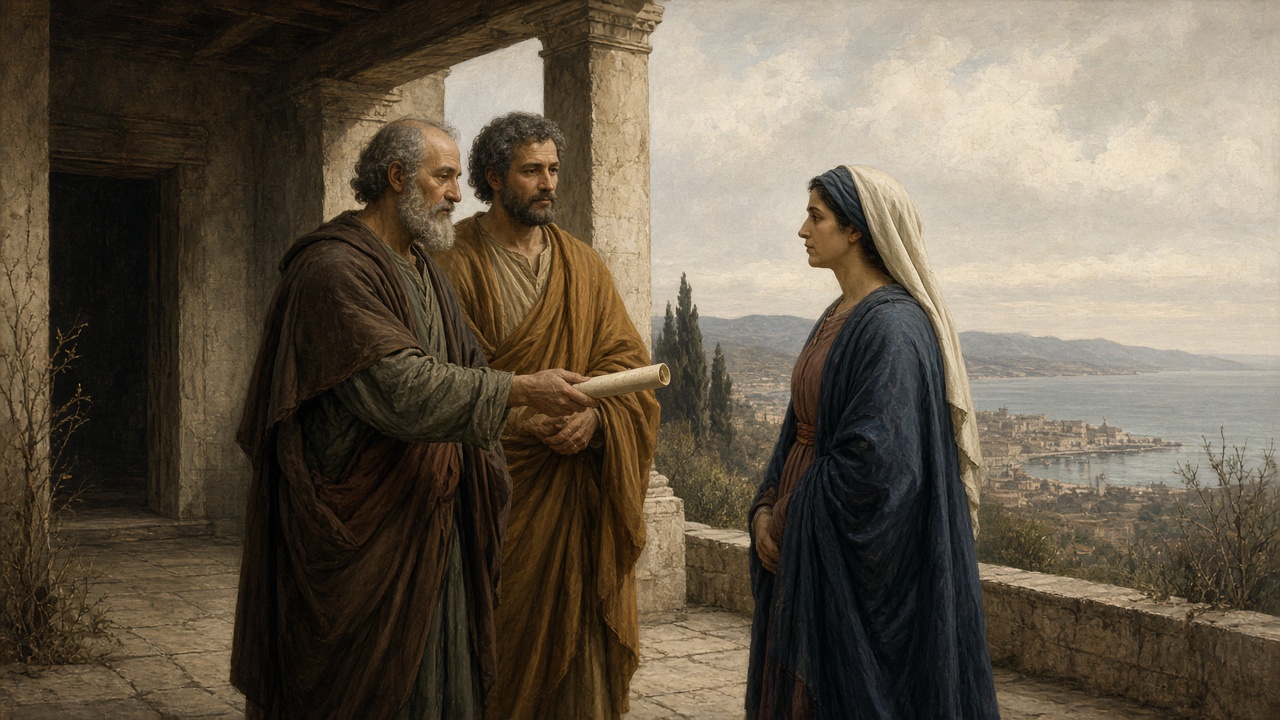
- Easton's Bible Dictionary (1897) presents this letter as written by the apostle, probably at Corinth, where Gaius of Corinth was his host and Erastus was the city's chamberlain. The dictionary dates the writing to early in A.D. 58, at the close of the apostle's second visit to Greece, in the winter before he went to Jerusalem to minister to the saints. Phoebe of Cenchrea carried the letter to Rome.Sources: Easton: Romans, Epistle to the
- Easton thinks it highly probable that Christianity was planted in Rome by people who had been in Jerusalem on the day of Pentecost, when strangers from Rome were there. Jews were then numerous in the city, and Romans probably also attended their synagogues and so heard what was reported about Jesus; a church of both Jews and Gentiles was formed, already numerous and probably meeting in more than one place.Sources: Easton: Romans, Epistle to the · Rome
- When the New Testament was written, Rome was the most celebrated city in the world. It is said to have been founded in 753 B.C. Easton estimates its population at 1,200,000, about half of them slaves, including people from nearly every nation then known, and describes the city as marked by wealth, luxury, and profligacy while the empire was at its greatest prosperity.Sources: Rome
- Easton says the apostle's aim was to explain the great teachings of the gospel in their relation to both Jews and Gentiles. He describes Romans as a systematic, argumentative exposition of a gospel of universal application, and as a plea for Gentiles addressed to Jews, unlike Galatians, where the apostle appeals to his own authority because he had founded that church. After the introduction (1:1-15), Easton outlines justification by faith (1:16-11:36), which he links to Christ's imputed righteousness and to salvation as wholly of grace, then practical exhortations (12:1-15:13), and a closing section with personal notes, greetings to twenty-four Christians in Rome, a benediction, and a doxology (15:14-16).Sources: Easton: Romans, Epistle to the
- In the letter, Paul states his intention to visit Spain. Easton's article on Spain notes that there is no evidence he ever made that journey, although some think he may have done so between a first and a second imprisonment.Sources: Spain
Notes written with AI assistance from open sources (Theographic Bible Metadata, CC BY-SA 4.0; Easton’s Bible Dictionary, public domain) and reviewed before publishing.
Paul Greets the Saints in Rome
1Paul, a servant of Christ Jesus, called to be an apostle, and set apart for the gospel of God— 2the gospel He promised beforehand through His prophets in the Holy Scriptures, 3regarding His Son, who was a descendant of David according to the flesh, 4and who through the Spirit of holiness was declared with power to be the Son of God by His resurrection from the dead: Jesus Christ our Lord.
5Through Him and on behalf of His name, we received grace and apostleship to call all those among the Gentiles to the obedience that comes from faith. 6And you also are among those who are called to belong to Jesus Christ.
7To all in Rome who are loved by God and called to be saints:
Grace and peace to you from God our Father and the Lord Jesus Christ.
Unashamed of the Gospel
8First, I thank my God through Jesus Christ for all of you, because your faith is being proclaimed all over the world. 9God, whom I serve with my spirit in preaching the gospel of His Son, is my witness how constantly I remember you 10in my prayers at all times, asking that now at last by God’s will I may succeed in coming to you. 11For I long to see you so that I may impart to you some spiritual gift to strengthen you, 12that is, that you and I may be mutually encouraged by each other’s faith.
13I do not want you to be unaware, brothers, how often I planned to come to you (but have been prevented from visiting until now), in order that I might have a harvest among you, just as I have had among the other Gentiles. 14I am obligated both to Greeks and non-Greeks, both to the wise and the foolish. 15That is why I am so eager to preach the gospel also to you who are in Rome.
16I am not ashamed of the gospel, because it is the power of God for salvation to everyone who believes, first to the Jew, then to the Greek. 17For the gospel reveals the righteousness of God that comes by faith from start to finish, just as it is written: “The righteous will live by faith.”
God’s Wrath against Sin
18The wrath of God is being revealed from heaven against all the godlessness and wickedness of men who suppress the truth by their wickedness. 19For what may be known about God is plain to them, because God has made it plain to them. 20For since the creation of the world God’s invisible qualities, His eternal power and divine nature, have been clearly seen, being understood from His workmanship, so that men are without excuse.
21For although they knew God, they neither glorified Him as God nor gave thanks to Him, but they became futile in their thinking and darkened in their foolish hearts. 22Although they claimed to be wise, they became fools, 23and exchanged the glory of the immortal God for images of mortal man and birds and animals and reptiles.
24Therefore God gave them over in the desires of their hearts to impurity for the dishonoring of their bodies with one another. 25They exchanged the truth of God for a lie, and worshiped and served the creature rather than the Creator, who is forever worthy of praise! Amen.
26For this reason God gave them over to dishonorable passions. Even their women exchanged natural relations for unnatural ones. 27Likewise, the men abandoned natural relations with women and burned with lust for one another. Men committed indecent acts with other men, and received in themselves the due penalty for their error.
28Furthermore, since they did not see fit to acknowledge God, He gave them up to a depraved mind, to do what ought not to be done. 29They have become filled with every kind of wickedness, evil, greed, and depravity. They are full of envy, murder, strife, deceit, and malice. They are gossips, 30slanderers, God-haters, insolent, arrogant, and boastful. They invent new forms of evil; they disobey their parents. 31They are senseless, faithless, heartless, merciless.
32Although they know God’s righteous decree that those who do such things are worthy of death, they not only continue to do these things, but also approve of those who practice them.
Did you know?
The Gospel Addressed to Rome
- Paul addresses this letter to “all in Rome.” At the time of Christ, Rome was the most celebrated city in the world, and it is said to have been founded in 753 B.C. When the New Testament was written, Rome was enriched with the spoils of the world and had an estimated population of 1,200,000, about half of them slaves, including people from nearly every nation then known; the empire of which it was the capital had reached its greatest prosperity.Sources: Rome · the Bible text itself
- The letter opens with Paul, a servant of Christ Jesus and an apostle set apart for the gospel, who received grace and apostleship to call Gentiles to the obedience that comes from faith; he also says he is obligated both to Greeks and to non-Greeks. He was a native of Tarsus, the capital of Cilicia, a Roman province in the southeast of Asia Minor—a wealthy commercial city on the navigable river Cydnus and the seat of a famous university. His circumcision name was Saul, and the name Paul was probably given to him in infancy for use in the Gentile world.Sources: Paul · the Bible text itself
- Paul says the gospel concerns God’s Son, who was a descendant of David according to the flesh. The name David is explained as meaning “beloved”; he was the eighth and youngest son of Jesse, a citizen of Bethlehem, and his early occupation was tending his father’s sheep on the uplands of Judah.Sources: David · the Bible text itself
Notes written with AI assistance from open sources (Theographic Bible Metadata, CC BY-SA 4.0; Easton’s Bible Dictionary, public domain) and reviewed before publishing.
Places in this chapter
Only places identified with high confidence are shown (90% or more according to the scholarly sources compiled by OpenBible). Period map: DARE (Digital Atlas of the Roman Empire), CC BY 4.0; modern map: © OpenStreetMap contributors; places: OpenBible.info (CC BY 4.0).
Credits and license for this translation
Berean Standard Bible
The Holy Bible in English: Berean Standard Bible
Public Domain
Language: English
Contributor: BSB Publishing, LLC
2026-10-02
Source: http://ebible.org/engbsb/ · eBible.org