2 Reyes 1
Berean Standard Bible · Toca un versículo para ver sus referencias cruzadas.
Acerca de este libro
Acerca de 2 Reyes
- El Diccionario Bíblico de Easton (1897) afirma que la autoría de los libros de Reyes es incierta. Pasajes casi idénticos a los de Jeremías, junto con acontecimientos que Jeremías conoció personalmente, dan cierto apoyo a la tradición de que él los escribió, pero Easton considera más probable que Esdras compilara los libros después del Cautiverio a partir de documentos anteriores. Easton fecha su composición entre el 561 a.C., cuando Evil-merodac liberó a Joaquín, y el 538 a.C., el año del decreto de liberación de Ciro.Fuentes: Easton: Kings, The Books of
- Los dos libros de Reyes formaban originalmente un solo libro en las Escrituras Hebreas. La Septuaginta los dividió por primera vez en dos y, junto con la Vulgata, los numera como el tercer y el cuarto libros de Reyes, contando los libros de Samuel como el primero y el segundo.Fuentes: Easton: Kings, The Books of
- Estos libros contienen los anales de la comunidad judía desde la ascensión de Salomón hasta el sometimiento del reino por Nabucodonosor y los babilonios, un período que Easton describe como aparentemente de unos cuatrocientos cincuenta y tres años. Mientras que Crónicas da mayor prominencia al oficio sacerdotal o levítico, Reyes da mayor prominencia al oficio real, y la narrativa se refiere a fuentes como el libro de los hechos de Salomón y las crónicas de los reyes de Judá y de Israel.Fuentes: Easton: Kings, The Books of
- En la división triple de las Escrituras hecha por los judíos, los libros de Reyes se clasifican entre los Profetas. Easton señala que son citados o aludidos con frecuencia por Jesús y los apóstoles.Fuentes: Easton: Kings, The Books of
Notas escritas con ayuda de IA a partir de fuentes abiertas (Theographic Bible Metadata, CC BY-SA 4.0; Easton’s Bible Dictionary, dominio público) y revisadas antes de publicarse.
Elijah Denounces Ahaziah
1After the death of Ahab, Moab rebelled against Israel.
2Now Ahaziah had fallen through the lattice of his upper room in Samaria and injured himself. So he sent messengers and instructed them: “Go inquire of Baal-zebub, the god of Ekron, whether I will recover from this injury.”
3But the angel of the LORD said to Elijah the Tishbite, “Go up to meet the messengers of the king of Samaria and ask them, ‘Is it because there is no God in Israel that you are on your way to inquire of Baal-zebub, the god of Ekron?’ 4Therefore this is what the LORD says: ‘You will not get up from the bed on which you are lying. You will surely die.’”
So Elijah departed.
5When the messengers returned to the king, he asked them, “Why have you returned?”
6They replied, “A man came up to meet us and said, ‘Go back to the king who sent you and tell him that this is what the LORD says: Is it because there is no God in Israel that you are sending these men to inquire of Baal-zebub, the god of Ekron? Therefore you will not get up from the bed on which you are lying. You will surely die.’”
7The king asked them, “What sort of man came up to meet you and spoke these words to you?”
8“He was a hairy man,” they answered, “with a leather belt around his waist.”
“It was Elijah the Tishbite,” said the king.
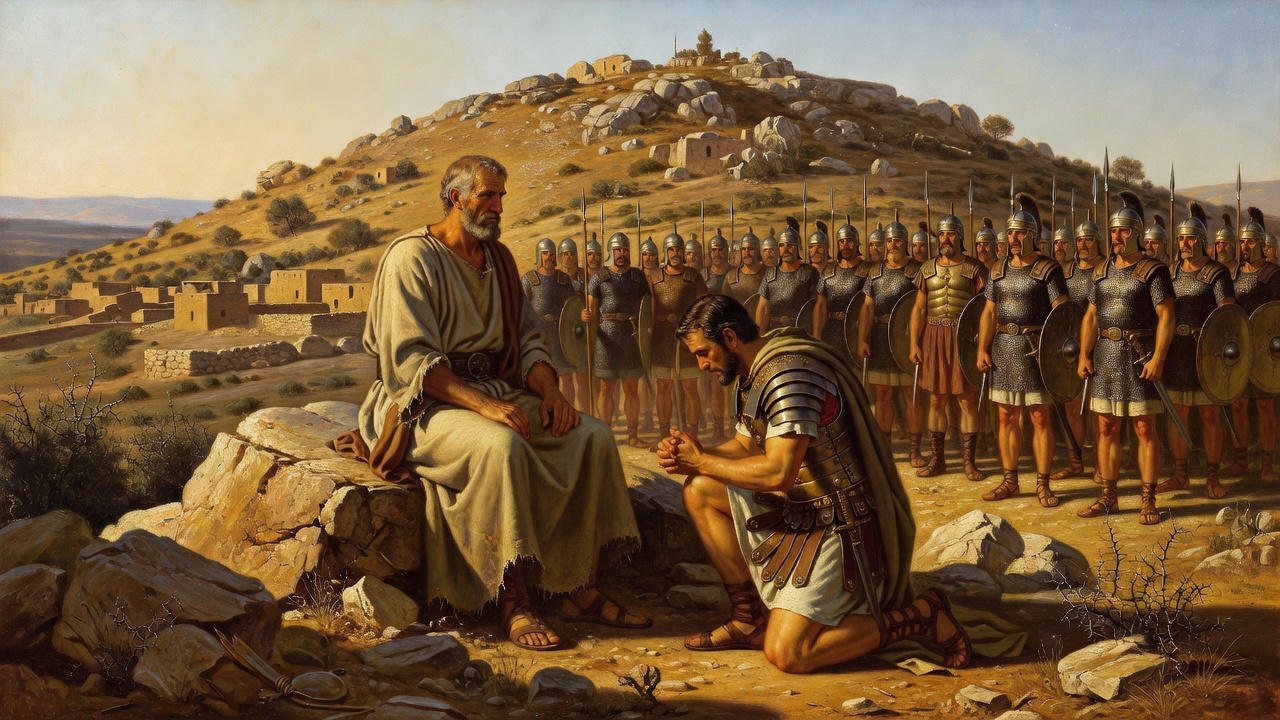
9Then King Ahaziah sent to Elijah a captain with his company of fifty men. So the captain went up to Elijah, who was sitting on top of a hill, and said to him, “Man of God, the king declares, ‘Come down!’”
10Elijah answered the captain, “If I am a man of God, may fire come down from heaven and consume you and your fifty men.”
And fire came down from heaven and consumed the captain and his fifty men.
11So the king sent to Elijah another captain with his fifty men. And the captain said to Elijah, “Man of God, the king declares, ‘Come down at once!’”
12Again Elijah replied, “If I am a man of God, may fire come down from heaven and consume you and your fifty men.”
And the fire of God came down from heaven and consumed the captain and his fifty men.
13So the king sent a third captain with his fifty men. And the third captain went up, fell on his knees before Elijah, and begged him, “Man of God, may my life and the lives of these fifty servants please be precious in your sight. 14Behold, fire has come down from heaven and consumed the first two captains of fifty, with all their men. But now may my life be precious in your sight.”
15Then the angel of the LORD said to Elijah, “Go down with him. Do not be afraid of him.”
So Elijah got up and went down with him to the king.
16And Elijah said to King Ahaziah, “This is what the LORD says: Is there really no God in Israel for you to inquire of His word? Is that why you have sent messengers to inquire of Baal-zebub, the god of Ekron? Therefore you will not get up from the bed on which you are lying. You will surely die.”
Jehoram Succeeds Ahaziah
17So Ahaziah died according to the word of the LORD that Elijah had spoken. And since he had no son, Jehoram succeeded him in the second year of the reign of Jehoram son of Jehoshaphat over Judah.
18As for the rest of the acts of Ahaziah, along with his accomplishments, are they not written in the Book of the Chronicles of the Kings of Israel?
¿Sabías que…?
Elías y el rey Ocozías
- Ocozías buscó consultar a Baal-zebub, una deidad venerada en Ecrón, la más septentrional de las cinco principales ciudades filisteas. El nombre significa "señor de las moscas", ya que se creía que esta deidad alejaba las temidas plagas de moscas en esa región.Fuentes: Baal-zebub · Ekron · el propio texto bíblico
- El rey Ocozías reconoció de inmediato al profeta cuando sus mensajeros describieron a un hombre velludo con un cinturón de cuero en la cintura. Esta descripción era característica de Elías tisbita.Fuentes: Elijah · el propio texto bíblico
- El reinado de Ocozías estuvo marcado por crisis externas y tragedia personal, incluida la rebelión de Moab tras la muerte de Acab y graves heridas sufridas al caer por la celosía de su palacio en Samaria.Fuentes: Ahaziah · el propio texto bíblico
Notas escritas con ayuda de IA a partir de fuentes abiertas (Theographic Bible Metadata, CC BY-SA 4.0; Easton’s Bible Dictionary, dominio público) y revisadas antes de publicarse.
Lugares de este capítulo
- Moab · Hoy: Moab 1 · 31.181, 35.701 · versículo 1
- Ekron · Hoy: Tel Miqne · 31.777, 34.852 · versículos 2, 3, 6, 16
- Samaria · 32.276, 35.195 · versículos 2, 3
Solo aparecen lugares identificados con alta confianza (90 % o más según las fuentes académicas reunidas por OpenBible). Mapa de la época: DARE (Digital Atlas of the Roman Empire), CC BY 4.0; mapa actual: © colaboradores de OpenStreetMap; lugares: OpenBible.info (CC BY 4.0).
Créditos y licencia de esta traducción
Berean Standard Bible
The Holy Bible in English: Berean Standard Bible
Public Domain
Language: English
Contributor: BSB Publishing, LLC
2026-10-02
Fuente: http://ebible.org/engbsb/ · eBible.org