2 Reis 1
Berean Standard Bible · Toque num versículo para ver as referências cruzadas.
Sobre este livro
Sobre 2 Reis
- O Dicionário Bíblico de Easton (1897) afirma que a autoria dos livros de Reis é incerta. Passagens quase idênticas às de Jeremias, juntamente com eventos que Jeremias conheceu pessoalmente, dão algum apoio à tradição de que ele os escreveu, mas Easton considera mais provável que Esdras tenha compilado os livros após o Cativeiro a partir de documentos anteriores. Easton data a composição entre 561 a.C., quando Evil-Merodaque libertou Joaquim, e 538 a.C., o ano do decreto de libertação de Ciro.Fontes: Easton: Kings, The Books of
- Os dois livros de Reis formavam originalmente um só livro nas Escrituras Hebraicas. A Septuaginta foi a primeira a dividi-los em dois e, junto com a Vulgata, os numera como o terceiro e o quarto livros de Reis, contando os livros de Samuel como o primeiro e o segundo.Fontes: Easton: Kings, The Books of
- Esses livros contêm os anais da comunidade judaica desde a ascensão de Salomão até a subjugação do reino por Nabucodonosor e os babilônios, período que Easton descreve como aparentemente de cerca de quatrocentos e cinquenta e três anos. Enquanto Crônicas dá maior destaque ao ofício sacerdotal ou levítico, Reis dá maior destaque ao ofício real, e a narrativa se refere a fontes como o livro dos atos de Salomão e as crônicas dos reis de Judá e de Israel.Fontes: Easton: Kings, The Books of
- Na divisão tríplice das Escrituras feita pelos judeus, os livros de Reis estão classificados entre os Profetas. Easton observa que eles são frequentemente citados ou aludidos por Jesus e os apóstolos.Fontes: Easton: Kings, The Books of
Notas escritas com auxílio de IA a partir de fontes abertas (Theographic Bible Metadata, CC BY-SA 4.0; Easton’s Bible Dictionary, domínio público) e revisadas antes de publicar.
Elijah Denounces Ahaziah
1After the death of Ahab, Moab rebelled against Israel.
2Now Ahaziah had fallen through the lattice of his upper room in Samaria and injured himself. So he sent messengers and instructed them: “Go inquire of Baal-zebub, the god of Ekron, whether I will recover from this injury.”
3But the angel of the LORD said to Elijah the Tishbite, “Go up to meet the messengers of the king of Samaria and ask them, ‘Is it because there is no God in Israel that you are on your way to inquire of Baal-zebub, the god of Ekron?’ 4Therefore this is what the LORD says: ‘You will not get up from the bed on which you are lying. You will surely die.’”
So Elijah departed.
5When the messengers returned to the king, he asked them, “Why have you returned?”
6They replied, “A man came up to meet us and said, ‘Go back to the king who sent you and tell him that this is what the LORD says: Is it because there is no God in Israel that you are sending these men to inquire of Baal-zebub, the god of Ekron? Therefore you will not get up from the bed on which you are lying. You will surely die.’”
7The king asked them, “What sort of man came up to meet you and spoke these words to you?”
8“He was a hairy man,” they answered, “with a leather belt around his waist.”
“It was Elijah the Tishbite,” said the king.
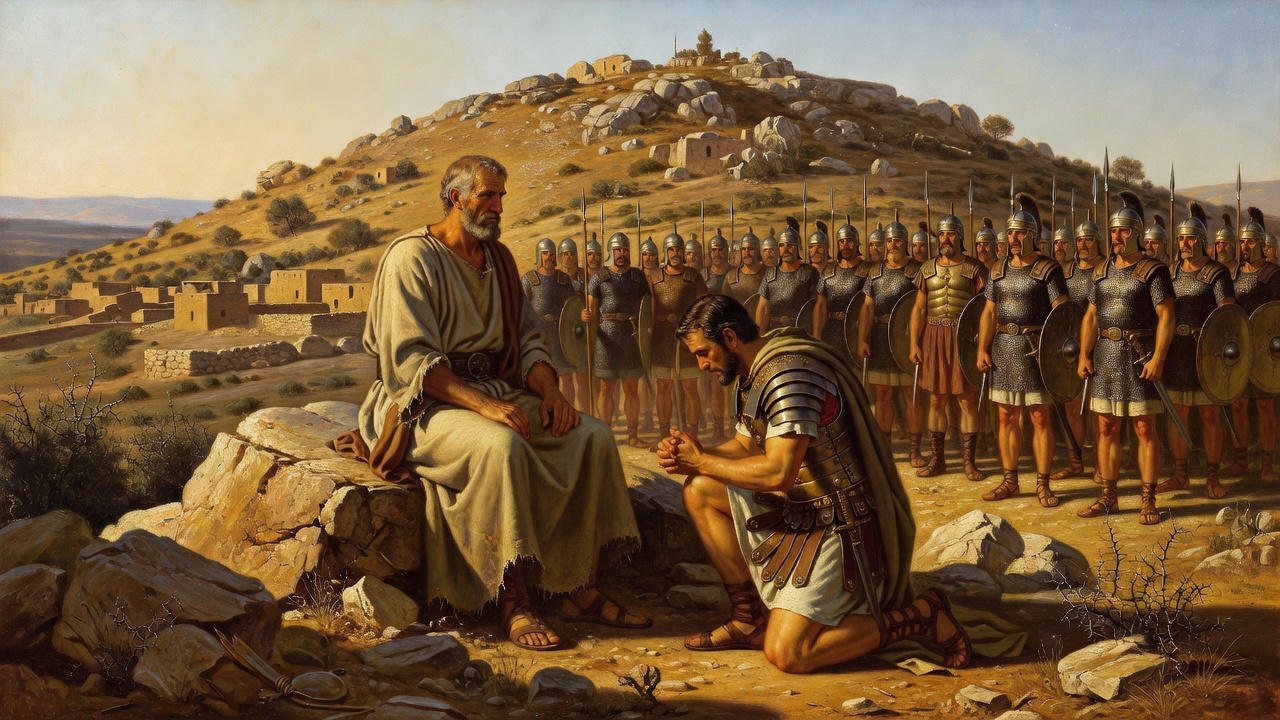
9Then King Ahaziah sent to Elijah a captain with his company of fifty men. So the captain went up to Elijah, who was sitting on top of a hill, and said to him, “Man of God, the king declares, ‘Come down!’”
10Elijah answered the captain, “If I am a man of God, may fire come down from heaven and consume you and your fifty men.”
And fire came down from heaven and consumed the captain and his fifty men.
11So the king sent to Elijah another captain with his fifty men. And the captain said to Elijah, “Man of God, the king declares, ‘Come down at once!’”
12Again Elijah replied, “If I am a man of God, may fire come down from heaven and consume you and your fifty men.”
And the fire of God came down from heaven and consumed the captain and his fifty men.
13So the king sent a third captain with his fifty men. And the third captain went up, fell on his knees before Elijah, and begged him, “Man of God, may my life and the lives of these fifty servants please be precious in your sight. 14Behold, fire has come down from heaven and consumed the first two captains of fifty, with all their men. But now may my life be precious in your sight.”
15Then the angel of the LORD said to Elijah, “Go down with him. Do not be afraid of him.”
So Elijah got up and went down with him to the king.
16And Elijah said to King Ahaziah, “This is what the LORD says: Is there really no God in Israel for you to inquire of His word? Is that why you have sent messengers to inquire of Baal-zebub, the god of Ekron? Therefore you will not get up from the bed on which you are lying. You will surely die.”
Jehoram Succeeds Ahaziah
17So Ahaziah died according to the word of the LORD that Elijah had spoken. And since he had no son, Jehoram succeeded him in the second year of the reign of Jehoram son of Jehoshaphat over Judah.
18As for the rest of the acts of Ahaziah, along with his accomplishments, are they not written in the Book of the Chronicles of the Kings of Israel?
Você sabia?
Elias e o rei Acazias
- Acazias buscou uma consulta a Baal-Zebube, divindade adorada em Ecrom, a mais setentrional das cinco principais cidades filisteias. O nome significa "senhor das moscas", pois acreditava-se que essa divindade afastava as pragas de moscas temidas naquela região.Fontes: Baal-zebub · Ekron · o próprio texto bíblico
- O rei Acazias reconheceu imediatamente o profeta quando seus mensageiros descreveram um homem peludo com um cinto de couro na cintura. Essa descrição era característica de Elias, o tisbita.Fontes: Elijah · o próprio texto bíblico
- O reinado de Acazias foi marcado por crises externas e tragédia pessoal, incluindo a revolta de Moabe após a morte de Acabe e ferimentos graves causados por uma queda da grade de seu palácio em Samaria.Fontes: Ahaziah · o próprio texto bíblico
Notas escritas com auxílio de IA a partir de fontes abertas (Theographic Bible Metadata, CC BY-SA 4.0; Easton’s Bible Dictionary, domínio público) e revisadas antes de publicar.
Lugares deste capítulo
- Moab · Hoje: Moab 1 · 31.181, 35.701 · versículo 1
- Ekron · Hoje: Tel Miqne · 31.777, 34.852 · versículos 2, 3, 6, 16
- Samaria · 32.276, 35.195 · versículos 2, 3
Só aparecem lugares com identificação de alta confiança (90% ou mais segundo as fontes acadêmicas reunidas pelo OpenBible). Mapa da época: DARE (Digital Atlas of the Roman Empire), CC BY 4.0; mapa atual: © colaboradores do OpenStreetMap; lugares: OpenBible.info (CC BY 4.0).
Créditos e licença desta tradução
Berean Standard Bible
The Holy Bible in English: Berean Standard Bible
Public Domain
Language: English
Contributor: BSB Publishing, LLC
2026-10-02
Fonte: http://ebible.org/engbsb/ · eBible.org