1 Timoteo 1
Berean Standard Bible · Toca un versículo para ver sus referencias cruzadas.
Acerca de este libro
Acerca de 1 Timoteo
- El Easton's Bible Dictionary (1897) presenta esta carta como escrita por Pablo a Timoteo, un joven discípulo y compañero de viaje a quien Pablo llamaba su propio hijo en la fe. La madre de Timoteo, Eunice, y su abuela, Loida, son recordadas por su piedad, y su padre era griego; probablemente vivía en Listra, donde Pablo lo tomó como compañero y lo hizo circuncidar para conciliar a los judíos. El nombre Timoteo significa honrar a Dios.Fuentes: Easton: Timothy, First Epistle to · Timotheus
- El Easton's Bible Dictionary (1897) fecha la carta probablemente hacia el año 66 o 67 d. C. Sitúa la redacción en Macedonia, probablemente en Filipos o en alguna otra ciudad de esa región, y no en Laodicea, nombrada en una suscripción final, porque la carta habla de Pablo como quien había dejado Éfeso para ir a Macedonia. Easton ubica esto en el intervalo entre el primer y el segundo encarcelamiento de Pablo, cuando probablemente volvió a visitar lugares de su trabajo anterior en Grecia y Asia y luego siguió hacia Macedonia, habiendo dejado a Timoteo en Éfeso.Fuentes: Easton: Timothy, First Epistle to
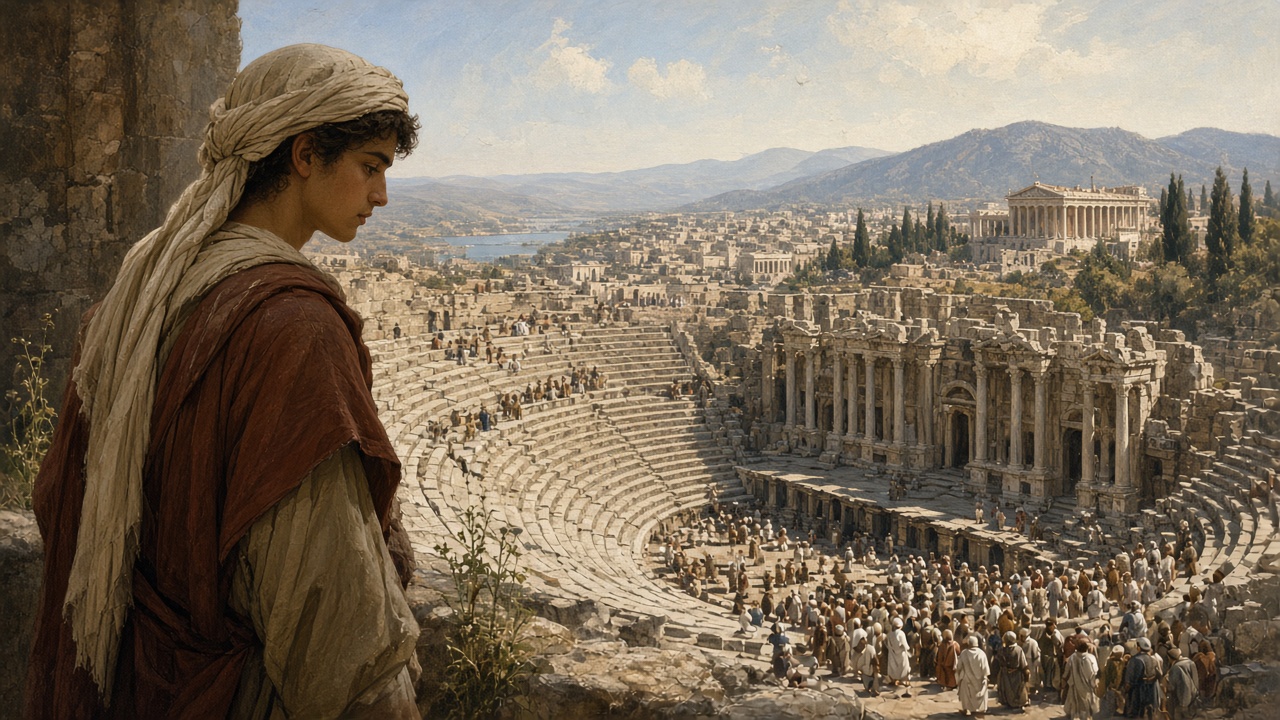
- Éfeso, donde Timoteo permaneció, era la capital del Asia proconsular, la parte occidental del Asia Menor. En tiempos romanos se la llamaba la primera y la más grande metrópoli de Asia, y era famosa por el templo de Diana y por un teatro abierto al cielo, el más grande del mundo, capaz de contener cincuenta mil espectadores. Macedonia, desde donde el diccionario dice que se envió la carta, era una provincia romana al norte de Grecia, gobernada por un propretor con el título de procónsul.Fuentes: Easton: Timothy, First Epistle to · Ephesus · Macedonia
- Según el Easton's Bible Dictionary (1897), la carta consiste principalmente en consejos a Timoteo sobre el culto y la organización de la iglesia y las responsabilidades de sus diversos miembros, y en una exhortación a permanecer fiel en el mantenimiento de la verdad en medio de los errores circundantes.Fuentes: Easton: Timothy, First Epistle to
- El Easton's Bible Dictionary (1897) identifica a Alejandro como un artesano que trabajaba el cobre y que, con Himeneo y otros, promovía ciertas enseñanzas sobre la resurrección, a las que el diccionario llama herejías. Dice que él naufragó en la fe y en la buena conciencia, y que Pablo lo excomulgó, con referencia a 1 Timoteo 1:20.Fuentes: Alexander
Notas escritas con ayuda de IA a partir de fuentes abiertas (Theographic Bible Metadata, CC BY-SA 4.0; Easton’s Bible Dictionary, dominio público) y revisadas antes de publicarse.
Paul’s Greeting to Timothy
1Paul, an apostle of Christ Jesus by the command of God our Savior and of Christ Jesus our hope,
2To Timothy, my true child in the faith:
Grace, mercy, and peace from God the Father and Christ Jesus our Lord.
Correcting False Teachers
3As I urged you on my departure to Macedonia, you should stay on at Ephesus to instruct certain men not to teach false doctrines 4or devote themselves to myths and endless genealogies, which promote speculation rather than the stewardship of God’s work, which is by faith.
5The goal of our instruction is the love that comes from a pure heart, a clear conscience, and a sincere faith. 6Some have strayed from these ways and turned aside to empty talk. 7They want to be teachers of the law, but they do not understand what they are saying or that which they so confidently assert.
8Now we know that the law is good, if one uses it legitimately. 9We realize that law is not enacted for the righteous, but for the lawless and rebellious, for the ungodly and sinful, for the unholy and profane, for killers of father or mother, for murderers, 10for the sexually immoral, for homosexuals, for slave traders and liars and perjurers, and for anyone else who is averse to sound teaching 11that agrees with the glorious gospel of the blessed God, with which I have been entrusted.
God’s Grace to Paul
12I thank Christ Jesus our Lord, who has strengthened me, that He considered me faithful and appointed me to service. 13I was formerly a blasphemer, a persecutor, and a violent man; yet because I had acted in ignorance and unbelief, I was shown mercy. 14And the grace of our Lord overflowed to me, along with the faith and love that are in Christ Jesus.
15This is a trustworthy saying, worthy of full acceptance: Christ Jesus came into the world to save sinners, of whom I am the worst. 16But for this very reason I was shown mercy, so that in me, the worst of sinners, Christ Jesus might display His perfect patience as an example to those who would believe in Him for eternal life. 17Now to the King eternal, immortal, and invisible, the only God, be honor and glory forever and ever. Amen.
18Timothy, my child, I entrust you with this command in keeping with the previous prophecies about you, so that by them you may fight the good fight, 19holding on to faith and a good conscience, which some have rejected and thereby shipwrecked their faith. 20Among them are Hymenaeus and Alexander, whom I have handed over to Satan to be taught not to blaspheme.
¿Sabías que…?
El encargo de Timoteo en Éfeso
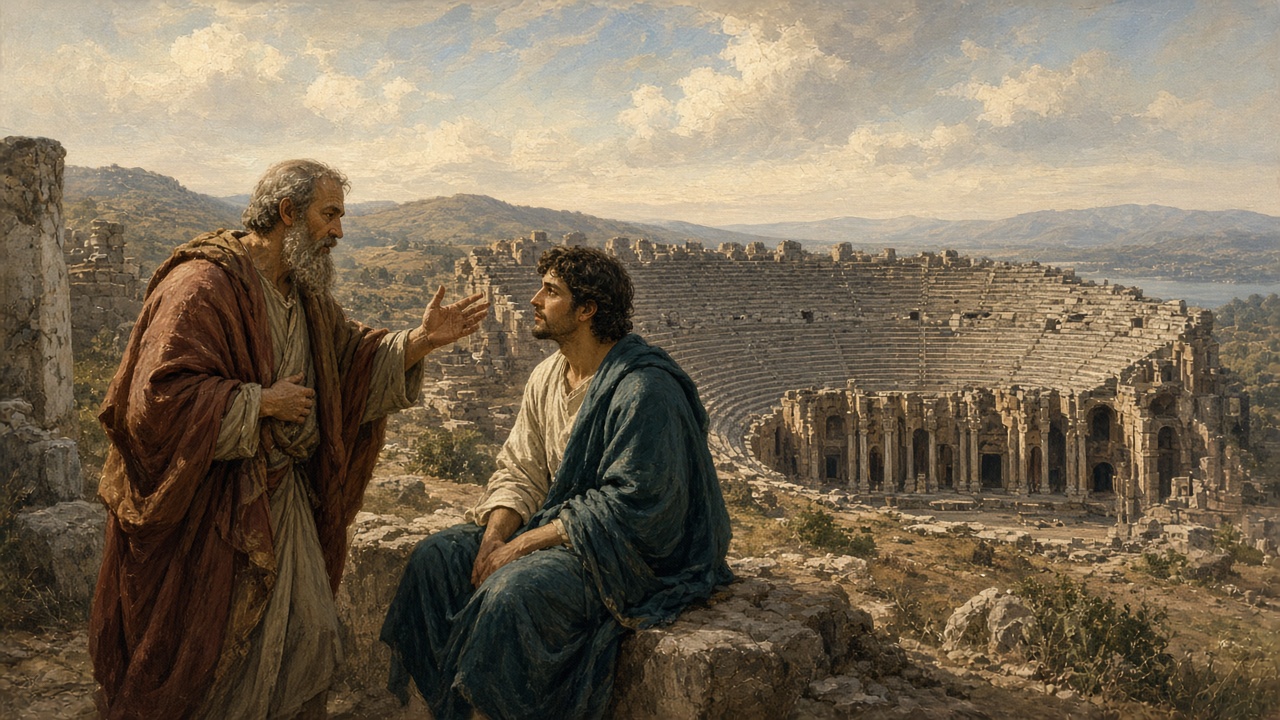
- Al partir hacia Macedonia, Pablo exhortó a Timoteo a quedarse en Éfeso y a instruir a ciertos hombres para que no enseñaran doctrinas falsas ni se dedicaran a mitos y genealogías interminables. Éfeso era la capital de Asia proconsular, la parte occidental de Asia Menor, y en tiempos romanos llevaba el título de primera y más grande metrópoli de Asia. Macedonia era una provincia romana situada al norte de Grecia.Fuentes: el propio texto bíblico · Ephesus · Macedonia
- Pablo llama a Timoteo su verdadero hijo en la fe. El nombre Timoteo significa honrar a Dios. El Diccionario Bíblico de Easton (1897) lo describe como un joven discípulo y compañero en muchos viajes de Pablo, hijo de un padre griego, a quien Pablo consideraba su propio hijo en la fe.Fuentes: el propio texto bíblico · Timotheus
- El capítulo nombra a Himeneo y a Alejandro entre quienes rechazaron la fe y la buena conciencia y así naufragaron en la fe; Pablo dice que los entregó a Satanás para que fueran enseñados a no blasfemar. El Diccionario Bíblico de Easton (1897) identifica a Alejandro como un calderero que, con Himeneo y otros, naufragó en la fe y en la buena conciencia, y describe este acto como una excomunión, comparándolo con 1 Corintios 5:5. Satanás significa adversario o acusador, y en el Nuevo Testamento el nombre se usa de manera intercambiable con el diablo.Fuentes: el propio texto bíblico · Alexander · Satan
Notas escritas con ayuda de IA a partir de fuentes abiertas (Theographic Bible Metadata, CC BY-SA 4.0; Easton’s Bible Dictionary, dominio público) y revisadas antes de publicarse.
Lugares de este capítulo
Solo aparecen lugares identificados con alta confianza (90 % o más según las fuentes académicas reunidas por OpenBible). Mapa de la época: DARE (Digital Atlas of the Roman Empire), CC BY 4.0; mapa actual: © colaboradores de OpenStreetMap; lugares: OpenBible.info (CC BY 4.0).
Créditos y licencia de esta traducción
Berean Standard Bible
The Holy Bible in English: Berean Standard Bible
Public Domain
Language: English
Contributor: BSB Publishing, LLC
2026-10-02
Fuente: http://ebible.org/engbsb/ · eBible.org