1 Timothy 1
Berean Standard Bible · Tap a verse to see its cross-references.
About this book
About 1 Timothy
- Easton's Bible Dictionary (1897) presents this letter as written by Paul to Timothy, a young disciple and traveling companion whom Paul called his own son in the faith. Timothy's mother, Eunice, and grandmother, Lois, are noted for their piety, and his father was a Greek; he probably lived at Lystra, where Paul took him as a companion and had him circumcised in order to conciliate the Jews. The name Timothy means Honouring God.Sources: Easton: Timothy, First Epistle to · Timotheus
- Easton's Bible Dictionary (1897) dates the letter probably to about A.D. 66 or 67. It places the writing in Macedonia, probably at Philippi or some other city in that region, and not at Laodicea, named in a closing subscription, because the letter speaks of Paul as having left Ephesus for Macedonia. Easton sets this in the interval between Paul's first and second imprisonments, when Paul probably revisited places of his earlier work in Greece and Asia and then went on to Macedonia, having left Timothy behind in Ephesus.Sources: Easton: Timothy, First Epistle to
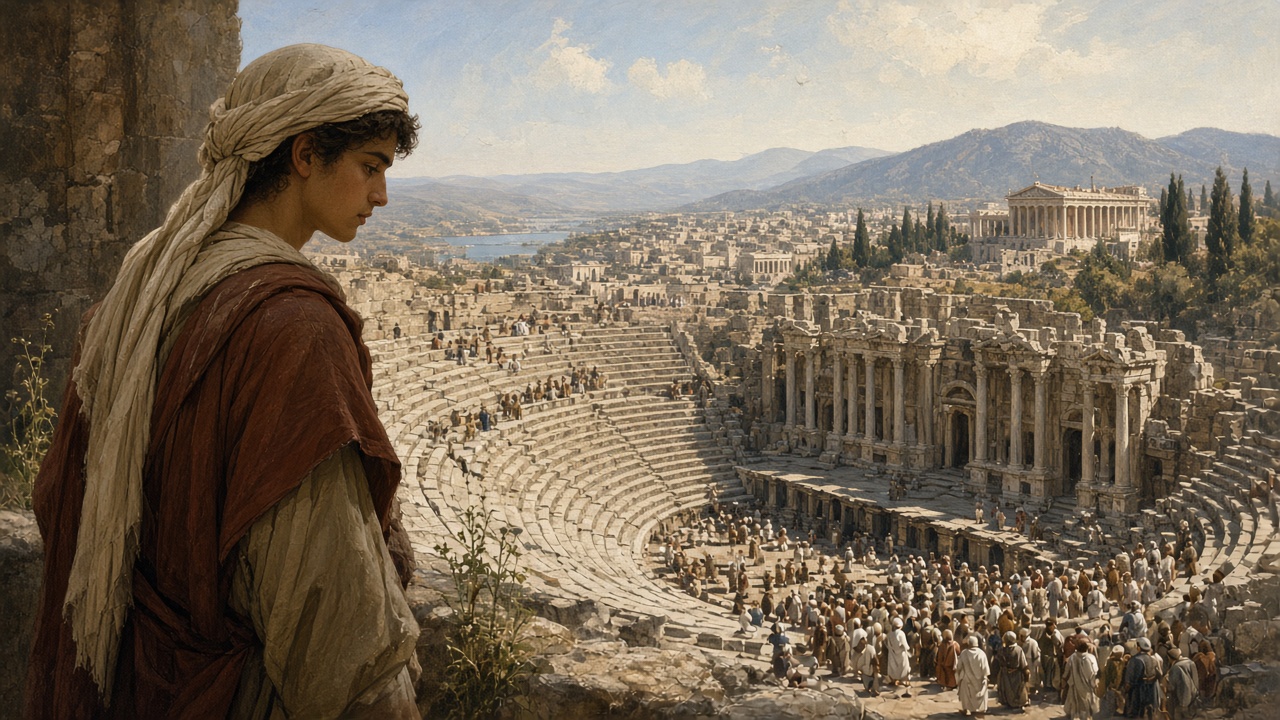
- Ephesus, where Timothy remained, was the capital of proconsular Asia, the western part of Asia Minor. In Roman times it was called the first and greatest metropolis of Asia, and it was famed for the Temple of Diana and for a theatre open to the sky, the largest in the world, capable of holding fifty thousand spectators. Macedonia, from which the dictionary says the letter was sent, was a Roman province north of Greece, governed by a propraetor with the title of proconsul.Sources: Easton: Timothy, First Epistle to · Ephesus · Macedonia
- According to Easton's Bible Dictionary (1897), the letter consists mainly of counsel to Timothy about the worship and organization of the church and the responsibilities of its various members, and of an exhortation to remain faithful in maintaining the truth amid surrounding errors.Sources: Easton: Timothy, First Epistle to
- Easton's Bible Dictionary (1897) identifies Alexander as a coppersmith who, with Hymenaeus and others, promoted certain teachings about the resurrection, which the dictionary calls heresies. It says that he made shipwreck of faith and of a good conscience, and that Paul excommunicated him, with reference to 1 Timothy 1:20.Sources: Alexander
Notes written with AI assistance from open sources (Theographic Bible Metadata, CC BY-SA 4.0; Easton’s Bible Dictionary, public domain) and reviewed before publishing.
Paul’s Greeting to Timothy
1Paul, an apostle of Christ Jesus by the command of God our Savior and of Christ Jesus our hope,
2To Timothy, my true child in the faith:
Grace, mercy, and peace from God the Father and Christ Jesus our Lord.
Correcting False Teachers
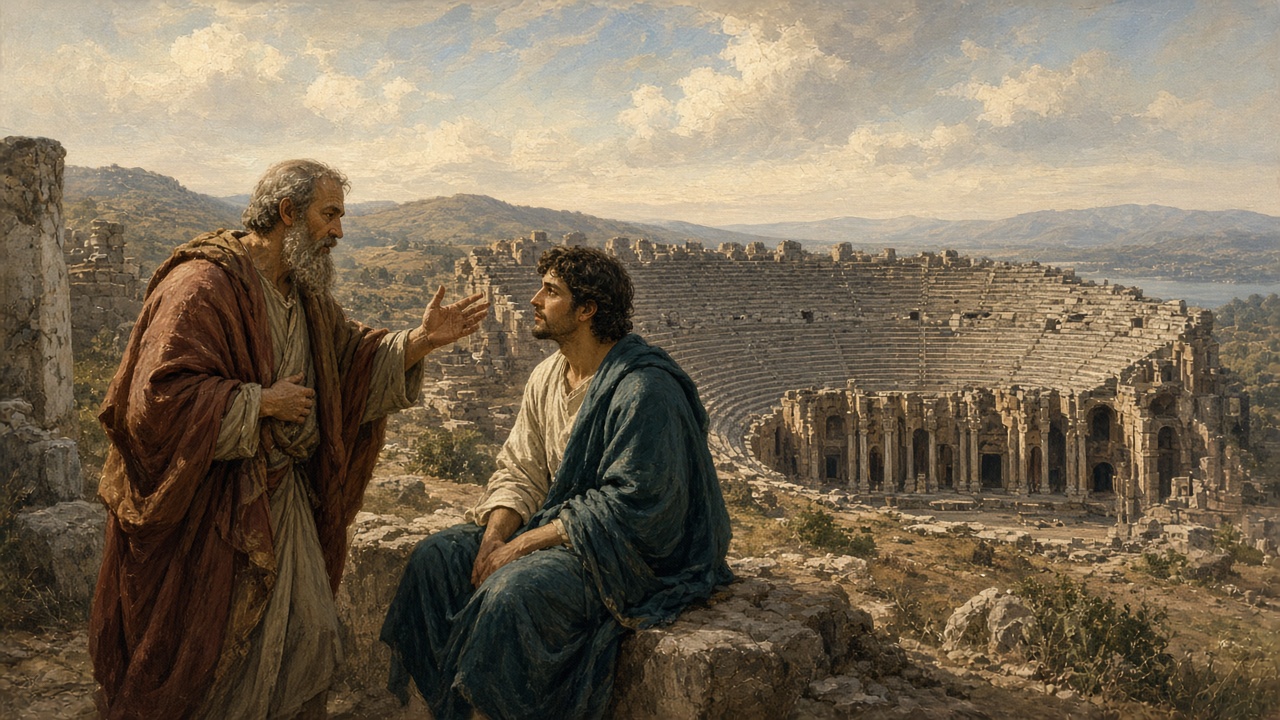
3As I urged you on my departure to Macedonia, you should stay on at Ephesus to instruct certain men not to teach false doctrines 4or devote themselves to myths and endless genealogies, which promote speculation rather than the stewardship of God’s work, which is by faith.
5The goal of our instruction is the love that comes from a pure heart, a clear conscience, and a sincere faith. 6Some have strayed from these ways and turned aside to empty talk. 7They want to be teachers of the law, but they do not understand what they are saying or that which they so confidently assert.
8Now we know that the law is good, if one uses it legitimately. 9We realize that law is not enacted for the righteous, but for the lawless and rebellious, for the ungodly and sinful, for the unholy and profane, for killers of father or mother, for murderers, 10for the sexually immoral, for homosexuals, for slave traders and liars and perjurers, and for anyone else who is averse to sound teaching 11that agrees with the glorious gospel of the blessed God, with which I have been entrusted.
God’s Grace to Paul
12I thank Christ Jesus our Lord, who has strengthened me, that He considered me faithful and appointed me to service. 13I was formerly a blasphemer, a persecutor, and a violent man; yet because I had acted in ignorance and unbelief, I was shown mercy. 14And the grace of our Lord overflowed to me, along with the faith and love that are in Christ Jesus.
15This is a trustworthy saying, worthy of full acceptance: Christ Jesus came into the world to save sinners, of whom I am the worst. 16But for this very reason I was shown mercy, so that in me, the worst of sinners, Christ Jesus might display His perfect patience as an example to those who would believe in Him for eternal life. 17Now to the King eternal, immortal, and invisible, the only God, be honor and glory forever and ever. Amen.
18Timothy, my child, I entrust you with this command in keeping with the previous prophecies about you, so that by them you may fight the good fight, 19holding on to faith and a good conscience, which some have rejected and thereby shipwrecked their faith. 20Among them are Hymenaeus and Alexander, whom I have handed over to Satan to be taught not to blaspheme.
Did you know?
Timothy's Charge in Ephesus
- As he departed for Macedonia, Paul urged Timothy to stay in Ephesus and instruct certain men not to teach false doctrines or devote themselves to myths and endless genealogies. Ephesus was the capital of proconsular Asia, the western part of Asia Minor, and in Roman times bore the title of the first and greatest metropolis of Asia. Macedonia was a Roman province lying north of Greece.Sources: the Bible text itself · Ephesus · Macedonia
- Paul addresses Timothy as his true child in the faith. The name Timotheus means honouring God. Easton's Bible Dictionary (1897) describes him as a young disciple and companion on many of Paul's journeys, the son of a Greek father, whom Paul regarded as his own son in the faith.Sources: the Bible text itself · Timotheus
- The chapter names Hymenaeus and Alexander among those who rejected faith and a good conscience and so shipwrecked their faith; Paul says he has handed them over to Satan to be taught not to blaspheme. Easton's Bible Dictionary (1897) identifies Alexander as a coppersmith who, with Hymenaeus and others, shipwrecked faith and a good conscience, and describes this act as an excommunication, comparing it with 1 Corinthians 5:5. Satan means adversary or accuser, and in the New Testament the name is used interchangeably with the devil.Sources: the Bible text itself · Alexander · Satan
Notes written with AI assistance from open sources (Theographic Bible Metadata, CC BY-SA 4.0; Easton’s Bible Dictionary, public domain) and reviewed before publishing.
Places in this chapter
Only places identified with high confidence are shown (90% or more according to the scholarly sources compiled by OpenBible). Period map: DARE (Digital Atlas of the Roman Empire), CC BY 4.0; modern map: © OpenStreetMap contributors; places: OpenBible.info (CC BY 4.0).
Credits and license for this translation
Berean Standard Bible
The Holy Bible in English: Berean Standard Bible
Public Domain
Language: English
Contributor: BSB Publishing, LLC
2026-10-02
Source: http://ebible.org/engbsb/ · eBible.org