Hechos 16
Nǫ̀htsı̨̨ Nı̨̨htł'è · Toca un versículo para ver sus referencias cruzadas.
Tımothy, Paul eyıts'ǫ Sılas goxè ajà
1Paul, kǫ̀ta Derbe eyıts'ǫ kǫ̀ta Lystra nàhtła, Nǫ̀htsı̨ wecheekeè ı̨łè Tımothy wìyeh ekǫ nàdè. Tımothy wemǫ Israel got'ı̨į̀ hǫt'e eyıts'ǫ wegha ehkw'ı-ahodı hǫt'e, hanìkò wetà Greece got'ı̨į̀ hǫt'e. 2Kǫ̀ta Lystra eyıts'ǫ kǫ̀ta Iconıum gots'ǫ Nǫ̀htsı̨ wecheekeè Tımothy ghǫ nezı̨į̀ gogede. 3Paul, Tımothy edexè kǫ̀ta ayele ha nıwǫ, eyıt'à Moses wenàowoò k'ę̀ę̀ wekwǫ̀ k'e nàat'a ayį̀į̀là. Israel got'ı̨į̀ eyı nàgedèe sìı Tımothy wetà Greece got'ı̨į̀ ne gık'èezǫ t'à ayį̀į̀là. 4Kǫ̀ta yàgòlaa gota k'egedè ekò Zezì wecheekeèdeè eyıts'ǫ k'aodèe gı̨ı̨lı̨ı̨ Jerusalem ekǫ nàowo dǫ gha gèhtsı̨ ı̨lèe sìı k'èagı̨ı̨t'e ha gògedı. 5Eyıt'à Nǫ̀htsı̨ wecheekeè hazǫǫ̀ gınì nàtsoò ajà, eyıts'ǫ dzę taàt'eè dǫ łǫ gotagı̨ı̨de.
Paul wenazhıı xègoèht'į̀
6Paul eyıts'ǫ dǫ gıxè at'ı̨ı̨ sìı Phrygıa nèk'e eyıts'ǫ Galatıa nèk'e hazǫǫ̀ k'egıadè, hanìkò Yedàyeh Nezı̨ı̨ Asıa nèk'e godı nezı̨ı̨ dǫ ts'ǫ̀ agı̨į̀là agǫ̀ǫ̀là-le. 7Mysıa nèk'e ts'ǫ̀ nıwà-le nègı̨ı̨de ekò Bıthynıa nèk'e agede ha hogeèhdzà hanìkò Zezì wets'ǫ Įnì Degaı ekǫ agejà-le agǫ̀ǫ̀là. 8Eyıt'à Mysıa nèk'e goxa geèhde, kǫ̀ta Troas ts'ǫ̀ agejà. 9Eyı toò k'e Paul wenazhıı xègoèht'į̀. Macedonıa nèk'e gots'ǫ dǫ nàwo xè yeghǫnàdaetì, hadı, “Gonèk'e Macedonıa ts'ǫ̀ anede, gots'ànedı,” yèhdı, wenazhıı hagòjà. 10Paul wenazhıı xègoèht'į̀ tł'axǫǫ̀ ekòet'ıì Macedonıa nèk'e ts'ǫ̀ ts'eedè ha sınìts'ı̨ı̨de. Nǫ̀htsı̨ hagòhdı wek'èts'eezǫ t'à, ekǫ godı nezı̨ı̨ dǫ gıghàts'eɂà ha ts'eède.
Lydıa wegha ehkw'ı-ahodıì ajà
11Kǫ̀ta Troas gots'ǫ ts'eèɂe, kǫ̀ta Samothrace ts'ǫ̀ ehkw'ıì ats'ejà. Ek'èdaedzęę̀ k'e kǫ̀ta Neapolıs ts'ǫ̀ ts'eède. 12Eyı gots'ǫ kǫ̀godeè Phılıppı ts'ǫ̀ ats'ejà. Roman got'ı̨į̀ eyı kǫ̀godeè gogèhtsı̨ ı̨lè. Macedonıa nèk'e hazǫǫ̀ gogha kǫ̀godeè wet'àaɂà hǫt'e. Whaà-lea gots'ǫ̀ eyı nàts'ı̨ı̨dè.
13Nǫ̀htsı̨ Dzęę̀ k'e kǫ̀ta gà deh nıɂàa ekǫ dǫ yagehtı ha sǫnı ts'ı̨ı̨wǫ t'à, ekǫ ts'ǫ̀ ats'ejà. Ts'èko mǫ̀hdaa eyı łą̀ą nègı̨ı̨dee sìı gıxè ts'eèhkw'e eyıts'ǫ gıts'ǫ̀ gots'ı̨ı̨de. 14Ts'èko ı̨łè eyı goèhkw'ǫǫ sìı Lydıa wìyeh. Eyı ts'èko kǫ̀godeè Thıyatıra gots'ǫ ɂehtł'ı̨-dek'oo weghǫ nàedìı dǫǫ̀ elı̨ eyıts'ǫ Nǫ̀htsı̨-ghàtsį̀edıı-dǫǫ̀ elı̨. Eyı ts'èko sìı Paul dàdıı yeèhkw'ǫ t'à gots'ǫ̀ K'àowo wegha ehkw'ı-ahodı ayį̀į̀là. 15Eyı ts'èko ededı̨ eyıts'ǫ dǫ yekǫ̀ nàgedèe sìı gık'ètaìdzǫ, eyı tł'axǫǫ̀ wekǫ̀ ts'ǫ̀ agǫ̀ǫ̀là, hadı, “Gots'ǫ̀ K'àowo segha ehkw'ı adı aht'e seahwhǫ nı̨dè sekǫ̀ aaht'e,” gòhdı. Goghǫ daèhnǫ t'à wekǫ̀ ts'ǫ̀ ats'ejà.
Paul eyıts'ǫ Sılas gıdaàtǫ
16Įłàà Israel got'ı̨į̀ edı̨į̀ yagehtıı k'è gòɂǫǫ ts'ǫ̀ ts'adè ekò t'eekoa dǫ nàyeèhdìı sìı goghaetła. Įnìłı̨ı̨ wets'ǫ̀-èlı̨ t'à nadąą̀ k'eet'į̀. Nadąą̀ gode t'à, wets'ǫ̀ k'àhogedè gı̨ı̨lı̨ı̨ sìı gha sǫǫ̀mba łǫ ehtsı̨. 17Eyı t'eekoa Paul eyıts'ǫ goxı̨ gok'èè k'etło xè hadıì yaìzeh, “Dıı dǫ sìı Nǫ̀htsı̨ wenahk'e gǫ̀hłı̨-le wecheekeè agı̨ı̨t'e. Dànì edaxàts'eedè ha sìı naxıts'ǫ̀ hagedı ha,” hadıì yaìzeh. 18Łǫ dzęę̀ ts'ǫ̀ hadı xè gok'èè k'eda. Nǫǫdea Paul wegha dìì agòjà t'à yets'ǫ̀ naɂa gà ı̨nìłı̨ı̨ ts'ǫ̀ hadı, “Zezì wıızì dahxà t'eekoa weyìı gots'ǫ xàı̨tłe!” yèhdı. Ekòet'ıì ı̨nìłı̨ı̨ wets'ǫǫ̀ ajà.
19T'eekoa ts'ǫ̀ k'ahogedè gı̨ı̨lı̨ı̨ sìı k'achı̨ gıt'à sǫǫ̀mba gehtsı̨ ha-le gık'èezǫ t'à Paul eyıts'ǫ Sılas dagogıachì. Kǫ̀ta k'aodèe ts'ǫ̀ agogele ha t'asìı nàedìı k'è yàgòlaa ekǫ ts'ǫ̀ gogeèwa. 20K'aodèe nadąą̀ nègogį̀ı̨wa, hagedı, “Dıı dǫ Israel got'ı̨į̀ agı̨ı̨t'e, gıts'ıhɂǫ̀ kǫ̀ta hazǫǫ̀ dǫ xè nàdahoowo. 21Goxı̨ Roman got'ı̨į̀ ats'ı̨ı̨t'ee sìı gonàowoò k'èch'a dǫ hoghàgogeehtǫ,” gedı.
22Hagedı t'à dǫ łǫ Paul eyıts'ǫ Sılas k'èch'a gogedeè agejà. Eyıt'à k'aodèe gıyatıì k'e gıgoht'ǫǫ̀ gok'e nàgį̀ı̨hdlah gà nàgogı̨ı̨hkwa. 23Hòtł'ò nàgogı̨ı̨hkwa tł'axǫǫ̀ dǫ-danìı̨laa-kǫ̀ ts'ǫ̀ agogį̀į̀là. Dǫ-danìı̨laa-k'èdìı-dǫǫ̀ hotıì nezı̨į̀ goxoehdı ha gıìhdı. 24Hagedı t'à kǫ̀ goyìı xàts'etła ha dìì sìı nègogį̀ı̨wa, eyıts'ǫ gıkechı̨į̀ dechı̨ t'à wedaàdoò agı̨į̀là. Gıkechı̨į̀ dechı̨ t'à wedaàdoò agı̨į̀là|src="HK019C.tif" size="span" ref="16.24"
25Totanı ekìıyeè k'e Paul eyıts'ǫ Sılas yagehtı xè Nǫ̀htsı̨ ts'ǫ̀ gejı̨, dǫ eyıì-le gıdanìı̨laa sìı gogeèhkw'ǫ. 26Hǫtsaa dèè hòtł'ò nàgoèhdǫ t'à yìetł'aà hazǫǫ̀ nàedaà ajà. Ekòet'ıì enìı̨tǫ hazǫǫ̀ ehghàà enìxànııtł'ı, eyıts'ǫ dǫ hazǫǫ̀ satsǫ̀tł'ıì gık'e whelaa sìı nàı̨tł'ı. 27Dǫ-danìı̨laa-k'èdìı-dǫǫ̀ ts'ı̨ı̨wo. Dǫ-danìı̨laa-kǫ̀ enìı̨tǫ hazǫǫ̀ enìxàı̨la yaɂı̨ ekò behcho edets'ǫ̀ xàechì, dǫ hazǫǫ̀ xàtı̨mǫgeède sǫnı nıwǫ t'à ełaàdìwı ha k'ehoɂa. 28Hanìkò Paul yets'ǫ̀ whezeh, hadı, “T'asadı̨ı̨le-le, hazǫǫ̀ jǫ ts'eèhkw'e hǫt'e,” yèhdı.
29Eyıt'à dǫ-danìı̨laa-k'èdìı-dǫǫ̀, ek'aèk'ǫ sets'ǫ̀ ààhchı, gòhdı. Ekòet'ıì goyaèhtła gà, dèhyeh t'à Paul eyıts'ǫ Sılas gogà nàgòı̨hgè. 30Xàgoèwa tł'axǫǫ̀ dagoehke hadı, “K'àowo, edaxàseetè gha ayìı dàhłe ha?” gòhdı.
31Gıts'ǫ̀ hadı, “Zezì gots'ǫ̀ K'àowo ehkw'ı adı neewǫ nı̨dè edaxàneetè ha, eyıts'ǫ nèot'ı̨ nexè nàgedèe sı edaxàgeedè ha,” gıìhdı. 32Eyıt'à ededı̨ eyıts'ǫ wekǫ̀ dǫ nàdèe sìı gots'ǫ̀ K'àowo weyatıì t'à gots'ǫ̀ gogı̨ı̨de. 33Totanı ekìıyeè k'e dǫ-danìı̨laa-k'èdìı-dǫǫ̀ whatsǫǫ̀ nègòı̨wa gà gokaà k'enaı̨htso. Eyı tł'axǫǫ̀ ededı̨ eyıts'ǫ wèot'ı̨ hazǫǫ̀ ekòet'ıì gık'ètaìdzǫ. 34Dǫ-danìı̨laa-k'èdìı-dǫǫ̀ Paul eyıts'ǫ Sılas edekǫ̀ ts'ǫ̀ nagòowa, eyıts'ǫ shègetı̨ ha t'asìı goghàı̨dì. Nǫ̀htsı̨ yegha ehkw'ı adıì ajà t'à sıì wınà, wèot'ı̨ sı hazǫǫ̀ gınà.
35K'omǫǫ̀dǫǫ̀ dzęh agòjà ekò kǫ̀ta k'aodèe edecheekeè dǫ-danìı̨laa-k'èdìı-dǫǫ̀ ts'ǫ̀ gogeèhɂà. Yatı gıdanìı̨ɂǫ hagedı, “Eyı dǫ xàgeedè agı̨ı̨le,” gıìhdı. 36Eyıt'à dǫ-danìı̨laa-k'èdìı-dǫǫ̀ Paul ts'ǫ̀ hadı, “Kǫ̀ta k'aodèe, nı̨ eyıts'ǫ Sılas xàahdè ha naxègedı. Eyıt'à naahdè ha dìì-le. Naxıxè sìghà welè,” gòhdı.
37Hanìkò Paul kǫ̀ta k'aodèe cheekeè ts'ǫ̀ hadı, “Gosınìyagı̨ı̨htı-le et'ıì dǫ daà nàgogı̨ı̨hkwa. Roman got'ı̨į̀ k'ę̀ę̀ goıtà kò dǫ-danìı̨laa-kǫ̀ ts'ǫ̀ agogį̀į̀là. Ekìı hanì dǫ naàhtǫ nagogeehɂà ha gı̨ı̨wǫ nì? Į̀le, ededı̨ gots'ǫ̀ gııdè gà xàgogııwa,” gòhdı.
38Kǫ̀ta k'aodèe cheekeè Paul dàdıı sìı hazǫǫ̀ k'aodèe ts'ǫ̀ hagedı. K'aodèe, Paul eyıts'ǫ Sılas, Roman got'ı̨į̀ k'ę̀ę̀ gııtà gok'èhogeèhzà ekò geèhyeh lagejà. 39K'aodèe, Paul eyıts'ǫ Sılas ts'ǫ̀ dǫ nezı̨ı̨ gı̨ı̨lı̨ ha gı̨ı̨wǫ t'à dǫ-danìı̨laa-kǫ̀ gots'ǫ xàgogeèwa, ts'èwhı̨į̀ kǫ̀ta ts'ǫǫ̀ naahdè gògedı. 40Paul eyıts'ǫ Sılas dǫ-danìı̨laa-kǫ̀ gots'ǫ xàgeède tł'axǫǫ̀ Lydıa wekǫ̀ ts'ǫ̀ t'akwełǫ̀ǫ̀ agejà. Ekǫ Nǫ̀htsı̨ wecheekeè xè gıakw'è. Yatı nezı̨ı̨ t'à nàgetsoò agogį̀į̀là tł'axǫǫ̀ nageèhde.
¿Sabías que…?
De Listra a Filipos
- En Listra, Pablo encontró a Timoteo, un discípulo de quien hablaban bien los hermanos de Listra e Iconio, hijo de una judía creyente y de un padre griego. Queriendo llevarlo como compañero, Pablo lo circuncidó a causa de los judíos de allí, que sabían que su padre era griego. El diccionario bíblico de Easton (1897) dice que Timoteo probablemente vivía en Listra y parece haberse convertido en la visita anterior de Pablo.Fuentes: el propio texto bíblico · Timotheus
- Después de que se les impidió hablar en la provincia de Asia, Pablo y sus compañeros viajaron por Frigia y Galacia. En la frontera de Misia no se les permitió entrar en Bitinia, así que bajaron a Troas, el puerto principal de Misia, en la costa noroeste de Asia Menor, ciudad que recibió su nombre de la antigua Troya, a unas cuatro millas al norte. Allí, una visión nocturna de un hombre de Macedonia que pedía ayuda los llevó a navegar hacia esa provincia romana al norte de Grecia.Fuentes: el propio texto bíblico · Mysia · Troas · Macedonia
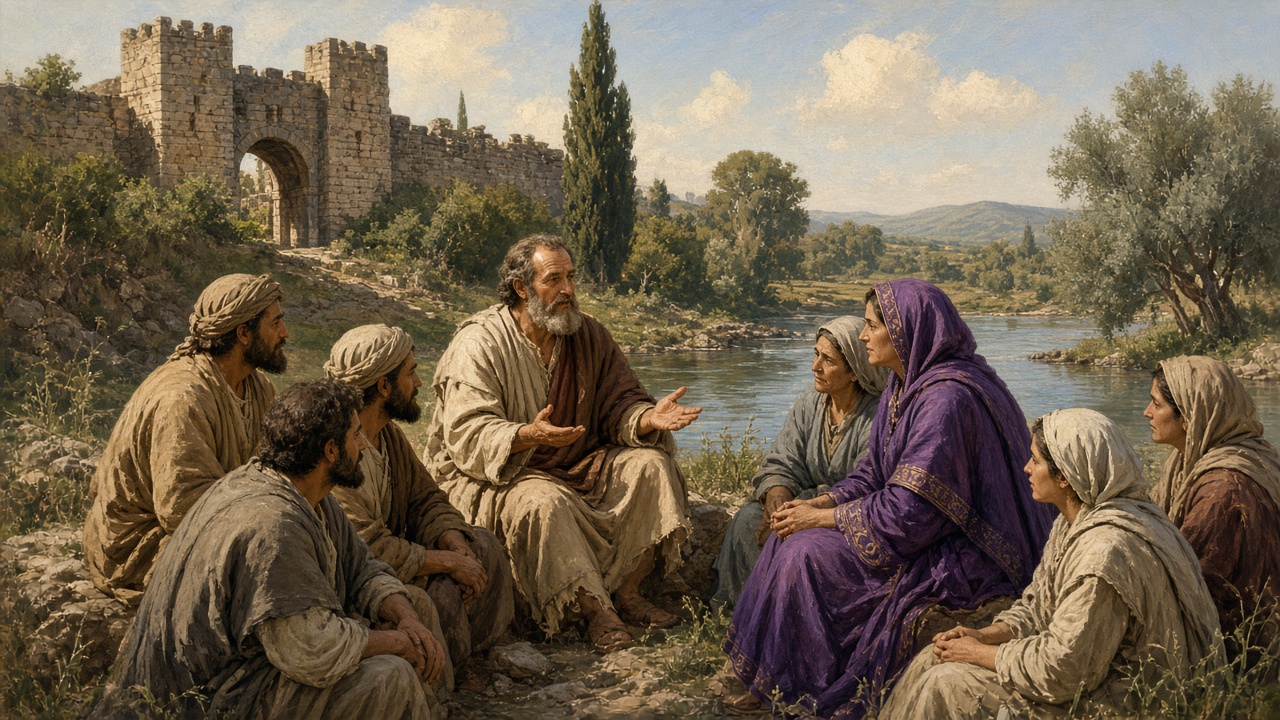
- En la colonia romana de Filipos, Pablo y sus compañeros encontraron, junto al río y fuera de la puerta de la ciudad, un lugar donde era costumbre orar, y allí se habían reunido unas mujeres. Entre ellas estaba Lidia, comerciante de telas de púrpura, de Tiatira, y adoradora de Dios; después de que ella y los de su casa fueron bautizados, convenció a los viajeros de quedarse en su casa. El diccionario bíblico de Easton (1897) la describe como una prosélita de considerable riqueza y como la primera persona en Europa que abrazó el cristianismo.Fuentes: el propio texto bíblico · Lydia
Notas escritas con ayuda de IA a partir de fuentes abiertas (Theographic Bible Metadata, CC BY-SA 4.0; Easton’s Bible Dictionary, dominio público) y revisadas antes de publicarse.
Lugares de este capítulo
- Lystra · Hoy: Tel Lystra · 37.602, 32.338 · versículos 1, 2
- Iconium · Hoy: Konya · 37.872, 32.492 · versículo 2
- Jerusalem · 31.777, 35.234 · versículo 4
- Asia · 38.400, 28.300 · versículo 6
- Galatia · 39.267, 32.983 · versículo 6
- Phrygia · 39.000, 31.000 · versículo 6
- Bithynia · 40.500, 31.000 · versículo 7
- Mysia · 40.000, 28.500 · versículos 7, 8
- Troas · Hoy: Alexandria Troas · 39.752, 26.159 · versículos 8, 11
- Greece · 37.972, 23.727 · versículo 9
- Macedonia · 41.600, 22.540 · versículos 9, 10, 12
- Neapolis · Hoy: Kavala · 40.935, 24.415 · versículo 11
- Samothrace · Hoy: Samothraki · 40.450, 25.583 · versículo 11
- Philippi · 41.012, 24.285 · versículo 12
- Thyatira · Hoy: Akhisar · 38.920, 27.837 · versículo 14
Solo aparecen lugares identificados con alta confianza (90 % o más según las fuentes académicas reunidas por OpenBible). Mapa de la época: DARE (Digital Atlas of the Roman Empire), CC BY 4.0; mapa actual: © colaboradores de OpenStreetMap; lugares: OpenBible.info (CC BY 4.0).
Créditos y licencia de esta traducción
Nǫ̀htsı̨̨ Nı̨̨htł'è
Dogrib: Dogrib Genesis & New Testament New Testament & Portions of Old Testament
copyright © 2009 Canadian Bible Society
Language: Dogrib
Translation by: Canadian Bible Society
Tłı̨chǫ Genesis and New Testament
About Tłı̨chǫ
Tłı̨chǫ (Dogrib) is a Na-Dene (Athabaskan) language. It is spoken by the First Nations Tłı̨chǫ people in the Northwest Territories in Canada. It has the largest number of speakers of any of the Aboriginal language communities in the NWT, and is one of the official languages of the Northwest Territories.
About This Translation
This translation includes the book of Genesis and the New Testament in Tłı̨chǫ. The first edition of the Tłı̨chǫ New Testament was published in 2003. It was a historic event, as it was the first time in more than a hundred years that a complete New Testament was published for one of the Dene First Nations in the Territories. The first edition was well received and quickly sold out. In the meantime the book of Genesis had been completed. Consequently, the 2008 reprint of the Tłı̨chǫ New Testament included Genesis.
Though this translation of the New Testament and Genesis took a total of ten years, the people who worked on it built on years of labor invested by the Tłı̨chǫ people, elders, priests and missionaries, translators, educators, and linguists. The material contained in this book was checked and approved by consultants from Wycliffe Bible Translators and the Canadian Bible Society.
If you are interested in obtaining a printed copy of this Bible, please contact the Canadian Bible Society at http://www.biblescanada.com .
Copyright Information
Dogrib Genesis and New Testament © 2003, 2008 Canadian Bible Society
The text of the Bible in Tłı̨chǫ that appears in this electronic format or website is for personal use only.
Up to five hundred (500) verses of the Bible text in any form (written, visual, electronic or audio) may be quoted without permission. The quoted verses may not be more than 50% of a complete book of the Bible, or more than 25% of the total text of the work in which they are quoted. Prior written permission must be obtained for any other use of the text. Copyright acknowledgement must in all cases appear on the title or copyright page.
For more information on copyright conditions or to apply, visit http://www.biblesociety.ca/copyright .
This translation is made available to you under the terms of the
Creative Commons Attribution-Noncommercial-No Derivatives license 4.0.
You may share and redistribute this Bible translation or extracts from it in any format, provided that:
You include the above copyright and source information.
You do not sell this work for a profit.
You do not change any of the words or punctuation of the Scriptures.
Pictures included with Scriptures and other documents on this site are licensed just for use with those Scriptures and documents.
For other uses, please contact the respective copyright owners.
2014-04-22
Fuente: http://ebible.org/dgrDOGNT/ · eBible.org