Hechos 15
Nǫ̀htsı̨̨ Nı̨̨htł'è · Toca un versículo para ver sus referencias cruzadas.
Zezì wecheekeèdeè eyıts'ǫ k'aodèe gı̨ı̨lı̨ı̨ sìı ełègı̨ı̨de
1Dǫ mǫ̀hdaa Judea nèk'e gots'ǫ kǫ̀ta Antıoch nègı̨ı̨de. Eyı dǫ nìı̨dee sìı Nǫ̀htsı̨ wecheekeè hoghàgogeehtǫ, hagògedı, “Moses wenàowoò k'ę̀ę̀ naxıkwǫ̀ k'e nàt'à-le nı̨dè edaxàahdè ha dìì,” gògedı. 2Eyı hagedıı sìı Paul eyıts'ǫ Barnabas gha ehkw'ı agedı-le t'à eyı ghǫ sıì gots'ǫ̀ nàyagı̨ı̨htı. Eyı nàowo ghǫ Zezì wecheekeèdeè eyıts'ǫ k'aodèe gı̨ı̨lı̨ı̨ sìı dagogeehke ha t'à Paul, Barnabas eyıts'ǫ dǫ gıgha ehkw'ı-ahodıı mǫ̀hdaa kǫ̀ta Jerusalem ts'ǫ̀ agogele ha gogį̀į̀hchì. 3Nǫ̀htsı̨ wecheekeè ekǫ ts'ǫ̀ gogeèhɂà. Phoenıcıa nèk'e eyıts'ǫ Samarıa nèk'e gok'egı̨į̀de ekò dànì dǫ eyıì-le xàɂaa Nǫ̀htsı̨ ts'ǫ̀ agejàa sìı ghǫ goxè gogedo. Eyıt'à Nǫ̀htsı̨ wecheekeè hazǫǫ̀ sıì gınà dìì. 4Jerusalem nègı̨ı̨de ekò Zezì wecheekeèdeè, Nǫ̀htsı̨ wecheekeè eyıts'ǫ gogha k'aodèe gı̨ı̨lı̨ı̨ sìı gınà xè goxè ełègede. Paul eyıts'ǫ Barnabas dànì Nǫ̀htsı̨ goxè eghàlaı̨dàa sìı hazǫǫ̀ gots'ǫ̀ hagedı.
5Hanìkò gıgha-ehkw'ı-ahodıı-dǫǫ̀ mǫ̀hdaa Pharısee gı̨ı̨lı̨ı̨ sìı, negı̨į̀de gà hagedı, “Dǫ eyıì-le xàɂaa gı̨ı̨lı̨ı̨ sìı gıkwǫ̀ k'e nàt'à ha hǫt'e, eyıts'ǫ Moses wenàowoò k'èagı̨ı̨t'e ha hǫt'e,” gedı.
6Zezì wecheekeèdeè eyıts'ǫ k'aodèe gı̨ı̨lı̨ı̨ sìı eyı ghǫ gogede ha ełègede. 7Whaà gogı̨ı̨de tł'axǫǫ̀ Peter nıìtła gà gots'ǫ̀ hadı, “Sèot'ı̨ı̨, ı̨dèe whaà-le ekò sexè dàgòjàa sìı wek'èahsǫ hǫt'e. Nǫ̀htsı̨ sìı dǫ eyıì-le xàɂaa gıgha ehkw'ı-ahodı ha nıwǫ t'à, gıts'ǫ̀ godı nezı̨ı̨ nèehɂà ha sèhdı ı̨lè. 8Nǫ̀htsı̨ sìı goınì t'à dàts'ı̨ı̨wǫǫ sìı hazǫǫ̀ yek'èezǫ hǫt'e. Dǫ eyıì-le xàɂaa ededı̨ sı wets'ǫ dǫ gı̨ı̨lı̨ ha nıwǫ t'à, goxèht'eè Yedàyeh Nezı̨ı̨ gok'e ayį̀į̀là. 9Goxèht'eè lanì goghàlaı̨dà, gıgha ehkw'ı-ahodı t'à gıdzeè degaı agǫ̀ǫ̀là. 10Nǫ̀htsı̨ hanì ha nıwǫ nı̨dè ayìıha Nǫ̀htsı̨ weahdzà? Dǫ eyıì-le xàɂaa Nǫ̀htsı̨ gı̨ı̨wǫǫ sìı eyı nàowo nedà lanıı gık'e nèts'ele ha dìì. Gocho eyıts'ǫ goxı̨ sı gogha nedàa t'à wek'ę̀ę̀ ts'eeda ha dìì ı̨lè. 11Į̀le, hagets'ele ha dìì! Gots'ǫ K'àowo Zezì goxı̨ gots'ǫ̀ sǫnıwǫ t'à edaxàgoı̨laa sìı gogha ehkw'ı hǫt'e. Dǫ eyıì-le xàɂaa ededı̨ sı hanì edaxàgoı̨la hǫt'e,” Peter gòhdı.
12Barnabas eyıts'ǫ Paul gogede ekò dǫ hazǫǫ̀ ełèwhedee sìı ts'èwhı̨į̀ egeèhkw'ǫ. Dànì Nǫ̀htsı̨ gots'àı̨dì t'à dǫ eyıì-le xàɂaa gha enıìyah hogèhtsı̨ı̨ sìı ghǫ gıìkw'o. 13Barnabas eyıts'ǫ Paul hòt'a gogı̨ı̨de tł'axǫǫ̀ James xàyaı̨htı, hadı, “Sèot'ı̨ı̨, seàhkw'ǫ. 14Įdì whaà-le ekò Sımon gots'ǫ̀ goı̨de ı̨lè. Dànì Nǫ̀htsı̨ t'akwełǫ̀ǫ̀ dǫ Israel got'ı̨į̀ agı̨ı̨t'e-le kò gıta ts'ǫ dǫ gòį̀hchìı ı̨lè, eyı weghàà dǫ hazǫǫ̀ edaxàgole ha nıwǫ wek'èts'eezǫǫ̀ agǫ̀ǫ̀là. 15Nakwenàoɂǫǫ sìı eyı xèht'eè gogı̨ı̨de ı̨lè, dıı hagedıì gı̨ı̨tł'è ı̨lè:
16‘Gots'ǫ̀ K'àowo dıı hadı: Eyı hagòjà tł'axǫǫ̀-ı̨dè jǫ ts'ǫ̀ anahde ha. K'àowocho Davıd wekǫ̀ gots'ǫ dǫ ts'ıɂǫ̀ geèdee sìı gıxè sıìnagohłe ha. 17Hanì-ı̨dè dıı nèk'e wets'ǫ dǫ gıghàhoòwoo sìı gots'ǫ̀ K'àowo hagı̨ı̨wǫǫ̀ agede ha. Eyıts'ǫ dǫ eyıì-le xàɂaa sıızì t'à-aget'ı̨ı̨ sìı ededı̨ sı sehagı̨ı̨wǫ ha. Gots'ǫ̀ K'àowo ededı̨ eyı hazǫǫ̀ yeghàlaedaa elı̨ı̨ sìı, hadı hǫt'e,’ nakwenàoɂǫǫ hagedıì gı̨ı̨tł'è ı̨lè.
18Eyı sìı whaà gots'ǫ dǫ gık'èezǫ hǫt'e.
19“Eyıt'à sı̨ dıı hahwhǫ, dǫ eyıì-le xàɂaa Nǫ̀htsı̨ ts'ǫ̀ agejàa sìı deɂǫ̀ǫ̀ hoìla agets'ele ha-le. 20Hanìkò dıı hats'edıì gıts'ǫ̀ ts'ı̨ı̨tł'è nı̨dè nezı̨ ha, ‘Bò nǫ̀htsı̨ hòèlı̨ı̨ ghàgeedıı sìı aahdè-le. Hołı̨ı̨ k'ę̀ę̀ ełek'alaahdèe-le. Tıts'aàdìı gık'à dahdlì t'à ełǫǫ̀wıı sìı gıkwǫ̀ aahdè-le, eyıts'ǫ edoò aahdǫ-le,’ gìts'edı ı̨lè. 21Įnę̀ę whaà gots'ǫ kǫ̀ta hazǫǫ̀ yàgòlaa sìı hanì Moses wenàowoò t'à dǫ hoghàgogeèhtǫ hǫt'e. Eyıts'ǫ Nǫ̀htsı̨ Dzęę̀ taàt'eè ełègehdèe-kǫ̀ goyìı wenı̨htł'è gık'eyahtı hǫt'e,” James hadıì gots'ǫ̀ goı̨de.
Zezì wecheekeèdeè eyıts'ǫ k'aodèe gı̨ı̨lı̨ı̨ sìı enı̨htł'è gı̨ı̨tł'è
22Eyıt'à Zezì wecheekeèdeè, k'aodèe gı̨ı̨lı̨ı̨ eyıts'ǫ Nǫ̀htsı̨ wecheekeè hazǫǫ̀ Paul eyıts'ǫ Barnabas gıxè dǫ kǫ̀ta Antıoch ts'ǫ̀ gogeehɂà ha dǫ mǫ̀hdaa gìhchı ha gı̨ı̨wǫ. Eyıt'à Zhıdàà (Barsabas sı wìyeh) eyıts'ǫ Sılas sı gį̀į̀hchì. Eyı dǫ nàke gogha k'aodèe gı̨ı̨lı̨ı̨ hǫt'e. 23Dıı hanì gots'ǫ̀ egı̨ı̨tł'è:
“Gòet'ı̨ı̨, dǫ eyıì-le xàɂaa gıgha ehkw'ı-ahodıı sìı kǫ̀ta Antıoch, Syrıa nèk'e eyıts'ǫ Cılıcıa nèk'e nàgedèe sìı gıts'ǫ̀ aatł'è. Dıı enı̨htł'è sìı Zezì wecheekeèdeè eyıts'ǫ k'aodèe gı̨ı̨lı̨ı̨ sìı egı̨ı̨tł'è hǫt'e.
“Naxıxè sìghà welè!
24“Gota gots'ǫ dǫ mǫ̀hdaa naxıts'ǫ̀ nègı̨ı̨dee sìı naxıgha hoìla gehtsı̨ı̨, gıghǫ ts'ıìkw'o hǫt'e. T'asìı hoghànaxegeehtǫǫ sìı wet'à naxınì tsį̀gehwhı ha aget'ı̨. Hanìkò eyı dǫ godahxà gogede nıìle. 25Eyıt'à dǫ mǫ̀hdaa gıts'į̀hchì gà goàgı̨ą nàke Barnabas eyıts'ǫ Paul, gıxè naxıts'ǫ̀ agets'ele ha. 26Eyı dǫ nàke sìı Zezì-Krı gha eghàlageeda t'à ełaàgede ha sǫnı kò edeghǫ nànıgedè-le. 27Zhıdàà eyıts'ǫ Sılas gıxè naxıts'ǫ̀ agets'ele ha, ayìı dek'enèts'ı̨ı̨tł'èe sìı ehkw'ı naxıts'ǫ̀ hagedı ha. 28Goxı̨, Yedàyeh Nezı̨ı̨ xè dıı hats'ı̨ı̨wǫ, t'asìı wèhoedı-le sìı k'èaht'e ha naxıts'ı̨ı̨hwhǫ-le. Nàowo dıı haàtłǫ zǫ k'èahdì ha naxets'ı̨ı̨hwhǫ: 29Bò nǫ̀htsı̨ hòèlı̨ı̨ ghàgeedıı sìı aahdè-le. Edoò aahdǫ-le. Tıts'aàdìı gık'à dahdlì t'à ełǫǫ̀wıı sìı gıkwǫ̀ aahdè-le. Hołı̨ı̨ k'ę̀ę̀ ełek'alaahdè-le. Eyı haàtłǫ k'èahdì nı̨dè naxıxè sìghà ha,” hagedıì gots'ǫ̀ gı̨ı̨tł'è.
30Eyıt'à dǫ dı̨ kǫ̀ta Antıoch ts'ǫ̀ gogeèhɂà. Ekǫ Nǫ̀htsı̨ wecheekeè łą̀ą nègogį̀ı̨wa gà enı̨htł'è gıda aatł'èe sìı goghàgı̨ı̨ɂa. 31Enı̨htł'è k'eyagı̨ı̨htı, yatı nezı̨ı̨ gıìkw'o t'à sıì gınà. 32Zhıdàà eyıts'ǫ Sılas ededı̨ nakwenàoɂǫǫ gı̨ı̨lı̨ t'à dǫ gınì nàtso ha nezı̨į̀ gots'ǫ̀ gogı̨ı̨de. 33Whaà-lea ts'ǫ̀ kǫ̀ta Antıoch goxè agı̨ı̨t'è tł'axǫǫ̀ kǫ̀ta Jerusalem dǫ gogı̨ı̨hɂàa sìı ts'ǫ̀ anagejà. Nǫ̀htsı̨ wecheekeè kǫ̀ta Antıoch nàgedèe sìı kǫ̀ta Jerusalem Nǫ̀htsı̨ wecheekeè nàgedè ts'ǫ̀ yatı nègı̨ı̨ɂǫ, “naxıxè sìghà welè,” gògedı. 35Paul eyıts'ǫ Barnabas ededı̨ t'aa kǫ̀ta Antıoch ageèhkw'e. Ededı̨ eyıts'ǫ Nǫ̀htsı̨ wecheekeè eyıì-le łǫ xè gots'ǫ̀ K'àowo weyatıì t'à dǫ hoghàgogeehtǫ.
Paul eyıts'ǫ Barnabas ełek'ę̀ę̀ agı̨ı̨wǫ-le
36Łatsaa hoòwo tł'axǫǫ̀ Paul, Barnabas ts'ǫ̀ hadı, “Kǫ̀ta hazǫǫ̀ yàgòlaa sìı gots'ǫ̀ K'àowo weyatıì t'à gıts'ǫ̀ gots'ı̨ı̨de ı̨lèe sìı k'achı̨ gıts'àłıìtła, gòet'ı̨ gıgha ehkw'ı-ahodıì agejàa sìı dàgı̨ı̨t'e lì gha,” yèhdı. 37Barnabas, John-Mark goxè awede nıwǫ. 38Hanìkò John-Mark kǫ̀ta Pamphylıa ekǫ gots'ǫǫ̀ naèhtła ı̨lè, eyıts'ǫ goxè eghàlaı̨dà-le t'à Paul, John-Mark goxè at'ı̨ ha nıwǫ-le. 39Paul eyıts'ǫ Barnabas eyı ghǫ sıì ełek'ę̀ę̀ agı̨ı̨wǫ-le t'à ı̨łak'aà agejà. Barnabas, John-Mark edexè ayį̀į̀là gà, Cyprus dı nechàa wheɂǫǫ ts'ǫ̀ geèɂe. 40Paul t'aa Sılas edexè ayį̀į̀là. Nageedè kwe Nǫ̀htsı̨ nezı̨į̀ gok'èdì ha t'à Nǫ̀htsı̨ wecheekeè gok'eèyagı̨ı̨htı. 41Paul, Syrıa nèk'e eyıts'ǫ Cılıcıa nèk'e gok'ıìtła, ekǫ Nǫ̀htsı̨ wecheekeè nàgedèe sìı gınì nàtsoò agǫ̀ǫ̀là.
¿Sabías que…?
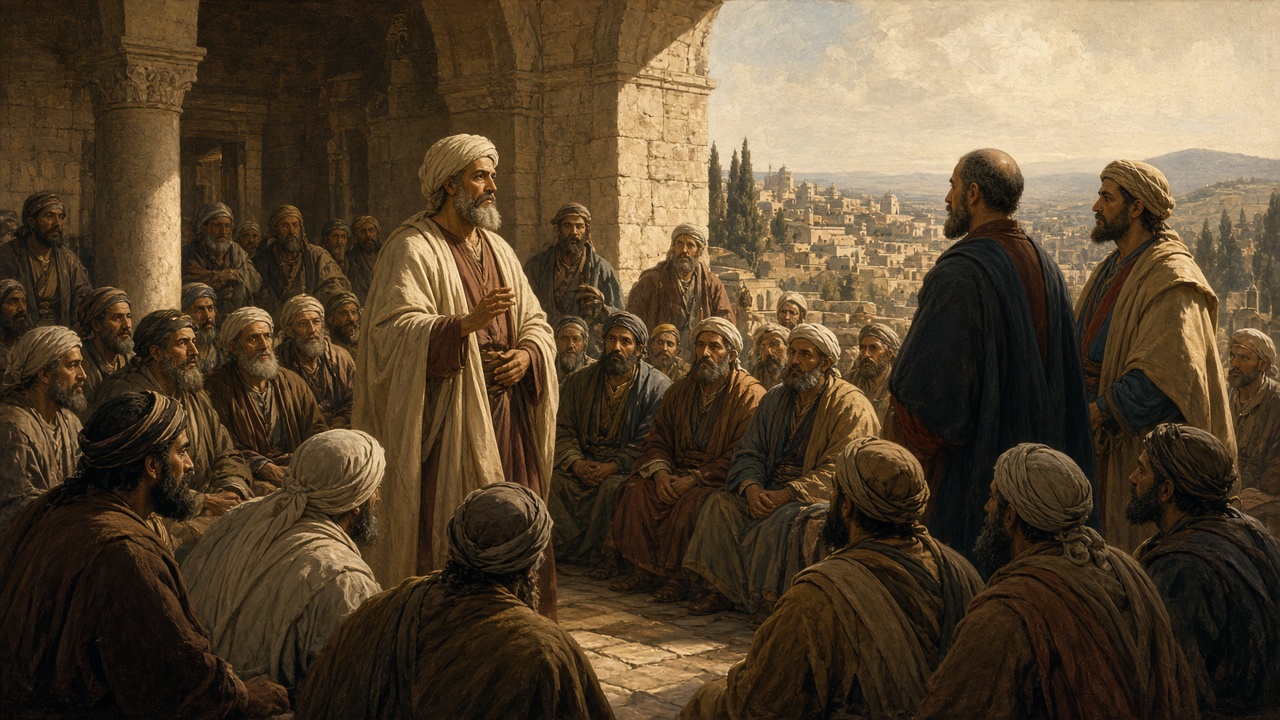
El concilio sobre los creyentes gentiles
- La controversia comenzó en Antioquía, a orillas del Orontes, unas trescientas millas al norte de Jerusalén, ciudad que entonces ocupaba el tercer lugar entre las ciudades del Imperio romano, después de Roma y Alejandría. De camino al concilio, Pablo y Bernabé pasaron por Fenicia, una franja costera de unas ciento veinte millas, y por Samaria. Una nota cronológica fecha el Concilio de Jerusalén en el año 46 d. C.Fuentes: Antioch (Syria) · Phenicia · el propio texto bíblico · Jerusalem Council
- El Easton's Bible Dictionary (1897) afirma que Santiago, a quien llama hermano o pariente cercano de Jesús, dirigía la iglesia en Jerusalén y presidió el concilio sobre los gentiles. La carta que siguió iba dirigida a los creyentes gentiles de Antioquía, Siria y Cilicia. Cilicia, provincia de origen de Pablo y provincia marítima romana en el sureste de Asia Menor desde el 67 a. C., incluía su ciudad natal, Tarso.Fuentes: James (Brother of Jesus) · el propio texto bíblico · Cilicia · Paul
- Judas, llamado Barsabás, y Silas, también conocido como Silvano, eran profetas y hombres destacados de la iglesia de Jerusalén, enviados para confirmar en persona la decisión del concilio. Un desacuerdo posterior y agudo por Juan Marcos, primo de Bernabé, separó a los dos misioneros: Bernabé se llevó a Marcos y zarpó hacia Chipre, mientras Pablo eligió a Silas. Una nota cronológica fecha esa separación en el año 47 d. C.Fuentes: el propio texto bíblico · Silas · John Mark · Paul and Barnabas part ways
Notas escritas con ayuda de IA a partir de fuentes abiertas (Theographic Bible Metadata, CC BY-SA 4.0; Easton’s Bible Dictionary, dominio público) y revisadas antes de publicarse.
Lugares de este capítulo
- Antioch · Hoy: Antioch on the Orontes · 36.227, 36.172 · versículos 1, 22, 23, 30, 35
- Judea · Hoy: Judea 1 · 31.777, 35.234 · versículo 1
- Jerusalem · 31.777, 35.234 · versículos 2, 3, 4, 22, 23, 33
- Phoenicia · 33.271, 35.196 · versículo 3
- Samaria · Hoy: Samaria 2 · 32.276, 35.195 · versículo 3
- Cilicia · 36.913, 34.892 · versículos 23, 41
- Syria · Hoy: Syria 2 · 33.511, 36.306 · versículos 23, 41
- Pamphylia · 37.000, 31.000 · versículo 38
- Cyprus · 35.000, 33.000 · versículo 39
Solo aparecen lugares identificados con alta confianza (90 % o más según las fuentes académicas reunidas por OpenBible). Mapa de la época: DARE (Digital Atlas of the Roman Empire), CC BY 4.0; mapa actual: © colaboradores de OpenStreetMap; lugares: OpenBible.info (CC BY 4.0).
Créditos y licencia de esta traducción
Nǫ̀htsı̨̨ Nı̨̨htł'è
Dogrib: Dogrib Genesis & New Testament New Testament & Portions of Old Testament
copyright © 2009 Canadian Bible Society
Language: Dogrib
Translation by: Canadian Bible Society
Tłı̨chǫ Genesis and New Testament
About Tłı̨chǫ
Tłı̨chǫ (Dogrib) is a Na-Dene (Athabaskan) language. It is spoken by the First Nations Tłı̨chǫ people in the Northwest Territories in Canada. It has the largest number of speakers of any of the Aboriginal language communities in the NWT, and is one of the official languages of the Northwest Territories.
About This Translation
This translation includes the book of Genesis and the New Testament in Tłı̨chǫ. The first edition of the Tłı̨chǫ New Testament was published in 2003. It was a historic event, as it was the first time in more than a hundred years that a complete New Testament was published for one of the Dene First Nations in the Territories. The first edition was well received and quickly sold out. In the meantime the book of Genesis had been completed. Consequently, the 2008 reprint of the Tłı̨chǫ New Testament included Genesis.
Though this translation of the New Testament and Genesis took a total of ten years, the people who worked on it built on years of labor invested by the Tłı̨chǫ people, elders, priests and missionaries, translators, educators, and linguists. The material contained in this book was checked and approved by consultants from Wycliffe Bible Translators and the Canadian Bible Society.
If you are interested in obtaining a printed copy of this Bible, please contact the Canadian Bible Society at http://www.biblescanada.com .
Copyright Information
Dogrib Genesis and New Testament © 2003, 2008 Canadian Bible Society
The text of the Bible in Tłı̨chǫ that appears in this electronic format or website is for personal use only.
Up to five hundred (500) verses of the Bible text in any form (written, visual, electronic or audio) may be quoted without permission. The quoted verses may not be more than 50% of a complete book of the Bible, or more than 25% of the total text of the work in which they are quoted. Prior written permission must be obtained for any other use of the text. Copyright acknowledgement must in all cases appear on the title or copyright page.
For more information on copyright conditions or to apply, visit http://www.biblesociety.ca/copyright .
This translation is made available to you under the terms of the
Creative Commons Attribution-Noncommercial-No Derivatives license 4.0.
You may share and redistribute this Bible translation or extracts from it in any format, provided that:
You include the above copyright and source information.
You do not sell this work for a profit.
You do not change any of the words or punctuation of the Scriptures.
Pictures included with Scriptures and other documents on this site are licensed just for use with those Scriptures and documents.
For other uses, please contact the respective copyright owners.
2014-04-22
Fuente: http://ebible.org/dgrDOGNT/ · eBible.org