Atos 16
Nǫ̀htsı̨̨ Nı̨̨htł'è · Toque num versículo para ver as referências cruzadas.
Tımothy, Paul eyıts'ǫ Sılas goxè ajà
1Paul, kǫ̀ta Derbe eyıts'ǫ kǫ̀ta Lystra nàhtła, Nǫ̀htsı̨ wecheekeè ı̨łè Tımothy wìyeh ekǫ nàdè. Tımothy wemǫ Israel got'ı̨į̀ hǫt'e eyıts'ǫ wegha ehkw'ı-ahodı hǫt'e, hanìkò wetà Greece got'ı̨į̀ hǫt'e. 2Kǫ̀ta Lystra eyıts'ǫ kǫ̀ta Iconıum gots'ǫ Nǫ̀htsı̨ wecheekeè Tımothy ghǫ nezı̨į̀ gogede. 3Paul, Tımothy edexè kǫ̀ta ayele ha nıwǫ, eyıt'à Moses wenàowoò k'ę̀ę̀ wekwǫ̀ k'e nàat'a ayį̀į̀là. Israel got'ı̨į̀ eyı nàgedèe sìı Tımothy wetà Greece got'ı̨į̀ ne gık'èezǫ t'à ayį̀į̀là. 4Kǫ̀ta yàgòlaa gota k'egedè ekò Zezì wecheekeèdeè eyıts'ǫ k'aodèe gı̨ı̨lı̨ı̨ Jerusalem ekǫ nàowo dǫ gha gèhtsı̨ ı̨lèe sìı k'èagı̨ı̨t'e ha gògedı. 5Eyıt'à Nǫ̀htsı̨ wecheekeè hazǫǫ̀ gınì nàtsoò ajà, eyıts'ǫ dzę taàt'eè dǫ łǫ gotagı̨ı̨de.
Paul wenazhıı xègoèht'į̀
6Paul eyıts'ǫ dǫ gıxè at'ı̨ı̨ sìı Phrygıa nèk'e eyıts'ǫ Galatıa nèk'e hazǫǫ̀ k'egıadè, hanìkò Yedàyeh Nezı̨ı̨ Asıa nèk'e godı nezı̨ı̨ dǫ ts'ǫ̀ agı̨į̀là agǫ̀ǫ̀là-le. 7Mysıa nèk'e ts'ǫ̀ nıwà-le nègı̨ı̨de ekò Bıthynıa nèk'e agede ha hogeèhdzà hanìkò Zezì wets'ǫ Įnì Degaı ekǫ agejà-le agǫ̀ǫ̀là. 8Eyıt'à Mysıa nèk'e goxa geèhde, kǫ̀ta Troas ts'ǫ̀ agejà. 9Eyı toò k'e Paul wenazhıı xègoèht'į̀. Macedonıa nèk'e gots'ǫ dǫ nàwo xè yeghǫnàdaetì, hadı, “Gonèk'e Macedonıa ts'ǫ̀ anede, gots'ànedı,” yèhdı, wenazhıı hagòjà. 10Paul wenazhıı xègoèht'į̀ tł'axǫǫ̀ ekòet'ıì Macedonıa nèk'e ts'ǫ̀ ts'eedè ha sınìts'ı̨ı̨de. Nǫ̀htsı̨ hagòhdı wek'èts'eezǫ t'à, ekǫ godı nezı̨ı̨ dǫ gıghàts'eɂà ha ts'eède.
Lydıa wegha ehkw'ı-ahodıì ajà
11Kǫ̀ta Troas gots'ǫ ts'eèɂe, kǫ̀ta Samothrace ts'ǫ̀ ehkw'ıì ats'ejà. Ek'èdaedzęę̀ k'e kǫ̀ta Neapolıs ts'ǫ̀ ts'eède. 12Eyı gots'ǫ kǫ̀godeè Phılıppı ts'ǫ̀ ats'ejà. Roman got'ı̨į̀ eyı kǫ̀godeè gogèhtsı̨ ı̨lè. Macedonıa nèk'e hazǫǫ̀ gogha kǫ̀godeè wet'àaɂà hǫt'e. Whaà-lea gots'ǫ̀ eyı nàts'ı̨ı̨dè.
13Nǫ̀htsı̨ Dzęę̀ k'e kǫ̀ta gà deh nıɂàa ekǫ dǫ yagehtı ha sǫnı ts'ı̨ı̨wǫ t'à, ekǫ ts'ǫ̀ ats'ejà. Ts'èko mǫ̀hdaa eyı łą̀ą nègı̨ı̨dee sìı gıxè ts'eèhkw'e eyıts'ǫ gıts'ǫ̀ gots'ı̨ı̨de. 14Ts'èko ı̨łè eyı goèhkw'ǫǫ sìı Lydıa wìyeh. Eyı ts'èko kǫ̀godeè Thıyatıra gots'ǫ ɂehtł'ı̨-dek'oo weghǫ nàedìı dǫǫ̀ elı̨ eyıts'ǫ Nǫ̀htsı̨-ghàtsį̀edıı-dǫǫ̀ elı̨. Eyı ts'èko sìı Paul dàdıı yeèhkw'ǫ t'à gots'ǫ̀ K'àowo wegha ehkw'ı-ahodı ayį̀į̀là. 15Eyı ts'èko ededı̨ eyıts'ǫ dǫ yekǫ̀ nàgedèe sìı gık'ètaìdzǫ, eyı tł'axǫǫ̀ wekǫ̀ ts'ǫ̀ agǫ̀ǫ̀là, hadı, “Gots'ǫ̀ K'àowo segha ehkw'ı adı aht'e seahwhǫ nı̨dè sekǫ̀ aaht'e,” gòhdı. Goghǫ daèhnǫ t'à wekǫ̀ ts'ǫ̀ ats'ejà.
Paul eyıts'ǫ Sılas gıdaàtǫ
16Įłàà Israel got'ı̨į̀ edı̨į̀ yagehtıı k'è gòɂǫǫ ts'ǫ̀ ts'adè ekò t'eekoa dǫ nàyeèhdìı sìı goghaetła. Įnìłı̨ı̨ wets'ǫ̀-èlı̨ t'à nadąą̀ k'eet'į̀. Nadąą̀ gode t'à, wets'ǫ̀ k'àhogedè gı̨ı̨lı̨ı̨ sìı gha sǫǫ̀mba łǫ ehtsı̨. 17Eyı t'eekoa Paul eyıts'ǫ goxı̨ gok'èè k'etło xè hadıì yaìzeh, “Dıı dǫ sìı Nǫ̀htsı̨ wenahk'e gǫ̀hłı̨-le wecheekeè agı̨ı̨t'e. Dànì edaxàts'eedè ha sìı naxıts'ǫ̀ hagedı ha,” hadıì yaìzeh. 18Łǫ dzęę̀ ts'ǫ̀ hadı xè gok'èè k'eda. Nǫǫdea Paul wegha dìì agòjà t'à yets'ǫ̀ naɂa gà ı̨nìłı̨ı̨ ts'ǫ̀ hadı, “Zezì wıızì dahxà t'eekoa weyìı gots'ǫ xàı̨tłe!” yèhdı. Ekòet'ıì ı̨nìłı̨ı̨ wets'ǫǫ̀ ajà.
19T'eekoa ts'ǫ̀ k'ahogedè gı̨ı̨lı̨ı̨ sìı k'achı̨ gıt'à sǫǫ̀mba gehtsı̨ ha-le gık'èezǫ t'à Paul eyıts'ǫ Sılas dagogıachì. Kǫ̀ta k'aodèe ts'ǫ̀ agogele ha t'asìı nàedìı k'è yàgòlaa ekǫ ts'ǫ̀ gogeèwa. 20K'aodèe nadąą̀ nègogį̀ı̨wa, hagedı, “Dıı dǫ Israel got'ı̨į̀ agı̨ı̨t'e, gıts'ıhɂǫ̀ kǫ̀ta hazǫǫ̀ dǫ xè nàdahoowo. 21Goxı̨ Roman got'ı̨į̀ ats'ı̨ı̨t'ee sìı gonàowoò k'èch'a dǫ hoghàgogeehtǫ,” gedı.
22Hagedı t'à dǫ łǫ Paul eyıts'ǫ Sılas k'èch'a gogedeè agejà. Eyıt'à k'aodèe gıyatıì k'e gıgoht'ǫǫ̀ gok'e nàgį̀ı̨hdlah gà nàgogı̨ı̨hkwa. 23Hòtł'ò nàgogı̨ı̨hkwa tł'axǫǫ̀ dǫ-danìı̨laa-kǫ̀ ts'ǫ̀ agogį̀į̀là. Dǫ-danìı̨laa-k'èdìı-dǫǫ̀ hotıì nezı̨į̀ goxoehdı ha gıìhdı. 24Hagedı t'à kǫ̀ goyìı xàts'etła ha dìì sìı nègogį̀ı̨wa, eyıts'ǫ gıkechı̨į̀ dechı̨ t'à wedaàdoò agı̨į̀là. Gıkechı̨į̀ dechı̨ t'à wedaàdoò agı̨į̀là|src="HK019C.tif" size="span" ref="16.24"
25Totanı ekìıyeè k'e Paul eyıts'ǫ Sılas yagehtı xè Nǫ̀htsı̨ ts'ǫ̀ gejı̨, dǫ eyıì-le gıdanìı̨laa sìı gogeèhkw'ǫ. 26Hǫtsaa dèè hòtł'ò nàgoèhdǫ t'à yìetł'aà hazǫǫ̀ nàedaà ajà. Ekòet'ıì enìı̨tǫ hazǫǫ̀ ehghàà enìxànııtł'ı, eyıts'ǫ dǫ hazǫǫ̀ satsǫ̀tł'ıì gık'e whelaa sìı nàı̨tł'ı. 27Dǫ-danìı̨laa-k'èdìı-dǫǫ̀ ts'ı̨ı̨wo. Dǫ-danìı̨laa-kǫ̀ enìı̨tǫ hazǫǫ̀ enìxàı̨la yaɂı̨ ekò behcho edets'ǫ̀ xàechì, dǫ hazǫǫ̀ xàtı̨mǫgeède sǫnı nıwǫ t'à ełaàdìwı ha k'ehoɂa. 28Hanìkò Paul yets'ǫ̀ whezeh, hadı, “T'asadı̨ı̨le-le, hazǫǫ̀ jǫ ts'eèhkw'e hǫt'e,” yèhdı.
29Eyıt'à dǫ-danìı̨laa-k'èdìı-dǫǫ̀, ek'aèk'ǫ sets'ǫ̀ ààhchı, gòhdı. Ekòet'ıì goyaèhtła gà, dèhyeh t'à Paul eyıts'ǫ Sılas gogà nàgòı̨hgè. 30Xàgoèwa tł'axǫǫ̀ dagoehke hadı, “K'àowo, edaxàseetè gha ayìı dàhłe ha?” gòhdı.
31Gıts'ǫ̀ hadı, “Zezì gots'ǫ̀ K'àowo ehkw'ı adı neewǫ nı̨dè edaxàneetè ha, eyıts'ǫ nèot'ı̨ nexè nàgedèe sı edaxàgeedè ha,” gıìhdı. 32Eyıt'à ededı̨ eyıts'ǫ wekǫ̀ dǫ nàdèe sìı gots'ǫ̀ K'àowo weyatıì t'à gots'ǫ̀ gogı̨ı̨de. 33Totanı ekìıyeè k'e dǫ-danìı̨laa-k'èdìı-dǫǫ̀ whatsǫǫ̀ nègòı̨wa gà gokaà k'enaı̨htso. Eyı tł'axǫǫ̀ ededı̨ eyıts'ǫ wèot'ı̨ hazǫǫ̀ ekòet'ıì gık'ètaìdzǫ. 34Dǫ-danìı̨laa-k'èdìı-dǫǫ̀ Paul eyıts'ǫ Sılas edekǫ̀ ts'ǫ̀ nagòowa, eyıts'ǫ shègetı̨ ha t'asìı goghàı̨dì. Nǫ̀htsı̨ yegha ehkw'ı adıì ajà t'à sıì wınà, wèot'ı̨ sı hazǫǫ̀ gınà.
35K'omǫǫ̀dǫǫ̀ dzęh agòjà ekò kǫ̀ta k'aodèe edecheekeè dǫ-danìı̨laa-k'èdìı-dǫǫ̀ ts'ǫ̀ gogeèhɂà. Yatı gıdanìı̨ɂǫ hagedı, “Eyı dǫ xàgeedè agı̨ı̨le,” gıìhdı. 36Eyıt'à dǫ-danìı̨laa-k'èdìı-dǫǫ̀ Paul ts'ǫ̀ hadı, “Kǫ̀ta k'aodèe, nı̨ eyıts'ǫ Sılas xàahdè ha naxègedı. Eyıt'à naahdè ha dìì-le. Naxıxè sìghà welè,” gòhdı.
37Hanìkò Paul kǫ̀ta k'aodèe cheekeè ts'ǫ̀ hadı, “Gosınìyagı̨ı̨htı-le et'ıì dǫ daà nàgogı̨ı̨hkwa. Roman got'ı̨į̀ k'ę̀ę̀ goıtà kò dǫ-danìı̨laa-kǫ̀ ts'ǫ̀ agogį̀į̀là. Ekìı hanì dǫ naàhtǫ nagogeehɂà ha gı̨ı̨wǫ nì? Į̀le, ededı̨ gots'ǫ̀ gııdè gà xàgogııwa,” gòhdı.
38Kǫ̀ta k'aodèe cheekeè Paul dàdıı sìı hazǫǫ̀ k'aodèe ts'ǫ̀ hagedı. K'aodèe, Paul eyıts'ǫ Sılas, Roman got'ı̨į̀ k'ę̀ę̀ gııtà gok'èhogeèhzà ekò geèhyeh lagejà. 39K'aodèe, Paul eyıts'ǫ Sılas ts'ǫ̀ dǫ nezı̨ı̨ gı̨ı̨lı̨ ha gı̨ı̨wǫ t'à dǫ-danìı̨laa-kǫ̀ gots'ǫ xàgogeèwa, ts'èwhı̨į̀ kǫ̀ta ts'ǫǫ̀ naahdè gògedı. 40Paul eyıts'ǫ Sılas dǫ-danìı̨laa-kǫ̀ gots'ǫ xàgeède tł'axǫǫ̀ Lydıa wekǫ̀ ts'ǫ̀ t'akwełǫ̀ǫ̀ agejà. Ekǫ Nǫ̀htsı̨ wecheekeè xè gıakw'è. Yatı nezı̨ı̨ t'à nàgetsoò agogį̀į̀là tł'axǫǫ̀ nageèhde.
Você sabia?
De Listra a Filipos
- Em Listra, Paulo encontrou Timóteo, um discípulo de quem os irmãos de Listra e Icônio falavam bem, filho de uma judia crente e de pai grego. Querendo-o como companheiro, Paulo o circuncidou por causa dos judeus dali, que sabiam que seu pai era grego. O dicionário bíblico de Easton (1897) diz que Timóteo provavelmente morava em Listra e parece ter se convertido na visita anterior de Paulo.Fontes: o próprio texto bíblico · Timotheus
- Depois de serem impedidos de falar na província da Ásia, Paulo e seus companheiros viajaram pela Frígia e pela Galácia. Na fronteira da Mísia não lhes foi permitido entrar na Bitínia, e então desceram a Trôade, o principal porto da Mísia, na costa noroeste da Ásia Menor, cidade que recebeu o nome da antiga Troia, cerca de quatro milhas ao norte. Ali, uma visão noturna de um homem da Macedônia que pedia ajuda os levou a navegar para essa província romana ao norte da Grécia.Fontes: o próprio texto bíblico · Mysia · Troas · Macedonia
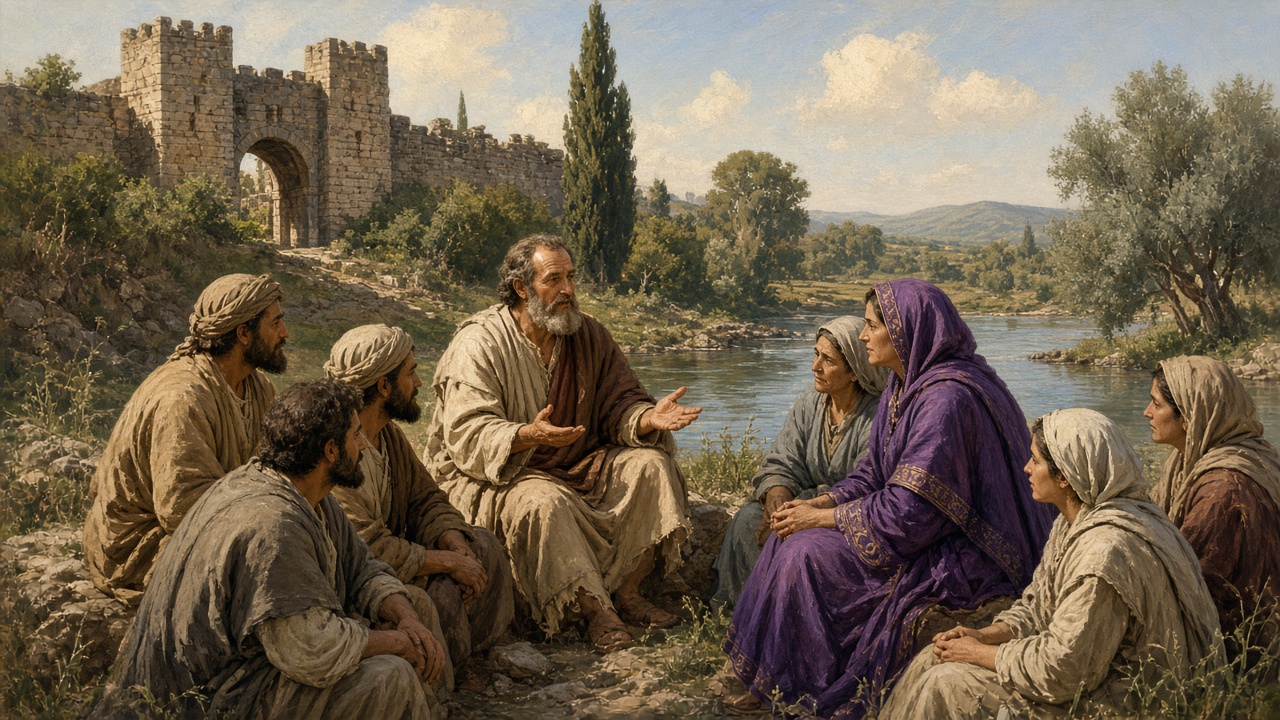
- Na colônia romana de Filipos, Paulo e seus companheiros encontraram, junto ao rio e fora da porta da cidade, um lugar onde era costume orar, e ali mulheres estavam reunidas. Entre elas estava Lídia, comerciante de tecidos de púrpura, de Tiatira, e adoradora de Deus; depois que ela e os de sua casa foram batizados, ela convenceu os viajantes a ficarem em sua casa. O dicionário bíblico de Easton (1897) a descreve como uma prosélita de riqueza considerável e como a primeira pessoa na Europa a abraçar o cristianismo.Fontes: o próprio texto bíblico · Lydia
Notas escritas com auxílio de IA a partir de fontes abertas (Theographic Bible Metadata, CC BY-SA 4.0; Easton’s Bible Dictionary, domínio público) e revisadas antes de publicar.
Lugares deste capítulo
- Lystra · Hoje: Tel Lystra · 37.602, 32.338 · versículos 1, 2
- Iconium · Hoje: Konya · 37.872, 32.492 · versículo 2
- Jerusalem · 31.777, 35.234 · versículo 4
- Asia · 38.400, 28.300 · versículo 6
- Galatia · 39.267, 32.983 · versículo 6
- Phrygia · 39.000, 31.000 · versículo 6
- Bithynia · 40.500, 31.000 · versículo 7
- Mysia · 40.000, 28.500 · versículos 7, 8
- Troas · Hoje: Alexandria Troas · 39.752, 26.159 · versículos 8, 11
- Greece · 37.972, 23.727 · versículo 9
- Macedonia · 41.600, 22.540 · versículos 9, 10, 12
- Neapolis · Hoje: Kavala · 40.935, 24.415 · versículo 11
- Samothrace · Hoje: Samothraki · 40.450, 25.583 · versículo 11
- Philippi · 41.012, 24.285 · versículo 12
- Thyatira · Hoje: Akhisar · 38.920, 27.837 · versículo 14
Só aparecem lugares com identificação de alta confiança (90% ou mais segundo as fontes acadêmicas reunidas pelo OpenBible). Mapa da época: DARE (Digital Atlas of the Roman Empire), CC BY 4.0; mapa atual: © colaboradores do OpenStreetMap; lugares: OpenBible.info (CC BY 4.0).
Créditos e licença desta tradução
Nǫ̀htsı̨̨ Nı̨̨htł'è
Dogrib: Dogrib Genesis & New Testament New Testament & Portions of Old Testament
copyright © 2009 Canadian Bible Society
Language: Dogrib
Translation by: Canadian Bible Society
Tłı̨chǫ Genesis and New Testament
About Tłı̨chǫ
Tłı̨chǫ (Dogrib) is a Na-Dene (Athabaskan) language. It is spoken by the First Nations Tłı̨chǫ people in the Northwest Territories in Canada. It has the largest number of speakers of any of the Aboriginal language communities in the NWT, and is one of the official languages of the Northwest Territories.
About This Translation
This translation includes the book of Genesis and the New Testament in Tłı̨chǫ. The first edition of the Tłı̨chǫ New Testament was published in 2003. It was a historic event, as it was the first time in more than a hundred years that a complete New Testament was published for one of the Dene First Nations in the Territories. The first edition was well received and quickly sold out. In the meantime the book of Genesis had been completed. Consequently, the 2008 reprint of the Tłı̨chǫ New Testament included Genesis.
Though this translation of the New Testament and Genesis took a total of ten years, the people who worked on it built on years of labor invested by the Tłı̨chǫ people, elders, priests and missionaries, translators, educators, and linguists. The material contained in this book was checked and approved by consultants from Wycliffe Bible Translators and the Canadian Bible Society.
If you are interested in obtaining a printed copy of this Bible, please contact the Canadian Bible Society at http://www.biblescanada.com .
Copyright Information
Dogrib Genesis and New Testament © 2003, 2008 Canadian Bible Society
The text of the Bible in Tłı̨chǫ that appears in this electronic format or website is for personal use only.
Up to five hundred (500) verses of the Bible text in any form (written, visual, electronic or audio) may be quoted without permission. The quoted verses may not be more than 50% of a complete book of the Bible, or more than 25% of the total text of the work in which they are quoted. Prior written permission must be obtained for any other use of the text. Copyright acknowledgement must in all cases appear on the title or copyright page.
For more information on copyright conditions or to apply, visit http://www.biblesociety.ca/copyright .
This translation is made available to you under the terms of the
Creative Commons Attribution-Noncommercial-No Derivatives license 4.0.
You may share and redistribute this Bible translation or extracts from it in any format, provided that:
You include the above copyright and source information.
You do not sell this work for a profit.
You do not change any of the words or punctuation of the Scriptures.
Pictures included with Scriptures and other documents on this site are licensed just for use with those Scriptures and documents.
For other uses, please contact the respective copyright owners.
2014-04-22
Fonte: http://ebible.org/dgrDOGNT/ · eBible.org