Mateo 9
I 'utz laj tzij re i dios · Toca un versículo para ver sus referencias cruzadas.
I Jesus xrutzirsaj jun achi sic
1Teʼuri i Jesus xoc chupam jun bárco y xa ʼax chic chʼaka alagun y xupon chic pu tinimit. 2Are ʼuri cʼamtal bi jun achi ruʼ, siquirnak u chʼacul, ʼo chuwa chʼat. Niʼpa i je cʼamawnak lok, lic cul qui cʼux che i Jesus. Ire, are xril ile, xu bij che i iwab:
—Wacʼal, cha cowij a cʼux; niʼpa i a mac ya cuytajnak chic —xu bij che.
3Je ʼo jujun aj tijonel re i ʼatbal tzij je ʼo chila. Ique xqui bij chiquiwach: “I achi-ri cu kajsaj u ʼij i Dios ruʼ u tzij,” xqui bij. 4I Jesus retaʼam chic wach que tijin chu chʼobic, rumal-i xu bij chique:
—¿Wuchac n-ʼus ta qui chʼobo? —xu bij chique—. 5Ile, n-cʼax tu bixquil chi “Ya xcuytaj a mac.” Are i cʼax u bixquil are iri: “Chat walijok, y chat binok,” are ile cʼax u ʼonquil che jun winak. 6Xui-ri, yin chi in Achi aj Chicaj, quin ʼalijinsaj ʼut chi ʼo pinʼab quin cuy ni qui mac i winak waral chuwach i jyub taʼaj —xu bij i Jesus chique. Teʼuri xu bij che i achi chi siquirnak:
—Chat walijok, cha yaca bi a soc, y jat che awachoch.
7I achi sic xwalijic y xa ʼe che rachoch. 8I winak, are xquilo, xe oc ʼil che y xqui coj u ʼij i Dios man u yom jun chique chi ʼo puʼab que rutzirsaj i winak, xak cresaj i qui mac.
I Jesus xu siqʼuij i ma Matéo
9I Jesus xel chila; are ca tijin chi be, xril jun aj tzʼonol alcawal, ma Matéo u bi, chi cul pu qʼuijibal.
—Chat terej chwij —xu bij i Jesus che.
Ire xwalijic y xterej chirij.
10I Jesus xe ʼe junam cuʼ u tijoxelab pa rachoch i ma Matéo. Are que tijin chi waʼim, xak xe upon juban chic aj tzʼonol alcawal, xak juban chic ajmaquib, que ʼe qui tija qui wa cuʼ. 11ʼO jujun aj Fariséo winak xe quilo, y xqui bij chique u tijoxelab i Jesus:
—¿Wuchac i tijonel yix cu tij u wa cuʼ i mal laj tak aj tzʼonol alcawal, xak cuʼ ajmaquib? —xqui bij.
12I Jesus xu ta ile chi xqui bij, y xu bij chique:
—Quin ʼan iri man je pacha iwabib. Are i je iwab cajwax jun ajcun chique; i ʼutz qui wach n-tu chac ajcun chique. 13Je i ta u be bien wach usucʼ i tzij-i chi i tzʼibtal can chupam u wuj i Dios chi cu bij: “Are i cwaj yin are quiwil toʼbal qui wach i loʼcʼanij; n-are ti u sujuxic i chicop chinwach.” Queje ile u bim can i Dios —xu bij i Jesus chique—. Yin in cʼun-nak in aj siqʼuil que i ajmaquib, man quiqui jalwachij qui cʼaslemal. N-in ta cʼun-nak cumal i je ʼutz chuwach i Dios —xu bij i Jesus chique.
I costúmbre re ujer n-cumaj ta rib ruʼ u cʼutunic i Jesus
14Teʼuri i u tijoxelab i ma Wan aj kajsanel ya, xe upon ruʼ i Jesus y xqui bij che:
—Yoj, nic are wi caka ʼano, caka chʼij jun ʼij queb ʼij chuwach i Dios, n-ta wa caka tijo; xak queje quiqui ʼan i aj Fariséo. ¿Wuchac ʼuri n-queje ta quiqui ʼan i a tijoxelab yet? —xqui bij che.
15I Jesus xu bij ʼuri i tijojbal tzij-i chique:
—I winak, we que ʼe pa nimaʼij re jun achi ya ca cʼuliʼic, ¿xataba que bisonic? ¿xataba n-quiqui tij ti wa ruʼ? Quiqui tijo pues, tzʼakat ire ʼo cuʼ. Xui-ri, are cu rik i ʼij chi ʼelsam chic i achi chiquixol, teʼuri quiqui mayij qui nimaʼij.
16—Mi jun cu cʼojoj jun u ʼuʼ ʼel ruʼ jun chʼakap cʼojbal cʼacʼ, man i cʼojbal cʼacʼ xa ca tzajic y cu rakchʼij i cʼul ʼel; ruʼ ile coʼon mas nim i rakchʼijnak. 17Xak queje ile, mi jun cu cʼol i víno cʼacʼ chupam i ʼel tak surum, man we queje quiqui ʼan ile, xa ca rakchʼij i surum. Queʼelok, coʼon mal i surum, y ca sach i víno. Rumal-i, ʼo u chac cocsax i víno cʼacʼ chupam i surum cʼacʼ; queje ile ʼutz queʼelic che queb —xu bij i Jesus chique.
I Jesus xu walijsaj jun ali camnak, xak xrutzirsaj jun ixok
18I Jesus, are ca tijin chu bixquil ile chique, xak teʼet xupon jun achi ruʼ, chi nim u patan chiquixol i aj Israel. Xuqui chuwach i Jesus cʼa chuwach ulew y xu bij che: —Cuymac, Ta, jun in miʼal cʼa te xcamic —coʼono—. Xui-ri, we ta cat ʼe yet wuʼ, xui ca ya a ʼab puwi y ca cʼun chic sak chuwach —xu bij.
19I Jesus xwalijic y xe ʼe ruʼ, junam cuʼ u tijoxelab. 20Are que tijin chi be, ʼo jun ixok chiquixol i winak chi je teren chirij. I ixok-le, ʼax iwab wi; cablajuj junab ʼo chic che chi cril i riqʼuil congan; n-ca tani taj. Ire xtejeb pan chirij i Jesus y xu yin pan u chiʼ u ʼuʼ, 21man xu chʼob pu cʼux: “Quin utzir na we tene quin yin pichʼ u ʼuʼ,” xu bij. 22Are xu chap u ʼuʼ, i Jesus xu naʼo; xu pisquilij rib, xu takej pan i ixok y xu bij che:
—Wacʼal, cha cowirsaj a cʼux; ya xat utziric rumal u cubibal a cʼux chwe —coʼono. Are ʼor ʼuri xutzir tan.
23Xqui maj chubi qui be, y xe upon ruʼ rachoch i achi chi nim u patan. Xril i Jesus chi je yij chic i aj bixanel re i mukunic, xak niʼpa i winak ʼis que siqʼuin che oʼej, 24xu bij ʼuri chique:
—Chix el chi, man i ali n-camnak taj, xa cwaric —xu bij chique.
I winak xa xpe qui tzej che. 25N-ta coʼono, ire xe resaj bic; teʼuri xoc bi pa ja, y xu chap che u ʼab i ali; are ʼuri ire xwalijic. 26Rumal i u ʼanom-le, weʼ xqui ta rason i winak ronojel i jyub-le, chi Jesus u walijsam i ali.
I Jesus xe rutzirsaj je queb mawach
27Are xel i Jesus chila, je ʼo queb mawach xe terej chirij; xe oc chi sicʼ che.
—¡Nim laj winak, yet at umuk uxiquin i mam David, chawila toʼbal ka wach! —xqui bij.
28Are xoc i Jesus ruʼ ja, xak i mawach xe tejeb pan ruʼ. Are ʼuri xu bij chique:
—¿Cul i cʼux chwe chi quin tiqui na che ile? —coʼono.
—Katzij cat tiquiʼic, nim laj winak —xe cha.
29Teʼuri i Jesus xu yin i qui baʼwach, y xu bij chique,
—We qui na pi cʼux chi quix wutzirsaj, queje ca ʼan ni ile chiwe —xu bij chique.
30Teʼuri i qui baʼwach xutzir na. I Jesus lic xu bij chique:
—Chi ʼana cwent, mi lap iri chique i winak, mi xa ta jubiʼ —coʼono.
31Xui-ri, are xe ʼel bic, xqui jek u bixquil chique conojel i winak re i jyub-le.
I Jesus xrutzirsaj jun mem
32Are xe ʼe ique, xe cʼun chal juban winak, cucʼam li jun achi mem. Memernak na rumal itzel tew ʼo che. 33I Jesus xresaj bi itzel tew che, i achi juntir xu jek chʼawic. I winak lic xqui bisoj rumal. Xqui bij:
—Lic n-kilom ta pacha ile, mi tene ronojel i jyub Israel —xe cha.
34Xui-ri, i aj Fariséo xqui bij:
—I achi-le cresaj i itzel tew chique i winak xa rumal u choʼab itzel ʼo ruʼ; i choʼab ʼo ruʼ-le, are i cajʼatzil itzel tew yawnak che —xe cha.
I Jesus cʼax que u na i winak chi n-ta ca ucʼaw u tzam chique
35I Jesus xe u solij ronojel tak i tinimit, ronojel tak i aldéa. ʼIs xoc pa tak molbalʼib que i aj Israel winak, xa ʼe u tijojbej que i winak chila; xa ʼe u paxsaj i ʼutz laj tzij chique i winak, xu bij chi petnak chic i u ʼatbal tzij i Dios chique. Xak xe rutzirsaj bi chi cʼaxil, bi chi yobil, ʼo chique. 36Are xe ril i winak, lic cʼax xu na pu cʼux, man que cʼachiric, lic n-ta jun que towic; xe rilo pacha juban chij, n-ta que ucʼaw u tzam chique. 37Are ʼuri xu bij chique u tijoxelab:
—Lic ʼo i jachʼic craj; xui-ri, i ajchac ne te qʼui. 38Rumal-i, chi tzʼonoj che i Rajaw i chac chi que u tak bi mas mocom pa jachʼ —xu bij chique.
¿Sabías que…?
Misericordia, curación y vino nuevo
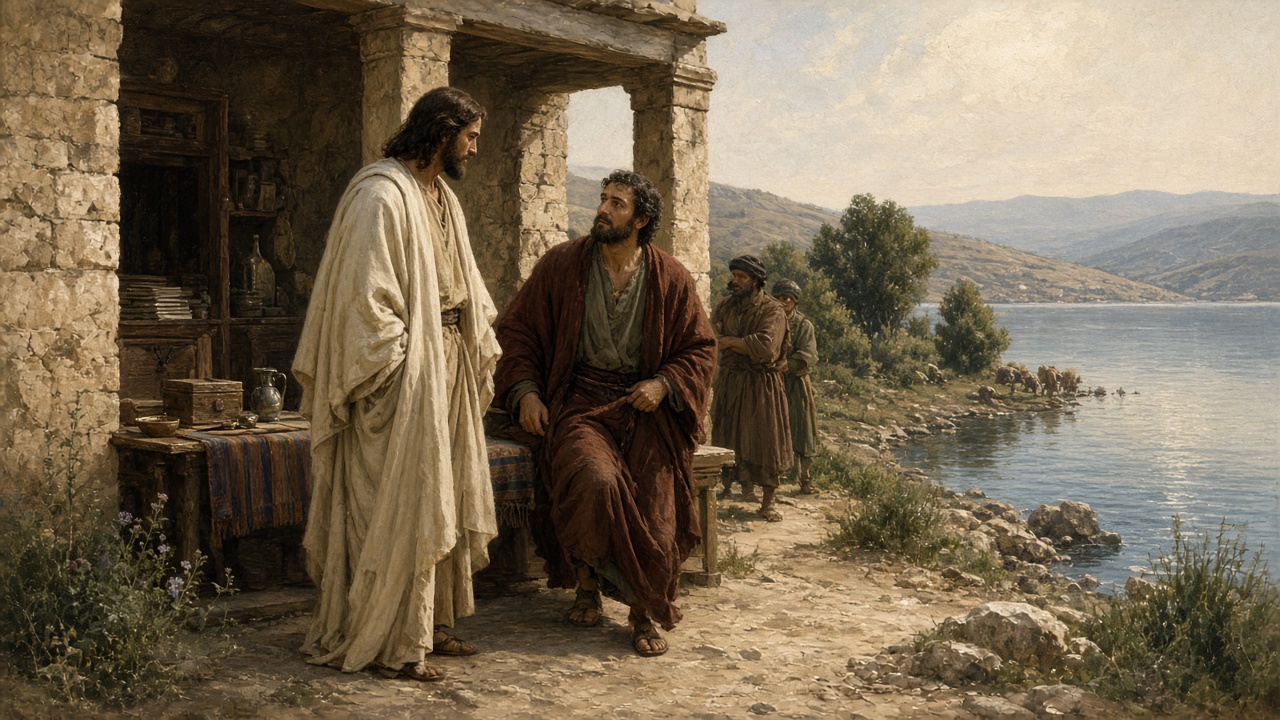
- Mateo, hijo de Alfeo, era publicano, es decir, recaudador de impuestos, en Cafarnaúm. Jesús, al subir desde la orilla del lago, pasó por el puesto de impuestos donde Mateo estaba sentado y le dijo: “Sígueme”. Antes se lo conocía como Leví; ese mismo día ofreció un gran banquete, descrito como una despedida, a Jesús, a los discípulos y, probablemente, a muchos de sus antiguos compañeros.Fuentes: Matthew · el propio texto bíblico
- Quienes preguntan por qué ellos y los fariseos ayunan tan a menudo, mientras los discípulos de Jesús no ayunan, son discípulos de Juan el Bautista. A Juan se lo llama el precursor; era de linaje sacerdotal, su padre Zacarías sacerdote del turno de Abías y su madre Elisabet una de las hijas de Aarón.Fuentes: John the Baptist · el propio texto bíblico
- Una cronología sitúa la curación del paralítico, el llamado de Mateo, la pregunta sobre el ayuno y la parábola de los odres en el año 28 d. C.Fuentes: Healing the Man with Palsy · Jesus Calls Matthew · Fasting Question · Parable of the Winseskins
Notas escritas con ayuda de IA a partir de fuentes abiertas (Theographic Bible Metadata, CC BY-SA 4.0; Easton’s Bible Dictionary, dominio público) y revisadas antes de publicarse.
Lugares de este capítulo
- Sea of Galilee · 32.819, 35.590 · versículo 1
Solo aparecen lugares identificados con alta confianza (90 % o más según las fuentes académicas reunidas por OpenBible). Mapa de la época: DARE (Digital Atlas of the Roman Empire), CC BY 4.0; mapa actual: © colaboradores de OpenStreetMap; lugares: OpenBible.info (CC BY 4.0).
Créditos y licencia de esta traducción
I 'utz laj tzij re i dios
New Testament in Achi (I 'utz laj tzij re i dios)
copyright © 2009 Wycliffe Bible Translators, Inc.
Language: Achi
Dialect: Cubulco
Translation by: Wycliffe Bible Translators, Inc.
Achi, Cubulco
Achi' is a Mayan language very
closely related to K'iche' (Quiché in the older orthography). It is spoken by the
Achi people, primarily in the area of Baja Verapaz in Guatemala. There are two Achi'
dialects. Cubulco Achi' is spoken by approximately 48,000 people in the Cubulco area
west of Rabinal area. Rabinal Achi' is spoken by approximately 37,000 people in the
Rabinal area.
El Nuevo Testamento
en el idioma Achí de Cubulco de
Guatemala
Ediciones anteriores
Segunda edición
©2009, Wycliffe Bible
Translators
Primera edición
Publicado por
©1984, Sociedad Bíblica
Internacional
Copyright Information
© 2009, Wycliffe Inc. All rights reserved.
This translation text is made available to you under the terms of the Creative
Commons License: Attribution-Noncommercial-No Derivative Works. ( http://creativecommons.org/licenses/by-nc-nd/3.0/ ) In addition, you have
permission to port the text to different file formats, as long as you do not change
any of the text or punctuation of the Bible.
You may share, copy, distribute, transmit, and extract portions or quotations from
this work, provided that you include the above copyright information:
You must give Attribution to the work.
You do not sell this work for a profit.
You do not make any derivative works that change any of the actual words or
punctuation of the Scriptures.
Permissions beyond the scope of this license may be available if you contact us
with your request. If you want to revise a translation, use a translation in an
adaptation, or use a translation commercially, we will consider your request.
NT:segunda edición
The New Testament
in Achi
© 2009, Wycliffe Inc. All rights reserved.
This translation is made available to you under the terms of the
Creative Commons Attribution-Noncommercial-No Derivatives license 4.0.
You may share and redistribute this Bible translation or extracts from it in any format, provided that:
You include the above copyright and source information.
You do not sell this work for a profit.
You do not change any of the words or punctuation of the Scriptures.
Pictures included with Scriptures and other documents on this site are licensed just for use with those Scriptures and documents.
For other uses, please contact the respective copyright owners.
2013-01-05
Fuente: http://ebible.org/acr-acc/ · eBible.org