Mateo 8
I 'utz laj tzij re i dios · Toca un versículo para ver sus referencias cruzadas.
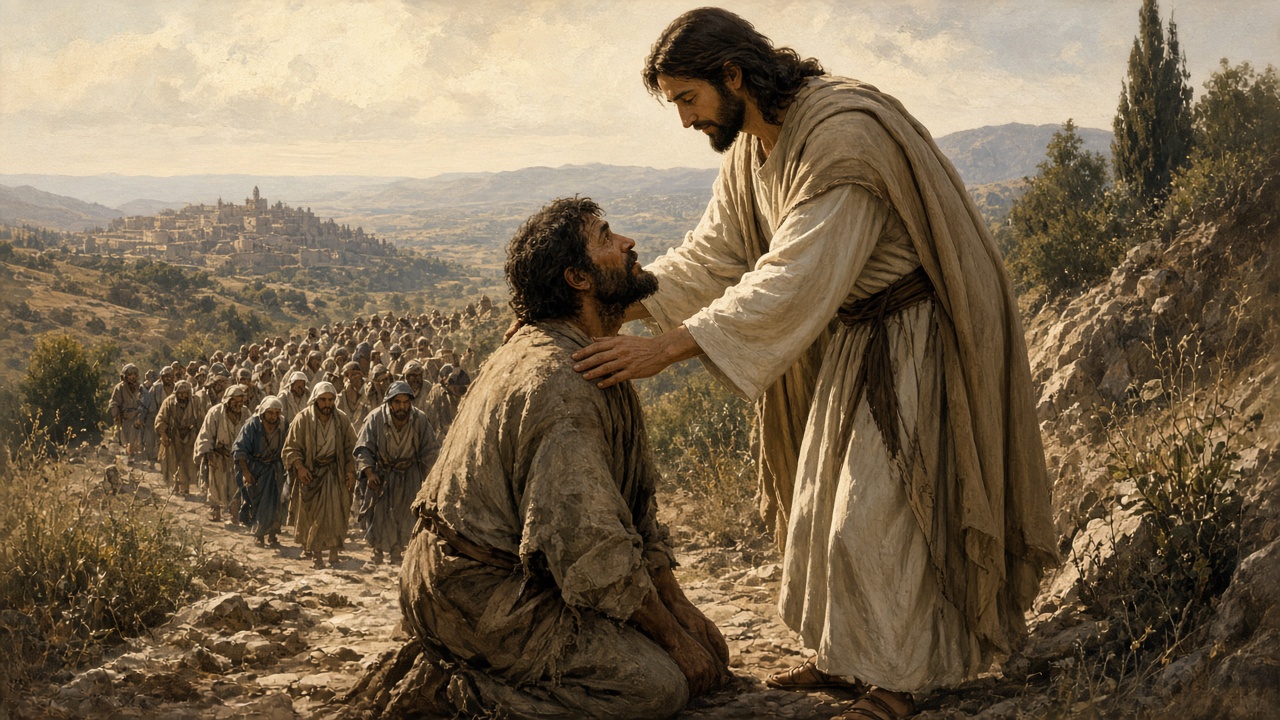
I Jesus xrutzirsaj jun achi ʼo yobil lépra che
1Are xkaj li Jesus tzam jyub, je qʼui i winak je teren chirij. 2Are ʼuri xcʼun li jun achi, ʼo i tzel laj yobil lépra che. Ire xupon chuwach i Jesus y xuquiʼic. Xu bij che:
—Kajwal, we ta cawaj, cawesaj ni itzel cʼax chwe —xu bij.
3I Jesus xu chap ruʼ u ʼab, y xu bij che:
—Cwaj. Chat utzirok.
Are xu bij ile che, i achi xutziric. 4I Jesus xu bij che:
—Chatapeʼ, mi jun ma lap wi. Xui-ri, jat, ja cʼutu awib che i sacerdóte chi at ʼutz chic; cha sujuj a sipon chuwach i Dios pacha u bim can i mam Moises. Queje cha ʼana ile man caquetamaj conojel chi at utzirnak chic, chi ya n-ta chic i chʼac chawij —xu bij che.
I Jesus xrutzirsaj i u mocom jun capitan n-aj Israel taj
5Xoʼon chupanok, are xoc i Jesus pa tinimit Capernaum, jun capitan aj Róma xa ʼe chu cʼulaxic y xu tzʼonoj u tobal che.
6—Nim laj winak —xu bij che—, ʼo jun in mocom ruʼ ja, lic iwab. ʼO chuwi chʼat, lic siquirnak chic; lic cu tij uyej rumal u cʼaxcʼol —xu bij che.
7I Jesus xu bij che i achi:
—Quin ʼe wutzirsaj —xu bij.
8—Nim laj winak —xu bij i capitan che—, yet n-ca majaw ta chawe cat oc pa wachoch; n-in ti aj Israel winak. Xui cha bij panok: ¡Chutzirok! Teʼuri in mocom cutzir na. Wetaʼam ʼo paʼab yet u ʼanic ile. 9Wetaʼam ile man xak yin in ʼo piquiʼab i je wajʼatzil; xak je ʼo jujun soldádo pinʼab yin. We “¡Jat!” quin bij che jun chique, ca ʼec; y we “¡Saʼaj!” quin bij che jun chic, ca petic. We xak quin tak bi wajchac, ire cu ʼan na wach i quin bij che. Wetaʼam chi xak ʼo paʼab yet cawesaj na bi itzel cʼax-le —xu bij i capitan.
10Are xu ta i Jesus ile, lic xu bisoj.
—Chitapeʼ —xu bij chique i je teren chirij—, mi tene jun chique i aj Israel winak cul u cʼux chwe pacha oʼonom i achi-le. 11Lic quin bij chiwe, je qʼui i ne te aj Israel winak chi lic qui cubam qui cʼux chwe, que pe pa quel wi i ʼij, que pe pa ca kaj wi i ʼij, que oc na ʼuri pa cu ʼat wi tzij i Dios; quiqui tij ni ʼutz chila junam cuʼ i mam Abraham, i mam Isaac, i mam Jacob, i catit qui mam i aj Israel winak. 12Xui-ri, je qʼui i aj Israel winak n-que oc ta chila cuʼ, tupu que ique i qʼuijibal-le. Ique-le, xa que yaʼ na pa ʼekumal; chila que oʼ wi, lic quiqui kachʼachʼej ni qui waque rumal qui bis —xu bij i Jesus chique i winak.
13Are ʼuri xu bij che i capitan:
—ʼUtz cat ʼe che awachoch, y ca ʼani na che a mocom pacha a tzʼonom; queje ile queʼel na rumal u cubibal a cʼux chwe —xu bij i Jesus che.
Lic are ʼor ʼuri xutzir i u mocom i capitan.
I Jesus xrutzirsaj u chuch u jiʼ i ma Pédro
14Xoʼon panok, xa ʼe i Jesus che i rachoch i ma Pédro. Are xoc paja, xrilo chi iwab u chuch u jiʼ i ma Pédro; ire cotzʼol chuwi chʼat, ʼo ʼaʼ chirij. 15I Jesus xa ʼe u yina u ʼab; are ʼuri, xchup i ʼaʼ chirij, xwalijic y xoc chu yijbaxic wach i quiqui tijo.
Cʼax i terejic chirij i Jesus
16Are xoc aʼab, je qʼui i winak xe qui cʼam li iwabib chuwach i Jesus. ʼO jujun ʼo itzel tew chique; i Jesus, xa ruʼ jun tzij xu bij, xe resaj bic; xak xe rutzirsaj niʼpa i iwabib. 17Are xoʼon ire ile, xeʼelok pacha u bim can i mam Isaías, chi ajbil u tzij i Dios ujer. Ire u bim canok chi i Jesus “Lic are ire aj ʼelsanel bi yobil chake; are ire aj ʼelsanel re i cʼax chake.” (Queje ile u tzʼibam canok.)
18I Jesus, are xrilo je qʼui i winak je ʼo chirij chuwach, xu bij chique u tijoxelab:
—Joʼ, choj ʼax chʼakap re i alagun —xu bij.
19Are ʼuri, ʼo jun tijonel re i ʼatbal tzij xtejeb ruʼ i Jesus.
—Mayes —xu bij che—, cwaj quin ʼe awuʼ xa ipa cat ʼe wi —xu bij.
20I Jesus xu bij che:
—Cʼax i terejic chwij. I yac ʼo qui jul, xak i tzʼiquin ʼo qui soc, xui-ri yin chi in Achi aj Chicaj, n-ta pa quin cotzʼba wi in jolom are quin waric —xu bij che.
21Teʼuri ʼo jun chique i je teren chirij xu bij:
—Nim laj winak, cʼa te quin terej chawij we xcam ni in kajaw —xu bij.
22I Jesus xu bij che:
—Suʼ woʼor chat terej chwij. Niʼpa i je camnak, cha ya can piquiʼab ique quiqui chajij i que camic —xu bij i Jesus che.
I Jesus xu ʼatij i tew-jab
23Teʼuri i Jesus xoc pa bárco, je rachiʼil u tijoxelab. 24Xak teʼet xpe jun nim laj tew puwi i alagun; i u wi ya, lic quel chicaj, cʼa puwi i bárco. I Jesus, lic cwaric. 25Are ʼuri i u tijoxelab xe ʼe qui cʼastaj.
—Kajwal —xqui bij che—, ¡Choj a to! ¡Ya coj muktaj pa ya!
26I Jesus xu bij chique:
—¿Wuchac lic qui xij iwib? ¿N-ta u cubibal i cʼux chwe? —xu bij.
Are ʼuri, xtaqʼui ʼanok y xu jek u ʼatixic i tew, tak i ya chi quel chicaj; y xe uxlanic, n-que silab ta chic. 27I rachiʼil lic xqui bisoj wach i xoʼono.
—¿Bi chi achial i achi-le chi ʼo i milágro puʼab? —xqui bij chiquiwach—. Ire, i tew, xak i ya, que cojon che, wach i cu bij —que cha.
I Jesus xe rutzirsaj queb achiab ʼo itzel tew chique
28Are ya xe ʼax chʼaka alagun, xe upon pa jyub Gadára. Are ʼuri xe ʼel li queb achiab pa tak mukbal que i camnak y xe upon ruʼ i Jesus. I queb-le, ʼo itzel tew chique, lic je chʼuj rumal; i winak lic quiqui xij quib chique, rumal-i, mi jun quicʼaw che i be-le. 29Ique-le xqui jek i sicʼ y xqui bij:
—¿Wach col a tzucuj chi kuʼ yoj, Jesus, chi at u Cʼojol i Dios? ¿Xat cʼun na col oj a ya pa cʼax? ¡Maja na cu rik i ʼij! —xqui bij che.
30Nakaj che i lugar-le, je ʼo juban uqʼuial ak que tijin chi waʼim. 31Are ʼuri i itzel tew queje iri xqui tzʼonoj che i Jesus:
—We coj awesaj na chique i achiab, cha ya chake coj oc chique i ak-le —xe cha.
32I Jesus xu bij:
—Jix ba chique.
Teʼuri i itzel tew xe ʼel chique achiab y xe oc chiquipam i ak. Xak teʼet conojel i ak xe kaj bi paʼanem, xe ʼe tzak pa ya y xe jiʼic.
33Are xqui ʼan ile, i que chajiw i ak lic xqui bisoj. Xe ʼe paʼanem cʼa pa tinimit. Are xe upon chila, xe oc chu bixquil ronojel wach i xquilo; xqui bij wach i xa ʼani chique i queb achiab chi ʼo itzel tew chique. 34Teʼuri conojel i winak re i tinimit xe ʼe chila paʼowi i Jesus. Are xquil u wach, lic xqui tzʼonoj che chi ca ʼec; n-cacaj ta ca canaj ire pa qui jyub ique.
¿Sabías que…?
Curaciones, fe y el mar
- Capernaum, la ciudad a la que Jesús entra en este capítulo, era una ciudad de Galilea que no se menciona en el Antiguo Testamento. El Easton's Bible Dictionary (1897) dice que llegó a ser “su propia ciudad” después de que dejó Nazaret, e incluye la súplica del centurión y la curación en la casa de Pedro entre los hechos situados allí.Fuentes: Capernaum · el propio texto bíblico
- Jesús dice que muchos vendrán del oriente y del occidente para compartir el banquete con Abraham, Isaac y Jacob en el reino de los cielos. El Easton's Bible Dictionary (1897) presenta a Abraham como hijo de Taré y heredero de las promesas, a Isaac como el único hijo de Abraham con Sara, y a Jacob —también llamado Israel— como el hijo gemelo menor de Isaac y Rebeca.Fuentes: el propio texto bíblico · Abraham · Isaac · Jacob (Israel)
- Mateo presenta las curaciones de aquella noche como cumplimiento de lo dicho por medio del profeta Isaías: “Él tomó nuestras dolencias y cargó con nuestras enfermedades.” El Easton's Bible Dictionary (1897) identifica a Isaías como hijo de Amoz, que profetizó durante los reinados de Uzías, Jotam, Acaz y Ezequías.Fuentes: el propio texto bíblico · Isaiah
Notas escritas con ayuda de IA a partir de fuentes abiertas (Theographic Bible Metadata, CC BY-SA 4.0; Easton’s Bible Dictionary, dominio público) y revisadas antes de publicarse.
Lugares de este capítulo
- Gadara · Hoy: Umm Qais · 32.656, 35.679 · versículo 28
Solo aparecen lugares identificados con alta confianza (90 % o más según las fuentes académicas reunidas por OpenBible). Mapa de la época: DARE (Digital Atlas of the Roman Empire), CC BY 4.0; mapa actual: © colaboradores de OpenStreetMap; lugares: OpenBible.info (CC BY 4.0).
Créditos y licencia de esta traducción
I 'utz laj tzij re i dios
New Testament in Achi (I 'utz laj tzij re i dios)
copyright © 2009 Wycliffe Bible Translators, Inc.
Language: Achi
Dialect: Cubulco
Translation by: Wycliffe Bible Translators, Inc.
Achi, Cubulco
Achi' is a Mayan language very
closely related to K'iche' (Quiché in the older orthography). It is spoken by the
Achi people, primarily in the area of Baja Verapaz in Guatemala. There are two Achi'
dialects. Cubulco Achi' is spoken by approximately 48,000 people in the Cubulco area
west of Rabinal area. Rabinal Achi' is spoken by approximately 37,000 people in the
Rabinal area.
El Nuevo Testamento
en el idioma Achí de Cubulco de
Guatemala
Ediciones anteriores
Segunda edición
©2009, Wycliffe Bible
Translators
Primera edición
Publicado por
©1984, Sociedad Bíblica
Internacional
Copyright Information
© 2009, Wycliffe Inc. All rights reserved.
This translation text is made available to you under the terms of the Creative
Commons License: Attribution-Noncommercial-No Derivative Works. ( http://creativecommons.org/licenses/by-nc-nd/3.0/ ) In addition, you have
permission to port the text to different file formats, as long as you do not change
any of the text or punctuation of the Bible.
You may share, copy, distribute, transmit, and extract portions or quotations from
this work, provided that you include the above copyright information:
You must give Attribution to the work.
You do not sell this work for a profit.
You do not make any derivative works that change any of the actual words or
punctuation of the Scriptures.
Permissions beyond the scope of this license may be available if you contact us
with your request. If you want to revise a translation, use a translation in an
adaptation, or use a translation commercially, we will consider your request.
NT:segunda edición
The New Testament
in Achi
© 2009, Wycliffe Inc. All rights reserved.
This translation is made available to you under the terms of the
Creative Commons Attribution-Noncommercial-No Derivatives license 4.0.
You may share and redistribute this Bible translation or extracts from it in any format, provided that:
You include the above copyright and source information.
You do not sell this work for a profit.
You do not change any of the words or punctuation of the Scriptures.
Pictures included with Scriptures and other documents on this site are licensed just for use with those Scriptures and documents.
For other uses, please contact the respective copyright owners.
2013-01-05
Fuente: http://ebible.org/acr-acc/ · eBible.org