Zechariah 9
YAUBADA YANA VONA'AWAUFAUFA 'IVAUNA · Tap a verse to see its cross-references.
About this book
About Zechariah
- Easton's Bible Dictionary (1897) presents Zechariah as a prophet of Judah, the eleventh of the twelve minor prophets, and, like Ezekiel, of priestly descent. He calls himself the son of Berechiah, while Ezra calls him the son of Iddo, whom Easton identifies as his grandfather. Easton dates the start of his prophetic work to the second year of Darius, 520 B.C., about sixteen years after the first company returned from exile, and notes that he was a contemporary of Haggai.Sources: Easton: Zechariah · Zechariah
- Zechariah addressed people who had returned from exile. Zerubbabel, also known by the Persian name Sheshbazzar, led the first returning company and, in the second year after the return, built an altar and laid the temple foundation on the ruins of the house destroyed by Nebuchadnezzar. Joshua, son of Jozadak, was high priest under Zerubbabel, and Easton says the night visions were meant to console these returned exiles and stir up hope.Sources: Easton: Zechariah · Zerubbabel · Joshua
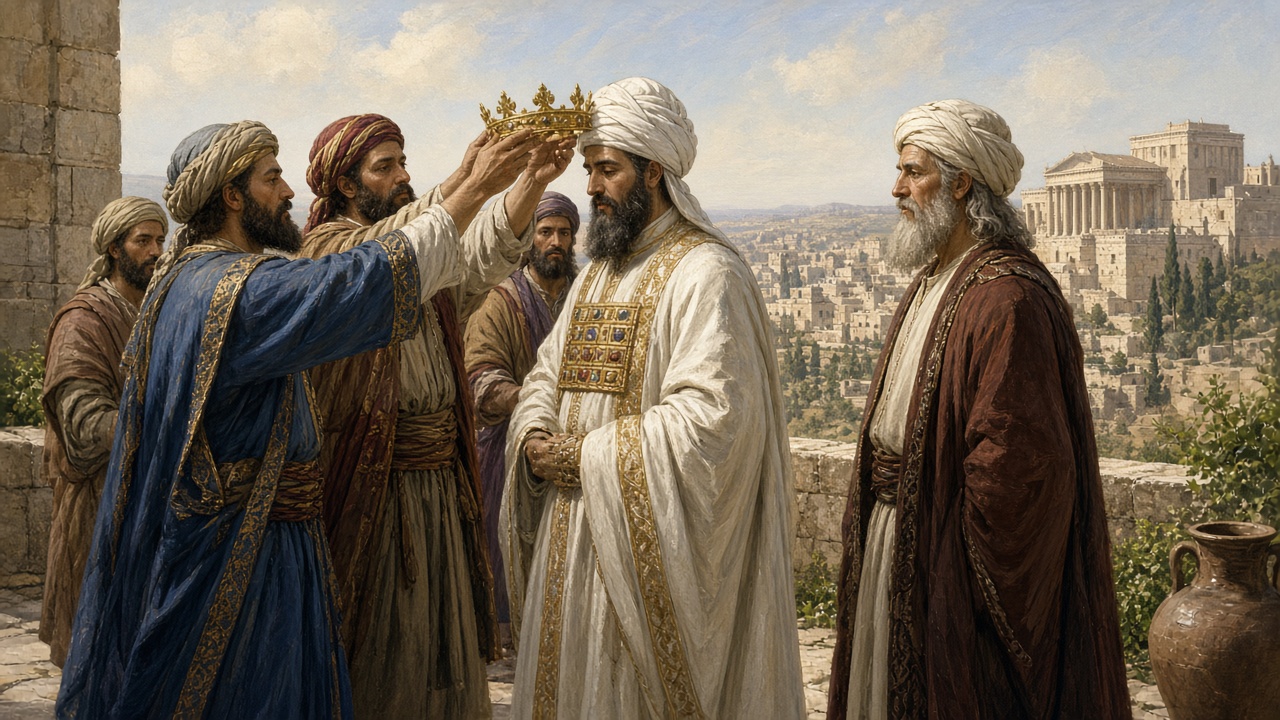
- Easton divides the book into two parts, chapters 1-8 and chapters 9-14. The first opens with a preface recalling the nation's past as a solemn warning, then eight visions in a single night and the symbolic crowning of Joshua; chapters 7 and 8, given two years later, answer whether mourning for the city's destruction should continue and encourage the people with the assurance of God's presence and blessing. The second part bears no date. Easton thinks a considerable interval separates it from the first and describes its two burdens as God's dealings down to the Advent and as glory, final conflict, and triumph in what he calls the latter day.Sources: Easton: Zechariah
- Easton explains the name Zechariah as meaning that Jehovah is renowned or remembered. A notable scene is the symbolic crowning of Joshua; Easton reads it as showing how the kingdoms of the world become the kingdom of God's Christ. Helem, named in Zechariah 6:10, is identified as one who returned from Babylon.Sources: Easton: Zechariah · Helem · Joshua
Notes written with AI assistance from open sources (Theographic Bible Metadata, CC BY-SA 4.0; Easton’s Bible Dictionary, public domain) and reviewed before publishing.
Me Ielusalema yadi kini i na mai
9'Auvea i vona i vo, Me Saioni, 'wa na toke 'wa na sosoana.
Me Ielusalema bonami bwaikinega 'wa na vegole ma yami sosoana.
'Wa 'iseni, yami Kini i mimai 'waimie,
ma yana veimea wata ma yana toketokena
siwe ma yana nuaobu i dodoga 'aisaya doniki natudi kwavuneye.
10Salioti 'eba vetalaga a na 'ewayavuledi 'awalawa Isileli 'wainega,
'aisaya osi vetalaga faifaina a na 'ewayavuledi Ielusalema 'wainega,
wata kukua 'eba vetalaga matatabuna a na luvela'ovidi.
Yami kini mia 'atumaina i na mieni tomotoga 'aila'a tulina tulina 'waidie.
Yana 'eba veimea bwaikaotogina, tamu malaveta yana tugusa 'wainega i na velamu i na nagoga tamu malaveta 'ana tugusa 'waineye i na 'ailove.
Ufa Iufiletisi 'wainega i na nago fwayafwaya 'ana 'eba ve'a'ava 'waineye.”
Did you know?
Judgment on Nations and the Coming Peaceful King
- The oracle describes Tyre amassing silver like dust and gold like dirt before its fortifications and wealth are cast into the sea. Historically, Tyre was a dominant Phoenician coastal city whose merchants navigated the Mediterranean and gathered immense commercial wealth from distant colonies into its storehouses.Sources: Tyre · the Bible text itself
- Zechariah foretells judgment upon Philistine coastal cities including Gaza, Ashkelon, Ashdod, and Ekron, but notes that Ekron would become like a clan in Judah. Ekron was the northernmost of the five major Philistine cities and long stood as a distinct neighboring power before this prophetic vision of assimilation.Sources: Ekron · the Bible text itself
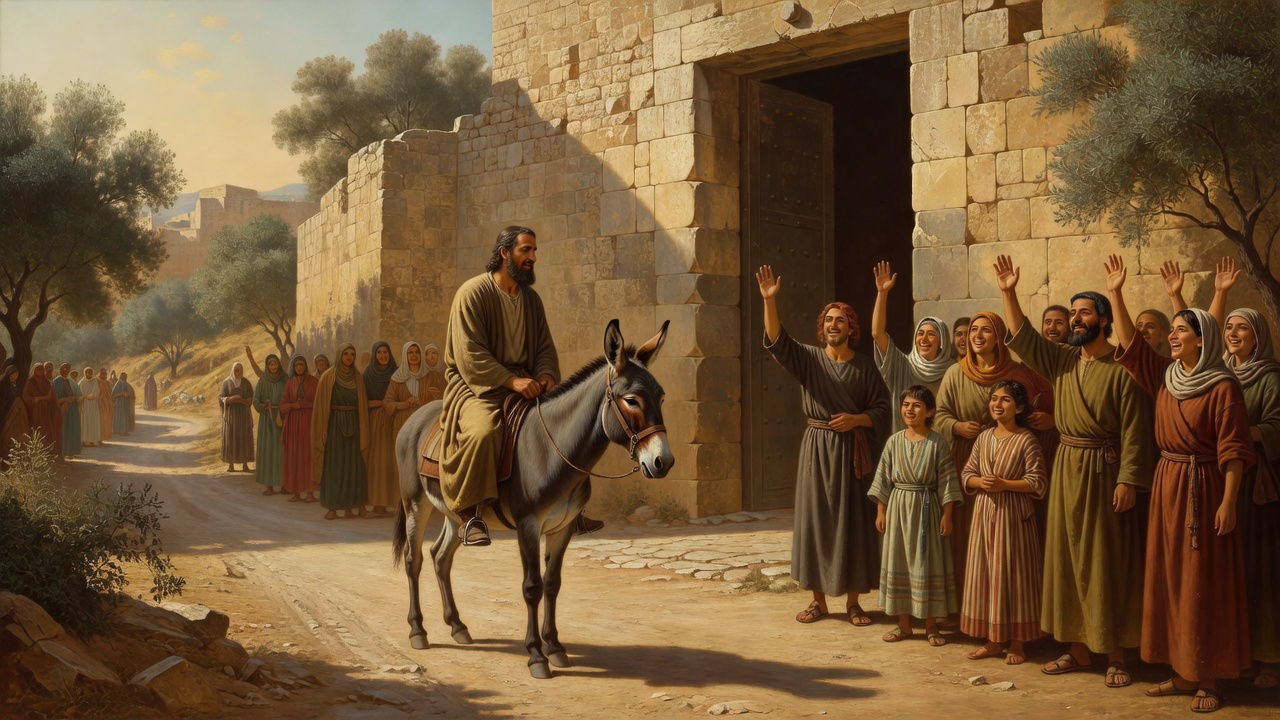
- The text calls the Daughter of Zion to celebrate the arrival of a righteous king who rides a young donkey and disarms the war chariots and horses of Ephraim and Jerusalem. Zion was the fortified southeastern hill of Jerusalem where David built his citadel, representing the royal center of the nation.Sources: Zion · the Bible text itself
Notes written with AI assistance from open sources (Theographic Bible Metadata, CC BY-SA 4.0; Easton’s Bible Dictionary, public domain) and reviewed before publishing.
Places in this chapter
- Aram · 33.511, 36.306 · verse 1
- Damascus · 33.511, 36.306 · verses 1, 2
- Hamath · Today: Hama · 35.136, 36.750 · verse 2
- Sidon · Today: Sandikli archaeological site in Sidon · 33.561, 35.372 · verse 2
- Tyre · 33.271, 35.196 · verses 2, 3, 4, 5
- Ashkelon · Today: Tel Ashkelon · 31.664, 34.546 · verse 5
- Ekron · Today: Tel Miqne · 31.777, 34.852 · verses 5, 7
- Gaza · Today: Tell Harube · 31.504, 34.464 · verse 5
- Ashdod · Today: Tel Ashdod · 31.757, 34.658 · verse 6
- Philistia · 31.664, 34.546 · verse 6
- Jerusalem · 31.777, 35.234 · verses 9, 10
- Zion · Today: Jerusalem · 31.777, 35.234 · verses 9, 13
- Euphrates · Today: Euphrates River · 31.004, 47.442 · verse 10
- Greece · 37.972, 23.727 · verse 13
Only places identified with high confidence are shown (90% or more according to the scholarly sources compiled by OpenBible). Period map: DARE (Digital Atlas of the Roman Empire), CC BY 4.0; modern map: © OpenStreetMap contributors; places: OpenBible.info (CC BY 4.0).
Credits and license for this translation
YAUBADA YANA VONA'AWAUFAUFA 'IVAUNA
The New Testament in the Iamalele dialect of the Ubuvala Language of Papua New Guinea
Nupela Testamen long tokples Ubuvala long Niugini
copyright © 1984, 1988, 2025 Wycliffe Bible Translators, Inc. and SIL Papua New Guinea
Language: Ubuvala (Iamalele)
Dialect: Iamalele
Translation by: SIL PNG
Contributor: Wycliffe Bible Translators
This translation is made available to you under the terms of the
Creative Commons Attribution-Noncommercial-No Derivatives license 4.0.
You may share and redistribute this Bible translation or extracts from it in any format, provided that:
You include the above copyright and source information.
You do not sell this work for a profit.
You do not change any of the words or punctuation of the Scriptures.
Pictures included with Scriptures and other documents on this site are licensed just for use with those Scriptures and documents.
For other uses, please contact the respective copyright owners.
2026-09-30
Source: http://png.bible/yml/ · eBible.org