Amos 8
YAUBADA YANA VONA'AWAUFAUFA 'IVAUNA · Tap a verse to see its cross-references.
About this book
About Amos
- Easton's Bible Dictionary (1897) presents Amos, whose name it explains as “borne” or “a burden,” as one of the twelve minor prophets. He was a man of humble birth from Tekoa, the modern Tekua, about twelve miles southeast of Bethlehem, and he described himself as neither a prophet nor a prophet’s son, but a herdsman and a dresser of sycomore trees.Sources: Easton: Amos · Amos
- Easton places Amos’s prophecy in the days of Uzziah, king of Judah, and treats him as a contemporary of Isaiah and Hosea, who outlived him by a few years. The same dictionary dates the reign of Jeroboam II, under whom Amos spoke, to 825–784 B.C.Sources: Easton: Amos · Jeroboam
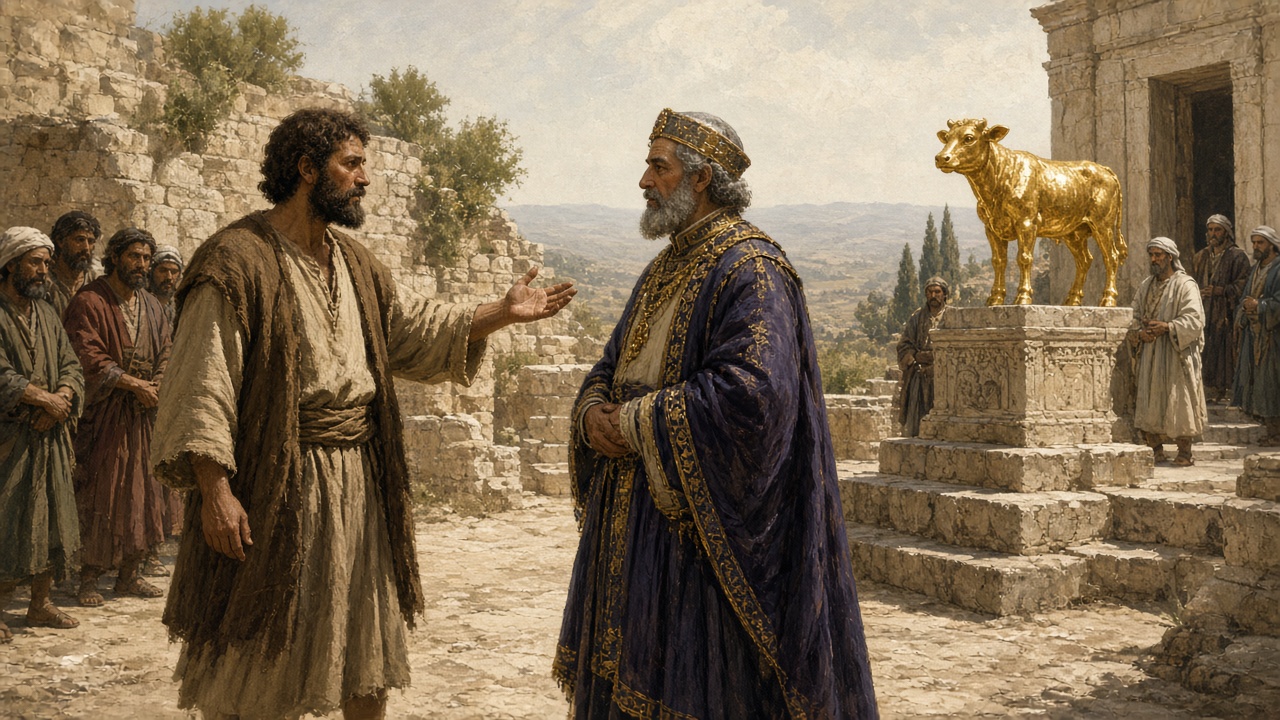
- Easton describes Jeroboam II’s reign as the most prosperous Israel had yet known: he defeated the Syrians and extended the kingdom from the entrance of Hamath to the sea of the plain, while keeping up the worship of the golden calves. With that prosperity, Easton says, came widespread luxury, vice, and idolatry, and Amos was called out of obscurity to speak of retributive justice and to summon the people to repentance.Sources: Easton: Amos · Jeroboam
- Easton divides the book into three parts: judgment on the surrounding nations (Amos 1:1–2:3), the spiritual condition of Judah and especially of Israel (2:4–6:14), and five visions (7:1–9:10). He includes a conversation at Bethel, about ten miles north of Jerusalem, between Amos and Amaziah, priest of the golden calves, and he reads the ending as Israel’s overthrow followed by a promise of restoration and of what he calls the kingdom’s final glory in the Messiah’s kingdom.Sources: Easton: Amos · Amaziah · Bethel (of Palestine)
- Easton notes that Amos’s style is marked by many allusions to natural objects and agricultural work, and that other phrases suggest he knew the law as well as country life. Expressions Easton treats as peculiar to him include “cleanness of teeth,” meaning want of bread, “the excellency of Jacob,” “the high places of Isaac,” “the house of Isaac,” and “he that createth the wind”; a passage from Amos is quoted in Acts 7:42.Sources: Easton: Amos
Notes written with AI assistance from open sources (Theographic Bible Metadata, CC BY-SA 4.0; Easton’s Bible Dictionary, public domain) and reviewed before publishing.
'Auvea tolueloelo i awavesakoyedi 'Auvea i vona i vo,
4'Wa ve'wada a na vonemi.
Tomotoga ma 'adi vita 'wa vavaogoogodi,
wata nuanuami tovewekowekoma 'wa na lueloelodi.
5Nuanuami 'aiata veawai wata tafalolo 'ana sakali i na 'abiwalowaloga,
bega 'ami fata 'ani'ani 'wa na vevekimwane,
wata tomotoga i kimwakimwanega 'wa na lueloelodi.
'Ani'ani 'adi tutula 'wa 'i'imoso'iedi i vevebwaika-'afo'afo,
'ani'ani 'wa lu'iawawa sakoidi,
wata yami 'eba 'etowava 'ani'ani 'ana vita faifaina i vevekali, tokimwane 'wa lueloelodi.
6'Ani'ani 'atumaidi wata 'anikudadi taiadi 'wa vevekimwaneyedi.
'Ai'edi tovewekowekoma 'ana 'ewa-maimaiga kebu i na tutuliga,
avinodi naninina siaina, bani'odi lubulubu 'aitamogana 'alo 'ageyafayafa 'aitamogana 'ana tutula,
siwe 'wa na vefoloveni yami tofolova-maimaiga.
7'Auvea taunina 'ana wagavayega yana vona'awaufaufa toketokena i 'idewai,
wagavanina me Isileli i veve'ililibuyeni 'wainega i vo,
Naninidi sakoidi 'wa 'idewadiga, kebu a na venuafanidi.
10A na vematavulogimi vita bwaikina a na velemi bega yami sakali matatabuna i na 'a'ava, we'e ma'itufa 'wa na vevemogai,
yami lei matatabuna i na 'ailove, we'e ma'itufa 'wa na taivonavona.
'Wa na vemwakula wata kaleko sakoidi 'wa na ve'wesena,
wata nava'aumi 'wa na 'welia, yami nuavita bwaikina 'ana 'eba 'isa.
Vitanina a na velemiga faifaina 'wa na taivonavona 'wa da vo natumi yami tamogana yawaina i da 'a'ava.
Vemogainina 'ana tutuya i na nunagoga 'ana 'eba ve'a'ava 'ami vita i na vebwaika-'afo'afo.”
Did you know?
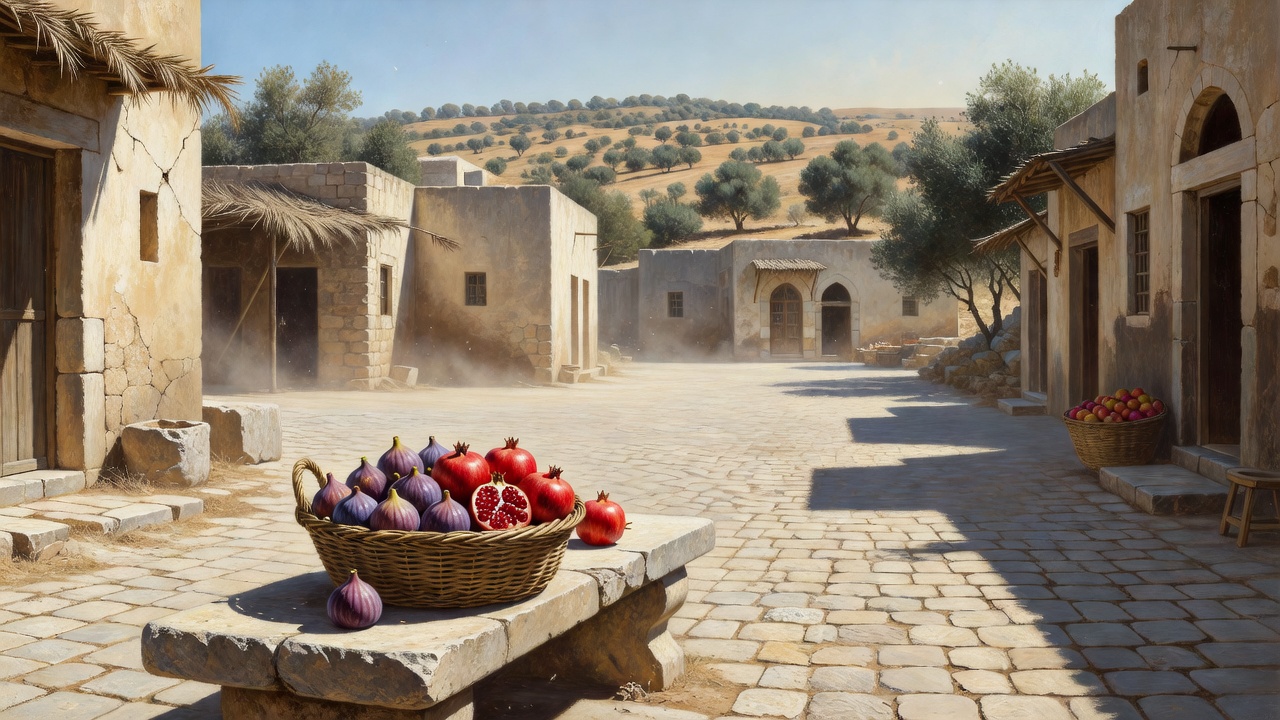
The Basket of Summer Fruit and Coming Famine
- Amos condemned merchants who grew impatient with religious observances like the New Moon and the Sabbath because they paused commerce. These traders sought to cheat buyers by shrinking the measure for grain (the ephah), increasing the price (the shekel), using rigged scales, and selling worthless chaff to desperate buyers.Sources: the Bible text itself
- To describe the catastrophic shaking and upheaval awaiting the land, the prophet compared the ground rising and receding to the annual flooding of the Nile River in Egypt.Sources: the Bible text itself · Egypt
- Amos warned of a severe spiritual crisis: a famine not of bread or water, but of hearing the words of the Lord. He pictured people wandering in exhaustion from sea to sea across the land in search of divine guidance without finding it.Sources: the Bible text itself
Notes written with AI assistance from open sources (Theographic Bible Metadata, CC BY-SA 4.0; Easton’s Bible Dictionary, public domain) and reviewed before publishing.
Places in this chapter
- Egypt · 30.129, 31.308 · verse 8
- Nile · Today: Nile River · 31.465, 30.367 · verse 8
- Dan · Today: Tel Dan · 33.249, 35.652 · verse 14
- Samaria · 32.276, 35.195 · verse 14
Only places identified with high confidence are shown (90% or more according to the scholarly sources compiled by OpenBible). Period map: DARE (Digital Atlas of the Roman Empire), CC BY 4.0; modern map: © OpenStreetMap contributors; places: OpenBible.info (CC BY 4.0).
Credits and license for this translation
YAUBADA YANA VONA'AWAUFAUFA 'IVAUNA
The New Testament in the Iamalele dialect of the Ubuvala Language of Papua New Guinea
Nupela Testamen long tokples Ubuvala long Niugini
copyright © 1984, 1988, 2025 Wycliffe Bible Translators, Inc. and SIL Papua New Guinea
Language: Ubuvala (Iamalele)
Dialect: Iamalele
Translation by: SIL PNG
Contributor: Wycliffe Bible Translators
This translation is made available to you under the terms of the
Creative Commons Attribution-Noncommercial-No Derivatives license 4.0.
You may share and redistribute this Bible translation or extracts from it in any format, provided that:
You include the above copyright and source information.
You do not sell this work for a profit.
You do not change any of the words or punctuation of the Scriptures.
Pictures included with Scriptures and other documents on this site are licensed just for use with those Scriptures and documents.
For other uses, please contact the respective copyright owners.
2026-09-30
Source: http://png.bible/yml/ · eBible.org