Hosea 11
YAUBADA YANA VONA'AWAUFAUFA 'IVAUNA · Tap a verse to see its cross-references.

About this book
About Hosea
- Easton's Bible Dictionary (1897) presents Hosea, whose name means "Salvation," as the son of Beeri and the author of the book of prophecies that bears his name. It says he belonged to the kingdom of Israel, and that the superscription (Hosea 1:1-2) indicates a ministry of some sixty years.Sources: Easton: Hosea · Hosea
- The same dictionary argues for a northern origin from his rough, Aramaizing diction, his close knowledge of places in Ephraim, his calling the kingdom "the land" (Hosea 1:2), and his calling the Israelite king "our" king (Hosea 7:5). It also describes him as the only prophet of Israel who left a written prophecy.Sources: Easton: Hosea · Hosea
- An entry on Jotham, son and successor of Uzziah as king of Judah, dates his sole reign to 759-743 B.C. and calls him a contemporary of Isaiah, Hosea, and Micah. Baal, identified as the principal male god of the Phoenicians, appears in the plural Baalim in Hosea 2:17.Sources: Jotham · Baal
- Hosea's first daughter is named Lo-ruhamah, "not pitied," and is presented as a type of Jehovah's temporary rejection of his people (Hosea 1:6; 2:23). Beth-aven, "house of nothingness," stands for Bethel in Hosea 4:15, 5:8, and 10:5, and is explained as a "house of idols," because calves were worshipped there and it was no longer a "house of God." Hosea 12:2-4 is also cited for Jacob, called Israel, whose name is explained as one who follows on another's heels, or supplanter.Sources: Lo-ruhamah · Beth-aven · Jacob (Israel)
Notes written with AI assistance from open sources (Theographic Bible Metadata, CC BY-SA 4.0; Easton’s Bible Dictionary, public domain) and reviewed before publishing.
Me Isileli 'wa da vo bani'odi 'Auvea natuna
1'Auvea i vona i vo, Basenadi me Isileli 'wa da vo bani'odi tamu kwamana, a nuakalikalieni.
Natuku iavetana a goleni Itifitayega i souyeni.
2Me Isileli tutuya matatabuna a golegoledi,
siwe i kwayekwayega i vevedumwe'ai'aieku.
I vevelomu yadi yaubada-vekavekali Beli 'waidie,
we'e vane i kabukabunidi wata i 'odu'odu kumaea 'ifwaidi 'waidie.”
Did you know?
God's Parental Love and Compassion
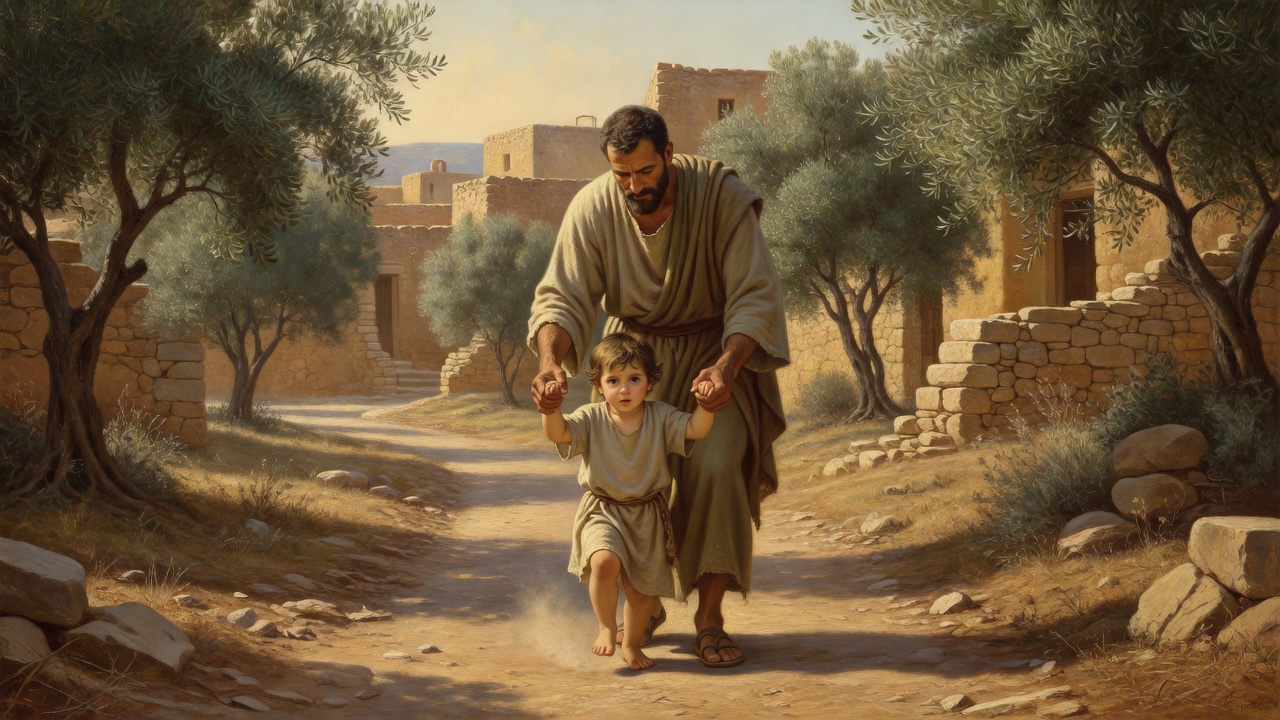
- The chapter depicts God as a devoted parent who called Israel out of Egypt as a child, taught Ephraim to walk, lifted the yoke from their necks, and bent down to feed them.Sources: the Bible text itself · Ephraim · Egypt
- When the passage asks 'How could I make you like Admah? How could I treat you like Zeboiim?', it references two cities of the plain in the vale of Siddim that were destroyed alongside Sodom and Gomorrah.Sources: the Bible text itself · Admah · Zeboiim
- Although Hosea warned that Israel would be ruled by Assyria for refusing to repent, he also prophesied a future return where the people would come trembling like doves from Egypt and Assyria to resettle their homes.Sources: the Bible text itself · Assyria · Egypt
Notes written with AI assistance from open sources (Theographic Bible Metadata, CC BY-SA 4.0; Easton’s Bible Dictionary, public domain) and reviewed before publishing.
Places in this chapter
Only places identified with high confidence are shown (90% or more according to the scholarly sources compiled by OpenBible). Period map: DARE (Digital Atlas of the Roman Empire), CC BY 4.0; modern map: © OpenStreetMap contributors; places: OpenBible.info (CC BY 4.0).
Credits and license for this translation
YAUBADA YANA VONA'AWAUFAUFA 'IVAUNA
The New Testament in the Iamalele dialect of the Ubuvala Language of Papua New Guinea
Nupela Testamen long tokples Ubuvala long Niugini
copyright © 1984, 1988, 2025 Wycliffe Bible Translators, Inc. and SIL Papua New Guinea
Language: Ubuvala (Iamalele)
Dialect: Iamalele
Translation by: SIL PNG
Contributor: Wycliffe Bible Translators
This translation is made available to you under the terms of the
Creative Commons Attribution-Noncommercial-No Derivatives license 4.0.
You may share and redistribute this Bible translation or extracts from it in any format, provided that:
You include the above copyright and source information.
You do not sell this work for a profit.
You do not change any of the words or punctuation of the Scriptures.
Pictures included with Scriptures and other documents on this site are licensed just for use with those Scriptures and documents.
For other uses, please contact the respective copyright owners.
2026-09-30
Source: http://png.bible/yml/ · eBible.org