Genesis 10
Buki Tabu Beyabeyana · Tap a verse to see its cross-references.
Yapeta tubunao
1Nowa natunao Semi, Ami yo Yapeta mekanakavao natuliyao yo tubuliyao edeededeli besiele bwaite. Yalubwasi mulina mena natuliyao sibaibaiwa sikabili. 2Yapeta natunao tatao siya Gomeli, Magogo, Madai, Yavan, Tubali, Meseki yo Tilas. 3Gomeli natunao tatao bwaite, Askenas, Lipati, yo Togalama. 4Yavan natunao tatao bwaite, Elaisa, Talisisi, Kitim yo Dodanim. Na Talisisi tubunao siyamala Sipein tomonliyao, Kitim tubunao siyamala bwanabwana Saipilosi tomonliyao yo Dodanim tubunao siyamala bwanabwana Lodesi tomonliyao. Na bwanabwanane Saipilosi yo Lodesi siyaele Kalita Mediteleiniya koina. Tomonliyaone kainali uloi uloi simiyamiya.
Ami tubunao
6Ami natunao tatao siya Kusa, Itipita, Puti esana labuina bwaimwa Libiya, yo Kenani. 7Kusa natunao tatao Siba, Abila, Sabita, Lama yo Sabiteka. Lama natunao tatao Seba yo Dedani. 8Kusa tubuna yabo esana Nimlodi. Iya iyamala tokaleya kana tobaguna lalakina yabo yo wasana ilalaki, yo me ana bodao yanuwa sibaibaiwa siyemwawasili. 9Yaubada ana sagu koina iyamala tokeloya namwanamwasosina mwa iya kaiwena tem tomo yabo ana keloya inamwanamwa kani siwaloba, “Tomo bwaite iya besiele Nimlodi.” 10Ana kaba loina ikabi bagunayan yanuwa Babilon, Eleki, Kelinei yo Akadi kolili, yanuwane siya esopaline simiyamiya dedei Babilon koina. 11Mwa ilauyoi dedei Asiliya kabo yanuwa lalakili siya Ninibe, Leoboti Ili yo Kala, 12yo Lesen ikabili. Na Lesen imiyamiya Ninibe yo yanuwa lalakina Kala luwaluwalili mena. 13Itipita tubunao siya boda Ludiya, Anam, Leab, Napituli, 14Patulusi, Kasilui, yo Kapitolimi. Na boda Pilistiya silaomaya boda Kapitolimi kolili. 15Kenani natuna tauna tobagubaguna iya Saidoni. Natunao tabe ikabili, kabo Kenani tubunao siya boda Iti, 16Yebusi, Amoli, Giligasi, 17Ivi, Aliki, Sini, 18Abaditi, Semali yo Amati. Susu bwaite Kenani tubunao simiya-tatagwaligwali dedei uloina uloina kolili. 19Kabo dedeine koina simiyamiya iyatubuya yanuwa Saidoni yo ilau Gelal kaiwena kanasiga bwaine Gasa yo besiele tabe ilau Sodoma, Gomola, Adima yo Seboim kaiweli kanasiga Lasa. 20Na Ami natunao yo tubunao bwaite besiele. Kabo susune bwaite kaina uloina koina siedeedede yo simiya-lau tupwana kali mwayaga iyai ali dedeine koina yo ali yanuwa kolili.
Semi tubunao
21Semi iya Yapeta kanakava lalakina, natunao tabe ikabili. Na iya Ibeliu meuloili tubuli bagubagunana. 22Semi natunao tatao bwaite, Elan, Asul, Alipakisadi, Ludi yo Alami. 23Alami natunao tatao bwaite, Yus, Uli, Geta yo Meseki. 24Alipakisadi iya Sela tamana yo Sela iya Ebe tamana. 25Ebe natunao tatao labui, yabo esana sipei Pelegi kaiwena ana sauga koina tomo simiya-tatagwaligwali yanuwa yaulina dedeina meuloina kolili. Na Pelegi kanakava esana Yokitani. 26Na Yokitani koina boda bwaite sidebalala siya Alimodad, Selepi, Asamavet, yo Yela, 27Adolami, Yusali, Dikila, 28Obal, Abimali, Seba, 29Opili, Abila yo Yobabi. Na yanuwane tomonliyaone siya tubuli Yokitani. 30Dedei bwaine koina simiyamiya iyatubuya Mesa, yo ilau Sepali, bwaimwa koya dedeina tete bomatu mena. 31Na Semi natunao yo tubunao besiele bwaite. Bodane siya kaina uloina koina siedeedede yo simiya-lau kali mwayaga iyai ali dedeine yo ali yanuwane kolili. 32Yalubwasine mulina mena bodaone bwaite siya simiyamiya dedei meuloina koina yo siedeedede kaina uloina uloina kolili siya silaomaya Nowa natunao kolili mwa siya Nowa tubunao.
Did you know?
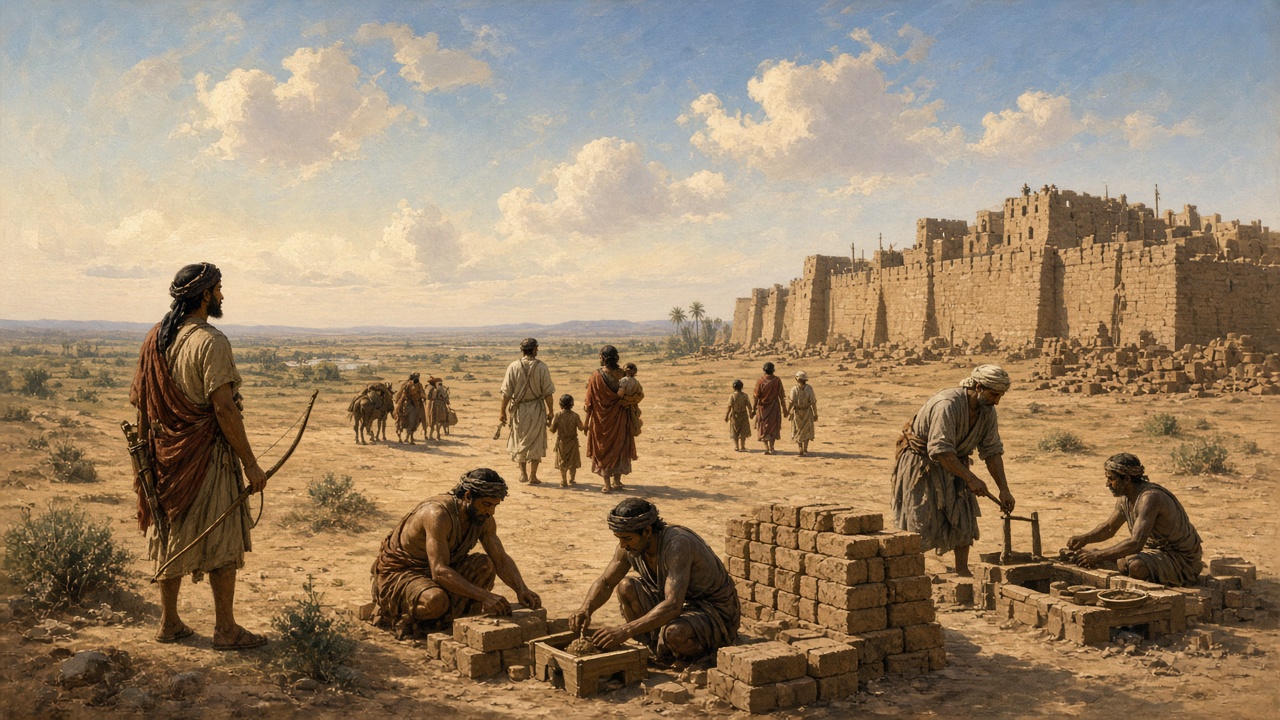
The Nations after the Flood
- Genesis 10 follows the families of Noah’s three sons, Shem, Ham, and Japheth, and says that after the flood the nations of the earth spread out from them, grouped by clans, languages, lands, and nations. Japheth’s line is linked with peoples of eastern Europe and northern Asia: Gomer is generally regarded as an ancestor of the Celts and the Cimmerians, who in early times settled north of the Black Sea, and Javan became the Hebrew name that the peoples of the East used for the Greeks, especially those of Ionia.Sources: the Bible text itself · Japheth · Gomer (son of Japheth) · Javan
- Cush, a son of Ham, was the father of Nimrod, remembered as a mighty hunter before the Lord, whose kingdom began at Babylon, Erech, Accad, and Calneh in the land of Shinar, probably Babylonia or southern Mesopotamia. From that land he went into Assyria and built Nineveh, Rehoboth-Ir, Calah, and Resen; Calah’s site is probably the Nimrud ruins on the left bank of the Tigris.Sources: the Bible text itself · Shinar · Nineveh · Calah
- Mizraim, the dual form of a Hebrew word for a mound or fortress, may point to Upper and Lower Egypt and is the name the Hebrews usually gave that country; Arabic still calls it Muzr. Shem is called the older brother of Japheth and the forefather of all the sons of Eber, regarded as the founder of the Hebrew people, while an Arab tradition remembers Eber’s son Joktan, Kahtan in Arabic, as the ancestor of tribes of central and southern Arabia.Sources: the Bible text itself · Mizraim · Eber (Heber) · Joktan
Notes written with AI assistance from open sources (Theographic Bible Metadata, CC BY-SA 4.0; Easton’s Bible Dictionary, public domain) and reviewed before publishing.
Places in this chapter
- Erech · Today: Uruk · 31.322, 45.636 · verse 10
- Shinar · Today: Babylonia · 32.543, 44.422 · verse 10
- Assyria · 36.359, 43.153 · verse 11
- Calah · Today: Nimrud · 36.098, 43.329 · verses 11, 12
- Nineveh · 36.359, 43.153 · verses 11, 12
- Canaan · 32.767, 35.333 · verse 19
- Gaza · Today: Tell Harube · 31.504, 34.464 · verse 19
- Sidon · Today: Sandikli archaeological site in Sidon · 33.561, 35.372 · verse 19
Only places identified with high confidence are shown (90% or more according to the scholarly sources compiled by OpenBible). Period map: DARE (Digital Atlas of the Roman Empire), CC BY 4.0; modern map: © OpenStreetMap contributors; places: OpenBible.info (CC BY 4.0).
Credits and license for this translation
Buki Tabu Beyabeyana
Portions of the Old Testament in the Tubetube dialect of the Bwanabwana language of Papua New Guinea
Hap Olpela Testamen long tokples Tubetube long Niugini
copyright © 2019 Wycliffe Switzerland
Language: Tubetube (Bwanabwana) (Bwanabwana)
Dialect: Tubetube
This translation is made available to you under the terms of the
Creative Commons Attribution-Noncommercial-No Derivatives license 4.0.
You may share and redistribute this Bible translation or extracts from it in any format, provided that:
You include the above copyright and source information.
You do not sell this work for a profit.
You do not change any of the words or punctuation of the Scriptures.
Pictures included with Scriptures and other documents on this site are licensed just for use with those Scriptures and documents.
For other uses, please contact the respective copyright owners.
2022-08-18
Source: http://png.bible/tteo/ · eBible.org