Exodus 1
Buki Tabu Beyabeyana · Tap a verse to see its cross-references.
About this book
About Exodus
- Easton's Bible Dictionary (1897) dates Israel's departure from Egypt to about 1490 B.C., four hundred and eighty years before Solomon's temple was built. How long they had sojourned there is disputed: Exodus 12:40 gives four hundred and thirty years, Genesis 15 speaks of about four hundred, and the Greek and Samaritan versions also count the years in Canaan, so some reckon only two hundred and fifteen years in Egypt.Sources: Easton: Exodus
- Easton's Bible Dictionary (1897) does not name the author of Exodus. The entry on Moses says Jacob and his sons went down into Egypt, probably about three hundred and fifty years before Moses was born, and that a Hyksos king, from a pastoral Semitic people of Asia who then ruled Egypt, settled them in Goshen. Moses later spent forty years in Midian, where that people pastured flocks on the Sinai peninsula, and became the son-in-law of Jethro, priest of Midian.Sources: Moses · Easton: Exodus · Midian · Jethro
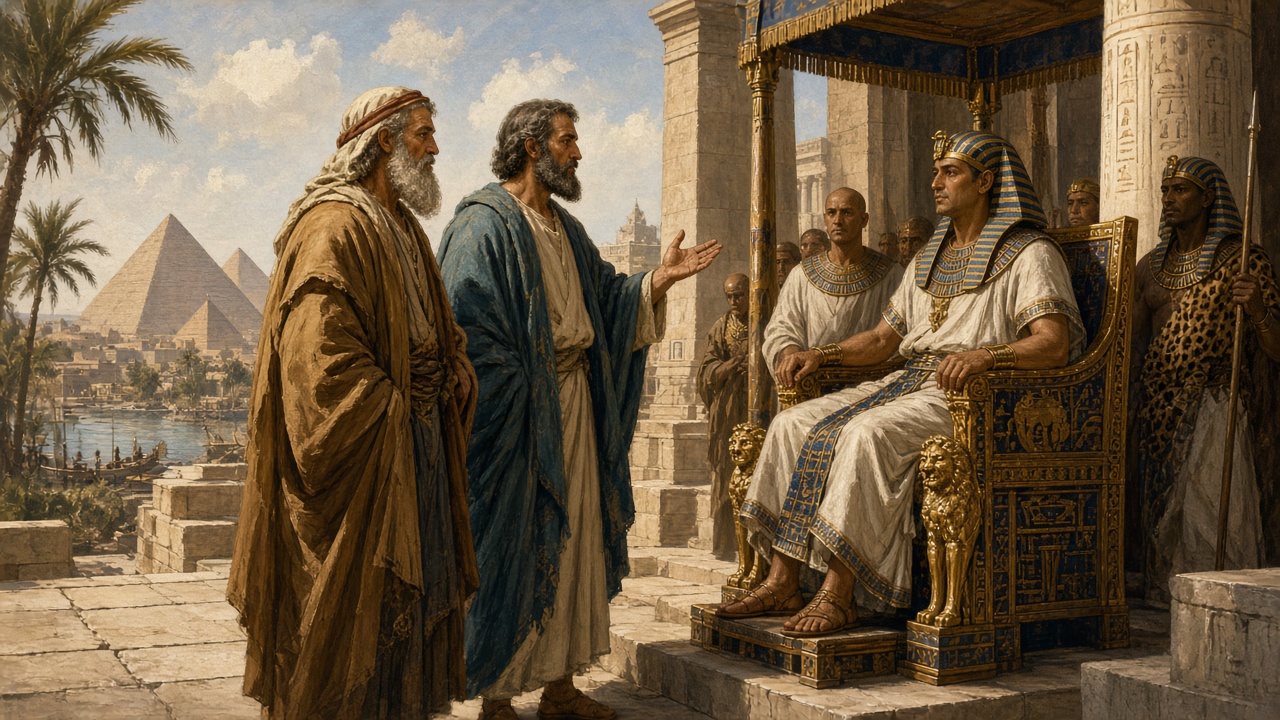
- Who was Pharaoh at the departure is also disputed. Easton's Bible Dictionary (1897) calls him probably Menephtah I, the fourteenth and eldest surviving son of Rameses II, who lived at Zoan and met Moses and Aaron there, while noting that some favor Seti II, whose reign began peacefully and ended in sudden disaster.Sources: Pharaoh (of the Exodus)
- The plagues, Easton writes, loosened Pharaoh's hold, and the Passover was instituted as a perpetual memorial, with the lamb's blood sprinkled on the doorposts. In the third month the people reached Mount Sinai, also called Horeb, about one hundred and fifty miles from the Red Sea, and camped there about a year. The last twenty-two chapters of Exodus record that stay, including the tabernacle, whose Holy Place had no opening for daylight and was lit only by the golden candlestick.Sources: Easton: Exodus · Mount Sinai · Holy Place
- Aaron, eldest son of Amram and Jochebed, was born in Egypt three years before Moses and was sent to meet him so the two could work together. At Rephidim, Joshua, also born in Egypt, commanded Israel's fighters when the Amalekites, a pastoral people living between the Dead Sea and the Red Sea, tried to bar their way.Sources: Aaron · Joshua · Amalek
Notes written with AI assistance from open sources (Theographic Bible Metadata, CC BY-SA 4.0; Easton’s Bible Dictionary, public domain) and reviewed before publishing.
Itipita tomo Isileli siyakamkamnali
1Yakobo natunao mekanakavao silau Itipita koina mekalikavao natuliyao siya bwaite esaliyao, 2Luben, Simion, Libai, Yuda, 3Isako, Sebulon, Beniyamina, 4Dani, Napitalai, Gada yo Aseli. 5Siya bwaite Yakobo natunao yo tubunao kali baibaiwa sebenti. Na natuna Yosepa iyaele Itipita. 6Simiyamiya ee kabo Yosepa yo kanakavao siya yaso bwaine siboita, 7na tubuliyao Isileli sikabikabi, na sibaibaiwasosi yo sikaiwe kabo Itipita siyakalapowon.
8Bolime sibaibaiwasosi mulina mena kabo kin waluwaluna yabo itolo yo Itipita iloinayan, iya Yosepa wasana nige ibebenalan, nige ikakatai yakato Yosepa iya tomo Isileli yabo yo Itipita tomo isaguili. 9Kin iwalo ana tomoyao Itipita kolili iba, “Eei, Isileli sidebalala yo sikaiwesosi bwaite ala kaba nae yabo iyawatagili. 10Yamatausi yo kategu iwakaka tem kaleya iyawatagili kani Isileli kala tokalomagigiliwo sisaguili siyaboda kaigeda na silaoma sikaleya kolila kabo sikaiwe-gabaegila na siyabubu. Mwa koina sauga bwaite ilonamwayagila tem loina kolokolololi taginauli kolili kisi ali boda idebalala yo sibaibaiwa.”
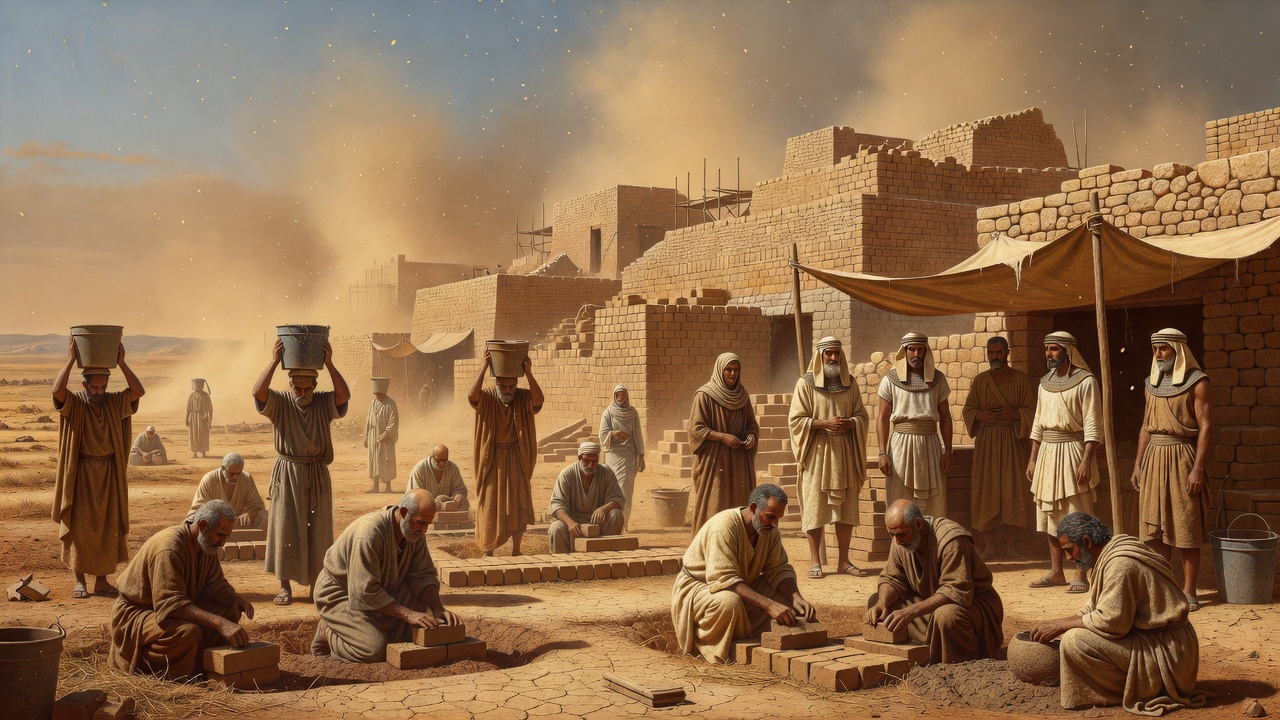
11Kabo tomo Isileli siyamala Itipita ali topaisowa panpanli na Itipita tomo Isileli siyakamkamnali paisowa polopoloweli siwolegili yakato yaluyaluwali siyakamkamnali. Mwa kaba gite bwaite, Itipita siloina kaiwe na Isileli wauwau sisepali kabo taon lalakili sikabili esali Pilom yo Lamesese, kin ana gogo kaba kalakalaina. 12Bwagana Itipita Isileli siyakamkamnali, na iyamo siya Isileli kali boda idebalala isaesae yo ali yanuwa siyalalaki yoi. Kabo Itipita simatausi Isileli kolili mwa siwalo paisowa polopoloweli siginaulili yo siwalo sipaisowa nume kana kabi koina yo tano koina, nige sikakate-kamkamna-yagili. Kabo Itipita tomo Isileli ali miyamiya sisibayanae.
15Yo Itipita ali kin iedeedede sinesineo labui kolili esali Sipila yo Puwa, siya ali paisowa Ibeliu sinesineoliyao sisaguili kabi kana sauga koina. 16Iwalo, “Saugana Ibeliu sinesineoliyao kwasaguili ali sauga kabi koina, tem sikabi na tau wakoyamate, na tem sine, kwapei meyawasina.” 17Na tosagu labuine simatausi Yaubada koina kabo kin ana walo nige sibebenalan kabo tatao nige sikokoyamateli. 18Na kin ibenalan yakato melumelu tataoliyao nige siuunuyamateli kabo walo iyawasa tosagu labuine silaoma mwa ineli-yagili iba, “Tawae kaiwena kwapaisowai besiele? Tawae kaiwena kwatalam tem tatao meyawasili?” 19Kabo kin kainana siyamaisa siba, “Ibeliu sinesineoliyao nige besiele Itipita sinesineoliyao, ali kabi imalaesosi, sikabi kabo muli mena kayawatagilima kolili.” 20Koinaele Yaubada sinesineo labuine isaguili siboma natuliyao iwolegili kolili kaiwena Yaubada simatausan na Isileli kali boda idebalala isaesae yo sikaiwe. 22Kabo kin loina kaikaiwena iginauli iwaloba, “Ibeliu melumeluwo kikiuli siya tatao wakalaili wagabaegili waila Naile koina sigalomwasi, na siya melumelu sinesineo kwatalamwagili meyawasili.”
Did you know?
Israel's Growth and Oppression in Egypt
- Easton's Bible Dictionary (1897) says that the Hebrews in Egypt were under Joseph's protection for about seventy years, and that after his death their condition changed only gradually. It notes that the new king who did not know Joseph was generally supposed to be Aahmes I, whom Josephus calls Amosis, though discoveries of that time led the dictionary to conclude that he was Seti, after the Hyksos were driven out and the former dynasty restored.Sources: Pharaoh · the Bible text itself
- Set to forced labor, the Israelites built Pithom and Rameses as store cities for Pharaoh. Easton's Bible Dictionary (1897) explains Pithom as Egyptian Pa-Tum, 'house of Tum,' the sun-god, and calls it a treasure city built for Pharaoh Rameses II; it identifies the site with Tell-el-Maskhuta, where ruins of supposed grain-chambers were reported in 1883.Sources: Pithom · Raamses · the Bible text itself
- Pharaoh then commanded that every son born to the Hebrews be thrown into the river. Easton's Bible Dictionary (1897) notes that the name Nile does not appear in Scripture; the Old Testament calls that river Sihor, 'the black stream,' or simply 'the river,' as in Exodus 1:22.Sources: Nile · the Bible text itself
Notes written with AI assistance from open sources (Theographic Bible Metadata, CC BY-SA 4.0; Easton’s Bible Dictionary, public domain) and reviewed before publishing.
Places in this chapter
- Egypt · 30.129, 31.308 · verses 1, 5, 8, 15, 17, 18
- Nile · Today: Nile River · 31.465, 30.367 · verse 22
Only places identified with high confidence are shown (90% or more according to the scholarly sources compiled by OpenBible). Period map: DARE (Digital Atlas of the Roman Empire), CC BY 4.0; modern map: © OpenStreetMap contributors; places: OpenBible.info (CC BY 4.0).
Credits and license for this translation
Buki Tabu Beyabeyana
Portions of the Old Testament in the Tubetube dialect of the Bwanabwana language of Papua New Guinea
Hap Olpela Testamen long tokples Tubetube long Niugini
copyright © 2019 Wycliffe Switzerland
Language: Tubetube (Bwanabwana) (Bwanabwana)
Dialect: Tubetube
This translation is made available to you under the terms of the
Creative Commons Attribution-Noncommercial-No Derivatives license 4.0.
You may share and redistribute this Bible translation or extracts from it in any format, provided that:
You include the above copyright and source information.
You do not sell this work for a profit.
You do not change any of the words or punctuation of the Scriptures.
Pictures included with Scriptures and other documents on this site are licensed just for use with those Scriptures and documents.
For other uses, please contact the respective copyright owners.
2022-08-18
Source: http://png.bible/tteo/ · eBible.org