Exodus 2
Buki Tabu Beyabeyana · Tap a verse to see its cross-references.
Mosese sikabi
1Na tau yabo mekanakava sine yabo sikasole, siya yoli labuine tomo Isileli, Libai ana susu, 2kabo natuli tau sikabi. Sinene igitai melumelu kana koleya inamwanamwasosi kabo iwadam imiyamiya kanasiga waikena yaiyona. 3Na saugana nige sowasowana iwadamyoi, kabo kodo yabo iyalusi lei malamalaweli koina, yo bwatano mena ikebali nige sowasowana waila ilusae. Melumelu itauli na iwadam kawasi malamalawena luwana mena waila papalina mena. 4Melumelu duna itolo-suwala igitagitai tawae kani iyawatagili koina.
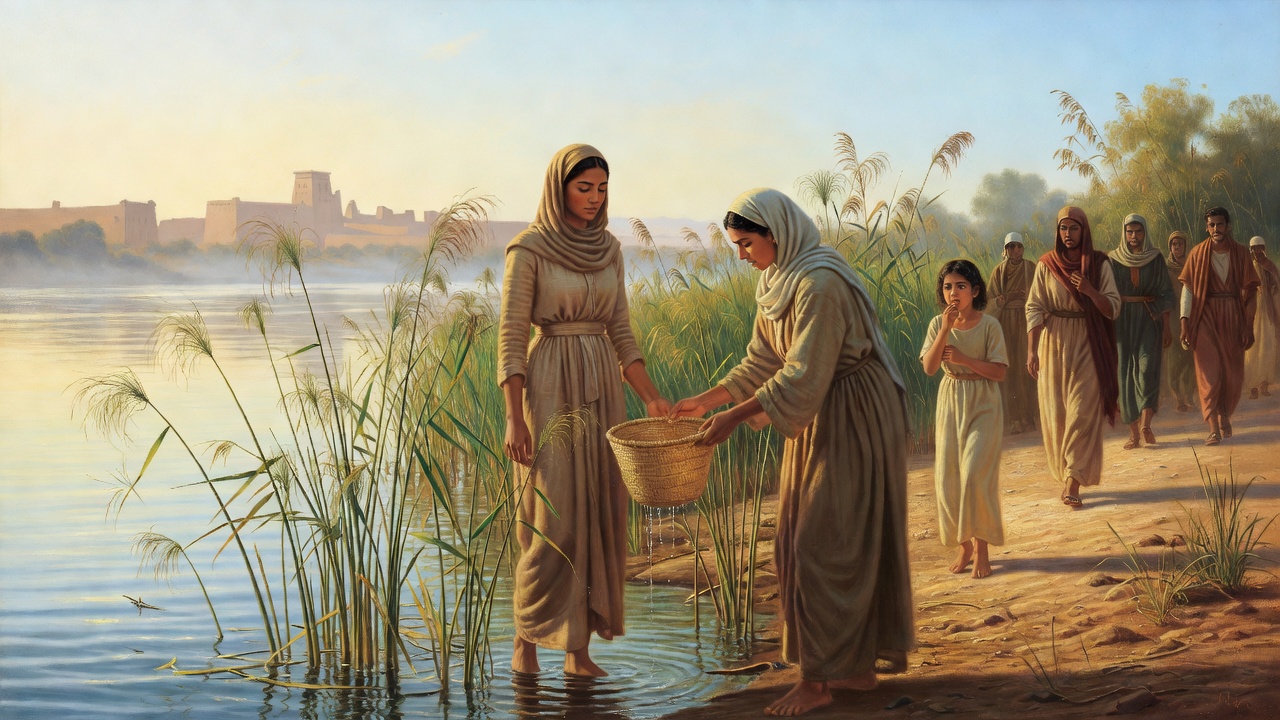
5Na kin natuna sine ilobima sabi sugu waila mena na ana topaisowa silolokeikeile waila papalina mena. Kabo kin natuna kodone igitai kawasi luwali mena yo topaisowa sine yabo iyawasa ilau ikalaiyama. 6Saugana kin natuna kodone isoke melumelu tauna igitai, melumelune ivalavalam kabo kin natuna nuwana inae yo katena ikamkamna-yan. Iwaloba, “Ibeliu melumeluna yabo bwaite.” 7Kabo melumelune duna ilau kin natuna koina ineli iwaloba, “Gubesi, tem sowasowana yalau Ibeliu sinena yabo yawalo ilaoma melumelune ikalai igite-kalatan na iyasusu kaiwem?” 8Kabo kin natuna italam iwaloba, “O, kulau.” Mwa gamasinene ilau melumelu sinana yawasosi iyoganama. 9Kabo kin natuna iwaloba, “Melumelu bwaite ukwalai, kuyasusu kaiwegu na kabo yayamaisao.” Yo melumelu ikalai iyasusu. 10Muli mena, melumelu ilalaki kabo sinana iyapileyoi kin natuna koina yakato iya iyamala kin natunane natuna. Kin natuna inuwatui iwaloba, “Yagayo-seyanama waila mena kabo esana yapei Mosese.” Kin natuna iedeedede Mosese sinana koina|src="CO00769B.TIF" size="col" copy="DCC" ref="2:9"
Mosese iyabubu ilau Midiya
11Saugana Mosese ilalaki nuwanuwana ilau ana tali Ibeliu igitaili. Ilau yo igitai sikamkamna kaiwena paisowa polopoloweli sipaipaisowaili Itipita ali loina koina. Kabo sauga yabo igitai Itipita tomona yabo Isileli tomona iunuunu-gwalagwalai. 12Mosese igitai kabo imunamunai yo igite-keikeile nige tomo yabo igigitai dedeinane koina kabo Itipita tomona iunuyamate yo yona ipulu-wadam bwatano mena. 13Yanuwa ilayan kabo ivivilayoi na Ibeliu tataoliyao labui igitaili sikalekaleya, kabo iwalolau kaleya toyatubuna koina iwaloba, “Tawae kaiwena am tali Ibeliu kuunuunui?” 14Yo tomone iwaloba, “Kowa nige kai kama toloina yo kama toyatala. Gubesi nuwanuwam kuunuyamateyau besiele laina Itipita tomona kuunuyamate?” Mwa Mosese isiliyata yo imatausi, inuwanuwatu iba, “Tomo silobaiyauko yo sikatai tawae yaginauli.” 15Kin Mosese wasana ibenalan yakato Itipita yabo iunuyamateyako, kabo kin nuwanuwana Mosese iunuyamate na Mosese iyabubu ilau dedei Midiya.
Sauganane Mosese iyawatagili Midiya koina ilau imiyasio waila keli yabo sopana mena, 16kabo Midiya ali topwaoli kokotomo kali tobaguna esana Yetolo natunao sinesineo yoli seben silaoma na waila silegu tamali ana sipi yo ana gouti siyanumali. 17Na boda uloi sipi togite-kalatan tupwaliyao silaoma sinesineone sitawoili. Kabo Mosese ilau sinesineone isaguili waila ilegu ali ebaebai kaiweli. Tatao sinesineone sitawoili na Mosese ilau sinesineone isaguili|src="CO00780B.TIF" size="col" copy="DCC" ref="2:16-17" 18Saugana sivivilayoi tamali koina kabo ineli kolili iwaloba, “Tawae kaiwena mwayamwayau kwavivilama kaliyate kabona?” 19Siwaloba, “Saugana sipi togite-kalatan sitawoimai, kabo Itipita tomona yabo isaguimai na waila ilegu kaiwemai iwolena ala ebaebai kolili.” 20Yo ineli natunao kolili iwaloba, “Na toweya iyaele? Tawae kaiwena kwalogabaen? Kwalau kwawalo ilaoma mekalakava takekan.”
21Kabo silau siwalolau Mosese koina yakato mekalikava tem silau ali nume mena sikekan. Mwa Mosese italam yo ilaoma mekalikava ali nume mena sikekan. Imwawasi yo italam imiyamiya kolili, na Yetolo natuna yabo esana Sipola italamwan Mosese koina mekanakava sikasole. 22Yo natuli tau sikabi. Mosese inuwanuwatu kabo iwaloba, “Yanuwa bwaite koina yamiya taumana kabo esana yapei Gelisoma.” 23Bolime sibaibaiwa imwawasi kabo Itipita ali kin iboita, na Isileli siyaelemo me ali kamkamna simiyamiya Itipita koina, kabo sivalam kawakawanoi sagu kaiwena. Ali valam isae Yaubada koina, 24kabo ali valam kawakawanoi ibenalan yo ana waloyameli Abelamo, Aisake yo Yakobo kolili inuwatu-kalatan. 25Igitai Isileli ali polowe yo ali kamkamna ilalakisosi kaiwena siya topaisowa panpanli mwa ikatekamkamna-yagili.
Did you know?
The birth and flight of Moses
- Pharaoh’s daughter named the child Moses, explaining that she had drawn him out of the water. Easton's Bible Dictionary (1897) links his name with “drawn,” or with the Egyptian word mesu, “son”—the element from which the dictionary also explains Rameses as “royal son.”Sources: the Bible text itself · Moses
- In Exodus 2 a daughter of Levi hides her son for three months, and Pharaoh’s daughter, finding him among the Nile reeds, recognizes a Hebrew child. Easton's Bible Dictionary (1897) links the Israelites’ affliction to “the new king who knew not Joseph,” long supposed to be Aahmes I, called Amosis by Josephus, though the dictionary, citing discoveries then recent, names Seti instead. Their hardship, it says, began after the Hyksos, masters of Egypt for some five centuries, were driven out and the old dynasty restored.Sources: the Bible text itself · Pharaoh
- After Pharaoh sought to kill him, Moses fled to Midian and sat down beside a well; he later married Zipporah, one of the seven daughters of the priest of Midian. The Midianites were nomadic Arabians descended from Midian, Abraham’s fourth son by Keturah, and they pastured their flocks in the Sinai peninsula and in the desert north of the Arabian peninsula. This chapter calls the priest Reuel, whom Easton's Bible Dictionary (1897) names Raguel, regarding that form as his personal name and Jethro—“excellency”—as an official title if the two are identified.Sources: the Bible text itself · Midian · Midian · Jethro
Notes written with AI assistance from open sources (Theographic Bible Metadata, CC BY-SA 4.0; Easton’s Bible Dictionary, public domain) and reviewed before publishing.
Places in this chapter
- Nile · Today: Nile River · 31.465, 30.367 · verses 3, 5
- Midian · 28.495, 35.012 · verses 15, 16
- Egypt · 30.129, 31.308 · verse 23
Only places identified with high confidence are shown (90% or more according to the scholarly sources compiled by OpenBible). Period map: DARE (Digital Atlas of the Roman Empire), CC BY 4.0; modern map: © OpenStreetMap contributors; places: OpenBible.info (CC BY 4.0).
Credits and license for this translation
Buki Tabu Beyabeyana
Portions of the Old Testament in the Tubetube dialect of the Bwanabwana language of Papua New Guinea
Hap Olpela Testamen long tokples Tubetube long Niugini
copyright © 2019 Wycliffe Switzerland
Language: Tubetube (Bwanabwana) (Bwanabwana)
Dialect: Tubetube
This translation is made available to you under the terms of the
Creative Commons Attribution-Noncommercial-No Derivatives license 4.0.
You may share and redistribute this Bible translation or extracts from it in any format, provided that:
You include the above copyright and source information.
You do not sell this work for a profit.
You do not change any of the words or punctuation of the Scriptures.
Pictures included with Scriptures and other documents on this site are licensed just for use with those Scriptures and documents.
For other uses, please contact the respective copyright owners.
2022-08-18
Source: http://png.bible/tteo/ · eBible.org