Exodus 12
Godón Buk · Tap a verse to see its cross-references.
⌊Büdül Kórzyón Tóre⌋
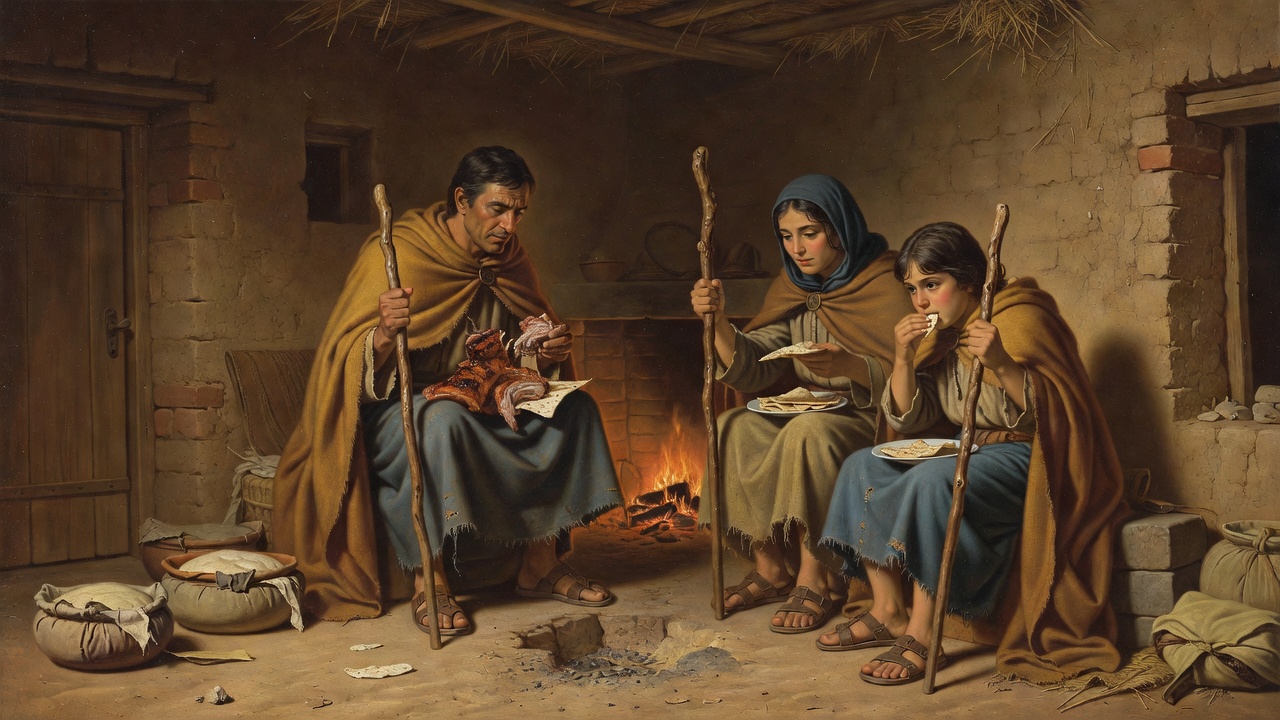
1⌊ Lod⌋ bóktanórr Moses akó Erron, ibüka Izipt kantrridü wagó, 2“Ini melpal, sab metat wata yabü blamanabkü ngaen-gógópan melpal yarile, blaman pailzan. 3Nüzazilamke blaman Isrrael basirr pamkolpam magó, ini 10 ngim ngürrdü, ini melpal, pama darrpan-darrpan ⌊sip⌋ kupo ó ta ia ⌊gout⌋ kupo tibiób olmalkolabkü ki yazebnóm, darrpan-darrpan müótankü. 4A oya olmalkol ne abün koke nóma kwarile ene dudu lar alóngóm, wató akó oya minggüpanan müótüdü ne pame, ene lar usakü arrgrrüti. Da wata we ngarkwatódó syórr yangórre, i ne ngarkwat olmalkolako, akó darrpan-darrpana ne ngarkwatódó elóngórre. 5Da i wata darrpan pail sip kupo ó ta ia gout kupo simanal korale, gülüng akó gao koke. 6Da morroal ngabkan koralónke kókó 14 ngim ngürr ini melpal. Blaman Isrrael basirr pamkolpama ene lar ugón ki okrralón, irrüba küp nóma sirrbüle. 7Da pamkolpama ngibürr óe ki yazebnóm da mamtae talkum ki nóngangonóm akó kwitana mamtae nugup, i ene lar ne müótüdü elóngórre. Pama óe angangda mamtae talkum akó kwitana mamtae nugup.|alt="Man with family painting blood on door post" src="KV-022.tif" size="col" ref="12:7" 8Ene dadan irrüb, i ene lar murr ki bamngulnüm birrdü, da ki elóngnóm kapan bókónpükü akó ist-koke bamngulürrün brredpükü. 9Lar murr alónggu kókres akó urur nae bamngulürrün, a wata dudu birrdü bamngulürrün, singülpükü, wapórpükü, akó aumana büb kugupidü murrpükü. 10Ngibürr murr arrbün-gu sab irrbim; ngibürr murra ne nóma bamirre, da urdü yamselamke. 11Da e inzan elóngamke: yabiób tumum mórrkenyórr belte barümürrün, yabiób wapór kla bamelórrón, akó tupuru tangdó korale. Büsai-büsai elóngamke, ene Lodón Büdül Kórzyón Tóre-e.
12“Ene dadan irrüb, ka blaman Izipt kantrri sab ugón arrgrrat namulo, dakla akrrankü blaman ngaensingül babótórrón simanal olmal, pamkolpam akó ngabyón lar. Ka ta blaman Izipt god sab zaz ninünümo. Ka Lodla. 13Da óe igó timama, müót bómzyatóm e ne ngyabendakla. Ka óe nóma nósenónómo yabü müótüdü, ka sab kwitana bórrgrrat namulo, da darrü büdülan kolae bain klama yabü koke namurrórre, ka ne Izipt pamkolpam wirri azid aeng nóma nókyenónómo. 14E wata metat gyagüpi amanik koralónke ini ngürr, akó e ini ngürr tórezan amanik koralónke Lodónkü. Ene metat ódód gida-a.”
⌊Ist-koke Brred Tóre⌋
15Lod bóktanórr wagó, “7 Ngürr kugupidü, e sab istpükü aungürrün brred alogu; wata ist-koke brred ololónke. Ngaen-gógópan ngürrdü, e blaman ist amónamke yabiób müótüdügab. Darrü oloma ene 7 ngürrdi istpükü aungürrün brred nótó nóma elo-e, oya sab metatómpükü zirrapórre Isrrael pamkolpamdógab. 16Ngaen-gógópan ngürr akó 7 ngim ngürrdü, e kwób bazen koralónke kürü ⌊ótókóm⌋. Darrü zaget tónggapón-gu ene nis ngürr kugupidü, a wa taia ene ngürrankü ngarkwatódó alo kla tómbapónóm blamanab alom. 17E amanik koralónke Ist-koke Brred Tóre, zitül ka ini ngürrdü simarrurrü yabü Isrrael zitül pamkolpam Iziptgab. Amanik koralónke ini Tóre, zitülkus ini bóktan sab metat mumyamón bóktana, yabükagab solkwat ne olmalbobatala tóbabótóle.”
Ngaensingül Babótórrón Simanal Olmalab Büdül
29Irrüb zokrrok, Lod ngaensingül simanal olmal ugón ekrranórr Izipt kantrridü, tai parraoan ngaensingül siman olomdógab, sab solkwat aban mórran pabodó nótó mórróne, kókó tümün müótüdü pamab ngaensingül simanal olmaldó. Akó blaman ngabyón larab ngaensingül simanal kupo ta inzan ekrranórr. 30Ene irrüb parrao, oya zaget pam, akó blaman Izipt kolpama ugón tübarsinürr. Da kari yón taegwarr koke yarilürr blaman Izipt kantrridü, zitülkus ola darrü popa müót babul yarilürr, a blaman wata büdülpükü müót kwarilürr. 31Ene dadan irrüb, parraoa Moses akó Erron ibü nginaunürr tóbaka, da bóktanórr wagó, “Bazeb! Kürü pamkolpam elókam, yadipa akó Isrrael pamkolpam! Ogob ótókóm Lodón, e enezan kümtirri kürü. 32E yabiób sip a gout akó ⌊kau⌋ yazebam da ogob! Da e dakla kürünkü tóre bako kwarilünke kürü ngyaben morroal ainüm.” 33Izipt pamkolpama wirri arüngi nilóp Isrrael pamkolpama büsai-büsai bazebóm ibü kantrri amgatóm. I bóktónóp wagó, “Ki kubó blamana kena nurrbarinünüm, e ne koke nóma bazebo!”
Isrrael Pamkolpama Izipt Amgütóp
37Isrrael pamkolpama we bazebórr wapórane Rrameses wirri basirrdügab ama Sukot wirri basirrdü. I aprrapórr 600,000 pam koralórr; kol akó olmal koke etóngóp, i nisakü bazebórr. 38Akó abün mogob pamkolpam akó abün sip a gout yabül akó kau yabüla ta inzan bazebórr usakü. 39I Iziptgab ne kókres plaoa barrmülürr, i kwat-kwat ist-koke pólan brred bamngulóp. Ene plaoa ist-koke yarilürr, zitülkus ibü Iziptgab wata büsai-büsai zirrnapónóp. Ibü gaodó ngarkwat koke yarilürr Iziptüm, kwat-kwat alom alo kla bamngulüm akó istpükü plaoa azebóm ene tonarr. 40Isrrael pamkolpama Iziptüm 430 pailüm ngyabenónóp.
Did you know?
Passover and the night Israel left Egypt
- Exodus 12 establishes this month as the first of the year and states that the Israelites left Egypt at the end of a 430-year stay, on the very day that period ended. A timeline given with these sources dates the Exodus to 1490 BC and the start of a 430-year sojourn in Canaan and Egypt to 1920 BC.Sources: the Bible text itself · Exodus from Egypt · Sojourn in Canaan and Egypt
- The Israelites journeyed from Rameses to Succoth with about 600,000 men on foot, besides women and children, a mixed multitude, and large flocks and herds. Easton's Bible Dictionary (1897) says the city of Rameses was probably Zoan, rebuilt by Rameses II, that the land of Rameses was probably Goshen, and that Succoth, their first encampment, was the civil name of Pithom.Sources: the Bible text itself · Rameses · Succoth
- Pharaoh, whom the chapter does not name, summoned Moses and Aaron during the night and ordered the Israelites to leave at once. Easton's Bible Dictionary (1897) thinks the Pharaoh of the Exodus was probably Menephtah I, the fourteenth and eldest surviving son of Rameses II, who resided at Zoan, while noting that some judge the evidence to favor Seti II.Sources: the Bible text itself · Pharaoh (of the Exodus)
Notes written with AI assistance from open sources (Theographic Bible Metadata, CC BY-SA 4.0; Easton’s Bible Dictionary, public domain) and reviewed before publishing.
Places in this chapter
Only places identified with high confidence are shown (90% or more according to the scholarly sources compiled by OpenBible). Period map: DARE (Digital Atlas of the Roman Empire), CC BY 4.0; modern map: © OpenStreetMap contributors; places: OpenBible.info (CC BY 4.0).
Credits and license for this translation
Godón Buk
Portions of the Holy Bible in the Gizrra language of Western Province, Papua New Guinea
Buk Baibel long tokples Gizrra long Niugini
copyright © 2019 Wycliffe Bible Translators, Inc.
Language: Gizrra
Translation by: Wycliffe Bible Translators, Inc.
This translation is made available to you under the terms of the
Creative Commons Attribution-Noncommercial-No Derivatives license 4.0.
You may share and redistribute this Bible translation or extracts from it in any format, provided that:
You include the above copyright and source information.
You do not sell this work for a profit.
You do not change any of the words or punctuation of the Scriptures.
Pictures included with Scriptures and other documents on this site are licensed just for use with those Scriptures and documents.
For other uses, please contact the respective copyright owners.
2024-07-01
Source: http://png.bible/tof/ · eBible.org