Exodus 14
Godón Buk · Tap a verse to see its cross-references.
Óe-óe Malu Baurrürr
5Izipt kinga igó nóma izazilóp wagó, Isrrael pamkolpama kuri busurre, wató akó oya zaget pama tibiób gyagüpitótók we nalüngóp, da bóktónóp wagó, “Mi ini gonggo poko iade tónggapónóp? Mi ta Isrrael ⌊leba zaget⌋ pamkolpam ok ninóp tótókóm, da i tibiób zaget kuri nümgütrre!” 6Da wa tóba ⌊osab amorrat kla⌋ we tómbapónórr, da tóba gazirr pam we yazebórr ibü solkwat atanóm. 7Da wa yazebórr tóbanan 600 morroalan gazirr osab amorrat kla, akó blaman Izipt gazirr osab amorrat kla, tibiób ngabkan wirri gazirr pampükü. 8⌊ Lod⌋ parraoan gyagüp kolaean ngitanórr, Izipt king, da wa igósidi akyanórr Isrrael pamkolpamab solkwat ibü akonóm, nidi ogoblórr gum-koke. 9Izipt gazirr pam, blaman parraoan ⌊os⌋ akó oya osab amorrat kla akó oya os amarru pama zutalórr da nómrrónóp, i ne bamilürr Óe-óe Malu kabedó, Pi Akirrot wirri basirr minggüpanan, Barr Zepon wirri basirr dakla kabedó.
10Parraoa tóba gazirr pampükü ngorram nóma nyónónóp, Isrrael pamkolpama ugón sazilóp kakota. Da i parrao esenóp tóba gazirr pampükü ibü solkwat akyande, ibü wirri guma yazebórr, da wirribóka we taegwarr apónóp Lodka tibiób tangbamtinüm. 11I Moseska bóktónóp wagó, “Ma kibü Iziptgabi büdülüm iade simarrua ⌊ngüin-koke bwóbdü⌋? Ia ene zitülkusdü, gapók balüng bwób babula Iziptüm? Ma ia kuri esena, ma kibüka ne kla tónggapórró? Ma kibü iade simarrua Iziptgab? 12Ki ia marüka ngaen-gógópan koke bóktónóp Iziptüm wagó, inzan pokoa sab aprrapórr tómbapóne mibü amgat kakóm? Ene amkoman: ki marü milóp wa, ‘Ma kibü selók, a ki leba zaget inzan tómbapón ki kwarila Izipt pamkolpamabkü.’ Ene wa kari morroal koke ki yaril leba zagetóm ola, a büdülüm koke, aini ngüin-koke bwóbdü.”
13Moses ibüka bóktan yalkomólórr wagó, “E gumüm bain-gu. Wata zürük inzan bórrang. E kubó esenane, Lod kubó laró tónggapóne yabü zid bainüm errkya; e sab myamem ini Izipt pam kokean nósenane akó. 14Lod yabünkü kubó wató gazirr yarile, a e wata piküp kwarilo.”
15Da Lod Moseska bóktanórr wagó, “Ma kürüka iade górrgandóla tangbamtinüm? Isrrael pamkolpam nilnüm tótókóm singül kwata! 16Moba tupuru kwit yó, da tang adrrat maludü nae nis ór angónóm. Ene igósüm, Isrrael pamkolpama mólóg tüpana wapórane iade baurre, we malu ór angórrón kandóma. 17Ka kubó Izipt pamab gyagüp kolaean ngintinünümo, igósüm i kubó zutale ibü solkwat. Ka kólba ngi iade wirri kwit emgnyelo, ka amkoman nóma ekrrono parrao akó oya gazirr pam, oya osab amorrat klampükü, akó oya os amarru pampükü. 18Ka ne kubó ibü memokan nóma ut-ut ninünümo, ka kólba ngi igósidi wirri kwit emngyelo, da Izipt pamkolpama kubó iade umul bairre wa, ka Lodla!”
19⌊Godón anerrua⌋, nótó wamlórr Isrrael pamkolpamab singül kwata, ama tolkomólórr ibü kakota, ibü solodó akyanóm. Talkumzan zamngórrón pülpül pokoa ta inzan tolkomólórr singül kwatagab, da ama kakota trramngólórr, Isrrael pamkolpam akó Izipt gazirr pamab aodó. Ene dudu irrüb, pülpül pokoa algón-koke tümün singrinürr Izipt gazirr pamdó, a zyón ma Isrrael pamkolpam nókyenóp. Da ene we zitülkusdü, Isrrael akó Izipt pamkolpama tibiób minggüpanan koke igósidi togobórr obzek basenóm ene dudu irrüb.
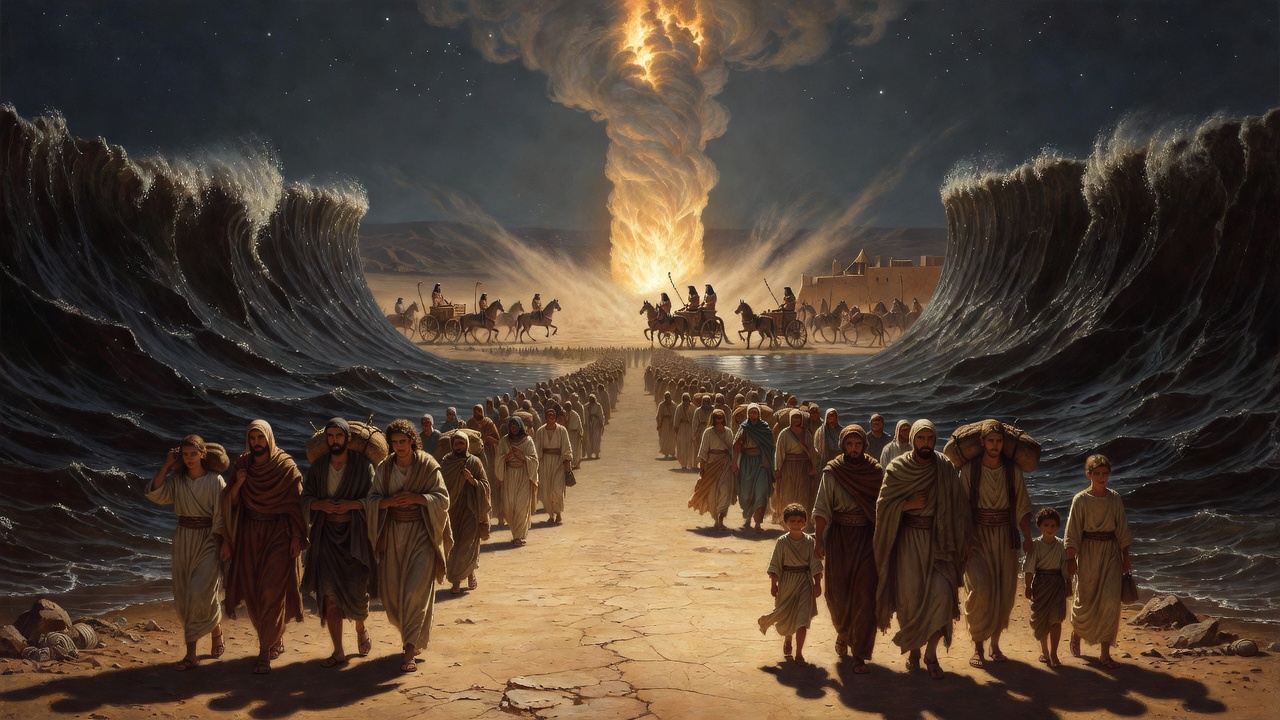
21Moses tóba tang adrratórr maludü, da ene dudu irrüb Lod malu nae ugón nis ór yangónórr wirri arüng zibórr wóri, ama imzazilürr mólóg tüpüm. Da malua ene inzan batülürr. 22Isrrael pamkolpama we ogoblórr maluana, mólóg tüpdüma, nae aodó ne nürrgrratórr, amaka griamli nizan kwata. Isrrael pamkolpama tótókdako maluana, mólóg tüpdüma.|alt="Moses with Israealites crossing the Reed sea" src="lll2-17.tif" size="span" ref="14:22" 23Izipt gazirr pam, blaman parraoan os, oya osab amorrat kla, akó oya os amarru pama ibü solkwat we zutalórr mólóg tüpdüma, malu aodó ne itilürr. 24Sisa anin minggüpanan, Lod ugón sazilürr kwitümgab, ene ur ulitpükü talkumzan zamngórrón pülpül pokodógab, Izipt gazirr pamdó, da ibü gyagüpitótók blaman gonggo ninóp. 25Wa ibü osab amorrat klamab wil barüm-barüman ngintinóp, da ibü busom kari müp koke yarilürr. Izipt gazirr pama bóktónóp wagó, “ Lod gazirrda minkü Isrrael pamkolpamab ngidü! Mi ibükagab gum busurre!”
26Lod Moseska bóktanórr wagó, “Moba tang adrrat maludü, da naea kubó ugón tolkomóle Izipt gazirr pam akó ibü osab amorrat kla akó ibü os amarru pam ngablaom.” 27Da Moses tóba tang we adrratórr maludü. Sisa nóma tunilürr, naea ugón tolkomólórr tóba gaodó. Izipt gazirr pama enan kainónóp busom naedógab, a Lod ibü maludü büdülümpükü we nae nitóp. 28Naea tolkomólórr, da nganolop blaman osab amorrat kla, os amarru pam, akó blaman Izipt gazirr pam, nidi zutalórr Isrrael pamkolpamdó maludü. Darrü oloma myamem kokean twadürükürr.
31Isrrael pamkolpama Lodón wirri arüng nóma esenóp, wa ne tórrmen okaka imzazilürr Izipt gazirr pamdó, i kari gum koke ipüdóp, da i tibiób moboküpi amkoman bangun blamana we irrbünóp Lodka akó tóba zaget pam Moseska.
Did you know?
Israel trapped between Pharaoh and the sea
- Israel was told to turn back and camp before Pi-hahiroth, between Migdol and the sea, directly opposite Baal-zephon, so that Pharaoh would think the wilderness had boxed them in. Pi-hahiroth means place where the reeds grow, though the Septuagint and the Coptic read farmstead, and Baal-zephon means Baal of the north.Sources: the Bible text itself · Pi-hahiroth · Baal-zephon
- Easton's Bible Dictionary (1897) describes Baal-zephon as an Egyptian town on the shores of the Gulf of Suez, probably modern Jebel Deraj or Kulalah on the western shore, and notes that Egyptian Baal-zapuna was a place of worship. Some have identified Pi-hahiroth with Ajrud, a fortress between Etham and Suez. The entry on Pi-hahiroth adds that the condition of the Isthmus of Suez at the time of the Exodus is not exactly known, so Pi-hahiroth and Israel's other camps in Egypt cannot be definitely located; the isthmus has been formed by deposits of the Nile.Sources: Baal-zephon · Pi-hahiroth
- Easton's Bible Dictionary (1897) says the Pharaoh of the Exodus was probably Menephtah I, the fourteenth and eldest surviving son of Rameses II, and that he resided at Zoan, where his interviews with Moses and Aaron recorded in Exodus took place. The same entry still treats it as an open question whether Seti II or his father Menephtah was that king, and notes that some judge the evidence to favor Seti II.Sources: Pharaoh (of the Exodus)
Notes written with AI assistance from open sources (Theographic Bible Metadata, CC BY-SA 4.0; Easton’s Bible Dictionary, public domain) and reviewed before publishing.
Places in this chapter
Only places identified with high confidence are shown (90% or more according to the scholarly sources compiled by OpenBible). Period map: DARE (Digital Atlas of the Roman Empire), CC BY 4.0; modern map: © OpenStreetMap contributors; places: OpenBible.info (CC BY 4.0).
Credits and license for this translation
Godón Buk
Portions of the Holy Bible in the Gizrra language of Western Province, Papua New Guinea
Buk Baibel long tokples Gizrra long Niugini
copyright © 2019 Wycliffe Bible Translators, Inc.
Language: Gizrra
Translation by: Wycliffe Bible Translators, Inc.
This translation is made available to you under the terms of the
Creative Commons Attribution-Noncommercial-No Derivatives license 4.0.
You may share and redistribute this Bible translation or extracts from it in any format, provided that:
You include the above copyright and source information.
You do not sell this work for a profit.
You do not change any of the words or punctuation of the Scriptures.
Pictures included with Scriptures and other documents on this site are licensed just for use with those Scriptures and documents.
For other uses, please contact the respective copyright owners.
2024-07-01
Source: http://png.bible/tof/ · eBible.org