Exodus 11
Godón Buk · Tap a verse to see its cross-references.

About this book
About Exodus
- Easton's Bible Dictionary (1897) dates Israel's departure from Egypt to about 1490 B.C., four hundred and eighty years before Solomon's temple was built. How long they had sojourned there is disputed: Exodus 12:40 gives four hundred and thirty years, Genesis 15 speaks of about four hundred, and the Greek and Samaritan versions also count the years in Canaan, so some reckon only two hundred and fifteen years in Egypt.Sources: Easton: Exodus
- Easton's Bible Dictionary (1897) does not name the author of Exodus. The entry on Moses says Jacob and his sons went down into Egypt, probably about three hundred and fifty years before Moses was born, and that a Hyksos king, from a pastoral Semitic people of Asia who then ruled Egypt, settled them in Goshen. Moses later spent forty years in Midian, where that people pastured flocks on the Sinai peninsula, and became the son-in-law of Jethro, priest of Midian.Sources: Moses · Easton: Exodus · Midian · Jethro
- Who was Pharaoh at the departure is also disputed. Easton's Bible Dictionary (1897) calls him probably Menephtah I, the fourteenth and eldest surviving son of Rameses II, who lived at Zoan and met Moses and Aaron there, while noting that some favor Seti II, whose reign began peacefully and ended in sudden disaster.Sources: Pharaoh (of the Exodus)
- The plagues, Easton writes, loosened Pharaoh's hold, and the Passover was instituted as a perpetual memorial, with the lamb's blood sprinkled on the doorposts. In the third month the people reached Mount Sinai, also called Horeb, about one hundred and fifty miles from the Red Sea, and camped there about a year. The last twenty-two chapters of Exodus record that stay, including the tabernacle, whose Holy Place had no opening for daylight and was lit only by the golden candlestick.Sources: Easton: Exodus · Mount Sinai · Holy Place
- Aaron, eldest son of Amram and Jochebed, was born in Egypt three years before Moses and was sent to meet him so the two could work together. At Rephidim, Joshua, also born in Egypt, commanded Israel's fighters when the Amalekites, a pastoral people living between the Dead Sea and the Red Sea, tried to bar their way.Sources: Aaron · Joshua · Amalek
Notes written with AI assistance from open sources (Theographic Bible Metadata, CC BY-SA 4.0; Easton’s Bible Dictionary, public domain) and reviewed before publishing.
Ngaen Simanal Olmalab Büdül Bóktan
1Da ⌊ Lod⌋ bóktanórr Moseska wagó, “Ka zirrapóndóla dómdóm darrpan kolae bain kla parraodó akó Izipt pamkolpamdó. Ene kakóm, wa yabü sab ok nirre tótókóm algab. Wa sab yabü nóma ok nirre tótókóm, wa sab yabü blaman tai amkoman amóne algab, metatómpükü. 2Errkyadan bóktanke Isrrael pamkolpamdó magó, ‘E blamana nümtinamke Izipt kolpam, yabü minggüpanan nidi ngyabendako, ⌊golde⌋ akó ⌊silba-e⌋ tómbapórrón elklazam.’” 3Da Lod Izipt pamkolpam morroal gyagüpitótók nókyenóp, igósüm i morroal esenóp Isrrael pamkolpamdó tibiób obzek kwata. Anda, parraoan zaget pam akó blaman Izipt kolpama Mosesón igó ngakanónóp wagó, wa kari wirri ngi pam kokea.
4Da Moses bóktanórr wagó, “ Lod inzan yaril wa, ‘Irrüb zokrrok, ka kalma wamlo blaman Izipt kantrri kugupidüma. 5Da blaman ngaensingül babótórrón simanal olmala kalma nurrbarine, tai parraoan ngaensingül siman olomdógab, sab solkwat aban mórran pabodó nótó mórróne, kókó ⌊leba zaget⌋ ngulmokuran ngaensingül siman olomdó, enan wirri zaget nótó tómbapóndo ⌊wit⌋ küp zaze amgünüm. Ngabyón larab ngaensingül babótórrón simanala ta inzan nurrbarine. 6Sab wirri yón gyaur yarile blaman Izipt kantrridü. Ngaen inzan wirri yón gyaur babul yarilürr ó myamem babul yarile ene kakóm. 7A darrü kolaea sab kokean tómbapóne Isrrael pamkolpamdó akó ibü ngabyón elklazadó. Da e sab umul bainane igó, ka, Lod, Isrrael pamkolpam darrpan tonarre koke ngabkandóla, Izipt pamkolpamdógab.’”
Did you know?
One More Plague before the Exodus
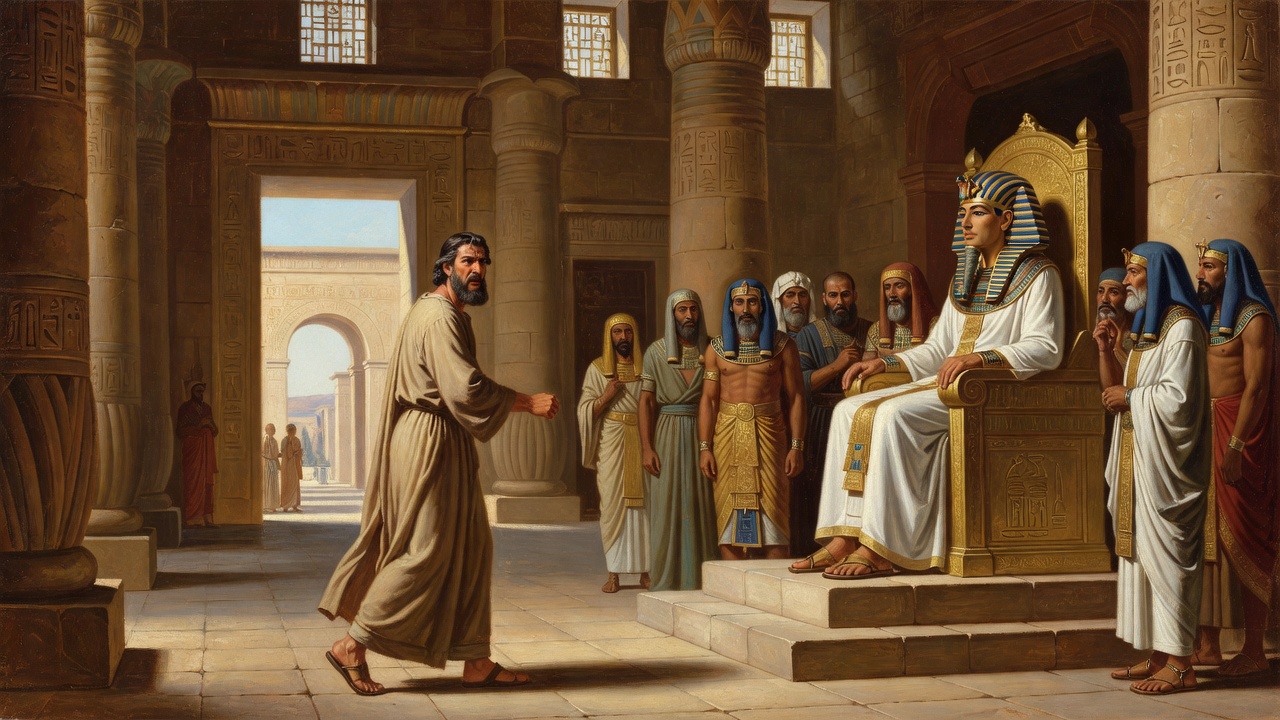
- Easton's Bible Dictionary (1897) says the pharaoh of the Exodus was probably Menephtah I, the fourteenth son of Rameses II and the eldest of the sons who survived, but it also says it is still a question whether he or Seti II was that king; some favor Seti II. The same entry says that pharaoh lived at Zoan, where his interviews with Moses and Aaron took place. This chapter ends as Moses, hot with anger, leaves Pharaoh's presence.Sources: Pharaoh (of the Exodus) · the Bible text itself
- Easton's Bible Dictionary (1897) says Jacob and his sons went down to Egypt probably about 350 years before Moses was born, and that the king gave them the best of the land, Goshen, to live in. In this chapter Israelite men and women alike are told to ask their neighbors for articles of silver and gold, and the account says the LORD gave the people favor in the sight of the Egyptians.Sources: Moses · the Bible text itself
- An event listing dates the start of the Exodus from Egypt to 1490 BC. In this chapter the LORD tells Moses that after one more plague Pharaoh will let the people leave and will drive them out completely.Sources: Exodus from Egypt · the Bible text itself
Notes written with AI assistance from open sources (Theographic Bible Metadata, CC BY-SA 4.0; Easton’s Bible Dictionary, public domain) and reviewed before publishing.
Places in this chapter
Only places identified with high confidence are shown (90% or more according to the scholarly sources compiled by OpenBible). Period map: DARE (Digital Atlas of the Roman Empire), CC BY 4.0; modern map: © OpenStreetMap contributors; places: OpenBible.info (CC BY 4.0).
Credits and license for this translation
Godón Buk
Portions of the Holy Bible in the Gizrra language of Western Province, Papua New Guinea
Buk Baibel long tokples Gizrra long Niugini
copyright © 2019 Wycliffe Bible Translators, Inc.
Language: Gizrra
Translation by: Wycliffe Bible Translators, Inc.
This translation is made available to you under the terms of the
Creative Commons Attribution-Noncommercial-No Derivatives license 4.0.
You may share and redistribute this Bible translation or extracts from it in any format, provided that:
You include the above copyright and source information.
You do not sell this work for a profit.
You do not change any of the words or punctuation of the Scriptures.
Pictures included with Scriptures and other documents on this site are licensed just for use with those Scriptures and documents.
For other uses, please contact the respective copyright owners.
2024-07-01
Source: http://png.bible/tof/ · eBible.org