Isaiah 28
Bibiri Kuyie Nnɑ́ɑǹtì Pɑ́tíri · Tap a verse to see its cross-references.
Kuyie nkpɑnnɛ̀mɛ̀ Sɑmmɑrii kó dihɛì
1A bo yɑ̀ fɔ̃́ nSɑmmɑrii kó dihɛì!
A donnɛ̀ dipìì ndi,
kɛ̀ Efɑdɑimmu kó tinɑɑ̀yɑ̃̀ɑ̃̀tì dɑ pɔtìnɛ̀,
kɑ̀ɑ bo ditennì kɛ sĩ́ĩ́ nkubiriku kɛtennɑtikɛ̀.
A kó tisɑ̃tì dònnɛ̀ mutepóó mmùù mɔ̀tɛ́ mù mmu,
tiì nɛ́ tú tinɑɑ̀yɑ̃̀kɛ́muɔ́ntì kó tisɑ̃tì.
2Ntɛ ti Yiɛ̀ nKuyie tɔ̃nnímɛ̀
onìtì dikɔ̃m̀bùɔ̀ yiɛ̀ nwèè kpeńnì,
kɛ donnɛ̀ fɛtɑdiɛfɛ̀ fɛ̀ɛ̀ kɔkɛ́nɛ̀ yɛmɑ́tɑ̃́rɛ̀,
nɛ̀ kuyɑɑkperíkù kɛ cɑɑri,
kɛ dò mmɛniɛ nhɔ̃ɔ̃ tɑmɛ̀ kukó kɛ́píɛ.
Nɛ̀ o nɔ̀ùtɛ̀ ntɛ ò yóó dì bɔmmɛ̀ kɛtenkɛ̀.
3Dikpɑ̀ɑ̀tìpìì Efɑdɑimmu kó tinɑɑ̀yɑ̃̀ɑ̃̀tì pɔ̀tìnɛ̀ dì,
bɛ̀ bo nɑu kɛtenkɛ̀.
4A kó tibɑnsɑ̃tì dònnɛ̀ mutepóó mmùù bo mù mmu ditennì,
kɛ sĩ́ĩ́ nkubiriku nɑtikù.
A kpɛrɛ yó ndònnɛ̀ fìkíè kó ditebii dìì nɑntɛ́ kɛ bi dìndi,
wèè dì yɑ̀ kòò pɑ̃̀nkɛ dì tɔ̃̀tɛ kɛ ɑɑroo.
5Dɛ yiè ti Yiɛ̀ nKuyie Mpɑkɛdɑɑ weè yó ntú o nìtìbɛ̀ bɛ̀ɛ̀ bo nkpɑɑ́ bɛ kó dikpɑ̀ɑ̀tìpìì, bɛ kó kuyítùòkù bɛ kó kubɑnsɑ̃rìkù. 6Kuù yó nduɔ̀ mɛyɛ̀mmɛ̀ mɛ̀ɛ̀ wenni bɛ̀ɛ̀ tu bɛbeémbɛ̀, kɛ duɔ̀ mmuwɛ̃rímú bɛ̀ɛ̀ bɑ̀ɑ dihɛì kó yɛbòrɛ̀ kɛ bɛtì bɛ dootitɔbɛ̀.
Bɛ̀ dɑúmɛ̀ wèè nɑ̀ɑ́ nKuyie mpɑ̃ɑ̃nɑ́ɑǹtì
7Ikuɔ́ nìùbɛ̀ nɛ̀ bɛ̀ɛ̀ nɑ̀ɑ́ nKuyie mpɑ̃ɑ̃nɑ́ɑǹtì, mɛnɑɑ̀ mmɛɛ̀ bɛ̀ fétìnnɛ,
bɛ̀ muɔ́ mmɛnɑɑ̀ kperímɛ̀ mmɛ kɛ yetɛ́ kucɛ,
bɛ̀ ɔ̃ ntṹṹ nkɛ mɛ́ú mɛnɑɑ̀ kperímɛ̀ miɛkɛ nkɛ,
bɛ̀ sɔ̃rikɛ mɛnɑɑ̀ kperímɛ̀ mmɛ
mɛɛ̀ te kɛ̀ bɛ̀ nɑ̀ɑ́ ntìì pɑ̃ɑ̃nɑ́ɑǹtì í co kucɛ
bɛ beéntì í síɛ́.
8Titɔ̃́ǹtũ̀ɔ̃́tì tiì dɑ̀ɑ́tí bɛ tɑ́bùrìbɛ̀ ĩ́nkɛ̀,
kupíkù mɑkù í feí.
9Kɛ̀ bɛ̀ nɛ́ nɑ́ɑ́ nkɛ tú:
Dɛ kóo Esɑii dɔ́ kɛ tí tié nhɔ̃̀nti?
Ɔ̃̀mbɛ mbɛ ò nɑ̀ɑ́mmɛ̀ tipɑ̃ɑ̃nɑ́ɑǹtì?
Yɛbíkɛ́mpĩ̀ɛ̃̀tɛ̀ bɛ̀ cɑ̀tɛ́ yɛ̀ bɑ̀mbɑ̀nɑ̀ɑ̀?
Yɑ́ɑ̀ yɛ̀ɛ̀ yɑ̃ɑ̃tɛ́ bɑ̀mbɑ̀?
10Kɛ tekíí Esɑii kɛ tú:
Ò ɔ̃ɔ̃ ntṹṹ nkɛ nɑ́ɑ́ nkɛ tú: Kɛ̀ kɛ̀, kɑ̀ kɑ̀,
ku m̀píkù sɑ́m̀pɔ́ kutɛkù sɑ́m̀pɔ́.
11Ti Yiɛ̀ nKuyie mbo duɔ́ nkɛ̀ ibotí tɛì
iì bɛ̀ nɑ̀kɛ́nɛ̀ í kó tinɑ́ɑǹtì,
ì bo bɛ̀ nɑ̀kɛ́nɛ̀ didɑ́údìrì.
12Kù do mɛ mbɛ̀ nɑ̀kɛ́mɛ̀mu kɛ dɔ̀:
Ntɛnɛ̀ diom̀pùrì bɛ̀ɛ̀ ɔ̀u bɛ̀ɛ om̀pɛ̀.
Diom̀pùrì ndi,
bɛ̀ mɛ nyí nyie kɛ kèńtɛ́ kù tu mù.
13Nɛ̀ dɛ kpɛ́í ti Yiɛ̀ nKuyie nyóó duɔ́ nkɛ̀ ibotí tɛì iì bɛ̀ nɑ̀kɛ́nɛ̀ didɑ́údìrì: Kɛ̀ kɛ̀, kɑ̀ kɑ̀, ku mpíkù sɑ́m̀pɔ́ kutɛkù sɑ́m̀pɔ́. Kɛ̀ bɛ̀ nkérí kɛ́bíétí kɛ duò diyɑ̀nyɑ̀nnì, kɛ́kɔutɛ kɔutɛ bɛ kɑ̀, kɛ́yĩɛ̃kɛ muceé, kɛ̀ bɛ̀ɛ bɛ̀ pĩ̀ḿmú.
Dipũũ kó ditɑ̃́rì
14Díndi bɛ̀ɛ̀ ni Sedisɑdɛmmu kó bɛnìtìbɛ̀,
díndi sipɔɔ yɛmbɛ̀ keènɛ̀ ti Yiɛ̀ nKuyie tu mù.
15Díndi bɛ̀ɛ̀ nɑ̀ɑ́ nkɛ tú:
Nɛ̀ mukṹṹ nti nɑɑtimu,
nɛ̀ kudɔnkù ti dɔ̀ɔ̀ mɛtɑummɛ̀ mmɛ,
kɛ̀ mutenkṹṹ nkéríní mu í yóó ti nintɛ,
ti sɔri siyɑ́ɑ̀bìsí miɛkɛ nkɛ,
mɛsoùmmɛ̀ mɛɛ̀ tu ti kó disɔ̀rì.
16Dɛɛ̀ te kɛ̀ ti Yiɛ̀ nKuyie mbɛ́i nkɛ tú:
N dɔú ndipũũ kó ditɑ̃́rì ndi,
ditɑ̃́rì dìì kpeńnì mɛsɑ̀ɑ̀, dìì donku kpeńnì,
diì ɔ̃ mbo ditou kentímɛ̀ kɛ̀ wèè ĩkú di ĩ́nkɛ̀,
dɛ̀mɑrɛ̀ bɑ́ɑ́ ò nɑmpɛ.
17Tibeéntì sɑ̀ɑ̀tì tiì yó ntú n kó tɛbiètɛ̀,
kɛ̀ mɛwetímmɛ̀ ntú kuhɔ̃ũ n níí yóó tɑ̃ũ nkù kɛ́yɑ dɛ̀ɛ̀ sìɛ́.
Fɛtɑɑfɛ̀ mɑ́tɑ̃́rɛ̀ yɛɛ̀ yóó nɛinɛ̀ disɔ̀rì siyɑ́ɑ̀bìsí kpɛri.
Mɛniɛ mbo pɔ̃ntɛ́nɛ̀ di kó disɔ̀rì.
18Fɛtɑɑfɛ̀ mɑ́tɑ̃́rɛ̀ bo dɛitɛ mɛtɑummɛ̀ di do dɔ̀ɔ̀nɛ̀mɛ̀ mukṹṹ
di do dɔúnnɛ̀ dìì nùù kudɔnkù dì bo dɛitɛ,
mɛyɛi mbo di do dìì mɔ̀nnì mɛ̀ bo di pɔ̃ntɛ́nɛ̀.
19Bɛ̀ yó ndi duòmu bɑ́ dìì kṹnweńnì, bɑ́ kùù yìe, bɑ́ kɛ̀ɛ̀ yènkɛ̀. Di níí yóó keè bɛ nɑm̀pòo kɛ̀ kufɔ̃wɑɑ́ nkuù di pĩ́.
20Kɛ̀ didɔ́ù kũpɛnɛ̀ di yiɛ̀, kɛ bɑ́ ndò nkɛ́duɔ́ kɛ́cɑ̃ɑ̃,
kɛ̀ kuyɑ̀ɑ̀kùu kɛ̃kɛ kɛ bɑ́ ndò nkɛ́dɑ́ɑ́tí.
21Ti Yiɛ̀ nKuyie nyiti kɛ bo cómmúmu, kù do dɔ̀ɔ̀mɛ̀ Pedɑsimmu,
kɛ bo nɑmpɛ kumɑ́ɑ̀ kù do dɔ̀ɔ̀mɛ̀ Kɑbɑɔ̃ɔ̃ biriku,
kù dɔ́ dìì mɔ̀nnì kɛ pĩ́ nku tɔ̃mmú mucɑ̀ncɑ̀mmù, mukpɑ́kpɑ̀rìmù.
22Di tũ ntɛ̃́nkɛ bɑ́ ntú sipɔɔ yɛmbɛ̀, kɛ̀ mɛɛ̀ dɔkɛ kuhɔ̃ũ kó dideè bo cɛ̃́tínnɛ́, ti Yiɛ̀ nKuyie Mpɑkɛdɑɑ tì nni nnɑ̀kɛ́mu kɛ tú ò tɑ̃ɑ̃tɛ́ kɛ bo kuɔ kutenkù nku, tì í yóó pɑɑ̀.
Kuyie nduɔ́mmɛ̀ otenkútì mɛciì
23Mɛm̀mɛ kɛ̀ Kuyie mbɛ́i nkɛ dɔ̀:
Kéntɛ́nɛ̀ n tɑmmɛ̀,
keènɛ̀ n tú mù.
24Otenkútì ɔ̃ nsɛ̃ĩmu,
kɛ dɛi kɛ pũũku kɛ dɔummɔɔ sɑ̃́ɑ̃̀ɑ̃̀?
25Ò ɔ̃ɔ̃ nkòò dùɔ̀ kɛ dèè wèe buɔtímu o dibotì,
tibotí tibotí nɛ̀ o kũmbotí,
kɛ́buɔtí titɛtì yɛpɛ̃nyɔ.
26Kuyie nkuù ò nɑ̀kɛ́ ò dò nkɛ́dɔɔ̀mɛ̀,
kuù ò duɔ́ mmɛciì.
27Bɛ̀ ɔ̃ɔ̃ í nnɑ̀ù ikũmbotí nɛ̀ tɛnɑɑsɑ̃ntɛ̀,
bɛ̀ ɔ̃ɔ̃ tì puotínɛ̀ kudɔú nku,
kɛ́ ti kpɑ̃̀ɑ̃́kɛ́ nɛ̀ kupɑ̀ɑ̀ti.
28Bɛ̀ ɔ̃ɔ̃ pítínnɛ́ tidɑbɛɛtì nti inɑ̀ɑ̀kɛ,
kɛ́nɑunɛ̀ tidiitì bɛ̀ tu tì bèdéè.
Bɛ̀ nɛ́ ɔ̃ ntì nɑ̀ù kɛ berímu kɛ bɑ́ɑ́ tì pùɔ.
29Ti Yiɛ̀ nKuyie Mpɑkɛdɑɑ weè duɔ̀ ndɛ kó mɛciì,
kù dɔ̀ɔ̀ri mùù tɔ̃mmú dɛumu.
Did you know?
The Cornerstone and the Farmer's Wisdom
- Isaiah references historical battlefields such as Mount Perazim, the 'mount of breaches' where David defeated the Philistines, and the Valley of Gibeon, warning that the Lord will rise up to perform an unexpected and disturbing judgment against His own people.Sources: Mount Perazim · Valley of Gibeon · the Bible text itself
- Addressing the leaders ruling in Jerusalem, the prophet contrasts their fragile political refuge with a tested, precious cornerstone laid in Zion, the elevated hill where David established his royal citadel.Sources: Jerusalem · Zion · the Bible text itself
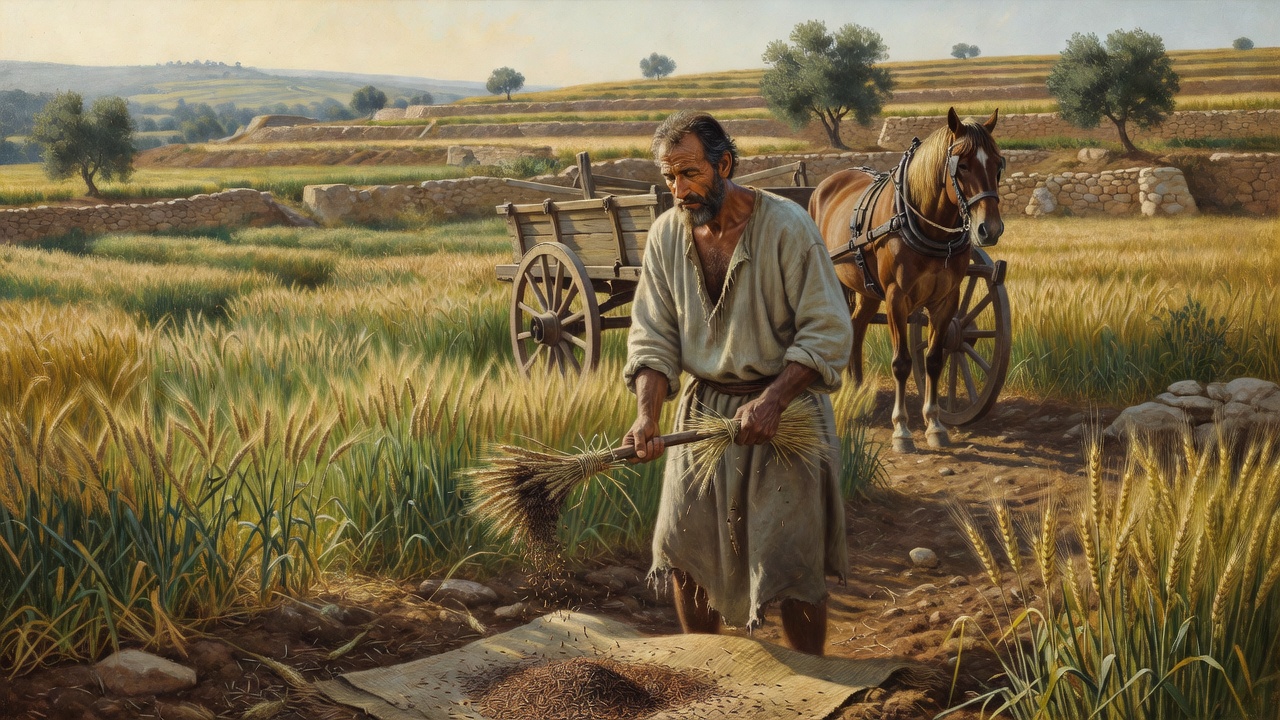
- The chapter concludes with an agricultural parable showing that a farmer does not thresh delicate spices like caraway and cumin with heavy sledges or wagon wheels, but beats them gently with a rod, illustrating God's measured wisdom in discipline.Sources: the Bible text itself
Notes written with AI assistance from open sources (Theographic Bible Metadata, CC BY-SA 4.0; Easton’s Bible Dictionary, public domain) and reviewed before publishing.
Places in this chapter
- Samaria · 32.276, 35.195 · verses 1, 3
- Jerusalem · 31.777, 35.234 · verse 14
- Zion · Today: Jerusalem · 31.777, 35.234 · verse 16
- Valley of Gibeon · 31.847, 35.183 · verse 21
Only places identified with high confidence are shown (90% or more according to the scholarly sources compiled by OpenBible). Period map: DARE (Digital Atlas of the Roman Empire), CC BY 4.0; modern map: © OpenStreetMap contributors; places: OpenBible.info (CC BY 4.0).
Credits and license for this translation
Bibiri Kuyie Nnɑ́ɑǹtì Pɑ́tíri
The Holy Bible in the Ditammari language of Benin
copyright © 2001 SIM International
Language: Ditammari
Translation by: SIM
This translation text is made available to you under the
terms of the Creative Commons License: Attribution-Noncommercial-No Derivative Works.
( http://creativecommons.org/licenses/by-nc-nd/3.0/ )
In addition, you have permission to port the text to different file formats, as long as you
do not change any of the text or punctuation of the Bible.
You may share, copy, distribute, transmit, and extract portions
or quotations from this work, provided that you include the above copyright
information:
You must give Attribution to the work.
You do not sell this work for a profit.
You do not make any derivative works that change any of the actual words or punctuation of the Scriptures.
Permissions beyond the scope of this license may be
available if you contact
us with your request.
This translation is made available to you under the terms of the
Creative Commons Attribution-No Derivatives license 4.0.
You may share and redistribute this Bible translation or extracts from it in any format, provided that:
You include the above copyright and source information.
You do not make any derivative works that change any of the actual words or punctuation of the Scriptures.
Pictures included with Scriptures and other documents on this site are licensed just for use with those Scriptures and documents.
For other uses, please contact the respective copyright owners.
2022-05-31
Source: http://ebible.org/tbzsim/ · eBible.org