Romans 1
Biblica® Open Nueva Biblia Viva 2008 · Tap a verse to see its cross-references.
About this book
About Romans
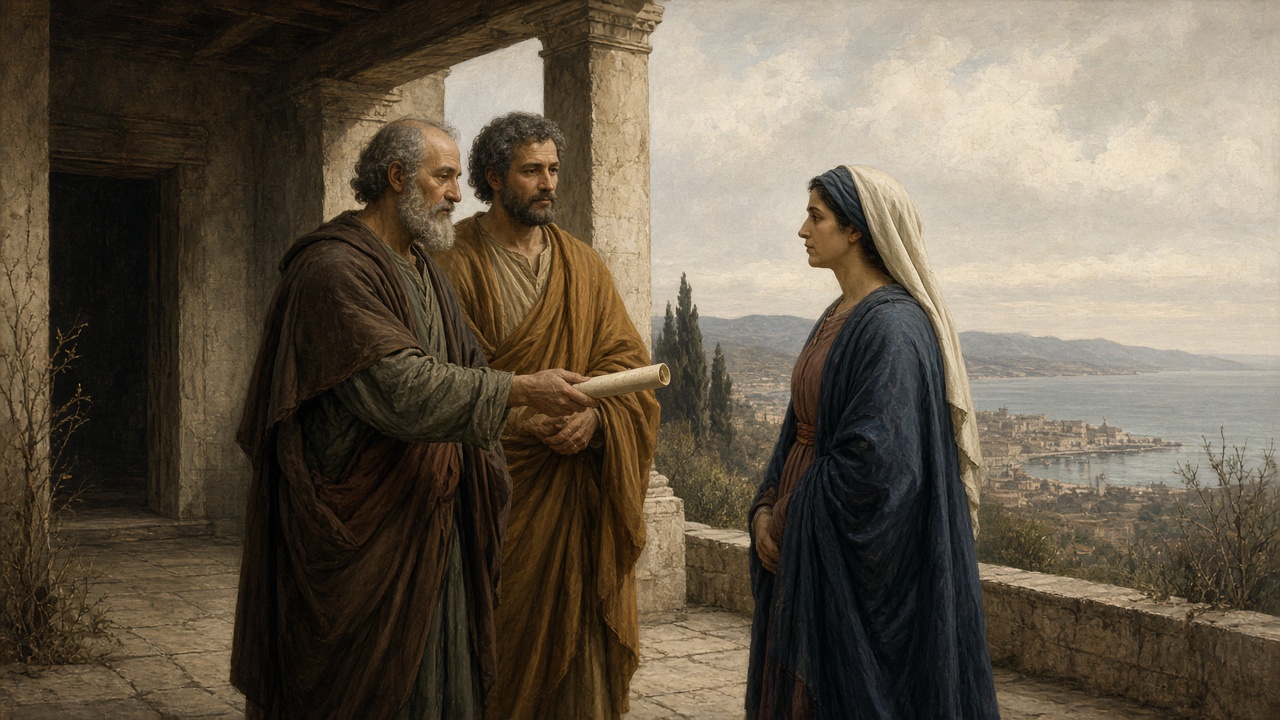
- Easton's Bible Dictionary (1897) presents this letter as written by the apostle, probably at Corinth, where Gaius of Corinth was his host and Erastus was the city's chamberlain. The dictionary dates the writing to early in A.D. 58, at the close of the apostle's second visit to Greece, in the winter before he went to Jerusalem to minister to the saints. Phoebe of Cenchrea carried the letter to Rome.Sources: Easton: Romans, Epistle to the
- Easton thinks it highly probable that Christianity was planted in Rome by people who had been in Jerusalem on the day of Pentecost, when strangers from Rome were there. Jews were then numerous in the city, and Romans probably also attended their synagogues and so heard what was reported about Jesus; a church of both Jews and Gentiles was formed, already numerous and probably meeting in more than one place.Sources: Easton: Romans, Epistle to the · Rome
- When the New Testament was written, Rome was the most celebrated city in the world. It is said to have been founded in 753 B.C. Easton estimates its population at 1,200,000, about half of them slaves, including people from nearly every nation then known, and describes the city as marked by wealth, luxury, and profligacy while the empire was at its greatest prosperity.Sources: Rome
- Easton says the apostle's aim was to explain the great teachings of the gospel in their relation to both Jews and Gentiles. He describes Romans as a systematic, argumentative exposition of a gospel of universal application, and as a plea for Gentiles addressed to Jews, unlike Galatians, where the apostle appeals to his own authority because he had founded that church. After the introduction (1:1-15), Easton outlines justification by faith (1:16-11:36), which he links to Christ's imputed righteousness and to salvation as wholly of grace, then practical exhortations (12:1-15:13), and a closing section with personal notes, greetings to twenty-four Christians in Rome, a benediction, and a doxology (15:14-16).Sources: Easton: Romans, Epistle to the
- In the letter, Paul states his intention to visit Spain. Easton's article on Spain notes that there is no evidence he ever made that journey, although some think he may have done so between a first and a second imprisonment.Sources: Spain
Notes written with AI assistance from open sources (Theographic Bible Metadata, CC BY-SA 4.0; Easton’s Bible Dictionary, public domain) and reviewed before publishing.
1Les escribe Pablo, sirviente de Jesucristo, llamado y enviado para predicar las buenas noticias de Dios.
2Dios había prometido estas buenas noticias a través de los profetas del Antiguo Testamento. 3Son buenas noticias acerca de su Hijo, Jesucristo nuestro Señor. En su calidad de hombre era descendiente de la familia de David, 4pero al resucitar de entre los muertos por el poder del Espíritu Santo, probó ser el Hijo de Dios.
5Por medio de Cristo, Dios derramó su gracia sobre nosotros y luego nos envió a todas las naciones, para que estas sean obedientes a la fe por amor a Cristo.
6Ustedes, romanos, están incluidos entre esas naciones, y Dios los ha llamado a pertenecer a Jesucristo. ¡Que la gracia y la paz de Dios nuestro Padre y de nuestro Señor Jesucristo se derramen sobre ustedes!
Pablo anhela visitar Roma
8Antes que nada les diré que casi todo el mundo sabe de su fe. Y ustedes no saben cuántas gracias le doy a Dios a través de Jesucristo por ello. 9Dios sí sabe cuántas veces, de día y de noche, los llevo en oración ante aquel a quien sirvo con todas mis fuerzas dando a conocer a otros las buenas noticias del Hijo de Dios.
10Una de mis repetidas oraciones es que Dios me permita ir a visitarlos a ustedes, si esa es su voluntad. 11Tengo muchos deseos de verlos para compartir con ustedes algún don espiritual que los ayude a crecer fuertes en el Señor. 12Con esto quiero decirles que no sólo deseo comunicarles mi fe, sino también alentarme yo mismo con la de ustedes. Así nos seremos de mutua bendición.
13Quiero que sepan, hermanos, que muchas veces he tratado de ir a visitarlos para trabajar entre ustedes y ver buenos resultados, como en las otras iglesias gentiles en que he estado; pero he encontrado obstáculos. 14Me siento en deuda con todos, con los griegos y con lo que no lo son, con el hombre culto y también con el inculto. 15Así que, en lo que a mí respecta, estoy listo a ir a Roma para predicar también allí las buenas noticias de Dios.
16Porque nunca me avergüenzo de las buenas noticias; ellas constituyen el poder de Dios para la salvación de todos los que creen. A los judíos se les dio el privilegio de ser los primeros en escuchar la predicación de este mensaje, pero ya el mundo entero está escuchándolo.
17Las buenas noticias nos muestran la manera en que Dios nos acepta: por la fe, de principio a fin. Como está escrito en el Antiguo Testamento: «El que es justo, lo es por creer en Dios».
La ira de Dios contra la humanidad
18Pero Dios muestra desde el cielo su ira contra la injusticia y la maldad de la gente que, por su injusticia, impide que la verdad se manifieste. 19Lo que se puede conocer de Dios, ellos lo conocen, pues Dios mismo se los ha revelado. 20Desde que el mundo fue creado, la humanidad ha contemplado toda la creación que le muestra el eterno poder de Dios y el hecho de que él es verdaderamente Dios. Así, lo invisible de Dios se deja ver por medio de la creación visible, por lo que nadie podrá excusarse diciendo que no sabía si Dios existía o no.
21Sin embargo, aunque lo sabían muy bien, no quisieron ni adorar a Dios ni darle gracias. Al contrario, se pusieron a concebir ideas estúpidas y, en consecuencia, sus necios entendimientos se oscurecieron. 22Al creerse sabios, se volvieron aún más necios.
23Luego, representaron la gloria del Dios inmortal con imágenes de pájaros, de animales que andan en cuatro patas, de reptiles y de simples humanos mortales.
24Por eso Dios los dejó caer en toda clase de suciedades y los dejó hacer lo que les viniera en gana. Así, deshonraron sus propios cuerpos unos con otros.
25Esto fue por cambiar la verdad de Dios y deliberadamente creer en la mentira; por adorar a las criaturas y no a Dios que las creó, el cual es bendito por todos los siglos.
26Por eso Dios dejó que se desbordaran en sus pasiones vergonzosas. Llegaron hasta el punto de que sus mujeres actuaban en contra de la naturaleza y se entregaron al sexo unas con otras. 27También los hombres, en vez de tener relaciones sexuales con mujeres, se encendieron en sus deseos entre ellos mismos y cometieron actos vergonzosos hombres con hombres. Y como consecuencia, recibieron en sus propios cuerpos el pago que bien se merecían.
28A tal grado llegaron que, al no querer ni siquiera tener en cuenta a Dios, él los abandonó para que hicieran lo que sus mentes corruptas pudieran concebir.
29Se entregaron a toda clase de injusticias e inmoralidades sexuales, de perversidad, avaricia y maldad. Están llenos de envidias, homicidios, contiendas, engaños y perversidades. 30Hablan mal de los demás con mentiras; son enemigos de Dios, insolentes, engreídos, vanidosos; inventan nuevas formas de pecar y continuamente desobedecen a sus padres. 31Fingen que no entienden y quebrantan sus promesas. No tienen afecto por nadie ni sienten compasión por los demás.
32Saben muy bien que el castigo que impone Dios por esos delitos es la muerte; y sin embargo, continúan cometiéndolos y se deleitan cuando otras personas los practican.
Did you know?
The Gospel Addressed to Rome
- Paul addresses this letter to “all in Rome.” At the time of Christ, Rome was the most celebrated city in the world, and it is said to have been founded in 753 B.C. When the New Testament was written, Rome was enriched with the spoils of the world and had an estimated population of 1,200,000, about half of them slaves, including people from nearly every nation then known; the empire of which it was the capital had reached its greatest prosperity.Sources: Rome · the Bible text itself
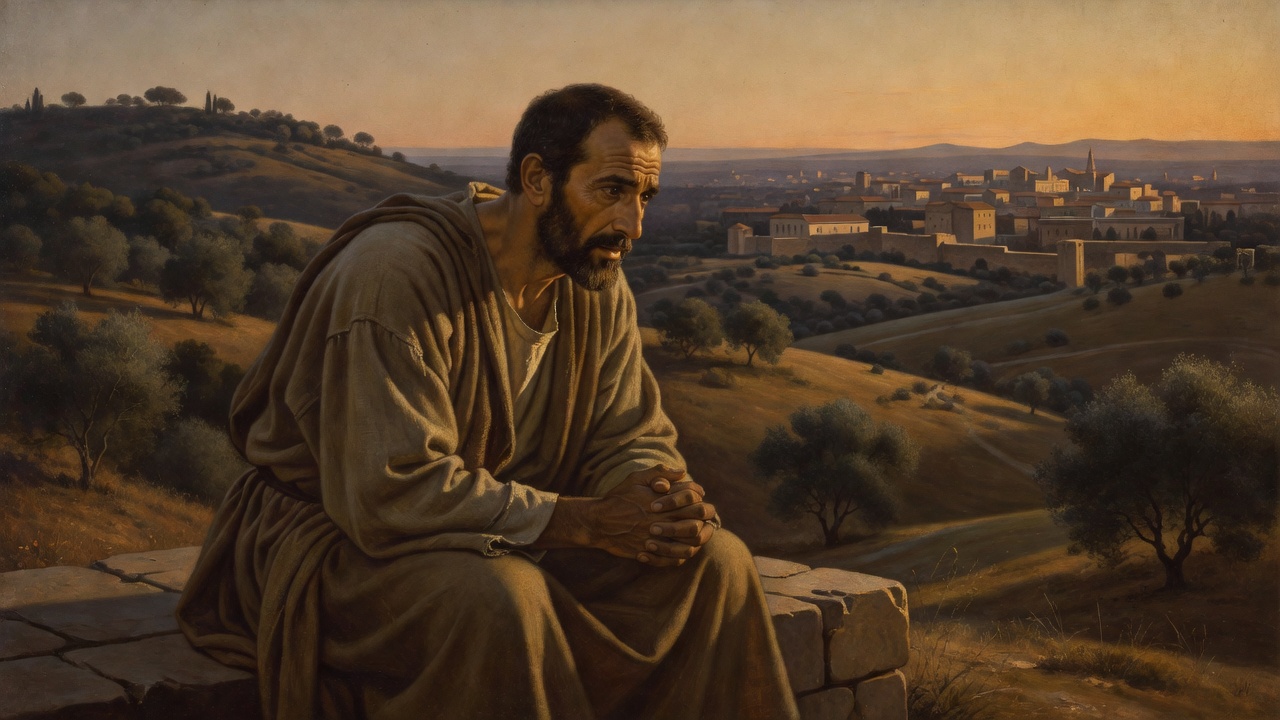
- The letter opens with Paul, a servant of Christ Jesus and an apostle set apart for the gospel, who received grace and apostleship to call Gentiles to the obedience that comes from faith; he also says he is obligated both to Greeks and to non-Greeks. He was a native of Tarsus, the capital of Cilicia, a Roman province in the southeast of Asia Minor—a wealthy commercial city on the navigable river Cydnus and the seat of a famous university. His circumcision name was Saul, and the name Paul was probably given to him in infancy for use in the Gentile world.Sources: Paul · the Bible text itself
- Paul says the gospel concerns God’s Son, who was a descendant of David according to the flesh. The name David is explained as meaning “beloved”; he was the eighth and youngest son of Jesse, a citizen of Bethlehem, and his early occupation was tending his father’s sheep on the uplands of Judah.Sources: David · the Bible text itself
Notes written with AI assistance from open sources (Theographic Bible Metadata, CC BY-SA 4.0; Easton’s Bible Dictionary, public domain) and reviewed before publishing.
Places in this chapter
Only places identified with high confidence are shown (90% or more according to the scholarly sources compiled by OpenBible). Period map: DARE (Digital Atlas of the Roman Empire), CC BY 4.0; modern map: © OpenStreetMap contributors; places: OpenBible.info (CC BY 4.0).
Credits and license for this translation
Biblica® Open Nueva Biblia Viva 2008
The Holy Bible in Spanish: Biblica® Open Nueva Biblia Viva 2008 (Bible)
copyright © 2008 Biblica, Inc.
Language: Español
Contributor: Biblica, Inc.
Biblica® Open Nueva Biblia Viva™
Copyright © 2006, 2008 by Biblica, Inc.
“Biblica” es una marca registrada en la oficina de Patentes y Marcas de los Estados Unidos por Biblica, Inc. Usado con permiso.
“Biblica” is a trademark registered in the United States Patent and Trademark Office by Biblica, Inc. Used with permission.
Creative Commons license
This work is made available under the Creative Commons Attribution-ShareAlike 4.0 International License (CC BY-SA). To view a copy of this license, visit https://creativecommons.org/licenses/by-sa/4.0 or send a letter to Creative Commons, PO Box 1866, Mountain View, CA 94042, USA.
You have permission to copy and distribute this Work, as long as you do not change it and you keep the title as it is. Changing or translating this Work will create a derivative work. When you publish this derivative work, you must list what changes you have made where people can see them, such as on a website. You must also show where the original Work is from: “The original Work by its copyright holders is available for free at www.biblica.com and open.bible .”
Notice of copyright must appear on the title or copyright page of the work as follows:
Biblica® Open Nueva Biblia Viva™
Copyright © 2006, 2008 by Biblica, Inc.
“Biblica” es una marca registrada en la oficina de Patentes y Marcas de los Estados Unidos por Biblica, Inc. Usado con permiso.
“Biblica” is a trademark registered in the United States Patent and Trademark Office by Biblica, Inc. Used with permission.
You must also make your derivative work available under the same license (CC BY-SA).
If you would like to notify Biblica, Inc. regarding your translation of this work, please contact us at https://open.bible/#feedback .
This translation is made available to you under the terms of the
Creative Commons Attribution Share-Alike license 4.0.
You have permission to share and redistribute this Bible translation in any format and to make reasonable revisions and adaptations of this translation, provided that:
You include the above copyright and source information.
If you make any changes to the text, you must indicate that you did so in a way that makes it clear that the original licensor is not necessarily endorsing your changes.
If you redistribute this text, you must distribute your contributions under the same license as the original.
Pictures included with Scriptures and other documents on this site are licensed just for use with those Scriptures and documents.
For other uses, please contact the respective copyright owners.
Note that in addition to the rules above, revising and adapting God's Word involves a great responsibility to be true to God's Word. See Revelation 22:18-19.
2025-05-21
Source: http://ebible.org/spaonbv/ · eBible.org