Mark 1
Biblica® Open Nueva Biblia Viva 2008 · Tap a verse to see its cross-references.
About this book
About Mark
- Easton's Bible Dictionary (1897) identifies the evangelist as John, whose surname was Mark. Mark, or Marcus, was his Roman name and gradually replaced the Jewish name John. He was the son of Mary, a woman of some means and influence, was probably born in Jerusalem, where she lived, and was a cousin of Barnabas; of his father, the entry says, nothing is known.Sources: Easton: Mark
- Easton's Bible Dictionary (1897) does not give a date for the Gospel. It places Mark with Paul and Barnabas on their first journey about A.D. 47 as their attendant, called their minister; he turned back at Perga in Pamphylia, and about three years later Paul refused to take him, which caused a sharp contention with Barnabas. The entry says he was later reconciled, was with Paul during his first imprisonment in Rome, then with Peter in Babylon—at that time and for some centuries afterward one of the chief seats of Jewish learning—and with Timothy in Ephesus.Sources: Easton: Mark
- Under the Romans in the time of Christ, Judea was the southernmost of the three divisions of Palestine and part of the province of Syria, though the name was sometimes used for Palestine as a whole. Pontius Pilate, the sixth procurator of Judea (A.D. 26–36), had his headquarters at Caesarea but often went up to Jerusalem; his rule covered the ministries of John the Baptist and of Jesus.Sources: Judea · Pontius Pilate
- The Jews called the region Galil; because its original inhabitants remained there a long time, it was also called Galilee of the Gentiles, and Upper Galilee was distinguished from Lower Galilee to the south. Simon Peter, of Bethsaida on the western coast of the Sea of Galilee, was trained as a fisher, and James and John, sons of Zebedee, also worked as fishermen on that lake.Sources: Galilee · Simon Peter · James (Son of Zebedee) · John the Apostle
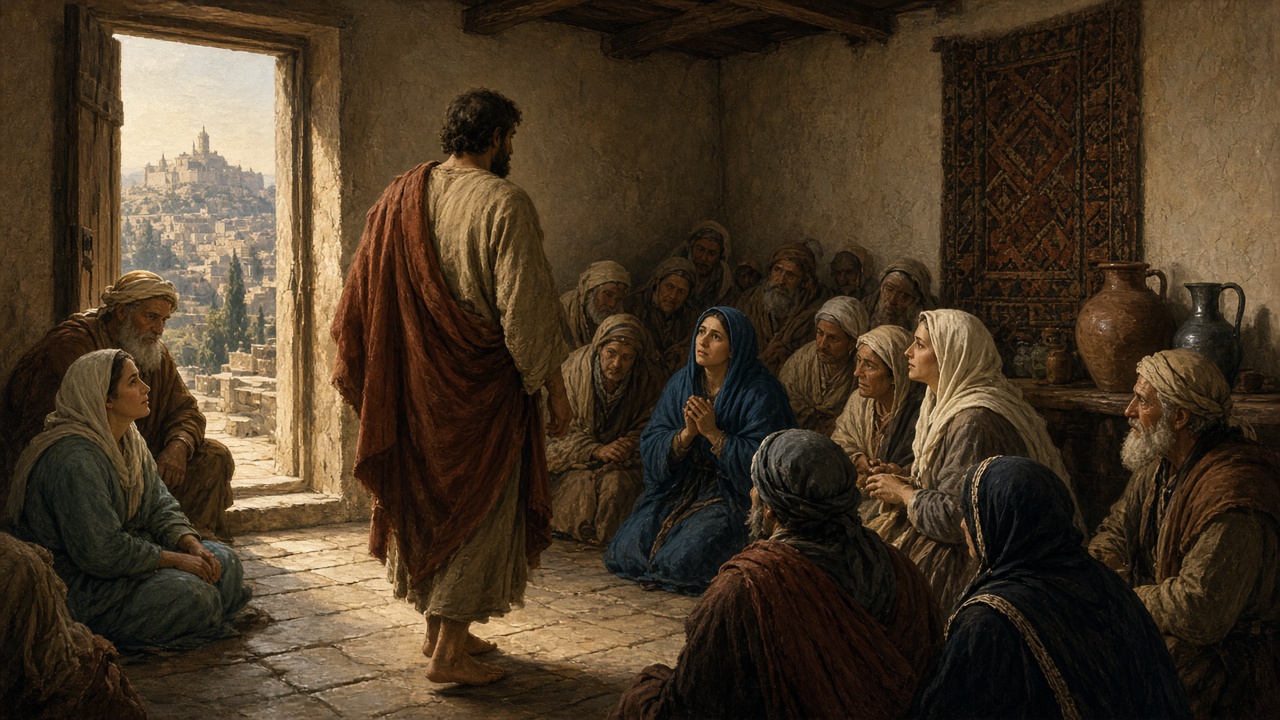
- Easton considers it probable that Mark was converted by Peter in his mother's house in Jerusalem, where Peter, released from prison, found many gathered in prayer, and notes that Peter calls him his son. The same entry also thinks it probable that the young man mentioned in Mark 14:51–52 was Mark himself.Sources: Easton: Mark
Notes written with AI assistance from open sources (Theographic Bible Metadata, CC BY-SA 4.0; Easton’s Bible Dictionary, public domain) and reviewed before publishing.
Juan el Bautista prepara el camino
1Este es el principio de la buena noticia de Jesús el Mesías, el Hijo de Dios.
2En el libro que escribió el profeta Isaías dice:
«Mira, voy a enviar un mensajero delante de ti, a prepararte el camino».
3«Voz de uno que clama en el desierto: “Preparen el camino del Señor, háganle caminos derechos”».
4Así fue como se presentó Juan en el desierto, predicando que debían arrepentirse y bautizarse para obtener el perdón de los pecados.
5Desde Jerusalén y de toda la provincia de Judea acudía la gente a Juan. Cuando alguien confesaba sus pecados, Juan lo bautizaba en el río Jordán.
6Juan usaba un vestido de pelo de camello ceñido con un cinto de cuero y se alimentaba con langostas del desierto y miel silvestre. 7Predicaba de esta manera:
«Pronto vendrá alguien más poderoso que yo, y ni siquiera soy digno de agacharme ante él para desatar la correa de sus sandalias. 8Yo los bautizo con agua, pero él los bautizará con el Espíritu Santo».
Bautismo y tentación de Jesús
9En esos días Jesús llegó de Nazaret de Galilea, y Juan lo bautizó en el río Jordán. 10En el instante en que Jesús salía del agua, vio los cielos abiertos y al Espíritu Santo que descendía sobre él en forma de paloma. 11Se escuchó entonces una voz del cielo que decía: «Tú eres mi Hijo amado; en ti me complazco».
12Inmediatamente el Espíritu lo llevó al desierto, 13donde pasó cuarenta días, y era tentado por Satanás. Estaba entre las fieras y los ángeles lo servían.
Llamamiento de los primeros discípulos
14Después de que el rey Herodes mandó arrestar a Juan, Jesús se fue a Galilea a predicar las buenas nuevas de Dios.
15«¡Llegó por fin la hora! —anunciaba—. ¡El reino de Dios está cerca! Arrepiéntanse y crean las buenas noticias».
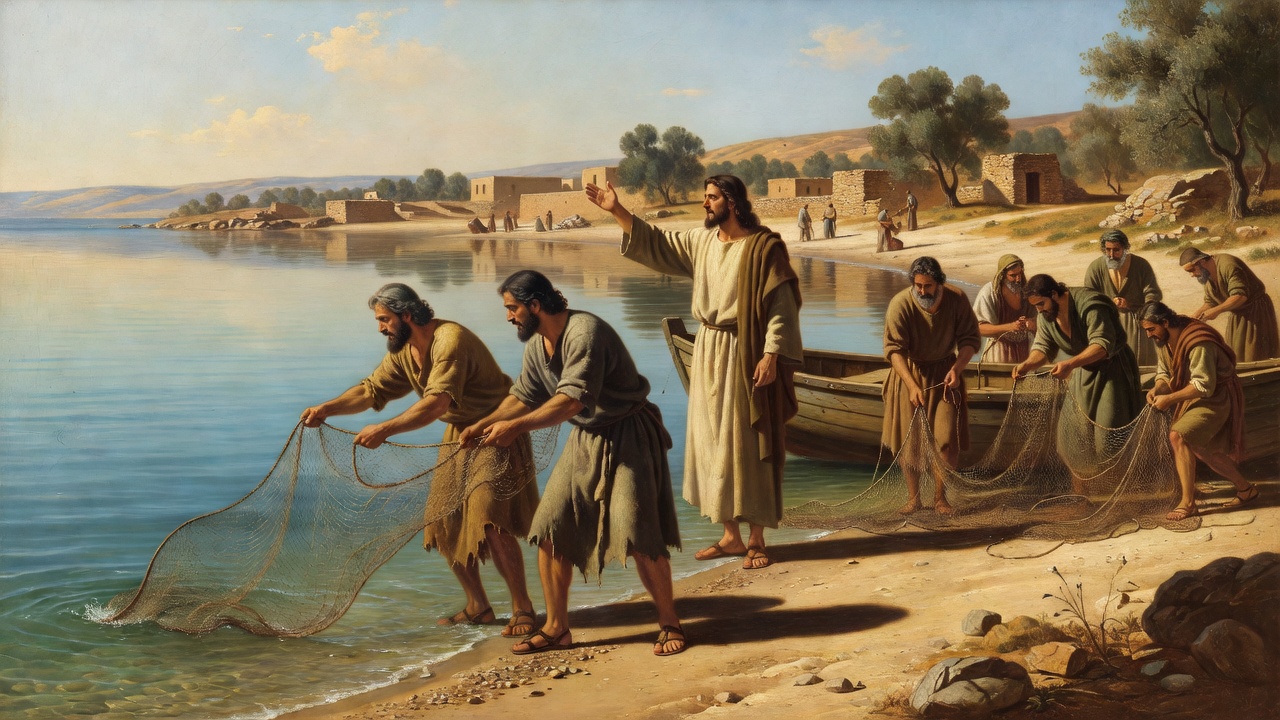
16Al pasar por la orilla del mar de Galilea, Jesús vio a Simón y a su hermano Andrés que echaban la red en el lago, pues eran pescadores.
17«¡Vengan y síganme —les dijo Jesús—, y los convertiré en pescadores de hombres!».
18De inmediato abandonaron las redes y lo siguieron.
19Un poco mas adelante vio a Jacobo y Juan, hijos de Zebedeo, que remendaban las redes en una barca. 20Los llamó también, y ellos dejaron a Zebedeo en la barca con los empleados y se fueron con Jesús.
Jesús expulsa a un espíritu maligno
21Llegaron a Capernaúm. El día de reposo por la mañana entraron en la sinagoga, y Jesús comenzó a enseñar. 22La gente quedó maravillada de su enseñanza, porque Jesús hablaba con autoridad, y no como los maestros de la ley.
23Un endemoniado que estaba en la sinagoga se puso a gritar:
24―¡Ah! ¿Por qué nos molestas, Jesús de Nazaret? ¿Has venido a destruirnos? Yo sé que eres el Santo de Dios.
25Jesús le dijo: —¡Cállate y sal de él!
26El espíritu inmundo sacudió con violencia al hombre y salió de él dando un gran alarido. 27Todos se quedaron tan espantados que se preguntaban unos a otros:
«¿Qué es esto? Es una enseñanza nueva, ¡y con qué autoridad! ¡Hasta los espíritus inmundos lo obedecen!». 28La noticia de lo sucedido corrió rápidamente por toda Galilea.
Jesús sana a muchos enfermos
29De allí, Jesús, Jacobo y Juan se fueron a casa de Simón y Andrés. 30Y le contaron a Jesús que la suegra de Simón estaba en cama con fiebre. 31Él se le acercó, la tomó de la mano y la ayudó a sentarse. ¡Inmediatamente se le quitó la fiebre y se levantó a servirlos!
32Al atardecer, cuando ya se ponía el sol, le llevaron a Jesús todos los enfermos y endemoniados, 33de manera que la ciudad entera estaba agolpada a la puerta. 34Jesús sanó a muchos enfermos y endemoniados. Pero no permitía que los demonios hablaran y revelaran quién era él.
Jesús ora en un lugar solitario
35A la mañana siguiente, todavía de madrugada, Jesús se levantó y se fue a un lugar solitario a orar. 36Simón y los demás fueron a buscarlo, 37y cuando lo encontraron le dijeron:
―Toda la gente te anda buscando.
38Él les respondió:
―Vámonos de aquí a otras ciudades cercanas donde también debo predicar. Para eso vine.
39Así que Jesús recorrió Galilea entera predicando en las sinagogas y expulsando a los demonios.
Jesús sana a un leproso
40Un leproso se le acercó y, de rodillas, le dijo:
―Si quieres, puedes sanarme.
41Jesús, compadecido, lo tocó y le dijo:
―Quiero; queda curado.
42E instantáneamente la lepra desapareció y quedó limpio.
43―Jesús lo despidió de inmediato y le recomendó con seriedad lo siguiente:
44―Mira, no le digas a nadie que yo te curé. Vete a presentarte ante el sacerdote y llévale la ofrenda que Moisés mandó, para que les conste a los sacerdotes.
45Pero tan pronto salió de allí, comenzó a divulgar lo que le había sucedido. Como consecuencia de esto, Jesús ya no podía entrar abiertamente en ninguna ciudad. Tenía que quedarse en los lugares apartados; y aun así, de todas partes llegaban a él.
Did you know?
The gospel begins by the Jordan and in Galilee
- John, who appears in the wilderness preaching a baptism of repentance, was of priestly descent. His father Zacharias was a priest of the course of Abia, and his mother Elisabeth was of the daughters of Aaron; his birth is said to have taken place six months before that of Jesus. His mission is described as the subject of prophecy in Isaiah and Malachi.Sources: John the Baptist · the Bible text itself
- Simon and his brother Andrew were fishermen from Bethsaida, on the western coast of the Sea of Galilee. Andrew had been a disciple of John the Baptist and had already brought Simon to Jesus; the brothers kept working as fishermen until after John's imprisonment. James and John were sons of Zebedee, a Galilean fisherman of some position in Capernaum who had hired servants of his own; they left him in the boat with those men.Sources: Simon Peter · Andrew · Zebedee · the Bible text itself
- The Sea of Galilee, also called the Sea of Tiberias, is about twelve and a half miles long and from four to seven and a half miles wide, and its surface lies 682 feet below the Mediterranean. Jesus came to be baptized from Nazareth in Galilee, a town not mentioned in the Old Testament and the home of Joseph and Mary. Under the Romans, Judea was the southernmost of the three divisions of Palestine, and people went out to John from Jerusalem and the countryside of Judea.Sources: Sea of Galilee · Nazareth · Judea · the Bible text itself
Notes written with AI assistance from open sources (Theographic Bible Metadata, CC BY-SA 4.0; Easton’s Bible Dictionary, public domain) and reviewed before publishing.
Places in this chapter
- Jerusalem · 31.777, 35.234 · verse 5
- Jordan · Today: Jordan River · 31.761, 35.558 · verses 5, 9
- Judea · Today: Judea 1 · 31.777, 35.234 · verse 5
- Galilee · 32.760, 35.527 · verses 9, 14, 28, 39
- Nazareth · 32.702, 35.298 · verses 9, 24
- Sea of Galilee · 32.819, 35.590 · verse 16
Only places identified with high confidence are shown (90% or more according to the scholarly sources compiled by OpenBible). Period map: DARE (Digital Atlas of the Roman Empire), CC BY 4.0; modern map: © OpenStreetMap contributors; places: OpenBible.info (CC BY 4.0).
Credits and license for this translation
Biblica® Open Nueva Biblia Viva 2008
The Holy Bible in Spanish: Biblica® Open Nueva Biblia Viva 2008 (Bible)
copyright © 2008 Biblica, Inc.
Language: Español
Contributor: Biblica, Inc.
Biblica® Open Nueva Biblia Viva™
Copyright © 2006, 2008 by Biblica, Inc.
“Biblica” es una marca registrada en la oficina de Patentes y Marcas de los Estados Unidos por Biblica, Inc. Usado con permiso.
“Biblica” is a trademark registered in the United States Patent and Trademark Office by Biblica, Inc. Used with permission.
Creative Commons license
This work is made available under the Creative Commons Attribution-ShareAlike 4.0 International License (CC BY-SA). To view a copy of this license, visit https://creativecommons.org/licenses/by-sa/4.0 or send a letter to Creative Commons, PO Box 1866, Mountain View, CA 94042, USA.
You have permission to copy and distribute this Work, as long as you do not change it and you keep the title as it is. Changing or translating this Work will create a derivative work. When you publish this derivative work, you must list what changes you have made where people can see them, such as on a website. You must also show where the original Work is from: “The original Work by its copyright holders is available for free at www.biblica.com and open.bible .”
Notice of copyright must appear on the title or copyright page of the work as follows:
Biblica® Open Nueva Biblia Viva™
Copyright © 2006, 2008 by Biblica, Inc.
“Biblica” es una marca registrada en la oficina de Patentes y Marcas de los Estados Unidos por Biblica, Inc. Usado con permiso.
“Biblica” is a trademark registered in the United States Patent and Trademark Office by Biblica, Inc. Used with permission.
You must also make your derivative work available under the same license (CC BY-SA).
If you would like to notify Biblica, Inc. regarding your translation of this work, please contact us at https://open.bible/#feedback .
This translation is made available to you under the terms of the
Creative Commons Attribution Share-Alike license 4.0.
You have permission to share and redistribute this Bible translation in any format and to make reasonable revisions and adaptations of this translation, provided that:
You include the above copyright and source information.
If you make any changes to the text, you must indicate that you did so in a way that makes it clear that the original licensor is not necessarily endorsing your changes.
If you redistribute this text, you must distribute your contributions under the same license as the original.
Pictures included with Scriptures and other documents on this site are licensed just for use with those Scriptures and documents.
For other uses, please contact the respective copyright owners.
Note that in addition to the rules above, revising and adapting God's Word involves a great responsibility to be true to God's Word. See Revelation 22:18-19.
2025-05-21
Source: http://ebible.org/spaonbv/ · eBible.org