Leviticus 1
Biblica® Open Nueva Biblia Viva 2008 · Tap a verse to see its cross-references.
About this book
About Leviticus
- Easton's Bible Dictionary (1897) presents Leviticus as the third book of the Pentateuch and as the third book of Moses. The name, used in the Vulgate following the LXX, reflects the book's chief concern: the Levitical service.Sources: Easton: Leviticus
- Easton states that every ordinance in the book was delivered within one month, the first month of the second year after the Exodus. His entry on Sinai, also called Horeb, says the Hebrews reached that mountain district in the third month after the Exodus and remained encamped for about a whole year, and that the whole of Leviticus records what occurred there.Sources: Easton: Leviticus · Mount Sinai
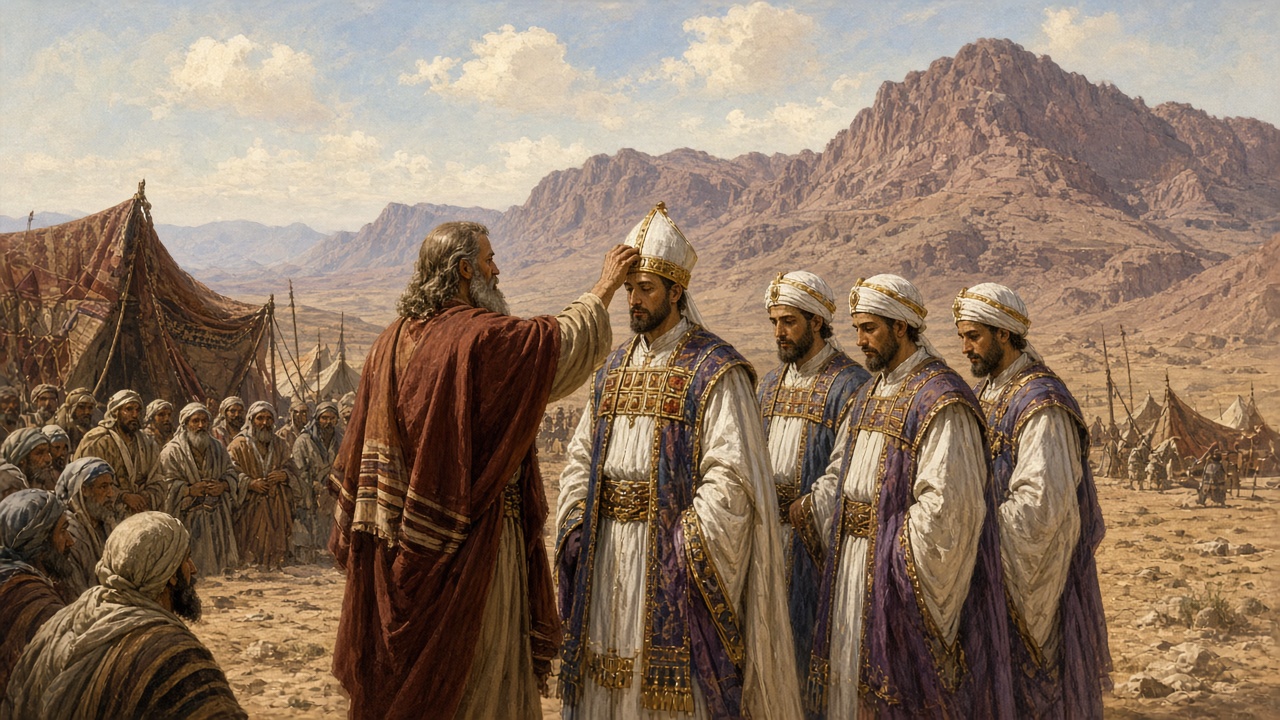
- Chapters 1–7 give laws for burnt offerings, meat offerings, and thank offerings, then for sin offerings and trespass offerings, and for the priests' duties in offering sacrifice. Chapters 8–10 recount the consecration of Aaron and his sons, Aaron's first offering for himself and the people, and the death of Nadab and Abihu, who were struck dead and buried outside the camp after offering strange, or common, fire not taken from the great brazen altar. Chapters 11–16 concern purity and the sacrifices and ordinances for putting impurity away.Sources: Easton: Leviticus · Nadab · Abihu
- Easton describes chapters 17–20 as laws marking the separation between Israel and other peoples. Further laws concern the priests' personal purity and their eating of holy things, offerings without blemish, and the due celebration of the great festivals in chapters 23 and 25. Promises and warnings about obedience follow, the book closes with a section on vows, and Easton notes that God is the direct speaker through almost the whole of it.Sources: Easton: Leviticus
- In the rites of chapter 16, one goat is associated with Azazel, which the Authorized Version renders scapegoat and the Revised Version leaves as Azazel. Easton reports that some Jewish interpreters take it as a place in the wilderness about twelve miles east of Jerusalem, while others take it as an evil spirit or even Satan, and he also notes a root meaning of separation.Sources: Azazel
Notes written with AI assistance from open sources (Theographic Bible Metadata, CC BY-SA 4.0; Easton’s Bible Dictionary, public domain) and reviewed before publishing.
El holocausto
1El Señor le habló a Moisés desde el santuario, 2y le ordenó que le diera las siguientes instrucciones al pueblo de Israel: «Cuando presenten una ofrenda animal al Señor, deberán traer un animal de ganado vacuno o lanar.
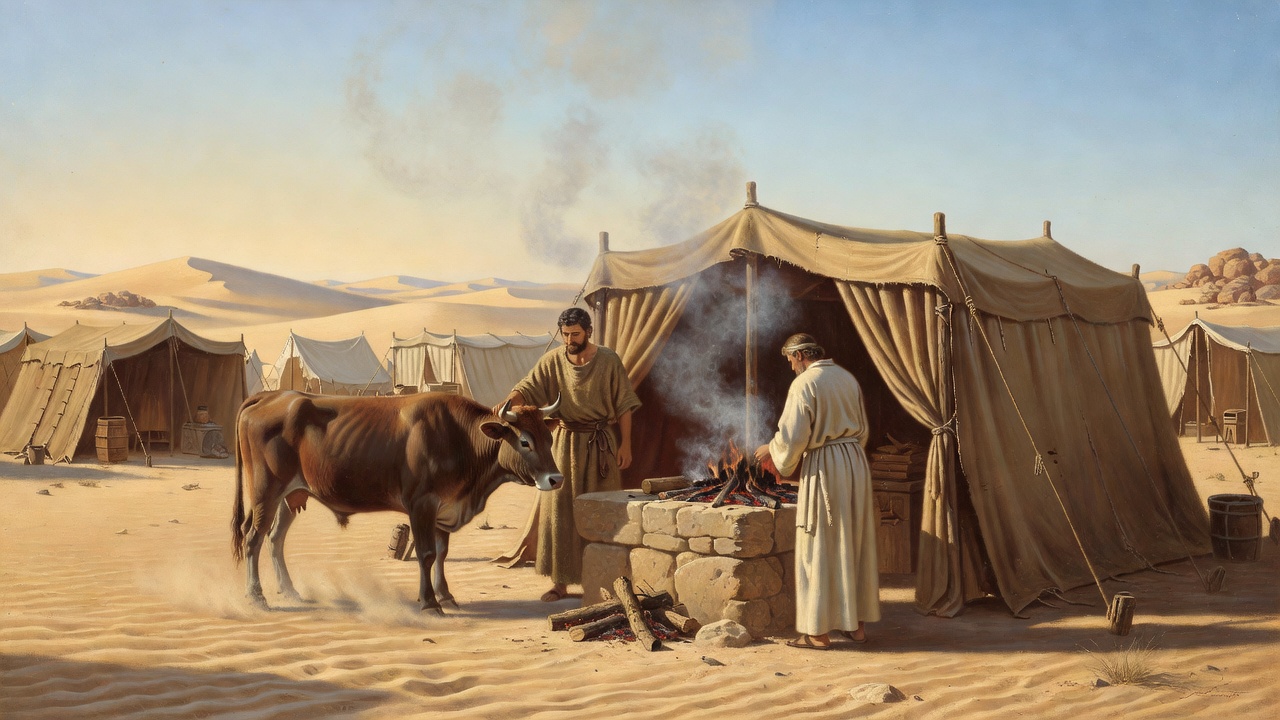
3»Si el animal que se ofrece en holocausto es de ganado vacuno, entonces deberá ser un macho sin defecto. Llevarán el animal hasta la entrada del santuario, donde los sacerdotes aceptarán su ofrenda para el Señor. 4La persona que lo lleve deberá poner las manos sobre la cabeza del animal, con lo que este se convertirá en su sustituto. La muerte del animal será aceptada por el Señor, en lugar de quien lo ofrece como castigo por sus pecados. 5El hombre dará muerte al animal allí, delante del Señor, y los hijos de Aarón, los sacerdotes, presentarán la sangre delante del Señor y la rociarán alrededor del altar, a la entrada del santuario. 6Entonces los sacerdotes desollarán el animal, lo descuartizarán, prenderán leña sobre el altar, 8y pondrán las diferentes partes del animal, la cabeza y la grasa sobre la leña. 9Lavarán los órganos internos y las patas, y luego los sacerdotes lo quemarán todo sobre el altar. Será un holocausto, una ofrenda de olor grato al Señor.
10»Si el animal ofrecido para el holocausto es un cordero o un cabrito, también debe ser un macho sin defectos. 11El hombre que lo presente lo matará delante del Señor, en el lado norte del altar, y los hijos de Aarón, los sacerdotes, rociarán la sangre alrededor del altar. 12Entonces el ofrendante lo descuartizará, y el sacerdote colocará los pedazos, con la cabeza y la grasa encima de la leña, sobre el altar. 13Pero antes lavará los órganos internos y las patas con agua. Luego, el sacerdote quemará el sacrificio sobre el altar como un holocausto, como ofrenda encendida de olor grato al Señor.
14»Si alguno desea ofrecer un holocausto de aves, puede elegir tórtolas o palominos. 15El sacerdote llevará el ave al altar, le cortará la cabeza y derramará la sangre sobre la pared del altar. Enseguida el sacerdote tomará el buche y las plumas y los arrojará al costado oriental del altar, sobre las cenizas. Luego, tomándola por las alas, partirá el ave en dos, pero sin separar completamente las dos partes. Por último, el sacerdote la quemará sobre el altar como un holocausto, una ofrenda de olor grato al Señor.
Did you know?
The Burnt Offering
- The instructions for the burnt offering accommodate different economic means by allowing offerings from the herd, the flock (sheep or goats), or birds (turtledoves or young pigeons). For livestock, the animal was required to be a male without blemish.Sources: the Bible text itself
- The ritual required a clear division of roles between the worshiper and the priests. The worshiper brought the animal, laid a hand on its head for atonement, slaughtered it, skinned it, and washed its inner parts, while the sons of Aaron sprinkled the blood and burned the entire offering on the altar.Sources: the Bible text itself · Aaron
Notes written with AI assistance from open sources (Theographic Bible Metadata, CC BY-SA 4.0; Easton’s Bible Dictionary, public domain) and reviewed before publishing.
Credits and license for this translation
Biblica® Open Nueva Biblia Viva 2008
The Holy Bible in Spanish: Biblica® Open Nueva Biblia Viva 2008 (Bible)
copyright © 2008 Biblica, Inc.
Language: Español
Contributor: Biblica, Inc.
Biblica® Open Nueva Biblia Viva™
Copyright © 2006, 2008 by Biblica, Inc.
“Biblica” es una marca registrada en la oficina de Patentes y Marcas de los Estados Unidos por Biblica, Inc. Usado con permiso.
“Biblica” is a trademark registered in the United States Patent and Trademark Office by Biblica, Inc. Used with permission.
Creative Commons license
This work is made available under the Creative Commons Attribution-ShareAlike 4.0 International License (CC BY-SA). To view a copy of this license, visit https://creativecommons.org/licenses/by-sa/4.0 or send a letter to Creative Commons, PO Box 1866, Mountain View, CA 94042, USA.
You have permission to copy and distribute this Work, as long as you do not change it and you keep the title as it is. Changing or translating this Work will create a derivative work. When you publish this derivative work, you must list what changes you have made where people can see them, such as on a website. You must also show where the original Work is from: “The original Work by its copyright holders is available for free at www.biblica.com and open.bible .”
Notice of copyright must appear on the title or copyright page of the work as follows:
Biblica® Open Nueva Biblia Viva™
Copyright © 2006, 2008 by Biblica, Inc.
“Biblica” es una marca registrada en la oficina de Patentes y Marcas de los Estados Unidos por Biblica, Inc. Usado con permiso.
“Biblica” is a trademark registered in the United States Patent and Trademark Office by Biblica, Inc. Used with permission.
You must also make your derivative work available under the same license (CC BY-SA).
If you would like to notify Biblica, Inc. regarding your translation of this work, please contact us at https://open.bible/#feedback .
This translation is made available to you under the terms of the
Creative Commons Attribution Share-Alike license 4.0.
You have permission to share and redistribute this Bible translation in any format and to make reasonable revisions and adaptations of this translation, provided that:
You include the above copyright and source information.
If you make any changes to the text, you must indicate that you did so in a way that makes it clear that the original licensor is not necessarily endorsing your changes.
If you redistribute this text, you must distribute your contributions under the same license as the original.
Pictures included with Scriptures and other documents on this site are licensed just for use with those Scriptures and documents.
For other uses, please contact the respective copyright owners.
Note that in addition to the rules above, revising and adapting God's Word involves a great responsibility to be true to God's Word. See Revelation 22:18-19.
2025-05-21
Source: http://ebible.org/spaonbv/ · eBible.org