Jonah 1
Biblica® Open Nueva Biblia Viva 2008 · Tap a verse to see its cross-references.
About this book
About Jonah
- Jonah, whose name means “a dove,” was the son of Amittai of Gath-hepher and a prophet of Israel. Easton's Bible Dictionary (1897) holds that he wrote the book himself. His ministry is placed very early in the reign of Jeroboam II: he was contemporary with Hosea and Amos, or possibly earlier, and so may have been the oldest of the prophets whose writings survive.Sources: Jonah · Amittai · Easton: Jonah, Book of
- The book professes to tell what actually happened to the prophet. Some critics have read it as a parable or allegory rather than history, because miracle is so prominent and the form is narrative rather than prophecy, or because they deny miracles altogether. Easton's Bible Dictionary (1897) instead treats it as history, attaching great weight to the mention of Jonah in Matthew 12:39-40 and Luke 11:29.Sources: Easton: Jonah, Book of
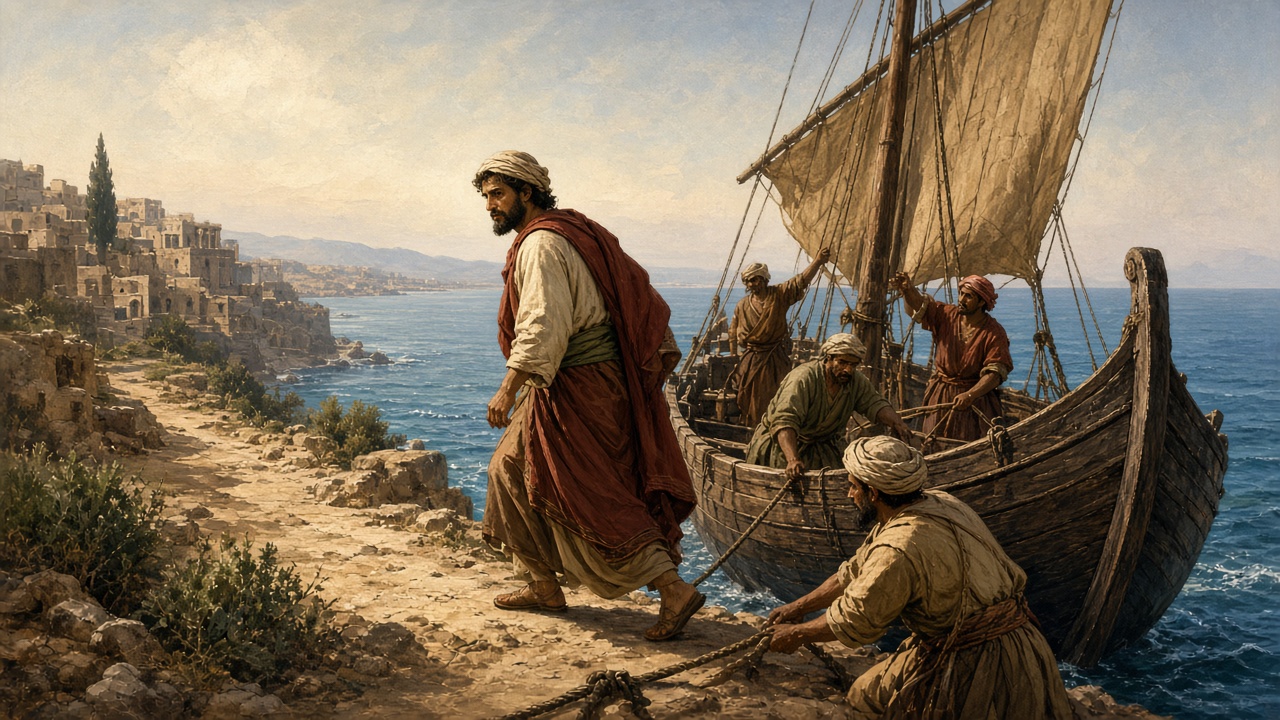
- Jonah was commissioned to go to Nineveh, described as a great and populous city and the flourishing capital of the Assyrian empire, but he sailed from Joppa, Judea's chief seaport, to flee toward Tarshish. Where Tarshish lay is disputed: some place it in the east, on the Indian coast, some identify it with Carthage, and Easton's dictionary takes it to be a Phoenician port in Spain.Sources: Easton: Jonah, Book of · Nineveh · Joppa · Tarshish
- Easton's outline has four movements: the divine commission, disobedience, and punishment; Jonah's prayer and deliverance; a second commission, the Ninevites' repentance, and God's sparing mercy; and Jonah's anger at that mercy, followed by a rebuke. The same dictionary notes that Nineveh was spared for more than a century after his mission.Sources: Easton: Jonah, Book of
- As a prophet of Israel, Jonah foretold the restoration of the kingdom's ancient borders. A biographical note presents him both as a missionary to Nineveh and as a type of the Son of man. The book of Nahum is taken up almost entirely with denunciations of that city, and Zephaniah also predicts its destruction.Sources: Jonah · Nineveh
Notes written with AI assistance from open sources (Theographic Bible Metadata, CC BY-SA 4.0; Easton’s Bible Dictionary, public domain) and reviewed before publishing.
Jonás desobedece al Señor
1El Señor envió este mensaje a Jonás, hijo de Amitay:
2«Ve a la gran ciudad de Nínive y anúnciale que la voy a destruir, porque su maldad ha quedado completamente evidente ante mí».
3Pero Jonás no quiso ir. Al contrario, quiso huir de la presencia del Señor; por eso, fue hacia la costa, al puerto de Jope. Allí encontró un barco que iba hacia Tarsis. Pagó su pasaje y subió al barco para irse bien lejos de la presencia del Señor.
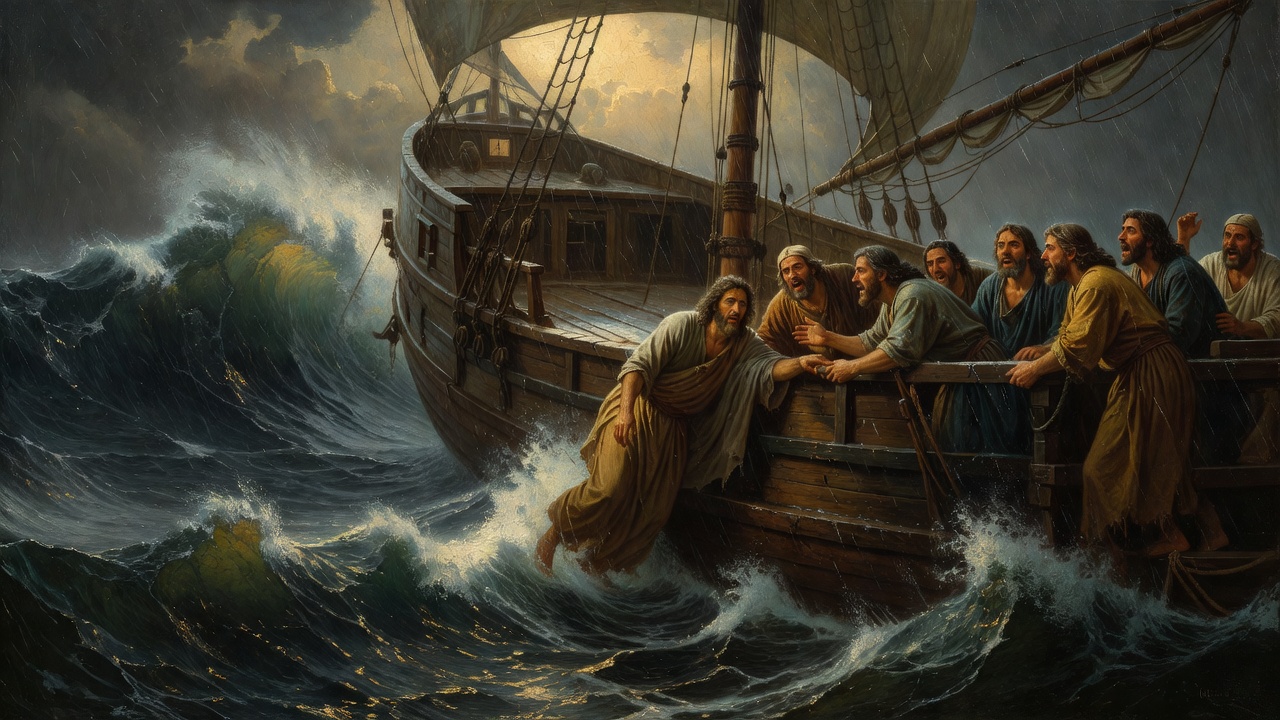
4El barco navegaba normalmente, cuando de repente el Señor envió un fuerte viento sobre el mar, haciendo que una gran tormenta amenazara con hacer naufragar el barco. 5Temerosos de perder la vida, los desesperados marineros gritaban pidiendo ayuda a sus dioses, y arrojaban la carga al mar para que la nave quedara más liviana. Mientras tanto, Jonás dormía profundamente en el fondo del barco.
6El capitán bajó a buscarlo y, cuando lo encontró, le gritó:
―¿Qué haces aquí dormido? ¡No es tiempo de dormir! ¡Levántate y clama a tu Dios! ¡Quizás tenga misericordia de nosotros y nos salve!
7Entonces los marineros decidieron echar suertes para descubrir quién era el culpable de que les estuviera pasando esa desgracia. ¡Y la mala suerte señaló a Jonás!
8―¿Qué hiciste para que nos viniera este mal? ¿Quién eres? ¿En qué trabajas? ¿De qué nacionalidad eres? ¿De qué país vienes? —le preguntaron.
9―Soy hebreo, soy devoto del Señor, el Dios del cielo, quien hizo el mar y la tierra. Lo que está sucediendo es por mi culpa, pues trato de huir de la presencia de Dios —les respondió.
Los hombres se asustaron mucho cuando oyeron esto, y le preguntaron:
―¿Por qué lo hiciste? 11Dinos, ¿qué debemos hacer contigo para detener la tormenta?
Porque el mar se embravecía más y más.
12―Arrójenme al mar —les dijo— y el mar se aquietará nuevamente. Porque yo sé que esta tormenta ha venido por mi culpa.
13Los marineros trataron de hacer volver la nave a tierra, remando arduamente, pero fue imposible. El mar estaba demasiado embravecido y no lo podían vencer. 14Entonces clamaron al Señor, el Dios de Jonás: « Señor, no nos hagas morir por el pecado de este hombre, y no nos hagas responsables de su muerte, porque no ha sido culpa nuestra lo ocurrido; tú enviaste esta tempestad en su contra, porque tú tienes buenas razones para ello». 15En seguida tomaron a Jonás y lo arrojaron por la borda al mar enfurecido, y ¡la tempestad se calmó de inmediato!
16Aquellos hombres sintieron gran temor del Señor, le ofrecieron sacrificios y prometieron siempre rendirle homenaje.
17El Señor había planeado que un gran pez se tragara a Jonás. Y Jonás estuvo dentro del pez durante tres días y tres noches.
Did you know?
Jonah Flees from the Lord
- Jonah, the son of Amittai from Gath-hepher, is also recorded in 2 Kings 14:25 as a prophet active in the northern kingdom of Israel during the reign of Jeroboam II. God instructed him to travel east to Nineveh, the prominent and populous capital of the Assyrian empire, to preach against its wickedness.Sources: Jonah · Amittai · Nineveh · the Bible text itself
- Rather than traveling northeast overland to Nineveh, Jonah journeyed down to the Mediterranean seaport of Joppa to board a ship for Tarshish. Tarshish is traditionally identified as a Phoenician trading port located far to the west in southern Spain, representing the exact opposite direction.Sources: Joppa · Tarshish · the Bible text itself
- The sailors aboard the cargo ship came from polytheistic backgrounds, each calling out to his own deity during the violent tempest. After throwing the ship's cargo overboard to lighten the vessel, they turned to the ancient practice of casting lots to determine who was responsible for the calamity.Sources: the Bible text itself
Notes written with AI assistance from open sources (Theographic Bible Metadata, CC BY-SA 4.0; Easton’s Bible Dictionary, public domain) and reviewed before publishing.
Places in this chapter
Only places identified with high confidence are shown (90% or more according to the scholarly sources compiled by OpenBible). Period map: DARE (Digital Atlas of the Roman Empire), CC BY 4.0; modern map: © OpenStreetMap contributors; places: OpenBible.info (CC BY 4.0).
Credits and license for this translation
Biblica® Open Nueva Biblia Viva 2008
The Holy Bible in Spanish: Biblica® Open Nueva Biblia Viva 2008 (Bible)
copyright © 2008 Biblica, Inc.
Language: Español
Contributor: Biblica, Inc.
Biblica® Open Nueva Biblia Viva™
Copyright © 2006, 2008 by Biblica, Inc.
“Biblica” es una marca registrada en la oficina de Patentes y Marcas de los Estados Unidos por Biblica, Inc. Usado con permiso.
“Biblica” is a trademark registered in the United States Patent and Trademark Office by Biblica, Inc. Used with permission.
Creative Commons license
This work is made available under the Creative Commons Attribution-ShareAlike 4.0 International License (CC BY-SA). To view a copy of this license, visit https://creativecommons.org/licenses/by-sa/4.0 or send a letter to Creative Commons, PO Box 1866, Mountain View, CA 94042, USA.
You have permission to copy and distribute this Work, as long as you do not change it and you keep the title as it is. Changing or translating this Work will create a derivative work. When you publish this derivative work, you must list what changes you have made where people can see them, such as on a website. You must also show where the original Work is from: “The original Work by its copyright holders is available for free at www.biblica.com and open.bible .”
Notice of copyright must appear on the title or copyright page of the work as follows:
Biblica® Open Nueva Biblia Viva™
Copyright © 2006, 2008 by Biblica, Inc.
“Biblica” es una marca registrada en la oficina de Patentes y Marcas de los Estados Unidos por Biblica, Inc. Usado con permiso.
“Biblica” is a trademark registered in the United States Patent and Trademark Office by Biblica, Inc. Used with permission.
You must also make your derivative work available under the same license (CC BY-SA).
If you would like to notify Biblica, Inc. regarding your translation of this work, please contact us at https://open.bible/#feedback .
This translation is made available to you under the terms of the
Creative Commons Attribution Share-Alike license 4.0.
You have permission to share and redistribute this Bible translation in any format and to make reasonable revisions and adaptations of this translation, provided that:
You include the above copyright and source information.
If you make any changes to the text, you must indicate that you did so in a way that makes it clear that the original licensor is not necessarily endorsing your changes.
If you redistribute this text, you must distribute your contributions under the same license as the original.
Pictures included with Scriptures and other documents on this site are licensed just for use with those Scriptures and documents.
For other uses, please contact the respective copyright owners.
Note that in addition to the rules above, revising and adapting God's Word involves a great responsibility to be true to God's Word. See Revelation 22:18-19.
2025-05-21
Source: http://ebible.org/spaonbv/ · eBible.org