Hebrews 1
Biblica® Open Nueva Biblia Viva 2008 · Tap a verse to see its cross-references.
About this book
About Hebrews
- The entries used here do not name the author of the Epistle to the Hebrews or date the letter. Easton's article on Melchisedec speaks of the writer of chapter 7 simply as "the apostle," without naming him.Sources: Melchisedec
- As a word, "Hebrews," in Easton's explanation of Acts 6:1, meant the Hebrew-speaking Jews, as distinguished from those who spoke Greek.Sources: Easton: Hebrews
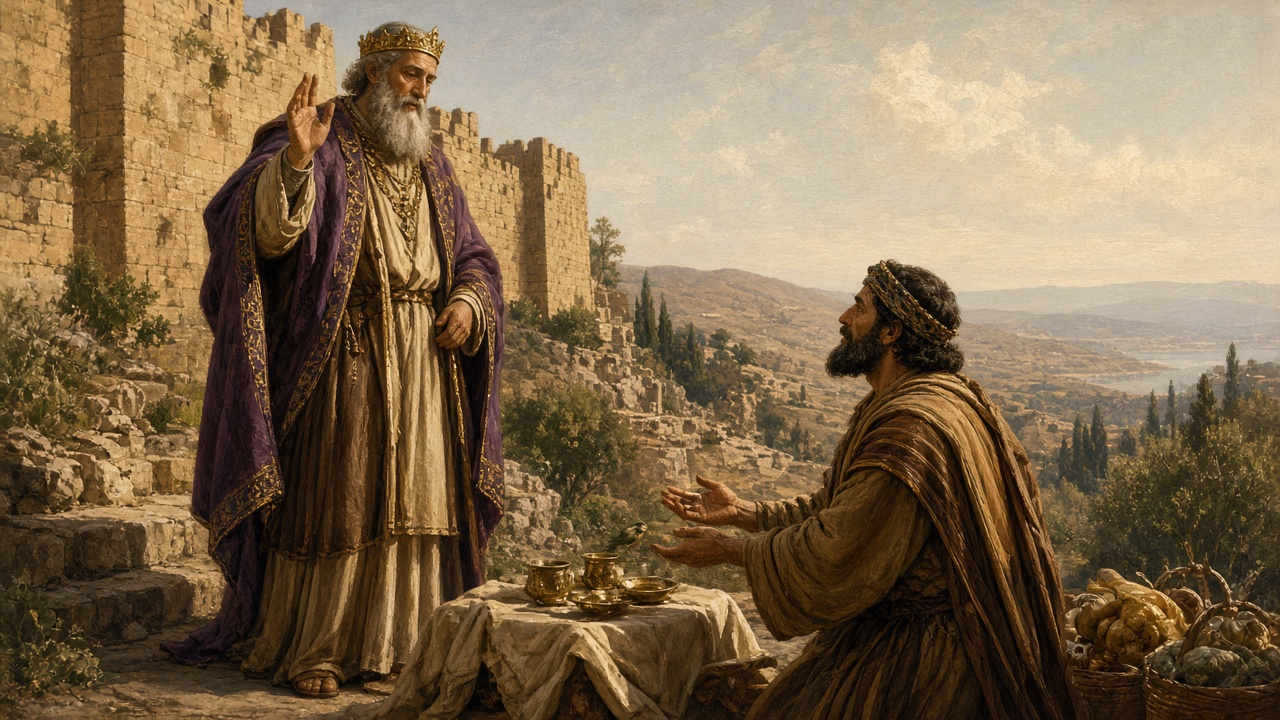
- Easton's Bible Dictionary says that the typical significance of Melchisedec, king of Salem and called king of righteousness, is set forth in detail in Hebrews 7. It summarizes the chapter as pointing out the superiority of his priesthood to Aaron's: Abraham paid him tithes and was blessed by him; Levi, still unborn, paid tithes in the person of Abraham; and he is the type of a priest who lives for ever, a permanence in Christ said to imply the abrogation of the Levitical system.Sources: Melchisedec
- Hebrews 9:2 is cited for the Holy Place, one of the two portions of the tabernacle. Easton describes it as twenty cubits long and ten in height and breadth, lit only by the golden candlestick because it had no opening for light, holding the table of showbread and the golden altar of incense, and divided from the holy of holies by a veil of costly materials and the brightest colors; the temple, he notes, followed the same arrangement.Sources: Holy Place
- Salem, which Easton renders "peace," is commonly supposed to be another name for Jerusalem, and Hebrews 7:1-2 is among the passages he cites. He also calls Jerusalem the "city of God" and the "holy city," and says that its name in the original is dual, meaning "possession of peace" or "foundation of peace," probably referring to the hills of Zion and Moriah or to the upper and lower city.Sources: Salem · Jerusalem
Notes written with AI assistance from open sources (Theographic Bible Metadata, CC BY-SA 4.0; Easton’s Bible Dictionary, public domain) and reviewed before publishing.
El Hijo, superior a los ángeles
1En tiempos remotos, Dios habló muchas veces y de varias maneras a nuestros antepasados por medio de los profetas; 2pero en estos últimos tiempos nos ha hablado por medio de su Hijo. A él Dios lo hizo heredero de todas las cosas y por medio de él creó todo el universo. 3Él es el resplandor de la gloria de Dios, la fiel imagen de su ser y el que sostiene el universo con su palabra poderosa. Y después de haber realizado la purificación de los pecados, se sentó a la diestra de Dios en el cielo. 4Así llegó a ser superior a los ángeles, en la misma medida en que el nombre que recibió es superior al de ellos.
5En efecto, Dios jamás le dijo a ningún ángel: «Tú eres mi Hijo y hoy mismo te he formado». Y en otro pasaje dice: «Yo seré su Padre y él será mi Hijo».
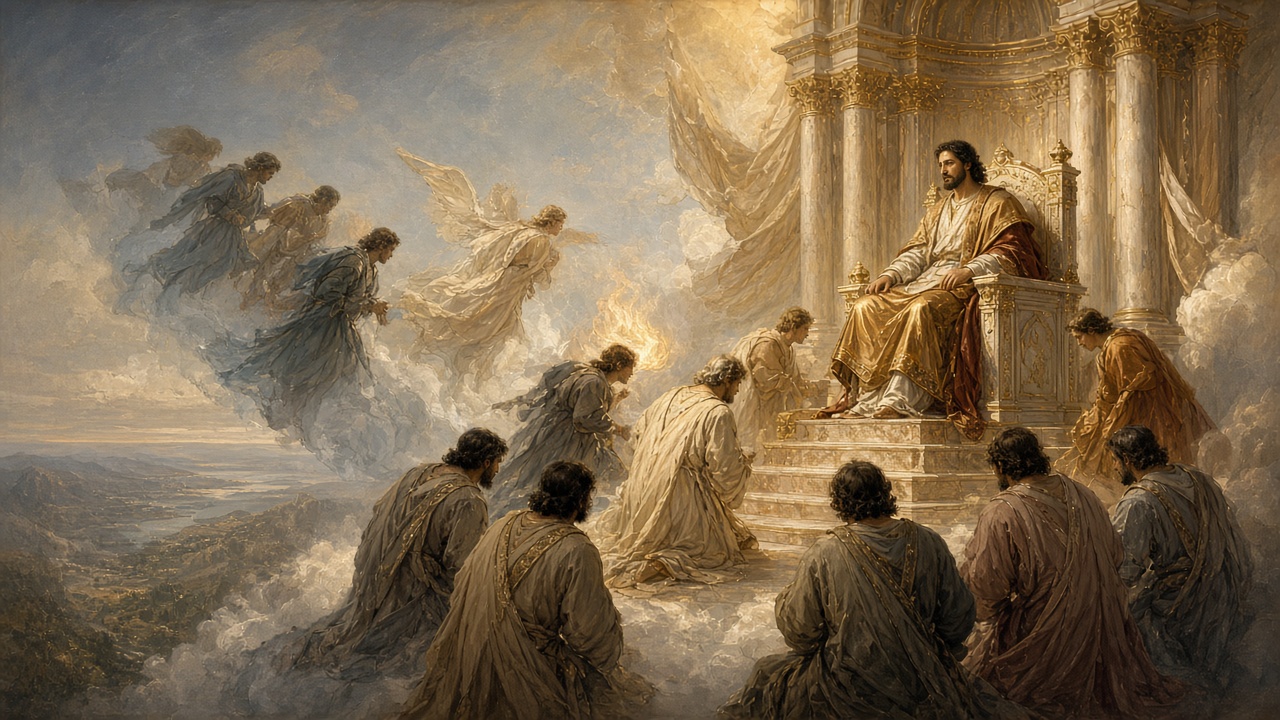
6Cuando Dios trajo a su Primogénito al mundo, dijo: «Adórenlo todos los ángeles de Dios».
7Y en cuanto a los ángeles, dijo: «Él hace que sus ángeles sean mensajeros y que sus servidores sean como llamas de fuego».
8Pero de su Hijo, dice: «Tu trono, oh Dios, es eterno, y gobiernas tu reino con justicia. 9Amas lo justo y odias lo malo; y por eso Dios, el Dios tuyo, te ha dado más alegría que a los demás». 10También dijo: «Tú, oh Señor, en el principio hiciste los cielos y la tierra. 11Ellos desaparecerán, pero tú permaneces para siempre. Se desgastarán como la ropa. 12Los doblarás como se dobla un vestido y los cambiarás por otros; pero tú eres siempre el mismo y tu vida nunca se acabará». 13¿Acaso Dios le dijo jamás a un ángel: «Siéntate a mi derecha, hasta que coloque a tus enemigos bajo tus pies»? 14¿Acaso no se dedican todos los ángeles a servir a Dios?, ¿acaso no los envía Dios para que ayuden a los que recibirán la salvación?
Did you know?
The Son Superior to the Angels
- The chapter opens by contrasting the many past occasions when God spoke to our fathers through the prophets with these last days, when he has spoken by his Son. The Son is appointed heir of all things and is the one through whom God made the universe.Sources: the Bible text itself
- The Son’s superiority to the angels is set out through words the chapter attributes to God. No angel is said to have been addressed as Son in this way; the angels are told to worship the firstborn, while the Son is addressed as God, with a throne that endures forever, and as Lord, who laid the foundations of the earth.Sources: the Bible text itself
- Angels are described as winds and as flames of fire, and as ministering spirits sent to serve those who will inherit salvation. After providing purification for sins, the Son is said to have sat down at the right hand of the Majesty on high, a place the chapter says was never offered to any angel.Sources: the Bible text itself
Notes written with AI assistance from open sources (Theographic Bible Metadata, CC BY-SA 4.0; Easton’s Bible Dictionary, public domain) and reviewed before publishing.
Credits and license for this translation
Biblica® Open Nueva Biblia Viva 2008
The Holy Bible in Spanish: Biblica® Open Nueva Biblia Viva 2008 (Bible)
copyright © 2008 Biblica, Inc.
Language: Español
Contributor: Biblica, Inc.
Biblica® Open Nueva Biblia Viva™
Copyright © 2006, 2008 by Biblica, Inc.
“Biblica” es una marca registrada en la oficina de Patentes y Marcas de los Estados Unidos por Biblica, Inc. Usado con permiso.
“Biblica” is a trademark registered in the United States Patent and Trademark Office by Biblica, Inc. Used with permission.
Creative Commons license
This work is made available under the Creative Commons Attribution-ShareAlike 4.0 International License (CC BY-SA). To view a copy of this license, visit https://creativecommons.org/licenses/by-sa/4.0 or send a letter to Creative Commons, PO Box 1866, Mountain View, CA 94042, USA.
You have permission to copy and distribute this Work, as long as you do not change it and you keep the title as it is. Changing or translating this Work will create a derivative work. When you publish this derivative work, you must list what changes you have made where people can see them, such as on a website. You must also show where the original Work is from: “The original Work by its copyright holders is available for free at www.biblica.com and open.bible .”
Notice of copyright must appear on the title or copyright page of the work as follows:
Biblica® Open Nueva Biblia Viva™
Copyright © 2006, 2008 by Biblica, Inc.
“Biblica” es una marca registrada en la oficina de Patentes y Marcas de los Estados Unidos por Biblica, Inc. Usado con permiso.
“Biblica” is a trademark registered in the United States Patent and Trademark Office by Biblica, Inc. Used with permission.
You must also make your derivative work available under the same license (CC BY-SA).
If you would like to notify Biblica, Inc. regarding your translation of this work, please contact us at https://open.bible/#feedback .
This translation is made available to you under the terms of the
Creative Commons Attribution Share-Alike license 4.0.
You have permission to share and redistribute this Bible translation in any format and to make reasonable revisions and adaptations of this translation, provided that:
You include the above copyright and source information.
If you make any changes to the text, you must indicate that you did so in a way that makes it clear that the original licensor is not necessarily endorsing your changes.
If you redistribute this text, you must distribute your contributions under the same license as the original.
Pictures included with Scriptures and other documents on this site are licensed just for use with those Scriptures and documents.
For other uses, please contact the respective copyright owners.
Note that in addition to the rules above, revising and adapting God's Word involves a great responsibility to be true to God's Word. See Revelation 22:18-19.
2025-05-21
Source: http://ebible.org/spaonbv/ · eBible.org