Genesis 11
Biblica® Open Nueva Biblia Viva 2008 · Tap a verse to see its cross-references.
La torre de Babel
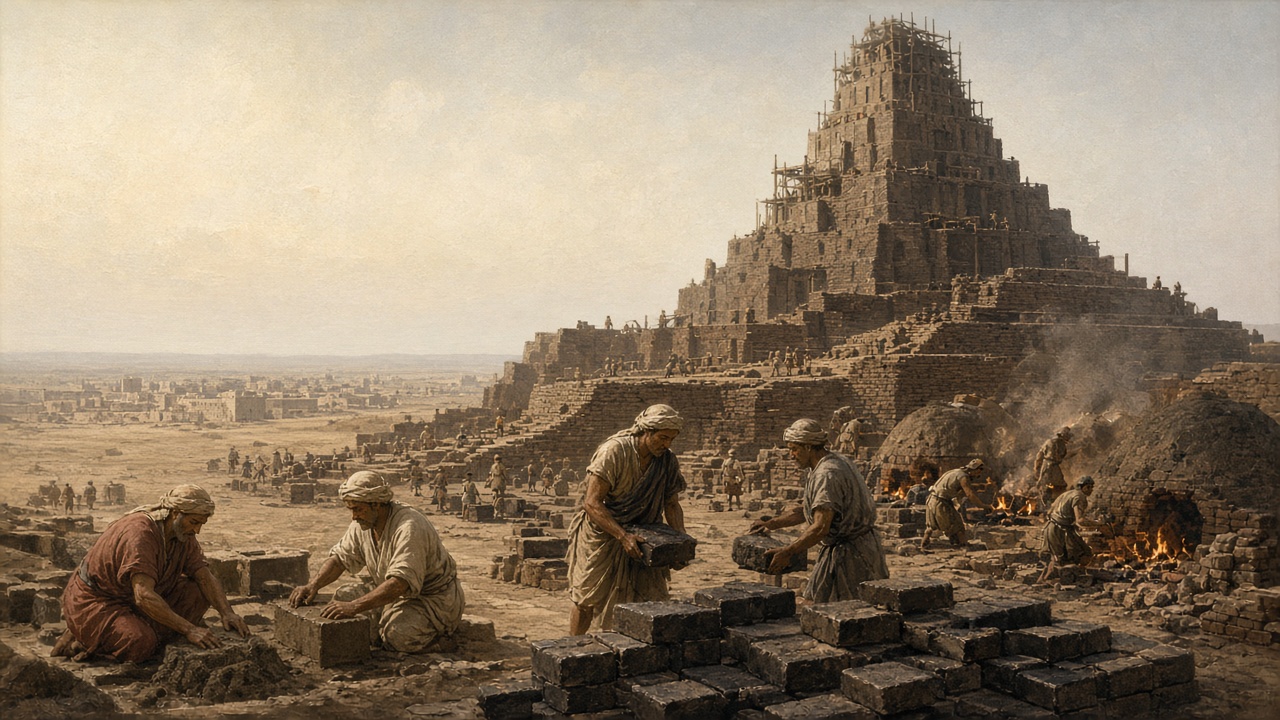
1En ese tiempo, toda la gente hablaba un mismo idioma. 2Al salir hacia el oriente, encontraron una llanura en la región de Sinar, y se quedaron a vivir allí. 3Un día decidieron hacer ladrillos y cocerlos en el fuego. De ese modo usaron los ladrillos en lugar de piedras. Además, emplearon el alquitrán en lugar de mezcla. 4Después dijeron: «Construyamos una ciudad con una torre altísima, que toque el cielo. Así nos haremos muy famosos y no tendremos que vivir por siempre errantes».
5Entonces el Señor bajó para ver la ciudad y la torre que estaban edificando, 6y pensó: «Esto lo pueden hacer porque forman un solo pueblo y hablan el mismo idioma. Esa torre es sólo la primera de muchas otras obras que harán. ¡Todo lo que se propongan hacer lo harán y nadie podrá detenerlos! 7Vamos, descendamos y hagamos que hablen diversos idiomas, para que no puedan entenderse».
8Así, pues, Dios los esparció por toda la tierra, lo que impidió que terminaran la construcción de la ciudad. 9Por esta razón la ciudad se llamó Babel, porque fue allí donde Dios los confundió haciendo que hablaran diversos idiomas, y los esparció por toda la tierra.
Descendientes de Sem
10La siguiente es la lista de los descendientes de Sem: Dos años después del diluvio, cuando Sem cumplió los cien años, tuvo un hijo al que llamó Arfaxad. 11Después de que Arfaxad nació, Sem vivió quinientos años más, y tuvo más hijos e hijas.
12Arfaxad tenía treinta y cinco años cuando le nació su hijo Selaj. 13Después de que Selaj nació, Arfaxad vivió cuatrocientos tres años más, y tuvo más hijos e hijas.
14Selaj tenía treinta años cuando le nació su hijo Éber. 15Después de que Éber nació, Selaj vivió cuatrocientos tres años más, y tuvo más hijos e hijas.
16Éber tenía treinta y cuatro años cuando le nació su hijo Péleg. 17Después de que Péleg nació, Éber vivió cuatrocientos treinta años más, y tuvo más hijos e hijas.
18Péleg tenía treinta años cuando le nació su hijo Reú. 19Después de que Reú nació, Péleg vivió doscientos nueve años más, y tuvo más hijos e hijas.
20Reú tenía treinta y dos años cuando le nació su hijo Serug. 21Después de que Serug nació, Reú vivió doscientos siete años más, y tuvo más hijos e hijas.
22Serug tenía treinta años cuando le nació su hijo Najor. 23Después de que Najor nació, Serug vivió doscientos años más, y tuvo más hijos e hijas.
24Najor tenía veintinueve años cuando le nació su hijo Téraj. 25Después de que Téraj nació, Najor vivió ciento diecinueve años más, y tuvo más hijos e hijas.
26A sus setenta años, a Téraj ya le habían nacido sus hijos Abram, Najor y Jarán.
Descendientes de Téraj
27La siguiente es la lista de los descendientes de Téraj, el padre de Abram, Najor y Jarán.
Jarán, que fue el padre de Lot, 28murió en el mismo lugar en el que había nacido, es decir, en Ur de los caldeos. Jarán murió antes que su padre Téraj.
29Abram se casó con Saray, y Najor se casó con Milca. Esta era hija de Jarán y hermana de Iscá. 30Saray no podía tener hijos, pues era estéril.
31Un día Téraj decidió salir de Ur de los caldeos para irse a vivir al país de Canaán. Se llevó consigo a su hijo Abram, a su nieto Lot y a su nuera Saray. Pero cuando llegaron a la ciudad de Jarán, se quedaron viviendo en ese lugar. 32Fue allí en Jarán donde murió Téraj, cuando tenía doscientos cinco años de edad.
Did you know?
Babel and the Road from Ur
- Travelers in this chapter settle on a plain in Shinar and build with baked brick and tar instead of stone and mortar. A dictionary treats Shinar as probably Babylonia or southern Mesopotamia, extending almost to the Persian Gulf, says the tower of Babel was built there, and describes the land's early inhabitants as people who made bricks and built cities.Sources: the Bible text itself · Shinar
- The unfinished city is named Babel because, the narrative says, there the Lord confused the language of the whole world and scattered its people. A dictionary explains the name as 'confusion' and suggests the tower was probably meant as a rallying-point on the wide plain of Shinar, after a migration from the uplands of Armenia, so the builders would not be scattered.Sources: the Bible text itself · Babel
- The chapter ends with Terah leaving Ur of the Chaldeans for Canaan with Abram, Sarai, and his grandson Lot, then settling in Haran, where he dies at 205; his son Haran had already died in Ur. A dictionary calls Ur that son's birthplace, the largest city of Shinar or northern Chaldea, and a center of trade and political power, and places Haran, now Harran and called Charran in the Greek Old Testament and in Acts, on the Belik, a Euphrates tributary in Upper Mesopotamia, where Abram stayed until Terah died.Sources: the Bible text itself · Terah · Ur of the Chaldees · Haran
Notes written with AI assistance from open sources (Theographic Bible Metadata, CC BY-SA 4.0; Easton’s Bible Dictionary, public domain) and reviewed before publishing.
Places in this chapter
- Shinar · Today: Babylonia · 32.543, 44.422 · verse 2
- Chaldea · 30.962, 46.104 · verses 28, 31
- Canaan · 32.767, 35.333 · verse 31
- Haran · Today: Harran · 36.864, 39.033 · verses 31, 32
Only places identified with high confidence are shown (90% or more according to the scholarly sources compiled by OpenBible). Period map: DARE (Digital Atlas of the Roman Empire), CC BY 4.0; modern map: © OpenStreetMap contributors; places: OpenBible.info (CC BY 4.0).
Credits and license for this translation
Biblica® Open Nueva Biblia Viva 2008
The Holy Bible in Spanish: Biblica® Open Nueva Biblia Viva 2008 (Bible)
copyright © 2008 Biblica, Inc.
Language: Español
Contributor: Biblica, Inc.
Biblica® Open Nueva Biblia Viva™
Copyright © 2006, 2008 by Biblica, Inc.
“Biblica” es una marca registrada en la oficina de Patentes y Marcas de los Estados Unidos por Biblica, Inc. Usado con permiso.
“Biblica” is a trademark registered in the United States Patent and Trademark Office by Biblica, Inc. Used with permission.
Creative Commons license
This work is made available under the Creative Commons Attribution-ShareAlike 4.0 International License (CC BY-SA). To view a copy of this license, visit https://creativecommons.org/licenses/by-sa/4.0 or send a letter to Creative Commons, PO Box 1866, Mountain View, CA 94042, USA.
You have permission to copy and distribute this Work, as long as you do not change it and you keep the title as it is. Changing or translating this Work will create a derivative work. When you publish this derivative work, you must list what changes you have made where people can see them, such as on a website. You must also show where the original Work is from: “The original Work by its copyright holders is available for free at www.biblica.com and open.bible .”
Notice of copyright must appear on the title or copyright page of the work as follows:
Biblica® Open Nueva Biblia Viva™
Copyright © 2006, 2008 by Biblica, Inc.
“Biblica” es una marca registrada en la oficina de Patentes y Marcas de los Estados Unidos por Biblica, Inc. Usado con permiso.
“Biblica” is a trademark registered in the United States Patent and Trademark Office by Biblica, Inc. Used with permission.
You must also make your derivative work available under the same license (CC BY-SA).
If you would like to notify Biblica, Inc. regarding your translation of this work, please contact us at https://open.bible/#feedback .
This translation is made available to you under the terms of the
Creative Commons Attribution Share-Alike license 4.0.
You have permission to share and redistribute this Bible translation in any format and to make reasonable revisions and adaptations of this translation, provided that:
You include the above copyright and source information.
If you make any changes to the text, you must indicate that you did so in a way that makes it clear that the original licensor is not necessarily endorsing your changes.
If you redistribute this text, you must distribute your contributions under the same license as the original.
Pictures included with Scriptures and other documents on this site are licensed just for use with those Scriptures and documents.
For other uses, please contact the respective copyright owners.
Note that in addition to the rules above, revising and adapting God's Word involves a great responsibility to be true to God's Word. See Revelation 22:18-19.
2025-05-21
Source: http://ebible.org/spaonbv/ · eBible.org