1 Samuel 1
Biblica® Open Nueva Biblia Viva 2008 · Tap a verse to see its cross-references.
About this book
About 1 Samuel
- Easton's Bible Dictionary (1897) says the books of Samuel were probably written by Samuel, Gad, and Nathan. It holds that Samuel wrote the first twenty-four chapters of the first book, that Gad, a companion of David, continued the history, and that Nathan completed it, probably arranging the whole in the form in which it now stands.Sources: Easton: Samuel, Books of
- Easton's Bible Dictionary (1897) says the first book covers a period of about a hundred years and nearly coincides with the life of Samuel. It contains the history of Eli (chapters 1-4), of Samuel (chapters 5-12), and of Saul and of David in exile (chapters 13-31), and notes that frequent gaps mean these are not complete histories of successive reigns.Sources: Easton: Samuel, Books of
- The story begins with Eli, high priest at Shiloh while the ark was there, who also judged Israel for forty years. Hannah consecrated her son Samuel at Shiloh as a perpetual Nazirite; he grew up under Eli's care and later had his home at Ramah, a town of Mount Ephraim, and resorted to Gilgal among the places where he administered justice.Sources: Eli · Samuel · Ramah · Gilgal
- Saul, son of Kish and of the tribe of Benjamin, is described as the first king of the Jewish nation; Gibeah was his birthplace and remained his residence after he became king. David, eighth and youngest son of Jesse of Bethlehem, tended his father's sheep on the uplands of Judah before the account of his exile from Saul.Sources: Saul · Gibeah · David · Easton: Samuel, Books of
- The Septuagint translators regarded the books of Samuel and Kings as one continuous history, divided into four books they called the Books of the Kingdom. The Vulgate followed that division but styled them the Books of the Kings, so the books now called First and Second Samuel in Protestant versions were there the First and Second Books of Kings.Sources: Easton: Samuel, Books of
Notes written with AI assistance from open sources (Theographic Bible Metadata, CC BY-SA 4.0; Easton’s Bible Dictionary, public domain) and reviewed before publishing.
Nacimiento de Samuel
1Elcaná era un hombre de la tribu de Efraín que vivía en Ramatayin de Zofim, en la región montañosa de Efraín.
Su padre se llamó Jeroán; su abuelo, Eliú; su bisabuelo, Tohu, y su tatarabuelo, Zuf.
2Tenía dos esposas, Ana y Penina. Penina tenía hijos, pero Ana no.
3Cada año Elcaná y su familia viajaban al santuario en Siló para adorar al Señor Todopoderoso y ofrecerle sacrificios. En aquel tiempo oficiaban como sacerdotes los dos hijos de Elí, Ofni y Finés. 4El día que ofrecía sacrificio, Elcaná celebraba la ocasión dando porciones de la carne a Penina y a sus hijos e hijas. 5A Ana le daba una porción especial, pues la amaba mucho, a pesar de que el Señor no le había concedido tener hijos. 6Penina empeoraba la situación burlándose de Ana a causa de su esterilidad. 7Todos los años era igual: Penina se burlaba y se reía de ella cuando iban a Siló, y la hacía llorar tanto que Ana no podía comer.
8«¿Qué pasa, Ana? —le preguntaba Elcaná—, ¿por qué no comes? ¿Por qué te afliges tanto por no tener hijos? ¿No es mejor tenerme a mí que tener diez hijos?».
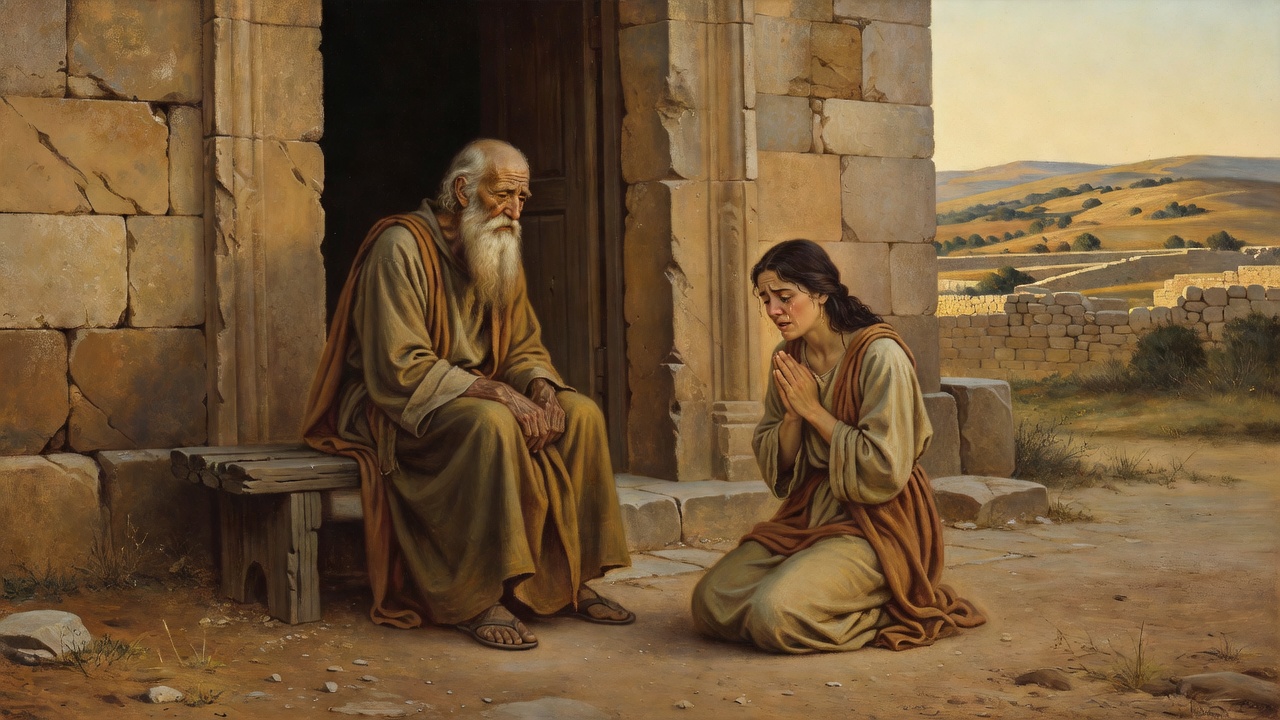
9Una tarde en Siló, después de la cena, Ana fue al santuario. Elí el sacerdote estaba sentado en el lugar acostumbrado junto a la entrada. 10Ella estaba profundamente angustiada y clamaba con amargura mientras oraba al Señor. 11E hizo este voto: «Oh Señor, Dios Todopoderoso, si miras mi dolor y respondes a mi oración dándome un hijo, yo te lo devolveré y será tuyo por toda su vida, y jamás será cortado su cabello».
12Como Elí vio que Ana prolongaba mucho su oración y que movía los labios sin emitir sonido, pensó que estaba ebria.
14―¿Cómo te atreves a venir aquí borracha? —le dijo—. ¡Deja ya tu borrachera!
15―No, señor —contestó ella—, no estoy ebria; es que estoy muy triste y estaba derramando las penas de mi corazón delante del Señor. No pienses que soy una borracha.
17―En ese caso —dijo Elí—, alégrate, y que el Dios de Israel conceda tu petición, cualquiera que sea.
18―¡Oh, gracias, señor! —exclamó ella, y regresó muy alegre y comenzó a comer nuevamente.
19El día siguiente toda la familia se levantó temprano y fueron al santuario a adorar al Señor una vez más. Entonces regresaron a su hogar en Ramá, y cuando Elcaná durmió con Ana, el Señor se acordó de su petición.
20Pasado el tiempo, ella tuvo un hijo. Y le puso Samuel (Pedido a Dios) porque, como ella dijo: «Se lo pedí al Señor».
Ana dedica a Samuel
21Al año siguiente, Elcaná y Penina y sus hijos fueron a ofrecer el sacrificio anual al santuario, 22pero Ana no fue esa vez porque le dijo a su marido:
―Espera hasta que el niño haya sido destetado. Entonces yo lo llevaré y lo dejaré allí para siempre.
23―Bien, haz lo que te parezca mejor —contestó Elcaná—. Quédate hasta que destetes al niño, y que el Señor vea el cumplimiento de tu voto.
Así que se quedó en casa hasta que destetó al niño. 24Entonces, aunque era muy pequeño, lo llevaron al santuario en Siló, juntamente con un becerro de tres años para el sacrificio y veinticuatro kilos de harina y un odre de vino.
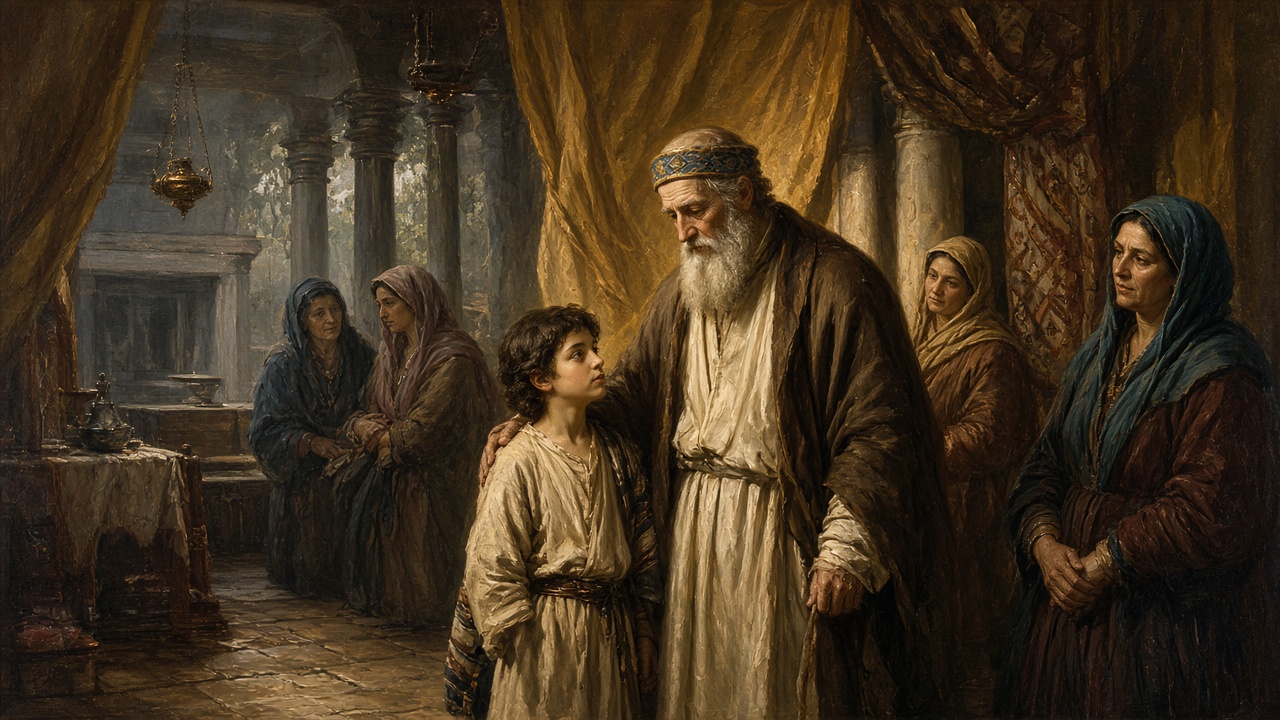
25Después del sacrificio llevaron al niño ante la presencia de Elí. 26«Señor, ¿te acuerdas de mí? —le preguntó Ana—. Yo soy la mujer que estuvo aquí hace algún tiempo orando al Señor. 27Le pedí a él que me diera un hijo, y él ha respondido a mi petición. 28Ahora lo traigo para entregarlo al Señor para toda la vida». Y adoraron allí al Señor.
Did you know?
Hannah's Prayer and the Sanctuary at Shiloh
- Shiloh, located in the territory of Ephraim, served as the central place of worship where the tabernacle had been established in the days of Joshua. Faithful Israelites like Elkanah made regular annual journeys there to offer sacrifices and worship before the sanctuary.Sources: Shiloh · Hannah · the Bible text itself
- Elkanah lived in Ramathaim-zophim (also called Ramah) in the hill country of Ephraim. The district was associated with his ancestor Zuph, a Kohathite Levite whose family line had settled in that territory.Sources: Elkanah · Zuph · Ramathaim-zophim · the Bible text itself
- Eli, who observed Hannah praying near the entrance of the sanctuary, was the high priest and judged Israel for forty years. He was the first high priest from the line of Aaron's fourth son, Ithamar, and his sons Hophni and Phinehas also officiated as priests at Shiloh.Sources: Eli · Hannah · the Bible text itself
Notes written with AI assistance from open sources (Theographic Bible Metadata, CC BY-SA 4.0; Easton’s Bible Dictionary, public domain) and reviewed before publishing.
Places in this chapter
Only places identified with high confidence are shown (90% or more according to the scholarly sources compiled by OpenBible). Period map: DARE (Digital Atlas of the Roman Empire), CC BY 4.0; modern map: © OpenStreetMap contributors; places: OpenBible.info (CC BY 4.0).
Credits and license for this translation
Biblica® Open Nueva Biblia Viva 2008
The Holy Bible in Spanish: Biblica® Open Nueva Biblia Viva 2008 (Bible)
copyright © 2008 Biblica, Inc.
Language: Español
Contributor: Biblica, Inc.
Biblica® Open Nueva Biblia Viva™
Copyright © 2006, 2008 by Biblica, Inc.
“Biblica” es una marca registrada en la oficina de Patentes y Marcas de los Estados Unidos por Biblica, Inc. Usado con permiso.
“Biblica” is a trademark registered in the United States Patent and Trademark Office by Biblica, Inc. Used with permission.
Creative Commons license
This work is made available under the Creative Commons Attribution-ShareAlike 4.0 International License (CC BY-SA). To view a copy of this license, visit https://creativecommons.org/licenses/by-sa/4.0 or send a letter to Creative Commons, PO Box 1866, Mountain View, CA 94042, USA.
You have permission to copy and distribute this Work, as long as you do not change it and you keep the title as it is. Changing or translating this Work will create a derivative work. When you publish this derivative work, you must list what changes you have made where people can see them, such as on a website. You must also show where the original Work is from: “The original Work by its copyright holders is available for free at www.biblica.com and open.bible .”
Notice of copyright must appear on the title or copyright page of the work as follows:
Biblica® Open Nueva Biblia Viva™
Copyright © 2006, 2008 by Biblica, Inc.
“Biblica” es una marca registrada en la oficina de Patentes y Marcas de los Estados Unidos por Biblica, Inc. Usado con permiso.
“Biblica” is a trademark registered in the United States Patent and Trademark Office by Biblica, Inc. Used with permission.
You must also make your derivative work available under the same license (CC BY-SA).
If you would like to notify Biblica, Inc. regarding your translation of this work, please contact us at https://open.bible/#feedback .
This translation is made available to you under the terms of the
Creative Commons Attribution Share-Alike license 4.0.
You have permission to share and redistribute this Bible translation in any format and to make reasonable revisions and adaptations of this translation, provided that:
You include the above copyright and source information.
If you make any changes to the text, you must indicate that you did so in a way that makes it clear that the original licensor is not necessarily endorsing your changes.
If you redistribute this text, you must distribute your contributions under the same license as the original.
Pictures included with Scriptures and other documents on this site are licensed just for use with those Scriptures and documents.
For other uses, please contact the respective copyright owners.
Note that in addition to the rules above, revising and adapting God's Word involves a great responsibility to be true to God's Word. See Revelation 22:18-19.
2025-05-21
Source: http://ebible.org/spaonbv/ · eBible.org