John 1
Biblica® Open Nova Bíblia Viva 2007 · Tap a verse to see its cross-references.
About this book
About John
- Easton's Bible Dictionary (1897) attributes the Gospel of John to the apostle John and says it was probably written at Ephesus about A.D. 90. It notes that after Jerusalem was destroyed in A.D. 70, Ephesus became a center of Christian life and activity in the East, and that from about 1820 many attempts were made to deny that John was the author.Sources: Easton: John, Gospel of
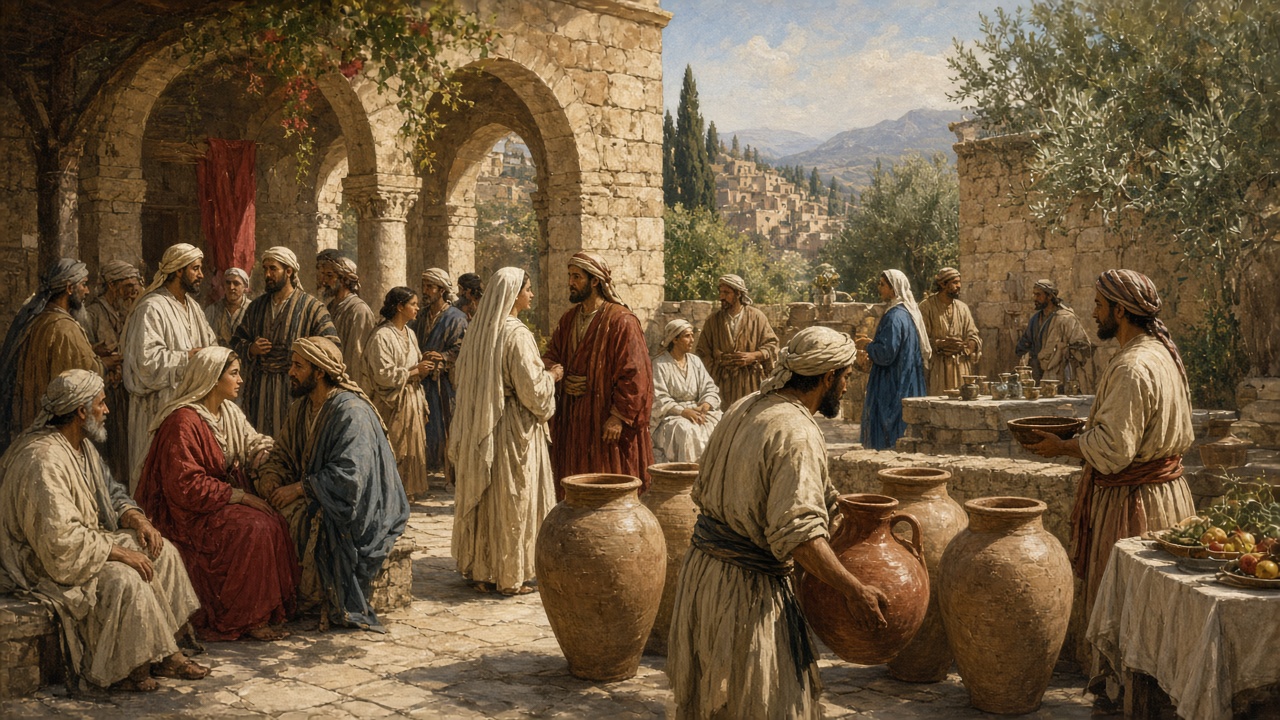
- The narrative is set in the time of Pontius Pilate, the sixth Roman procurator of Judea from A.D. 26 to 36, whose headquarters were at Caesarea and who often went up to Jerusalem. Judea was then the southernmost of Palestine's three divisions, distinguished from Galilee and Samaria, and was part of the Roman province of Syria; the Gospel also places a wedding at Cana, a town of Galilee near Capernaum.Sources: Pontius Pilate · Judea · Cana
- After the prologue (1:1-5), Easton says the historical narrative begins at verse 6 and falls into two parts. The first (1:6 through chapter 12) follows the public ministry from John the Baptist's introduction of Jesus until that ministry closes. The second (chapters 13-21) presents him in private life with his immediate followers (13-17) and then recounts his sufferings and his appearances to the disciples after the resurrection (18-21).Sources: Easton: John, Gospel of
- Easton lists four distinctive features: the relation of the Son to the Father, the relation of Christ to believers, the announcement of the Holy Spirit as the Comforter, and the prominence given to love in Christian character. The dictionary says the Gospel was addressed primarily to Christians.Sources: Easton: John, Gospel of
- Easton notes that it was once supposed John wrote to supply omissions in the first three Gospels, but says there is no evidence for this. Citing Reuss, it describes the book instead as a historical presentation of Christian faith centered on the person of Christ, picturing the world's antagonism to the truth revealed in him and the spiritual blessedness of the few who yield themselves to him as the Light of life.Sources: Easton: John, Gospel of
Notes written with AI assistance from open sources (Theographic Bible Metadata, CC BY-SA 4.0; Easton’s Bible Dictionary, public domain) and reviewed before publishing.
O Princípio
1No princípio era aquele que é a Palavra, e ele estava com Deus e era Deus. 2Ele estava com Deus no princípio.
3Por seu intermédio tudo o que existe foi criado. Não existe nada que tenha sido feito sem ele. 4Nele estava a vida, e esta vida era a luz de toda a humanidade. 5A vida dele é a luz que brilha no meio da escuridão, e nunca pode ser apagada pela escuridão.
O Testemunho de João
6Deus enviou um homem chamado João 7como testemunha do fato de que Jesus Cristo é a verdadeira luz, a fim de que por meio dele todos os homens cressem. 8João mesmo não era a luz; ele era apenas uma testemunha da luz. 9Estava chegando ao mundo aquele que é a verdadeira luz, que veio para brilhar sobre todos os que vêm ao mundo.
10Aquele que é a Palavra estava no mundo, e o mundo foi feito por meio dele, mas não foi reconhecido pelo mundo. 11Ele veio em sua própria terra e entre seu próprio povo, os judeus, mas ele não foi aceito. 12Mas a todos que o receberam, aos que creram nele, ele deu o direito de se tornarem filhos de Deus. 13Eles não se tornaram filhos de Deus pelos meios naturais, como resultado do desejo humano, mas da vontade de Deus.
O Verbo se Fez Carne
14Aquele que é a Palavra tornou-se um ser humano e morou aqui na terra entre nós, cheio de graça e de verdade. E vimos a sua glória, a glória do Filho único do Pai celeste!
15João mostrou Cristo ao povo, dizendo às multidões: “Este é aquele a respeito de quem eu estava falando quando disse: ‘Está para chegar alguém que é muitíssimo mais importante do que eu, porque ele já existia muito antes de mim!’ ” 16Todos nós temos tirado proveito das ricas dádivas que ele nos trouxe, dádiva sobre dádiva! 17Porque Moisés nos deu a Lei, enquanto Jesus Cristo nos trouxe a graça e a verdade. 18Ninguém jamais viu realmente a Deus, porém o seu Filho único certamente o viu, porque ele vive com o Pai e o tornou conhecido.
A Missão de João Batista
19Os líderes judaicos enviaram de Jerusalém sacerdotes e levitas para perguntarem a João quem ele era. 20Ele confessou sem rodeios: “Eu não sou o Cristo”, disse.
21“Nesse caso, quem é você?”, perguntaram eles. “É Elias?”
“Não sou”, respondeu.
“Você é o profeta?”
“Não”, respondeu ele outra vez.
22“Então, quem é você? Diga-nos, para que possamos dar uma resposta aos que nos enviaram. Que tem você a dizer de si mesmo?”
23João respondeu, citando as palavras do profeta Isaías: “Eu sou uma voz que clama no deserto: ‘Preparem um caminho para o Senhor!’ ”
24Então aqueles que foram enviados pelos fariseus 25perguntaram-lhe: “Se você não é o Cristo, nem Elias, nem o profeta, por que você batiza?”
26João lhes disse: “Eu simplesmente batizo com água, mas entre vocês está alguém que vocês nunca conheceram, 27que vem depois de mim, e eu não sou digno de desamarrar as correias das sandálias dele”.
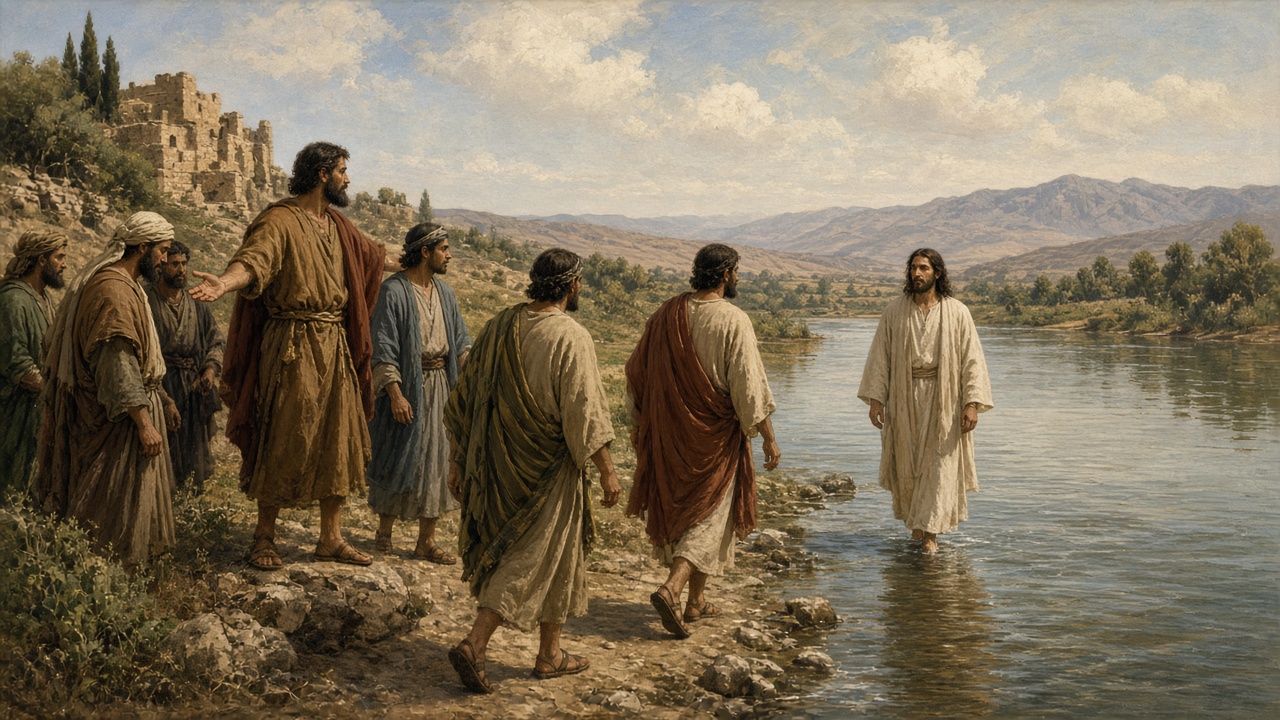
28Isso aconteceu em Betânia, uma aldeia do outro lado do rio Jordão, onde João estava batizando.
Jesus, o Cordeiro de Deus
29No dia seguinte, João viu Jesus caminhando em sua direção e disse: “Vejam! Aí está o Cordeiro de Deus que tira o pecado do mundo! 30Era dele que eu estava falando quando disse: ‘Logo vai chegar um homem muito mais importante do que eu, o qual já existia muito antes de mim!’ 31Eu não o conhecia, porém estou aqui batizando com água a fim de revelá-lo à nação de Israel”.
32Então João deu o seguinte testemunho: “Eu vi o Espírito descendo dos céus na forma de uma pomba e permanecer sobre Jesus. 33Eu não sabia quem era ele, mas aquele que me enviou para batizar, disse-me: ‘Quando você vir o Espírito descer e pousar sobre alguém, esse é aquele que batiza com o Espírito Santo’. 34Eu vi acontecer isso com esse homem, e, portanto, sou testemunha que ele é o Filho de Deus”.
Os Primeiros Discípulos
35No outro dia, quando João se achava com dois dos seus discípulos, 36viu Jesus passando. João olhou atentamente para ele e então declarou: “Vejam! Aí está o Cordeiro de Deus!”
37Então os dois discípulos de João seguiram a Jesus!
38Jesus olhou em volta e viu os dois seguindo atrás dele. “O que vocês querem?”, perguntou-lhes.
Eles disseram: “Rabi” (que significa “Mestre”), “onde é que o Senhor mora?”
39“Venham ver”, disse ele.
Então eles o acompanharam ao lugar onde ele estava morando e ficaram com ele das quatro horas da tarde, mais ou menos, até o anoitecer.
40André, irmão de Simão Pedro, era um dos dois que tinham ouvido o que João dissera e que haviam seguido Jesus.
41André foi então procurar seu irmão Simão e lhe disse: “Nós encontramos o Messias (isto é, o Cristo)”. 42E o levou para conhecer Jesus.
Jesus olhou fixamente para ele e disse: “Você é Simão, filho de João, mas será chamado de Cefas”, que traduzido quer dizer “Pedro!”
Jesus Chama Filipe e Natanael
43No dia seguinte, Jesus decidiu ir para a Galileia. Ele encontrou Filipe e lhe disse: “Siga-me!”
44Filipe era de Betsaida, cidade natal de André e Pedro. 45Então Filipe saiu à procura de Natanael e lhe disse: “Nós encontramos o Messias! — aquele de quem Moisés e os profetas falaram! O nome dele é Jesus, o filho de José de Nazaré!”
46“Nazaré!”, exclamou Natanael. “Pode vir alguma coisa boa de lá?”
“Venha e veja você mesmo”, disse Filipe.
47Ao ver Natanael se aproximando, disse Jesus: “Vem aí um verdadeiro israelita, um homem direito e sincero”.
48“Como o Senhor sabe quem eu sou?”, perguntou Natanael.
E Jesus respondeu: “Eu pude ver você debaixo da figueira, antes que fosse encontrado por Filipe”.
49Então Natanael respondeu: “Mestre, o Senhor é o Filho de Deus, o Rei de Israel!”
50Jesus lhe perguntou: “Você crê porque eu lhe disse que o tinha visto debaixo da figueira? Você verá provas maiores do que esta”. 51Então acrescentou: “Vocês verão o céu se abrir e os anjos de Deus subindo e descendo sobre o Filho do Homem”.
Did you know?
The Word, John's Witness, and the First Disciples
- When the Jews of Jerusalem sent priests and Levites to ask who he was, John denied that he was the Christ, Elijah, or the Prophet, and described himself, in Isaiah's words, as a voice crying in the wilderness. He was of priestly descent: his father, Zacharias, belonged to the course of Abia, and his mother, Elisabeth, was of the daughters of Aaron. A note on the event dates this testimony to AD 27.Sources: the Bible text itself · John the Baptist · John's Witness
- All this happened at Bethany beyond the Jordan, where John was baptizing. A place note records that the Revised Version reads Bethany here instead of Bethabara, on the authority of the oldest manuscripts, and that the name appears to have belonged to a place east of the Jordan.Sources: the Bible text itself · Bethany
- Andrew, then a disciple of John and a man of Bethsaida, heard John call Jesus the Lamb of God, followed him, and is described as the first of Jesus' disciples; he then brought his brother Simon. Philip found Nathanael and told him about Jesus of Nazareth, and Nathanael asked whether anything good could come from there, a town not mentioned in the Old Testament. Nathanael, from Cana in Galilee, is called an Israelite in whom there is no deceit, and because this Gospel never names Bartholomew, he has been identified with him.Sources: the Bible text itself · Andrew · Nathanael · Nazareth
Notes written with AI assistance from open sources (Theographic Bible Metadata, CC BY-SA 4.0; Easton’s Bible Dictionary, public domain) and reviewed before publishing.
Places in this chapter
- Jerusalem · 31.777, 35.234 · verse 19
- Jordan · Today: Jordan River · 31.761, 35.558 · verse 28
- Galilee · 32.760, 35.527 · verse 43
- Nazareth · 32.702, 35.298 · verses 45, 46
Only places identified with high confidence are shown (90% or more according to the scholarly sources compiled by OpenBible). Period map: DARE (Digital Atlas of the Roman Empire), CC BY 4.0; modern map: © OpenStreetMap contributors; places: OpenBible.info (CC BY 4.0).
Credits and license for this translation
Biblica® Open Nova Bíblia Viva 2007
Portuguese: Biblica® Open Nova Bíblia Viva 2007 (Bible)
copyright © 2007, 2010 Biblica, Inc.
Language: Português
Dialect: Brazil
Contributor: Biblica, Inc.
Biblica® Open Nova Bíblia Viva™
Copyright © 2007, 2010 by Biblica, Inc.
“Biblica” é uma marca registrada na Oficina de Patentes e Marcas dos Estados Unidos por Biblica, Inc. Usado com permissão.
“Biblica” is a trademark registered in the United States Patent and Trademark Office by Biblica, Inc. Used with permission.
――――――
Creative Commons license
This work is made available under the Creative Commons Attribution-ShareAlike 4.0 International License (CC BY-SA). To view a copy of this license, visit https://creativecommons.org/licenses/by-sa/4.0 or send a letter to Creative Commons, PO Box 1866, Mountain View, CA 94042, USA.
You have permission to copy and distribute this Work, as long as you do not change it and you keep the title as it is. Changing or translating this Work will create a derivative work. When you publish this derivative work, you must list what changes you have made where people can see them, such as on a website. You must also show where the original Work is from: “The original Work by its copyright holders is available for free at www.biblica.com and open.bible .”
Notice of copyright must appear on the title or copyright page of the work as follows:
Biblica® Open Nova Bíblia Viva™
Copyright © 2007, 2010 by Biblica, Inc.
“Biblica” é uma marca registrada na Oficina de Patentes e Marcas dos Estados Unidos por Biblica, Inc. Usado com permissão.
“Biblica” is a trademark registered in the United States Patent and Trademark Office by Biblica, Inc. Used with permission.
You must also make your derivative work available under the same license (CC BY-SA).
If you would like to notify Biblica, Inc. regarding your translation of this work, please contact us at https://open.bible/#feedback .
This translation is made available to you under the terms of the
Creative Commons Attribution Share-Alike license 4.0.
You have permission to share and redistribute this Bible translation in any format and to make reasonable revisions and adaptations of this translation, provided that:
You include the above copyright and source information.
If you make any changes to the text, you must indicate that you did so in a way that makes it clear that the original licensor is not necessarily endorsing your changes.
If you redistribute this text, you must distribute your contributions under the same license as the original.
Pictures included with Scriptures and other documents on this site are licensed just for use with those Scriptures and documents.
For other uses, please contact the respective copyright owners.
Note that in addition to the rules above, revising and adapting God's Word involves a great responsibility to be true to God's Word. See Revelation 22:18-19.
2025-05-20
Section headings adapted from the Berean Standard Bible (public domain); they are not part of this translation’s text.
Source: http://ebible.org/poronbv/ · eBible.org