Ecclesiastes 1
Biblica® Open Nova Bíblia Viva 2007 · Tap a verse to see its cross-references.
About this book
About Ecclesiastes
- Ecclesiastes is the Greek rendering of the Hebrew Koheleth, which means “Preacher.”Sources: Easton: Ecclesiastes
- The old and traditional view attributes the book to Solomon, and the writer represents himself implicitly as Solomon (1:12). Others date it from the Captivity.Sources: Easton: Ecclesiastes
- It has been styled “The Confession of King Solomon.” Its keynote, in chapter 1 verse 2, is “Vanity of vanities! saith the Preacher, Vanity of vanities! all is vanity!” Easton's Bible Dictionary (1897) explains this as meaning that all human efforts to find happiness apart from God are without result.Sources: Easton: Ecclesiastes
- Easton's Bible Dictionary (1897) describes the writer as a man who gave way to selfishness and sensuality, paid the penalty of that sin in satiety and weariness of life, and yet, under the discipline of a divine education, learned the lesson God meant to teach him. The writer concludes that the secret of a true life is that a man should consecrate the vigor of his youth to God.Sources: Easton: Ecclesiastes
Notes written with AI assistance from open sources (Theographic Bible Metadata, CC BY-SA 4.0; Easton’s Bible Dictionary, public domain) and reviewed before publishing.
Tudo é ilusão
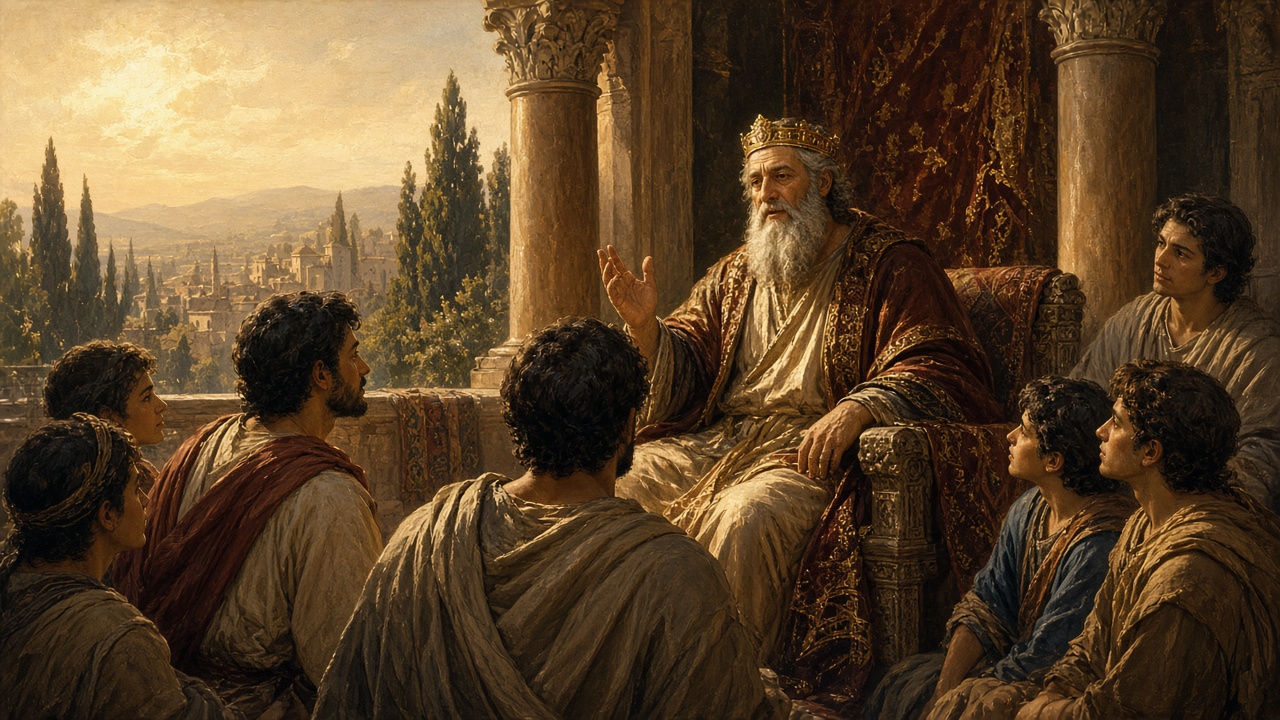
1Palavra do Pregador Salomão, rei de Jerusalém, filho de Davi, rei de Jerusalém.
2Tudo é ilusão, diz o Pregador. Tudo é ilusão. Tudo é inútil.
3Qual é a vantagem que o homem consegue com o seu trabalho em que se esforça tanto debaixo do sol?
4Gente nasce e morre, mas a terra permanece para sempre.
5O sol nasce e se põe e volta ao lugar de onde nasceu.
6O vento sopra para o sul e para o norte, vai e vem, sopra aqui e ali, sem chegar a lugar algum.
7Os rios correm para o mar, mas o mar nunca fica cheio. A água volta para os rios e corre outra vez para o mar.
8A vida é uma canseira, nem dá para descrever! Mesmo que vejamos tudo que existe, não ficamos satisfeitos; podemos ouvir todos os sons, mas nem assim ficamos contentes.
9A história sempre se repete. O que foi feito se fará outra vez. Na verdade, não há nada de novo debaixo do sol.
10Tudo já foi dito ou feito antes. Você pode mostrar alguma coisa nova? Como é que você sabe que isso não existiu há muito tempo?
11Não podemos nos lembrar do que aconteceu no passado e daqui a algum tempo ninguém vai se lembrar do que nós fizemos.
Com a sabedoria vem o sofrimento
12Eu, o Pregador, fui rei de Israel e morei em Jerusalém. 13Eu me esforcei para aprender bem tudo e a usar a sabedoria para explorar o que existe no universo. Descobri que Deus sobrecarregou o homem com trabalhos pesados. 14Tenho visto tudo o que é feito debaixo do sol; a vida é uma ilusão, é correr atrás do vento.
15O que está torto não pode ser endireitado; o que falta não pode ser contado.
16Eu disse então para mim mesmo: “Bem, eu sou muito mais estudado que todos os reis que governaram Jerusalém. Na verdade, adquiri muita sabedoria e conhecimento”.
17Por isso me esforcei bastante para ser sábio e conhecer a loucura e a insensatez, mas agora vejo que isso também é correr atrás do vento.
18Pois quanto maior a sabedoria, maior o sofrimento; quanto maior o conhecimento, maior a tristeza.
Did you know?
The Search for Meaning and the Cycles of Life
- The speaker introduces himself as the Teacher, identified as a son of David and king ruling in Jerusalem. In the biblical narrative, King David's line ruled from Jerusalem, a fortified mountain city often associated with wisdom and royal authority.Sources: the Bible text itself · David · Jerusalem
- To illustrate the repetitive and wearisome nature of human toil, the author points to ongoing natural cycles, such as the rising and setting of the sun, shifting wind patterns, and rivers flowing into the sea without ever filling it.Sources: the Bible text itself
- Although the speaker sets his mind to explore all human actions through extensive wisdom and knowledge, he concludes that gaining deeper understanding also brings increased sorrow and grief.Sources: the Bible text itself
Notes written with AI assistance from open sources (Theographic Bible Metadata, CC BY-SA 4.0; Easton’s Bible Dictionary, public domain) and reviewed before publishing.
Places in this chapter
Only places identified with high confidence are shown (90% or more according to the scholarly sources compiled by OpenBible). Period map: DARE (Digital Atlas of the Roman Empire), CC BY 4.0; modern map: © OpenStreetMap contributors; places: OpenBible.info (CC BY 4.0).
Credits and license for this translation
Biblica® Open Nova Bíblia Viva 2007
Portuguese: Biblica® Open Nova Bíblia Viva 2007 (Bible)
copyright © 2007, 2010 Biblica, Inc.
Language: Português
Dialect: Brazil
Contributor: Biblica, Inc.
Biblica® Open Nova Bíblia Viva™
Copyright © 2007, 2010 by Biblica, Inc.
“Biblica” é uma marca registrada na Oficina de Patentes e Marcas dos Estados Unidos por Biblica, Inc. Usado com permissão.
“Biblica” is a trademark registered in the United States Patent and Trademark Office by Biblica, Inc. Used with permission.
――――――
Creative Commons license
This work is made available under the Creative Commons Attribution-ShareAlike 4.0 International License (CC BY-SA). To view a copy of this license, visit https://creativecommons.org/licenses/by-sa/4.0 or send a letter to Creative Commons, PO Box 1866, Mountain View, CA 94042, USA.
You have permission to copy and distribute this Work, as long as you do not change it and you keep the title as it is. Changing or translating this Work will create a derivative work. When you publish this derivative work, you must list what changes you have made where people can see them, such as on a website. You must also show where the original Work is from: “The original Work by its copyright holders is available for free at www.biblica.com and open.bible .”
Notice of copyright must appear on the title or copyright page of the work as follows:
Biblica® Open Nova Bíblia Viva™
Copyright © 2007, 2010 by Biblica, Inc.
“Biblica” é uma marca registrada na Oficina de Patentes e Marcas dos Estados Unidos por Biblica, Inc. Usado com permissão.
“Biblica” is a trademark registered in the United States Patent and Trademark Office by Biblica, Inc. Used with permission.
You must also make your derivative work available under the same license (CC BY-SA).
If you would like to notify Biblica, Inc. regarding your translation of this work, please contact us at https://open.bible/#feedback .
This translation is made available to you under the terms of the
Creative Commons Attribution Share-Alike license 4.0.
You have permission to share and redistribute this Bible translation in any format and to make reasonable revisions and adaptations of this translation, provided that:
You include the above copyright and source information.
If you make any changes to the text, you must indicate that you did so in a way that makes it clear that the original licensor is not necessarily endorsing your changes.
If you redistribute this text, you must distribute your contributions under the same license as the original.
Pictures included with Scriptures and other documents on this site are licensed just for use with those Scriptures and documents.
For other uses, please contact the respective copyright owners.
Note that in addition to the rules above, revising and adapting God's Word involves a great responsibility to be true to God's Word. See Revelation 22:18-19.
2025-05-20
Section headings adapted from the Berean Standard Bible (public domain); they are not part of this translation’s text.
Source: http://ebible.org/poronbv/ · eBible.org