Luke 10
Aka (Hrusso) Bible · Tap a verse to see its cross-references.
Shüraw mroĝü ná kiw
1Seyo he ñu nafum sa a Tawgyew i nüna mroĝü lapyo, sünda ha ha ñetrü ge i jijoma, süge ksü, ksü dañe ivro kibraĝitsü. 2Sünda i ná che, “Rhamu kiw añe dume; séŝo chiĝa daw mesame duba sündada vi übraw i küĝüwe chejodawe, se i í nudzoĝ vi í tcholajo vi nüna kiwe.” 3Jiwe; howe no djó fugulu vyeduw dañe fumsu namko ge kijome. 4Sündada dzulngasaje djulawe, kapüĝa je, seyo shita je; sünda ĝabo ge je nüna ná dju je gaga djudawe. 5“Dju ñe ge jihima, uvromashü chevzüwe, ‘He ñe ge ĝüdzüw djuwe chewe.’” 6Süge djuma ĝüdzüw pafiwjo dumeje, ba ĝüdzüw djüdaw ye üdra dusajome, momeje bachi ge kakutchojome. 7Se ñe ge ĝyowe, sünda ichi go ha paima, se í tsa-tuwe, hado chemeje chiĝa daw nüna na ná shishü patsüw; ñetro-ñetro djukahijodawe. 8Seyo ha ñetrü ge jiyima, sügow nüna na hutrovowñe, se bavro a ha vedama se i tsajodabuwe. 9“Sügow sonaw ná dagyojodawe: sünda ná chewe, ‘Tawgyew í ñetrü ye batrü iñiñisa ge kakudamme.’” 10Sé ba ha ñetrü ge jimyoima, seyo sügo nüna na bá mahutrovolaime, ná bodzaĝ ge jeñe ana chewe, 11“‘Djo ñetrü yo ñelümo naje, ñishi ge güdrüsadaw na, ñi djovro a pafiamkoimme, sedamje he í danghujodawe, Tawgyew i ñetrü djotrü iñiñsa ge kakulaimme.’ 12No djo trungkoime, se niyay ñeto se ñetrü ye Sadom ñetrü i je mofokaw gijo lyajome.”
Üdrü-ulu mavyegudow ná tui
13“Tui Kurajiña! Tui Betseda! Dju dyew chiĝa dafiw ye djo ge dadama, sese í Sor ñetrüñe sidon ñetrü ge dameje, na ke ge gye güpañe seyo kütsesüpu ge ĝyoñe na kye ge dru-lu vyegudoñjemma. 14Seŝo, melye gzuñe cheĝiyi sehu bafo vyego yo yeje Sor ñe Sidon naksü vyego ye vyeksufofijome. 15Seyo Kafarnahum ñetrü, hawa ba soĝgo kuw lüvzüw dalyijoma? Ba bó noĝu üla ge kuw üla kaajome.” 16“Dju ba chew dzüima, se i no chew dzüjo, sünda ba dju mauw daima, noje i mauw dajome; seyo dju no mauw daima, se ye no kiadaw i je mauw dajome.”
Shürhaw mroĝü na kakuw
17Se shürhaw mroĝü yo ksü na lüshüw yo kakutchoñe che, “He Tawgyewwa, ba üñiñi yo se ĝuló mauw na je ñichi pudu-puña ulunge pumódame.” 18I ná che, “No mütü í ñedzü lüĝaw veduw ñedzü go gaahu hohuime.” 19No djó byu na seyo mütü güdzü na dügrüdzagofijo djüwme, seyo vyeñiw nachi go vyew mau dafiwjo ná madafijo pudu-puña djüwme; seyo ha gañ yo je djo naw madafijomme. 20Sé sünaŝo cheñe djulüshüwe, se ĝulo mauw na djo pudu-puña yo pumoda cheñe, seŝo djo lüshüjo dawe se djo ñiñi Ñedzü ge ĝi vyedotro yo.
Üsaw udru yo uyow í duw
21Sa yo sa a i ĝulo güdraw yo dañe lüshüdzoalye, seyo che “He Awa, Ñedzü ñe No i Tawgyewwa, no ba ulu yo uw cheime, se ba he ñu na danghu-kinghuw nüna seyo vyesü-vyelüw na yo müŝüñe veda, sünda angasa natrü ge duda. Am, he Tawgyewa, hado chemeje bá he í uw veda. 22No awu i nó vyow nodru ge traadamme; seyo djuje madanghu se saw ye djujema, awu aka danghuba seyo awu djujema se je dju madanghu, se i ye sawchi gemdo aka seyo se djudru ge saw i dujoñe vyedama.” 23Seyo í shürhaw nachi ge tchoñe akasa ge che, “Ŝüvzüwme se iñi ye, se he ñu ná se ba hoiwa hoiye, 24Hado chemeje no djo chemkoime, ŝüpo ñihow truw na seyo ñubyu na tsüdaw ye, se ba ha ñu ye hoima howe; sé maho seyo ha ñu ye ba dzüima dzüwe, sé madzühu.”
Samri nüna uw a i zeĝaw
25Sündawñe nüna a gudzulyi; sünda ana cheñe í küna daima hopüñew che, “He shotuko-kunu go dadrüwa, shüwa shüw shüjo ibo ha dameje ujowa?” 26I í che, “Shotuko-kunu ge ha ĝida? Ba künda ngüña?” 27I trutcho, “Ba Tabraw bá nudzoĝ Tawgyewchi go vyew nudzoĝ drü-lu seyo nudzoĝ krãŝe seyo nudzoĝ budzu vyew se nadra nülvow vyejodawe; seyo nudzoĝ ĝafopsüĝi-ĝampsüĝi go ná nülvojo dawe.” 28I í che, “Ba umso chedaba, he ana dabya sündame üshü ĝyojome.” 29Sé i í nudzo í usu dajoñe veñe Jisu í dzü, “Nameje nochi ĝafopsüĝi-ĝampsüĝi na djuwa?” 30Jisu i che, “Nüna a ye Yarusalem yo Jeriko ge jimkoi ye ñigudu tsaĝaw na djeshiĝiaña i gye í na shalügülag, sünda gü-shü dañe atrü dzüw datralye katrükralye. 31Sünda ana da, se ĝabo ge mügaw a kamkoi, séŝo í holye ĝeaglyeñe djetrükralye. 32Ana vedumbo Lewi a ye je seŝü katcho, ije í holyeñe ĝeaglye djetrükralyetcho. 33Séŝo djudamje Samari ñetrü a go sa a kakukülye, sünda í hohulyeñe nülvo vyela. 34Sünda itrüĝañ ge jikuñe seyo ichi üshi ge luvuhu seyo tsühu prüñe gyeche-gyelye yo pyogo, seyo í güĝedru ge gyodügyelyeñe ñe ĝyow ge lajikye sünda í uwyo hoivo. 35Se draha í lumu yo bosüñ ksü lahuañe se ñebraw i djüñe che, ‘I uwyo hoivojodawe, seyo bachi go küña kapyoima, se ye no kakuwñe doajome.’” 36Hesahelu he ba vyew ge se na ñigudu-tsaĝaw süna ge lyalahado, nadzüngko a dju ichi ĝafopsüĝi ĝampsüĝi go na ñe veiya,? 37I che, “Se i dju í nülvodama.” Jisu i í che, “Kai, baje kañe süná dajodawe.”
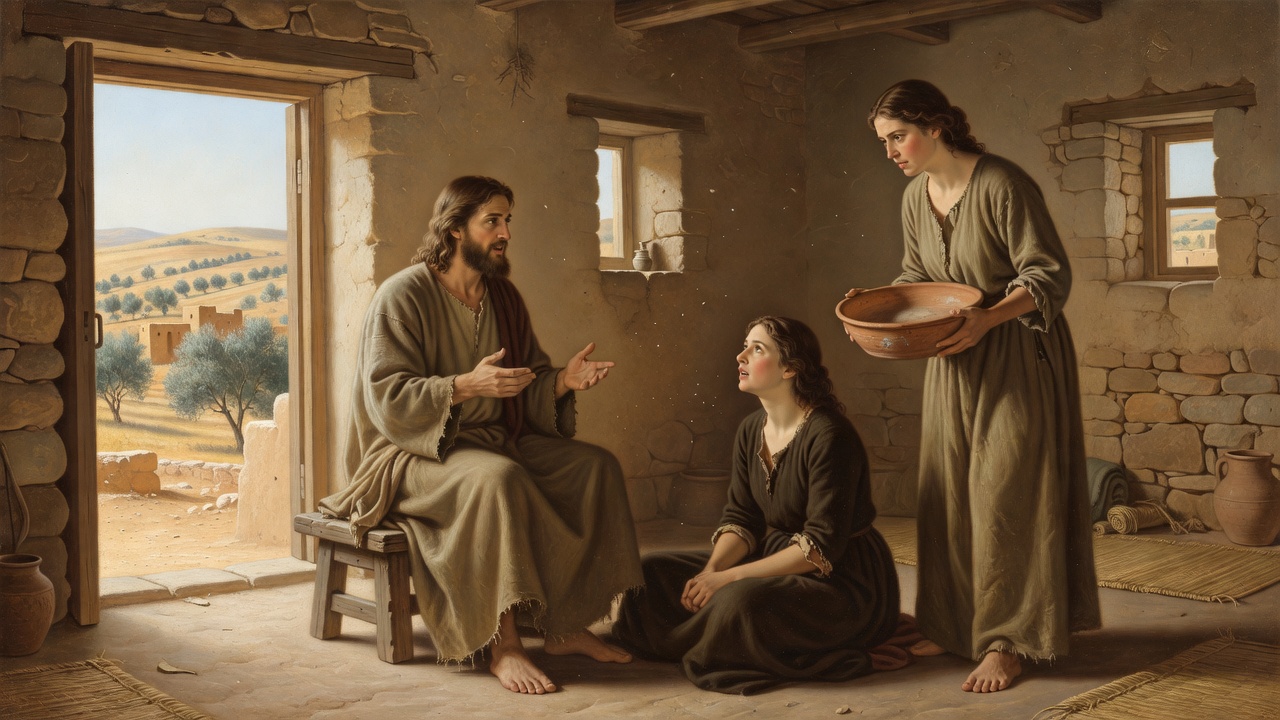
Marta ñe Mariyam
38Sündatcholye Jisuñe i shürhaw na jimkoitchoi ye, se i ñetrü a ge ji, seyo Marta cheñe mim a ye í iñe ge balada. 39Seyo Mariam cheñe uñum a duw, i Tawgyew ishitrü ge ĝyoñe i shi-ñu dzüw. 40Sé Marta chiĝa da dañe mavenghua sünda itrü iñisa ge jikuñe che, “He Tawgyewwa, ba haje mavema, noñum í no akasa chiĝa daweñe traadaw ye? Sündada í chetcho, nó datunowe.” 41Tawgyew i í trutcho, “Marta O Marta; ba ŝüpyo ñu ha vejema venglyeñe seyo mavenghu lyaha.” 42“Séŝo ñu a ye umsome, seyo se chiĝa uw í Mariam i golame; se i ichi go malaĝafijomme.”
Did you know?
The mission, the towns, and Martha and Mary
- Easton's Bible Dictionary (1897) identifies Chorazin, named in this chapter's woes along with Bethsaida and Capernaum, with Kerazeh, about two and a half miles up the Wady Kerazeh from Capernaum. It says that after Jesus was expelled from Nazareth, Capernaum became his own city. The chapter compares those towns with Tyre and Sidon; the dictionary calls Sidon the first home of the Phoenicians on the coast of Palestine and the mother city of Tyre, about twenty-five miles north of Tyre.Sources: the Bible text itself · Chorazin · Capernaum · Sidon
- Easton's Bible Dictionary (1897) gives the name Martha as meaning bitterness, and says that she, her sister Mary, and their brother Lazarus lived at Bethany, with Martha probably the eldest. Because this passage calls the house hers, the dictionary notes that some have supposed she was a widow and that her brother and sister lodged with her. It describes her as anxious and bustling in caring for her guest, unlike Mary, who sat at Jesus' feet and listened.Sources: the Bible text itself · Martha · Mary (sister of Lazarus)
- The Lord appoints seventy-two others and sends them two by two ahead of him, and an event chronology dates that sending to AD 29. When they return, rejoicing that even the demons submit in his name, he says he saw Satan fall like lightning from heaven. Easton's Bible Dictionary (1897) explains the name Satan as adversary or accuser, and notes that the New Testament uses it interchangeably with the devil more than thirty times.Sources: the Bible text itself · 70 Sent Out · Satan
Notes written with AI assistance from open sources (Theographic Bible Metadata, CC BY-SA 4.0; Easton’s Bible Dictionary, public domain) and reviewed before publishing.
Places in this chapter
- Sidon · Today: Sandikli archaeological site in Sidon · 33.561, 35.372 · verses 13, 14
- Tyre · 33.271, 35.196 · verses 13, 14
- Jericho · Today: Tell el Alayiq · 31.852, 35.436 · verse 30
- Jerusalem · 31.777, 35.234 · verses 30, 38
Only places identified with high confidence are shown (90% or more according to the scholarly sources compiled by OpenBible). Period map: DARE (Digital Atlas of the Roman Empire), CC BY 4.0; modern map: © OpenStreetMap contributors; places: OpenBible.info (CC BY 4.0).
Credits and license for this translation
Aka (Hrusso) Bible
Hruso: Aka (Hrusso) Bible (Portions) for India
copyright © 2024 Bridge Connectivity Solutions Pvt. Ltd.
Language: (Hruso)
Contributor: Bridge Connectivity Solutions Pvt. Ltd.
This translation is made available to you under the terms of the
Creative Commons Attribution Share-Alike license 4.0.
You have permission to share and redistribute this Bible translation in any format and to make reasonable revisions and adaptations of this translation, provided that:
You include the above copyright and source information.
If you make any changes to the text, you must indicate that you did so in a way that makes it clear that the original licensor is not necessarily endorsing your changes.
If you redistribute this text, you must distribute your contributions under the same license as the original.
Pictures included with Scriptures and other documents on this site are licensed just for use with those Scriptures and documents.
For other uses, please contact the respective copyright owners.
Note that in addition to the rules above, revising and adapting God's Word involves a great responsibility to be true to God's Word. See Revelation 22:18-19.
2025-05-03
Source: http://ebible.org/hru/ · eBible.org