Job 29
כתבי הקודש · Tap a verse to see its cross-references.
1וַיֹּ֣סֶף אִ֭יּוֹב שְׂאֵ֥ת מְשָׁל֗וֹ וַיֹּאמַֽר׃ 2מִֽי־יִתְּנֵ֥נִי כְיַרְחֵי־קֶ֑דֶם כִּ֝ימֵ֗י אֱל֣וֹהַּ יִשְׁמְרֵֽנִי׃ 3בְּהִלּ֣וֹ נֵ֭רוֹ עֲלֵ֣י רֹאשִׁ֑י לְ֝אוֹרוֹ אֵ֣לֶךְ חֹֽשֶׁךְ׃ 4כַּאֲשֶׁ֣ר הָ֭יִיתִי בִּימֵ֣י חָרְפִּ֑י בְּס֥וֹד אֱ֝ל֗וֹהַּ עֲלֵ֣י אָהֳלִֽי׃ 5בְּע֣וֹד שַׁ֭דַּי עִמָּדִ֑י סְבִ֖יבוֹתַ֣י נְעָרָֽי׃ 6בִּרְחֹ֣ץ הֲלִיכַ֣י בְּחֵמָ֑ה וְצ֥וּר יָצ֥וּק עִ֝מָּדִ֗י פַּלְגֵי־שָֽׁמֶן׃ 7בְּצֵ֣אתִי שַׁ֣עַר עֲלֵי־קָ֑רֶת בָּ֝רְח֗וֹב אָכִ֥ין מוֹשָׁבִֽי׃ 8רָא֣וּנִי נְעָרִ֣ים וְנֶחְבָּ֑אוּ וִֽ֝ישִׁישִׁים קָ֣מוּ עָמָֽדוּ׃ 9שָׂ֭רִים עָצְר֣וּ בְמִלִּ֑ים וְ֝כַ֗ף יָשִׂ֥ימוּ לְפִיהֶֽם׃ 10קוֹל־נְגִידִ֥ים נֶחְבָּ֑אוּ וּ֝לְשׁוֹנָ֗ם לְחִכָּ֥ם דָּבֵֽקָה׃ 11כִּ֤י אֹ֣זֶן שָׁ֭מְעָה וַֽתְּאַשְּׁרֵ֑נִי וְעַ֥יִן רָ֝אֲתָ֗ה וַתְּעִידֵֽנִי׃ 12כִּֽי־אֲ֭מַלֵּט עָנִ֣י מְשַׁוֵּ֑עַ וְ֝יָת֗וֹם וְֽלֹא־עֹזֵ֥ר לֽוֹ׃ 13בִּרְכַּ֣ת אֹ֭בֵד עָלַ֣י תָּבֹ֑א וְלֵ֖ב אַלְמָנָ֣ה אַרְנִֽן׃ 14צֶ֣דֶק לָ֭בַשְׁתִּי וַיִּלְבָּשֵׁ֑נִי כִּֽמְעִ֥יל וְ֝צָנִ֗יף מִשְׁפָּטִֽי׃ 15עֵינַ֣יִם הָ֭יִיתִי לַֽעִוֵּ֑ר וְרַגְלַ֖יִם לַפִּסֵּ֣חַ אָֽנִי׃ 16אָ֣ב אָ֭נֹכִֽי לָֽאֶבְיוֹנִ֑ים וְרִ֖ב לֹא־יָדַ֣עְתִּי אֶחְקְרֵֽהוּ׃ 17וָֽ֭אֲשַׁבְּרָה מְתַלְּע֣וֹת עַוָּ֑ל וּ֝מִשִּׁנָּ֗יו אַשְׁלִ֥יךְ טָֽרֶף׃ 18וָ֭אֹמַר עִם־קִנִּ֣י אֶגְוָ֑ע וְ֝כַח֗וֹל אַרְבֶּ֥ה יָמִֽים׃ 19שָׁרְשִׁ֣י פָת֣וּחַ אֱלֵי־מָ֑יִם וְ֝טַ֗ל יָלִ֥ין בִּקְצִירִֽי׃ 20כְּ֭בוֹדִי חָדָ֣שׁ עִמָּדִ֑י וְ֝קַשְׁתִּ֗י בְּיָדִ֥י תַחֲלִֽיף׃ 21לִֽי־שָׁמְע֥וּ וְיִחֵ֑לּוּ וְ֝יִדְּמ֗וּ לְמ֣וֹ עֲצָתִֽי׃ 22אַחֲרֵ֣י דְ֭בָרִי לֹ֣א יִשְׁנ֑וּ וְ֝עָלֵ֗ימוֹ תִּטֹּ֥ף מִלָּתִֽי׃ 23וְיִֽחֲל֣וּ כַמָּטָ֣ר לִ֑י וּ֝פִיהֶ֗ם פָּעֲר֥וּ לְמַלְקֽוֹשׁ׃ 24אֶשְׂחַ֣ק אֲ֭לֵהֶם לֹ֣א יַאֲמִ֑ינוּ וְא֥וֹר פָּ֝נַ֗י לֹ֣א יַפִּילֽוּן׃ 25אֶֽבֲחַ֣ר דַּרְכָּם֮ וְאֵשֵׁ֪ב רֹ֥אשׁ וְ֭אֶשְׁכּוֹן כְּמֶ֣לֶךְ בַּגְּד֑וּד כַּאֲשֶׁ֖ר אֲבֵלִ֣ים יְנַחֵֽם׃
Did you know?
Job Recalls His Former Honor
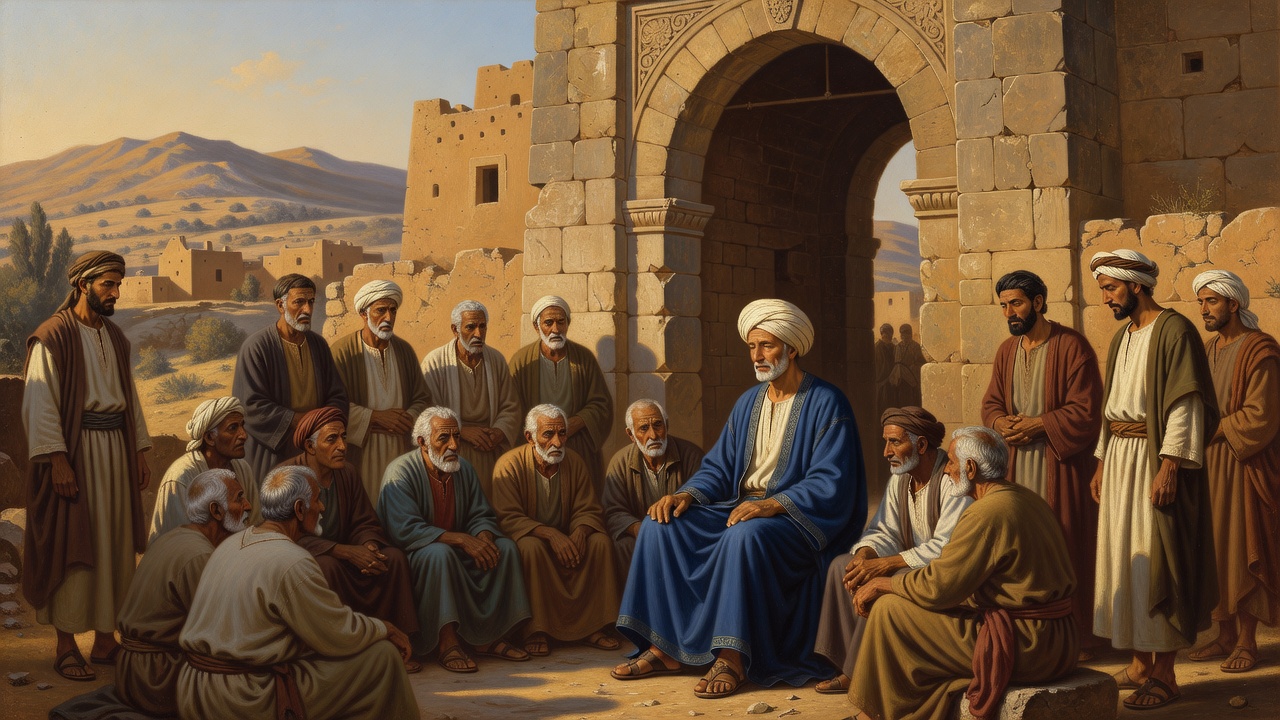
- In ancient times, the city gate and public square served as the center of community leadership, assembly, and judicial decisions. Job recalls sitting there as an honored counselor and chief, where young men stepped aside, elders stood in respect, and nobles fell silent to hear his guidance.Sources: the Bible text itself
- Job describes his former righteousness in terms of social justice and active protection of the vulnerable. He acted as an advocate and helper for the poor, the fatherless, the widow, the blind, the lame, and the stranger, while actively restraining oppressors.Sources: the Bible text itself
- Job is identified as an Arabian patriarch who resided in the land of Uz. In this chapter, he looks back with deep longing on the time before his sudden calamities, when his children were gathered around him and his household enjoyed exceptional prosperity and friendship with God.Sources: Job · the Bible text itself
Notes written with AI assistance from open sources (Theographic Bible Metadata, CC BY-SA 4.0; Easton’s Bible Dictionary, public domain) and reviewed before publishing.
Credits and license for this translation
כתבי הקודש
The Hebrew Old Testament, Westminster Leningrad Codex
Public Domain
Language: עברית (Hebrew)
Dialect: Biblical/Ancient
Lemma and morphology data are licensed under a Creative Commons Attribution- ShareAlike license (http://creativecommons.org/licenses/by-sa/3.0/). For attribution purposes, credit the Open Scriptures Hebrew Bible Project. The text of the WLC remains in the public domain.
2017-12-27
Source: http://ebible.org/hboWLC/ · eBible.org