Job 30
כתבי הקודש · Tap a verse to see its cross-references.
1וְעַתָּ֤ה ׀ שָֽׂחֲק֣וּ עָלַי֮ צְעִירִ֥ים מִמֶּ֗נִּי לְיָ֫מִ֥ים אֲשֶׁר־מָאַ֥סְתִּי אֲבוֹתָ֑ם לָ֝שִׁ֗ית עִם־כַּלְבֵ֥י צֹאנִֽי׃ 2גַּם־כֹּ֣חַ יְ֭דֵיהֶם לָ֣מָּה לִּ֑י עָ֝לֵ֗ימוֹ אָ֣בַד כָּֽלַח׃ 3בְּחֶ֥סֶר וּבְכָפָ֗ן גַּ֫לְמ֥וּד הַֽעֹרְקִ֥ים צִיָּ֑ה אֶ֝֗מֶשׁ שׁוֹאָ֥ה וּמְשֹׁאָֽה׃ 4הַקֹּטְפִ֣ים מַלּ֣וּחַ עֲלֵי־שִׂ֑יחַ וְשֹׁ֖רֶשׁ רְתָמִ֣ים לַחְמָֽם׃ 5מִן־גֵּ֥ו יְגֹרָ֑שׁוּ יָרִ֥יעוּ עָ֝לֵ֗ימוֹ כַּגַּנָּֽב׃ 6בַּעֲר֣וּץ נְחָלִ֣ים לִשְׁכֹּ֑ן חֹרֵ֖י עָפָ֣ר וְכֵפִֽים׃ 7בֵּין־שִׂיחִ֥ים יִנְהָ֑קוּ תַּ֖חַת חָר֣וּל יְסֻפָּֽחוּ׃ 8בְּֽנֵי־נָ֭בָל גַּם־בְּנֵ֣י בְלִי־שֵׁ֑ם נִ֝כְּא֗וּ מִן־הָאָֽרֶץ׃ 9וְ֭עַתָּה נְגִינָתָ֣ם הָיִ֑יתִי וָאֱהִ֖י לָהֶ֣ם לְמִלָּֽה׃ 10תִּֽ֭עֲבוּנִי רָ֣חֲקוּ מֶ֑נִּי וּ֝מִפָּנַ֗י לֹא־חָ֥שְׂכוּ רֹֽק׃ 11כִּֽי־יתרו פִ֭תַּח וַיְעַנֵּ֑נִי וְ֝רֶ֗סֶן מִפָּנַ֥י שִׁלֵּֽחוּ׃ 12עַל־יָמִין֮ פִּרְחַ֪ח יָ֫ק֥וּמוּ רַגְלַ֥י שִׁלֵּ֑חוּ וַיָּסֹ֥לּוּ עָ֝לַ֗י אָרְח֥וֹת אֵידָֽם׃ 13נָתְס֗וּ נְֽתִיבָ֫תִ֥י לְהַוָּתִ֥י יֹעִ֑ילוּ לֹ֖א עֹזֵ֣ר לָֽמוֹ׃ 14כְּפֶ֣רֶץ רָחָ֣ב יֶאֱתָ֑יוּ תַּ֥חַת שֹׁ֝אָ֗ה הִתְגַּלְגָּֽלוּ׃ 15הָהְפַּ֥ךְ עָלַ֗י בַּלָּ֫ה֥וֹת תִּרְדֹּ֣ף כָּ֭רוּחַ נְדִבָתִ֑י וּ֝כְעָ֗ב עָבְרָ֥ה יְשֻׁעָתִֽי׃ 16וְעַתָּ֗ה עָ֭לַי תִּשְׁתַּפֵּ֣ךְ נַפְשִׁ֑י יֹ֭אחֲז֣וּנִי יְמֵי־עֹֽנִי׃ 17לַ֗יְלָה עֲ֭צָמַי נִקַּ֣ר מֵעָלָ֑י וְ֝עֹרְקַ֗י לֹ֣א יִשְׁכָּבֽוּן׃ 18בְּרָב־כֹּ֭חַ יִתְחַפֵּ֣שׂ לְבוּשִׁ֑י כְּפִ֖י כֻתָּנְתִּ֣י יַֽאַזְרֵֽנִי׃ 19הֹרָ֥נִי לַחֹ֑מֶר וָ֝אֶתְמַשֵּׁ֗ל כֶּעָפָ֥ר וָאֵֽפֶר׃ 20אֲשַׁוַּ֣ע אֵ֭לֶיךָ וְלֹ֣א תַעֲנֵ֑נִי עָ֝מַ֗דְתִּי וַתִּתְבֹּ֥נֶן בִּֽי׃ 21תֵּהָפֵ֣ךְ לְאַכְזָ֣ר לִ֑י בְּעֹ֖צֶם יָדְךָ֣ תִשְׂטְמֵֽנִי׃ 22תִּשָּׂאֵ֣נִי אֶל־ר֭וּחַ תַּרְכִּיבֵ֑נִי וּ֝תְמֹגְגֵ֗נִי תשוה׃ 23כִּֽי־יָ֭דַעְתִּי מָ֣וֶת תְּשִׁיבֵ֑נִי וּבֵ֖ית מוֹעֵ֣ד לְכָל־חָֽי׃ 24אַ֣ךְ לֹא־בְ֭עִי יִשְׁלַח־יָ֑ד אִם־בְּ֝פִיד֗וֹ לָהֶ֥ן שֽׁוּעַ׃ 25אִם־לֹ֣א בָ֭כִיתִי לִקְשֵׁה־י֑וֹם עָֽגְמָ֥ה נַ֝פְשִׁ֗י לָאֶבְיֽוֹן׃ 26כִּ֤י ט֣וֹב קִ֭וִּיתִי וַיָּ֣בֹא רָ֑ע וַֽאֲיַחֲלָ֥ה לְ֝א֗וֹר וַיָּ֥בֹא אֹֽפֶל׃ 27מֵעַ֖י רֻתְּח֥וּ וְלֹא־דָ֗מּוּ קִדְּמֻ֥נִי יְמֵי־עֹֽנִי׃ 28קֹדֵ֣ר הִ֭לַּכְתִּי בְּלֹ֣א חַמָּ֑ה קַ֖מְתִּי בַקָּהָ֣ל אֲשַׁוֵּֽעַ׃ 29אָ֭ח הָיִ֣יתִי לְתַנִּ֑ים וְ֝רֵ֗עַ לִבְנ֥וֹת יַעֲנָֽה׃ 30ע֭וֹרִי שָׁחַ֣ר מֵעָלָ֑י וְעַצְמִי־חָ֝֗רָה מִנִּי־חֹֽרֶב׃ 31וַיְהִ֣י לְ֭אֵבֶל כִּנֹּרִ֑י וְ֝עֻגָבִ֗י לְק֣וֹל בֹּכִֽים׃
Did you know?
Humiliation, Physical Suffering, and Desert Outcasts
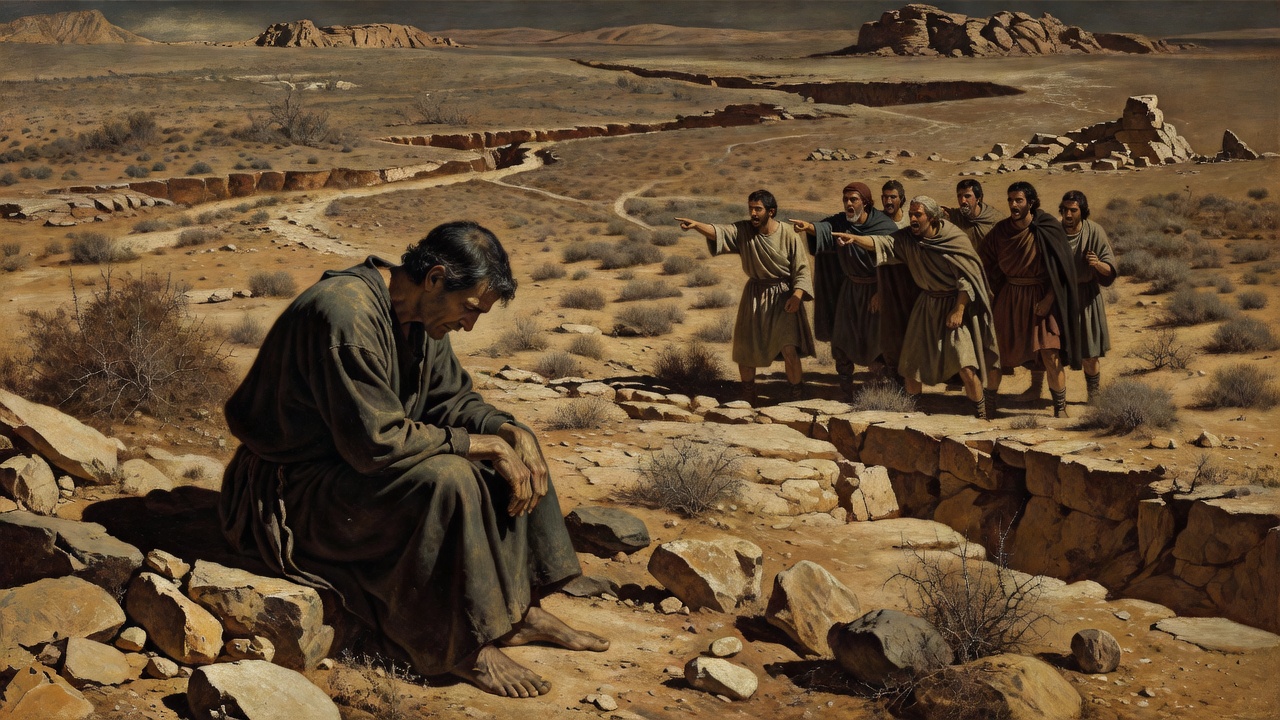
- In this chapter, Job contrasts his previous social standing with his current humiliation at the hands of impoverished outcasts. He describes these men as surviving on the margins of society, foraging for wild mallow and broom tree roots in desolate wadis and rock hollows.Sources: the Bible text itself
- Job uses vivid siege metaphors, picturing his attackers as an advancing army laying ramps and breaking through breaches against him, while he endures severe physical afflictions such as fever, gnawing pain, and blackened, peeling skin.Sources: the Bible text itself
- To convey the isolation and intensity of his grief, Job identifies with the mournful sounds of wilderness creatures, calling himself a companion to jackals and ostriches, while his musical instruments—the harp and flute—are turned entirely to weeping.Sources: the Bible text itself
Notes written with AI assistance from open sources (Theographic Bible Metadata, CC BY-SA 4.0; Easton’s Bible Dictionary, public domain) and reviewed before publishing.
Credits and license for this translation
כתבי הקודש
The Hebrew Old Testament, Westminster Leningrad Codex
Public Domain
Language: עברית (Hebrew)
Dialect: Biblical/Ancient
Lemma and morphology data are licensed under a Creative Commons Attribution- ShareAlike license (http://creativecommons.org/licenses/by-sa/3.0/). For attribution purposes, credit the Open Scriptures Hebrew Bible Project. The text of the WLC remains in the public domain.
2017-12-27
Source: http://ebible.org/hboWLC/ · eBible.org