Job 28
כתבי הקודש · Tap a verse to see its cross-references.
1כִּ֤י יֵ֣שׁ לַכֶּ֣סֶף מוֹצָ֑א וּ֝מָק֗וֹם לַזָּהָ֥ב יָזֹֽקּוּ׃ 2בַּ֭רְזֶל מֵעָפָ֣ר יֻקָּ֑ח וְ֝אֶ֗בֶן יָצ֥וּק נְחוּשָֽׁה׃ 3קֵ֤ץ ׀ שָׂ֤ם לַחֹ֗שֶׁךְ וּֽלְכָל־תַּ֭כְלִית ה֣וּא חוֹקֵ֑ר אֶ֖בֶן אֹ֣פֶל וְצַלְמָֽוֶת׃ 4פָּ֤רַץ נַ֨חַל ׀ מֵֽעִם־גָּ֗ר הַֽנִּשְׁכָּחִ֥ים מִנִּי־רָ֑גֶל דַּ֖לּוּ מֵאֱנ֣וֹשׁ נָֽעוּ׃ 5אֶ֗רֶץ מִמֶּ֥נָּה יֵֽצֵא־לָ֑חֶם וְ֝תַחְתֶּ֗יהָ נֶהְפַּ֥ךְ כְּמוֹ־אֵֽשׁ׃ 6מְקוֹם־סַפִּ֥יר אֲבָנֶ֑יהָ וְעַפְרֹ֖ת זָהָ֣ב לֽוֹ׃ 7נָ֭תִיב לֹֽא־יְדָ֣עוֹ עָ֑יִט וְלֹ֥א שְׁ֝זָפַ֗תּוּ עֵ֣ין אַיָּֽה׃ 8לֹֽא־הִדְרִיכֻ֥הוּ בְנֵי־שָׁ֑חַץ לֹֽא־עָדָ֖ה עָלָ֣יו שָֽׁחַל׃ 9בַּֽ֭חַלָּמִישׁ שָׁלַ֣ח יָד֑וֹ הָפַ֖ךְ מִשֹּׁ֣רֶשׁ הָרִֽים׃ 10בַּ֭צּוּרוֹת יְאֹרִ֣ים בִּקֵּ֑עַ וְכָל־יְ֝קָ֗ר רָאֲתָ֥ה עֵינֽוֹ׃ 11מִ֭בְּכִי נְהָר֣וֹת חִבֵּ֑שׁ וְ֝תַעֲלֻמָ֗הּ יֹ֣צִא אֽוֹר׃ פ 12וְֽ֭הַחָכְמָה מֵאַ֣יִן תִּמָּצֵ֑א וְאֵ֥י זֶ֝ה מְק֣וֹם בִּינָֽה׃ 13לֹא־יָדַ֣ע אֱנ֣וֹשׁ עֶרְכָּ֑הּ וְלֹ֥א תִ֝מָּצֵ֗א בְּאֶ֣רֶץ הַֽחַיִּֽים׃ 14תְּה֣וֹם אָ֭מַר לֹ֣א בִי־הִ֑יא וְיָ֥ם אָ֝מַ֗ר אֵ֣ין עִמָּדִֽי׃ 15לֹא־יֻתַּ֣ן סְג֣וֹר תַּחְתֶּ֑יהָ וְלֹ֥א יִ֝שָּׁקֵ֗ל כֶּ֣סֶף מְחִירָֽהּ׃ 16לֹֽא־תְ֭סֻלֶּה בְּכֶ֣תֶם אוֹפִ֑יר בְּשֹׁ֖הַם יָקָ֣ר וְסַפִּֽיר׃ 17לֹא־יַעַרְכֶ֣נָּה זָ֭הָב וּזְכוֹכִ֑ית וּתְמ֖וּרָתָ֣הּ כְּלִי־פָֽז׃ 18רָאמ֣וֹת וְ֭גָבִישׁ לֹ֣א יִזָּכֵ֑ר וּמֶ֥שֶׁךְ חָ֝כְמָ֗ה מִפְּנִינִֽים׃ 19לֹֽא־יַ֭עַרְכֶנָּה פִּטְדַת־כּ֑וּשׁ בְּכֶ֥תֶם טָ֝ה֗וֹר לֹ֣א תְסֻלֶּֽה׃ פ 20וְֽ֭הַחָכְמָה מֵאַ֣יִן תָּב֑וֹא וְאֵ֥י זֶ֝֗ה מְק֣וֹם בִּינָֽה׃ 21וְֽ֭נֶעֶלְמָה מֵעֵינֵ֣י כָל־חָ֑י וּמֵע֖וֹף הַשָּׁמַ֣יִם נִסְתָּֽרָה׃ 22אֲבַדּ֣וֹן וָ֭מָוֶת אָ֣מְר֑וּ בְּ֝אָזְנֵ֗ינוּ שָׁמַ֥עְנוּ שִׁמְעָֽהּ׃ 23אֱ֭לֹהִים הֵבִ֣ין דַּרְכָּ֑הּ וְ֝ה֗וּא יָדַ֥ע אֶת־מְקוֹמָֽהּ׃ 24כִּי־ה֭וּא לִקְצוֹת־הָאָ֣רֶץ יַבִּ֑יט תַּ֖חַת כָּל־הַשָּׁמַ֣יִם יִרְאֶֽה׃ 25לַעֲשׂ֣וֹת לָר֣וּחַ מִשְׁקָ֑ל וּ֝מַ֗יִם תִּכֵּ֥ן בְּמִדָּֽה׃ 26בַּעֲשֹׂת֣וֹ לַמָּטָ֣ר חֹ֑ק וְ֝דֶ֗רֶךְ לַחֲזִ֥יז קֹלֽוֹת׃ 27אָ֣ז רָ֭אָהּ וַֽיְסַפְּרָ֑הּ הֱ֝כִינָ֗הּ וְגַם־חֲקָרָֽהּ׃ 28וַיֹּ֤אמֶר ׀ לָֽאָדָ֗ם הֵ֤ן יִרְאַ֣ת אֲ֭דֹנָי הִ֣יא חָכְמָ֑ה וְס֖וּר מֵרָ֣ע בִּינָֽה׃ ס
Did you know?
The Mining of Treasures and the Value of Wisdom
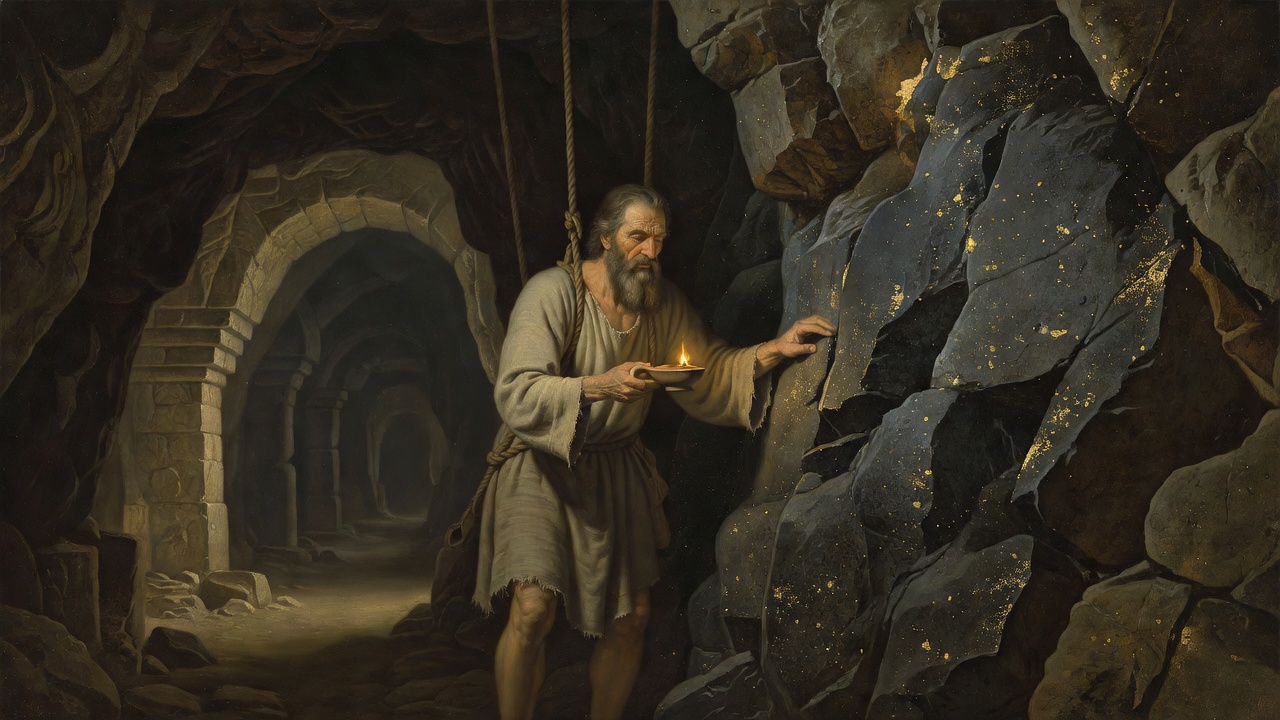
- Job 28 offers a vivid description of ancient mining practices, including digging deep shafts far from human settlements, descending on ropes, tunneling through rock, and damming underground water sources to extract copper, iron, silver, and precious stones.Sources: the Bible text itself
- To emphasize that wisdom exceeds all earthly wealth, the poem references the gold of Ophir and topaz from Cush (translated as Ethiopia in the Greek Septuagint). Ophir was a famous ancient source of pure gold often linked to Arabia or India, while Cush designated the region south of Egypt.Sources: the Bible text itself · Ophir · Ethiopia
- The poem concludes that while humans can master the subterranean world to extract buried treasures, true wisdom cannot be bought or mined. Instead, God reveals that wisdom for mortals consists in the fear of the Lord and turning away from evil.Sources: the Bible text itself
Notes written with AI assistance from open sources (Theographic Bible Metadata, CC BY-SA 4.0; Easton’s Bible Dictionary, public domain) and reviewed before publishing.
Places in this chapter
- Ethiopia · 16.935, 33.751 · verse 19
Only places identified with high confidence are shown (90% or more according to the scholarly sources compiled by OpenBible). Period map: DARE (Digital Atlas of the Roman Empire), CC BY 4.0; modern map: © OpenStreetMap contributors; places: OpenBible.info (CC BY 4.0).
Credits and license for this translation
כתבי הקודש
The Hebrew Old Testament, Westminster Leningrad Codex
Public Domain
Language: עברית (Hebrew)
Dialect: Biblical/Ancient
Lemma and morphology data are licensed under a Creative Commons Attribution- ShareAlike license (http://creativecommons.org/licenses/by-sa/3.0/). For attribution purposes, credit the Open Scriptures Hebrew Bible Project. The text of the WLC remains in the public domain.
2017-12-27
Source: http://ebible.org/hboWLC/ · eBible.org