Exodus 2
כתבי הקודש · Tap a verse to see its cross-references.
1וַיֵּ֥לֶךְ אִ֖ישׁ מִבֵּ֣ית לֵוִ֑י וַיִּקַּ֖ח אֶת־בַּת־לֵוִֽי׃ 2וַתַּ֥הַר הָאִשָּׁ֖ה וַתֵּ֣לֶד בֵּ֑ן וַתֵּ֤רֶא אֹתֹו֙ כִּי־טֹ֣וב ה֔וּא וַֽתִּצְפְּנֵ֖הוּ שְׁלֹשָׁ֥ה יְרָחִֽים׃ 3וְלֹא־יָכְלָ֣ה עֹוד֮ הַצְּפִינֹו֒ וַתִּֽקַּֽח־לֹו֙ תֵּ֣בַת גֹּ֔מֶא וַתַּחְמְרָ֥ה בַחֵמָ֖ר וּבַזָּ֑פֶת וַתָּ֤שֶׂם בָּהּ֙ אֶת־הַיֶּ֔לֶד וַתָּ֥שֶׂם בַּסּ֖וּף עַל־שְׂפַ֥ת הַיְאֹֽר׃ 4וַתֵּתַצַּ֥ב אֲחֹתֹ֖ו מֵרָחֹ֑ק לְדֵעָ֕ה מַה־יֵּעָשֶׂ֖ה לֹֽו׃ 5וַתֵּ֤רֶד בַּת־פַּרְעֹה֙ לִרְחֹ֣ץ עַל־הַיְאֹ֔ר וְנַעֲרֹתֶ֥יהָ הֹלְכֹ֖ת עַל־יַ֣ד הַיְאֹ֑ר וַתֵּ֤רֶא אֶת־הַתֵּבָה֙ בְּתֹ֣וךְ הַסּ֔וּף וַתִּשְׁלַ֥ח אֶת־אֲמָתָ֖הּ וַתִּקָּחֶֽהָ: 6וַתִּפְתַּח֙ וַתִּרְאֵ֣הוּ אֶת־הַיֶּ֔לֶד וְהִנֵּה־נַ֖עַר בֹּכֶ֑ה וַתַּחְמֹ֣ל עָלָ֔יו וַתֹּ֕אמֶר מִיַּלְדֵ֥י הָֽעִבְרִ֖ים זֶֽה׃ 7וַתֹּ֣אמֶר אֲחֹתֹו֮ אֶל־בַּת־פַּרְעֹה֒ הַאֵלֵ֗ךְ וְקָרָ֤אתִי לָךְ֙ אִשָּׁ֣ה מֵינֶ֔קֶת מִ֖ן הָעִבְרִיֹּ֑ת וְתֵינִ֥ק לָ֖ךְ אֶת־הַיָּֽלֶד׃ 8וַתֹּֽאמֶר־לָ֥הּ בַּת־פַּרְעֹ֖ה לֵ֑כִי וַתֵּ֙לֶךְ֙ הָֽעַלְמָ֔ה וַתִּקְרָ֖א אֶת־אֵ֥ם הַיָּֽלֶד׃ 9וַתֹּ֧אמֶר לָ֣הּ בַּת־פַּרְעֹ֗ה הֵילִ֜יכִי אֶת־הַיֶּ֤לֶד הַזֶּה֙ וְהֵינִקִ֣הוּ לִ֔י וַאֲנִ֖י אֶתֵּ֣ן אֶת־שְׂכָרֵ֑ךְ וַתִּקַּ֧ח הָאִשָּׁ֛ה הַיֶּ֖לֶד וַתְּנִיקֵֽהוּ׃ 10וַיִגְדַּ֣ל הַיֶּ֗לֶד וַתְּבִאֵ֙הוּ֙ לְבַת־פַּרְעֹ֔ה וֽ͏ַיְהִי־לָ֖הּ לְבֵ֑ן וַתִּקְרָ֤א שְׁמֹו֙ מֹשֶׁ֔ה וַתֹּ֕אמֶר כִּ֥י מִן־הַמַּ֖יִם מְשִׁיתִֽהוּ׃ 11וַיְהִ֣י ׀ בַּיָּמִ֣ים הָהֵ֗ם וַיִּגְדַּ֤ל מֹשֶׁה֙ וַיֵּצֵ֣א אֶל־אֶחָ֔יו וַיַּ֖רְא בְּסִבְלֹתָ֑ם וַיַּרְא֙ אִ֣ישׁ מִצְרִ֔י מַכֶּ֥ה אִישׁ־עִבְרִ֖י מֵאֶחָֽיו׃ 12וַיִּ֤פֶן כֹּה֙ וָכֹ֔ה וַיַּ֖רְא כִּ֣י אֵ֣ין אִ֑ישׁ וַיַּךְ֙ אֶת־הַמִּצְרִ֔י וַֽיִּטְמְנֵ֖הוּ בַּחֹֽול׃ 13וַיֵּצֵא֙ בַּיֹּ֣ום הַשֵּׁנִ֔י וְהִנֵּ֛ה שְׁנֵֽי־אֲנָשִׁ֥ים עִבְרִ֖ים נִצִּ֑ים וַיֹּ֙אמֶר֙ לָֽרָשָׁ֔ע לָ֥מָּה תַכֶּ֖ה רֵעֶֽךָ׃ 14וַ֠יֹּאמֶר מִ֣י שָֽׂמְךָ֞ לְאִ֨ישׁ שַׂ֤ר וְשֹׁפֵט֙ עָלֵ֔ינוּ הַלְהָרְגֵ֙נִי֙ אַתָּ֣ה אֹמֵ֔ר כַּאֲשֶׁ֥ר הָרַ֖גְתָּ אֶת־הַמִּצְרִ֑י וַיִּירָ֤א מֹשֶׁה֙ וַיֹּאמַ֔ר אָכֵ֖ן נֹודַ֥ע הַדָּבָֽר׃ 15וַיִּשְׁמַ֤ע פַּרְעֹה֙ אֶת־הַדָּבָ֣ר הַזֶּ֔ה וַיְבַקֵּ֖שׁ לַהֲרֹ֣ג אֶת־מֹשֶׁ֑ה וַיִּבְרַ֤ח מֹשֶׁה֙ מִפְּנֵ֣י פַרְעֹ֔ה וַיֵּ֥שֶׁב בְּאֶֽרֶץ־מִדְיָ֖ן וַיֵּ֥שֶׁב עַֽל־הַבְּאֵֽר׃ 16וּלְכֹהֵ֥ן מִדְיָ֖ן שֶׁ֣בַע בָּנֹ֑ות וַתָּבֹ֣אנָה וַתִּדְלֶ֗נָה וַתְּמַלֶּ֙אנָה֙ אֶת־הָ֣רְהָטִ֔ים לְהַשְׁקֹ֖ות צֹ֥אן אֲבִיהֶֽן׃ 17וַיָּבֹ֥אוּ הָרֹעִ֖ים וַיְגָרְשׁ֑וּם וַיָּ֤קָם מֹשֶׁה֙ וַיֹּ֣ושִׁעָ֔ן וַיַּ֖שְׁקְ אֶת־צֹאנָֽם׃ 18וַתָּבֹ֕אנָה אֶל־רְעוּאֵ֖ל אֲבִיהֶ֑ן וַיֹּ֕אמֶר מַדּ֛וּעַ מִהַרְתֶּ֥ן בֹּ֖א הַיֹּֽום׃ 19וַתֹּאמַ֕רְןָ אִ֣ישׁ מִצְרִ֔י הִצִּילָ֖נוּ מִיַּ֣ד הָרֹעִ֑ים וְגַם־דָּלֹ֤ה דָלָה֙ לָ֔נוּ וַיַּ֖שְׁקְ אֶת־הַצֹּֽאן׃ 20וַיֹּ֥אמֶר אֶל־בְּנֹתָ֖יו וְאַיֹּ֑ו לָ֤מָּה זֶּה֙ עֲזַבְתֶּ֣ן אֶת־הָאִ֔ישׁ קִרְאֶ֥ן לֹ֖ו וְיֹ֥אכַל לָֽחֶם׃ 21וַיֹּ֥ואֶל מֹשֶׁ֖ה לָשֶׁ֣בֶת אֶת־הָאִ֑ישׁ וַיִּתֵּ֛ן אֶת־צִפֹּרָ֥ה בִתֹּ֖ו לְמֹשֶֽׁה׃ 22וַתֵּ֣לֶד בֵּ֔ן וַיִּקְרָ֥א אֶת־שְׁמֹ֖ו גֵּרְשֹׁ֑ם כִּ֣י אָמַ֔ר גֵּ֣ר הָיִ֔יתִי בְּאֶ֖רֶץ נָכְרִיָּֽה׃ פ 23וַיְהִי֩ בַיָּמִ֨ים הֽ͏ָרַבִּ֜ים הָהֵ֗ם וַיָּ֙מָת֙ מֶ֣לֶךְ מִצְרַ֔יִם וַיֵּאָנְח֧וּ בְנֵֽי־יִשְׂרָאֵ֛ל מִן־הָעֲבֹדָ֖ה וַיִּזְעָ֑קוּ וַתַּ֧עַל שַׁוְעָתָ֛ם אֶל־הָאֱלֹהִ֖ים מִן־הָעֲבֹדָֽה׃ 24וַיִּשְׁמַ֥ע אֱלֹהִ֖ים אֶת־נַאֲקָתָ֑ם וַיִּזְכֹּ֤ר אֱלֹהִים֙ אֶת־בְּרִיתֹ֔ו אֶת־אַבְרָהָ֖ם אֶת־יִצְחָ֥ק וְאֶֽת־יַעֲקֹֽב׃ 25וַיַּ֥רְא אֱלֹהִ֖ים אֶת־בְּנֵ֣י יִשְׂרָאֵ֑ל וַיֵּ֖דַע אֱלֹהִֽים׃ ס
Did you know?
The birth and flight of Moses
- Pharaoh’s daughter named the child Moses, explaining that she had drawn him out of the water. Easton's Bible Dictionary (1897) links his name with “drawn,” or with the Egyptian word mesu, “son”—the element from which the dictionary also explains Rameses as “royal son.”Sources: the Bible text itself · Moses
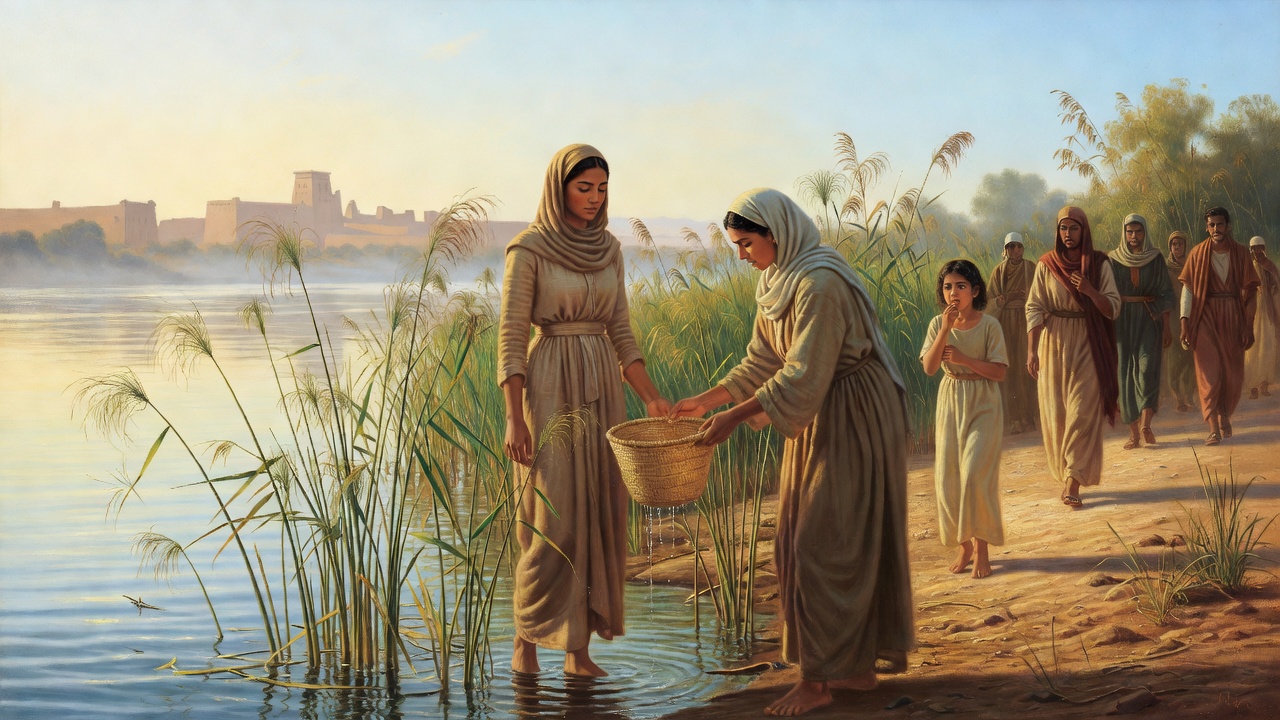
- In Exodus 2 a daughter of Levi hides her son for three months, and Pharaoh’s daughter, finding him among the Nile reeds, recognizes a Hebrew child. Easton's Bible Dictionary (1897) links the Israelites’ affliction to “the new king who knew not Joseph,” long supposed to be Aahmes I, called Amosis by Josephus, though the dictionary, citing discoveries then recent, names Seti instead. Their hardship, it says, began after the Hyksos, masters of Egypt for some five centuries, were driven out and the old dynasty restored.Sources: the Bible text itself · Pharaoh
- After Pharaoh sought to kill him, Moses fled to Midian and sat down beside a well; he later married Zipporah, one of the seven daughters of the priest of Midian. The Midianites were nomadic Arabians descended from Midian, Abraham’s fourth son by Keturah, and they pastured their flocks in the Sinai peninsula and in the desert north of the Arabian peninsula. This chapter calls the priest Reuel, whom Easton's Bible Dictionary (1897) names Raguel, regarding that form as his personal name and Jethro—“excellency”—as an official title if the two are identified.Sources: the Bible text itself · Midian · Midian · Jethro
Notes written with AI assistance from open sources (Theographic Bible Metadata, CC BY-SA 4.0; Easton’s Bible Dictionary, public domain) and reviewed before publishing.
Places in this chapter
- Nile · Today: Nile River · 31.465, 30.367 · verses 3, 5
- Midian · 28.495, 35.012 · verses 15, 16
- Egypt · 30.129, 31.308 · verse 23
Only places identified with high confidence are shown (90% or more according to the scholarly sources compiled by OpenBible). Period map: DARE (Digital Atlas of the Roman Empire), CC BY 4.0; modern map: © OpenStreetMap contributors; places: OpenBible.info (CC BY 4.0).
Credits and license for this translation
כתבי הקודש
The Old Testament in ancient Hebrew, following the Masoretic Text
Public Domain
Language: עברית (Hebrew)
Dialect: Biblical/Ancient
2013-12-11
Source: http://ebible.org/hbo/ · eBible.org